




White Porcelain Allegorical Figures
White porcelain allegorical figures embody grand themes in ceramic form, capturing classical seasons, continents and elements to grace a mantelpiece with enduring narrative charm.
White Porcelain Allegorical Figures
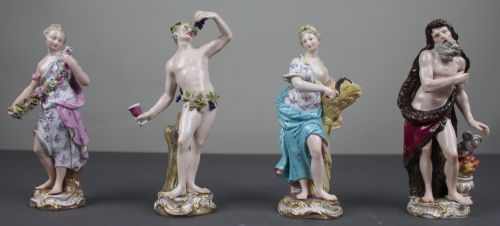
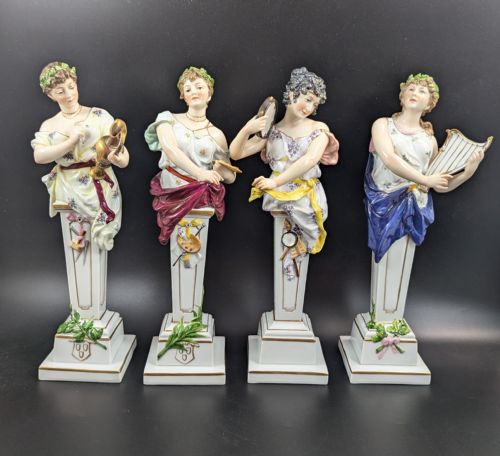
When you search for white porcelain allegorical figures, you encounter sculptural porcelain figurines, candlesticks and decorative statuettes representing abstract concepts such as the seasons, continents, elements and months. The forms span the eighteenth century, the Victorian era and the early twentieth century, originating from English and continental factories.
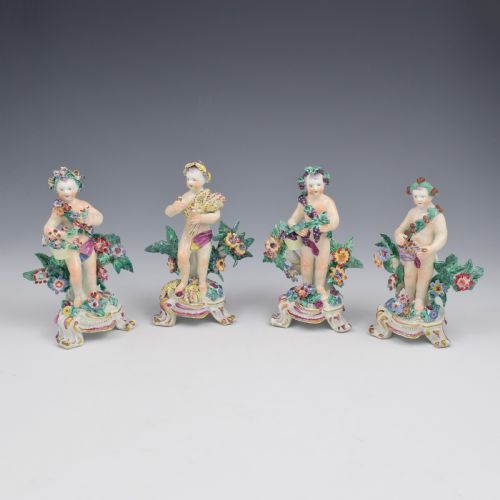
You are most likely to meet figures depicting the Four Seasons, such as Autumn or Winter, alongside representations of the four continents and elemental pairs. These pieces range from single standing putti and seated rustics to large sculptural groups involving multiple figures and attributes.
The objects serve as both decorative centrepieces and miniature dramas, often incorporating symbolic animals, flora or emblematic tools. Makers utilised the stark brilliance of white paste to highlight moulded detail before adding select touches of enamel, gilding and gold leaf.
How they were made
Potters shaped these pieces using soft-paste porcelain in the eighteenth century before hard-paste porcelain gained favour in later periods. The body was formed in moulds, sometimes assembled from several parts, and then fired to achieve a dense, vitrified ceramic base.
Makers applied enamel paints, overglaze colours and gold leaf by hand to accent garments, faces and symbolic attributes. Gilding was frequently fired onto the porcelain surface to provide rich contrast against the unglazed or glazed white body.
Listings feature pieces spanning the eighteenth century through to the Victorian era and nineteen-ten, utilising both soft-paste and hard-paste porcelain.
What varies in quality
The crispness of the modelling sets the finer examples apart, where facial expressions, drapery folds and tiny fingers remain sharp and distinct. Weaker pieces suffer from blurred mould lines and heavy, clumsy application of enamel and gold leaf.
The sophistication of the composition dictates the standing of a piece within its period. Elaborate figure groups with complex multi-figure arrangements and detailed base work demand greater technical mastery than single, static statuettes.
Meissen·Bow Porcelain·Royal Worcester·Carl Thieme Dresden·Chelsea·Derby Porcelain·Achille Mollica·Frankenthal·Royal Berlin
The White Porcelain Allegorical Figures Glossary
- Soft-paste porcelain
- An artificial ceramic paste fired at lower temperatures than hard-paste, common in early English factories. It produces a warm, slightly creamy body ideal for subtle modelling.
- Hard-paste porcelain
- A true porcelain made from kaolin and petuntse, fired at high temperatures. It yields a durable, bright white body resistant to scratching.
- Putto
- A plump, naked male child figure often depicted with wings. They frequently populate seasonal and elemental allegorical sets.
- Overglaze enamel
- Colours applied on top of the fired glaze and subjected to a second, lower temperature kiln firing. This technique permits a wide palette of bright surface decoration.
- Gilding
- The application of gold or gold leaf to ceramic surfaces for decorative emphasis. It highlights borders, garments and symbolic attributes.
White Porcelain Allegorical Figures: Frequently Asked Questions
What do these figures represent?
These pieces personify abstract ideas, most commonly the four seasons, the continents, the elements or the months of the year. Each figure holds specific attributes, such as a sheaf of corn for summer or a globe for a continent, to signal its meaning.
Created as decorative table ornaments or mantel displays, they reflect the intellectual tastes of earlier centuries. Collectors often seek out complete sets rather than isolated examples to appreciate the full narrative sequence.
How were they displayed?
In their original domestic settings, these figures sat upon mantelpieces, side tables or formed part of elaborate dining table centrepieces. Candlestick variants combined illumination with symbolic sculpture.
Today, they require stable shelving away from direct sunlight and heavy foot traffic to protect their delicate extremities and gilded surfaces. Grouping matching pairs or series creates a striking visual balance in a room.
How do I date a piece?
Dating relies upon examining the ceramic body, glaze characteristics, factory marks and stylistic cues. Eighteenth-century pieces often utilise soft-paste porcelain with hand-painted polychrome enamels, whereas Victorian and later works frequently employ hard-paste bodies and machine-assisted precision.
Comparing the modelling style to known factory output helps narrow down the decade of production. Examining the base for factory culls, painted blue swords, anchors or factory ciphers provides definitive chronological markers.
Why is the porcelain white?
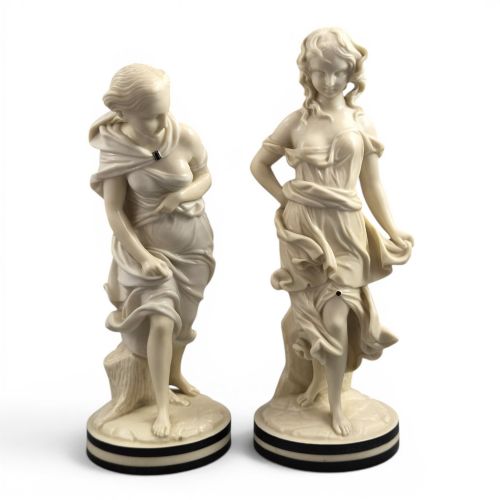
White porcelain provides a pure, classical aesthetic that mimics carved marble favoured by neoclassical taste. Leaving the body largely unglazed or in plain white glaze accentuates the delicate sculptural modelling.
Select applications of gold leaf and enamel draw the eye to specific symbolic details without overwhelming the form. This restrained palette allows the intricate craftsmanship of the modeller to take precedence.