






Gilded Dresden Porcelain Group
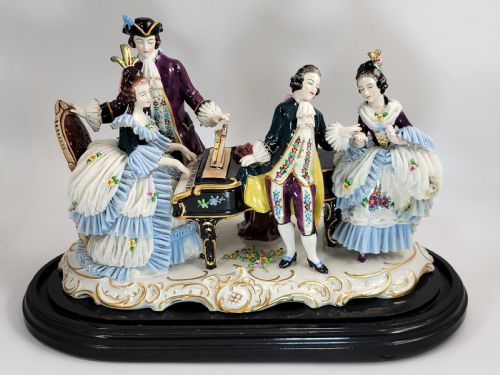
These gilded dresden porcelain group pieces bring theatrical figures and romantic tableaus into a room, offering rich enamel work and gilt highlights.
Gilded Dresden Porcelain Group
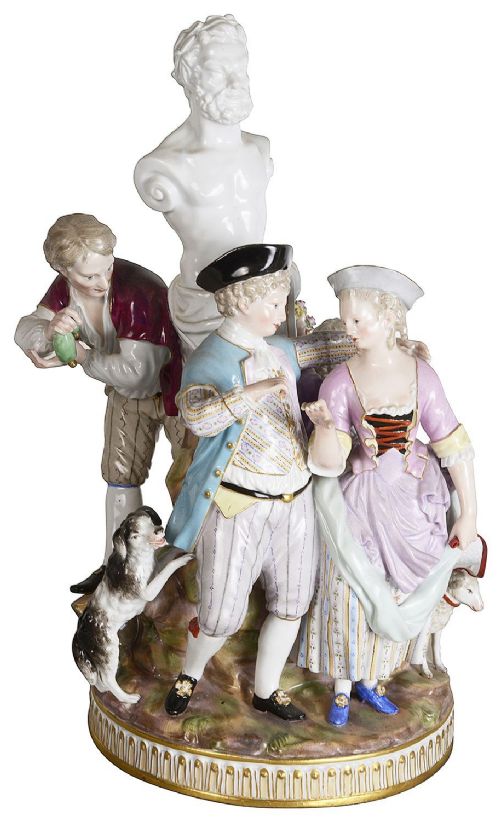
A gilded dresden porcelain group brings together multi-figure ceramic compositions, romantic pairings, and allegorical scenes. Buyers searching this phrase look for elaborate sculptural forms populated by musicians, lovers, and children accompanied by animals or instruments.
The pieces on this page span the eighteenth and nineteenth centuries, taking shape as hard-paste porcelain figures and lace groups. Makers from Paris and German manufactories produced these elaborate groups in styles ranging from Rococo revival to Neoclassical.
You will encounter groups depicting courtly couples, musical performances, and seasonal allegories such as summer and winter. These sculptural arrangements typically rest upon decorated bases enriched with gold leaf and applied enamel colours.
How they were made
Makers utilised hard-paste porcelain fired at high temperatures to create robust sculptural bodies for each figure group. Artisans then applied detailed enamel painting by hand before adding layers of gold leaf and gilding to the bases and garments.
Intricate additions such as porcelain lace required real textile mesh dipped in liquid slip before firing, which burned away to leave delicate ceramic threads. Wood elements sometimes support the structural integrity of larger multi-figure arrangements.
Listings feature hard-paste porcelain and enamel materials across nineteenth-century Victorian and eighteenth-century periods.
What varies in quality
The standard of modelling separates ordinary figures from exceptional sculptural groups. Finer pieces display crisp definition in facial expressions, hands, and the folds of garments rather than softened details.
The precision of the enamel painting and the crisp application of gold leaf dictate visual richness. Superior works maintain meticulous hand-painted patterns across every figure and accessory within the composition.
Bourdois and Bloch Paris·Meissen Porcelain·Carl Thieme Dresden·Ernst Bohne Sohne·Carl Thieme Potschappel
The Gilded Dresden Porcelain Group Glossary
- Hard-paste porcelain
- A dense, vitrified ceramic material composed of kaolin and petuntse, fired at very high temperatures. It provides a durable base for detailed sculptural figures.
- Gilding
- The application of gold leaf or gold powder to ceramic surfaces. This technique highlights decorative elements on bases and clothing.
- Allegorical figure
- A sculptural representation personifying an abstract concept or season. These figures often appear in matched sets representing themes like the four seasons.
- Rococo revival
- A nineteenth-century design style emulating the ornate asymmetry and organic curves of the eighteenth century. It appears frequently in the bases and postures of these groups.
Gilded Dresden Porcelain Group: Frequently Asked Questions
What subjects do these groups show?
These ceramic groups depict romantic couples, musical ensembles, children with dogs, and allegorical representations of the seasons.
Figures often engage in courtly pastimes or theatrical narratives set upon ornate rococo-style bases.
How do I date an antique group?
Dating relies on stylistic markers, manufacturing techniques, and underlying paste characteristics. Eighteenth-century pieces differ in modelling sharpness and paste texture from nineteenth-century revival works.
Maker marks and baseline numbers also offer chronological clues for specific European factories.
Where were these porcelain groups made?
Production centres include German manufactories such as Meissen and Dresden workshops, alongside French establishments in Paris.
German porcelain houses dominated hard-paste figurine production across both the eighteenth and nineteenth centuries.
How should I display a lace group?
Place these delicate figures within enclosed cabinets away from high traffic areas to protect fragile porcelain lace and protruding elements.
Stable shelving prevents accidental knocks to multi-figure compositions with intricate musical instruments or props.