

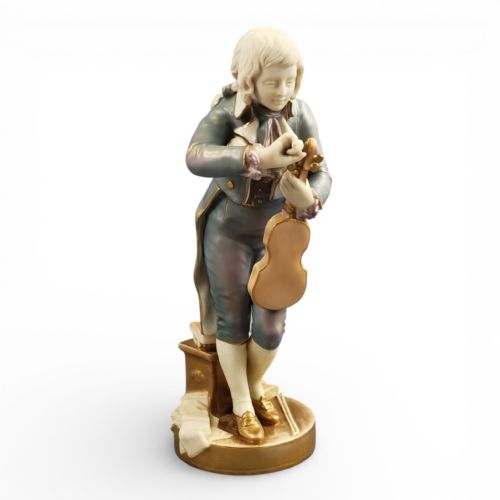
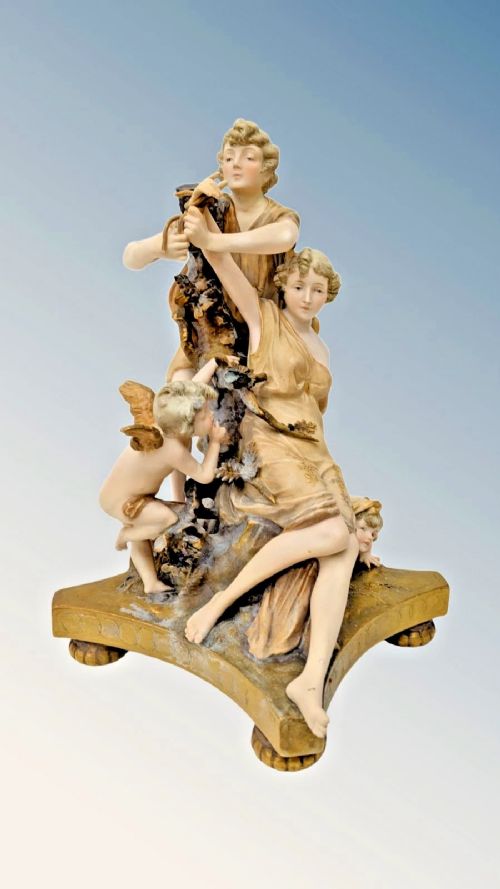


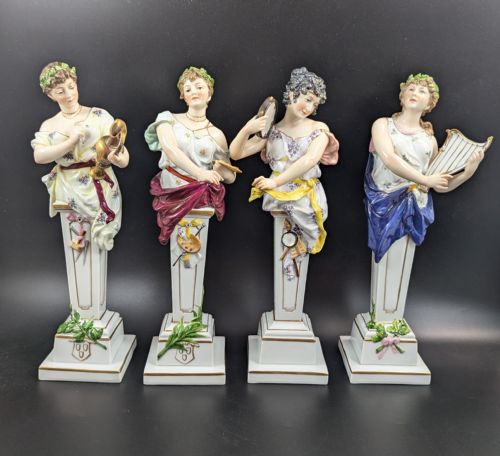


Gilded Porcelain Classical Statues
These gilded porcelain classical statues capture mythological figures and allegorical subjects through centuries of European ceramic tradition.
Gilded Porcelain Classical Statues
When you search for gilded porcelain classical statues, you encounter figures and allegorical groups spanning from the eighteenth century into the twentieth century. The selection contains porcelain figurines and larger sculptures shaped around classical themes, drawing heavily on mythological deities and allegorical personifications.
Most examples originate from prominent British and continental factories, including Royal Worcester, Derby, Chelsea, and various European porcelain works. Figures such as Jupiter, Diana, and allegorical representations of seasons or arts dominate the forms encountered in this category.
The aesthetic bridges neoclassical severity with revivalist ornamentation, frequently incorporating parcel-gilt highlights or extensive gilding upon the porcelain body. These pieces served as decorative ornaments for formal interiors, reflecting the enduring appeal of classical antiquity across successive design periods.
How they were made
Gilding forms a defining characteristic across the pieces, utilising gold leaf or liquid gilt applied to specific highlights, borders, and garments. This metallic enrichment accentuates the sculptural relief of the porcelain, requiring precise kiln work to bond the metal to the glazed surface.
Listings feature porcelain pieces spanning the Georgian, Victorian, and Edwardian eras, executed in neoclassical and revival styles.
What varies in quality
Quality in these figures rests primarily upon the crispness of the porcelain modelling and the delicacy of the hand-painting. Finer examples display intricate facial expressions, well-defined drapery, and precise anatomical details rather than softened contours resulting from worn moulds.
The application and preservation of the gilding further distinguish the tiers of craftsmanship. Superior pieces feature clean, deliberate gold leaf or gilt highlights that complement the porcelain body without obscuring the underlying ceramic form.
Samson Paris·Royal Worcester·Royal Crown Derby·Chelsea Porcelain·Volkstedt·Achille Mollica·Royal Dux·James Hadley
The Gilded Porcelain Classical Statues Glossary
- Parcel-Gilt
- Partially gilded, where gold leaf or gilt is applied only to specific areas of the porcelain object to create contrast against the white ceramic or enamel ground.
- Soft-paste Porcelain
- An artificial porcelain composition fired at lower temperatures than hard-paste, common in earlier European manufactories and characterised by a warm, slightly creamy glaze.
- Neoclassical
- A style inspired by the classical art and architecture of ancient Greece and Rome, emphasising restraint, symmetry, and mythological subject matter.
- Gold Anchor
- A factory mark utilised by the Chelsea porcelain works during a specific period of production, denoting particular eighteenth-century standards of output.
- Allegorical Figurine
- A sculptural ceramic piece personifying an abstract idea, season, or concept, such as art or autumn, through human or mythological representation.
Gilded Porcelain Classical Statues: Frequently Asked Questions
How do I identify eighteenth-century figures?
Eighteenth-century pieces typically exhibit soft-paste porcelain bodies and hand-painted enamels characteristic of early factory output. Factory marks, where present, help anchor the production to specific periods.
Examination of the modelling style and glaze characteristics also assists in distinguishing genuine period figures from later revival pieces.
What do allegorical figures represent?
Allegorical figures embody abstract concepts such as seasons, elements, or arts through human form and symbolic attributes. For example, a figure holding a sheaf of wheat might represent autumn or agriculture.
These subjects allowed makers to showcase their sculptural skill while appealing to educated collectors who understood the classical symbolism.
Where were these statues displayed?
These figures were designed for prominent placement on mantelpieces, side tables, and cabinets within formal drawing rooms. Their classical themes suited the refined interior decoration of Georgian and Victorian homes.
Pair arrangements were often utilised to balance symmetry on either side of a fireplace or architectural feature.
How should I care for gilded porcelain?
Gilded porcelain requires gentle maintenance using a soft, dry brush to remove dust from crevices and modelled surfaces. Avoid harsh chemical cleaners or abrasive cloths that might wear away the delicate gold leaf or hand-painted enamel highlights.
Displaying the pieces away from direct sunlight preserves the vibrancy of the colours and the integrity of the glaze.