7,414  PAGES BROWSED TODAY PAGES TODAY • 26 ANTIQUES UPLOADED TODAYNEW ARRIVALS
GIFTS
26 ITEMS ADDED TODAY
Sort Order
Items Per Page
Browse Categories
Sort order
Relevant Links
Items per page
ID #SA1244960
FOR SALE
£1,750
Email Phone
Save
Antique French Lapis Lazuli & Gold Walking Stick by Verdier 94cm/ 37inch 19th C
For sale by Regent Antiques
for sale €2,048     $2,223
£1,750
Regent Antiques

Regent Antiques

Sellingantiques Verified Since Sep 2016
Browse dealers 654 items
  • About Us
    We specialise in english and continental furniture, silver, porcelain and decorative items.
  • Trade Associations
    Regent Antiques is a registered member of LAPADA  CINOA
Id #SA1244960
PDF SHARE
SAVE

Antique French Lapis Lazuli & Gold Walking Stick by Verdier 94cm/ 37inch 19th C

19th century
For Sale by Regent Antiques
Description

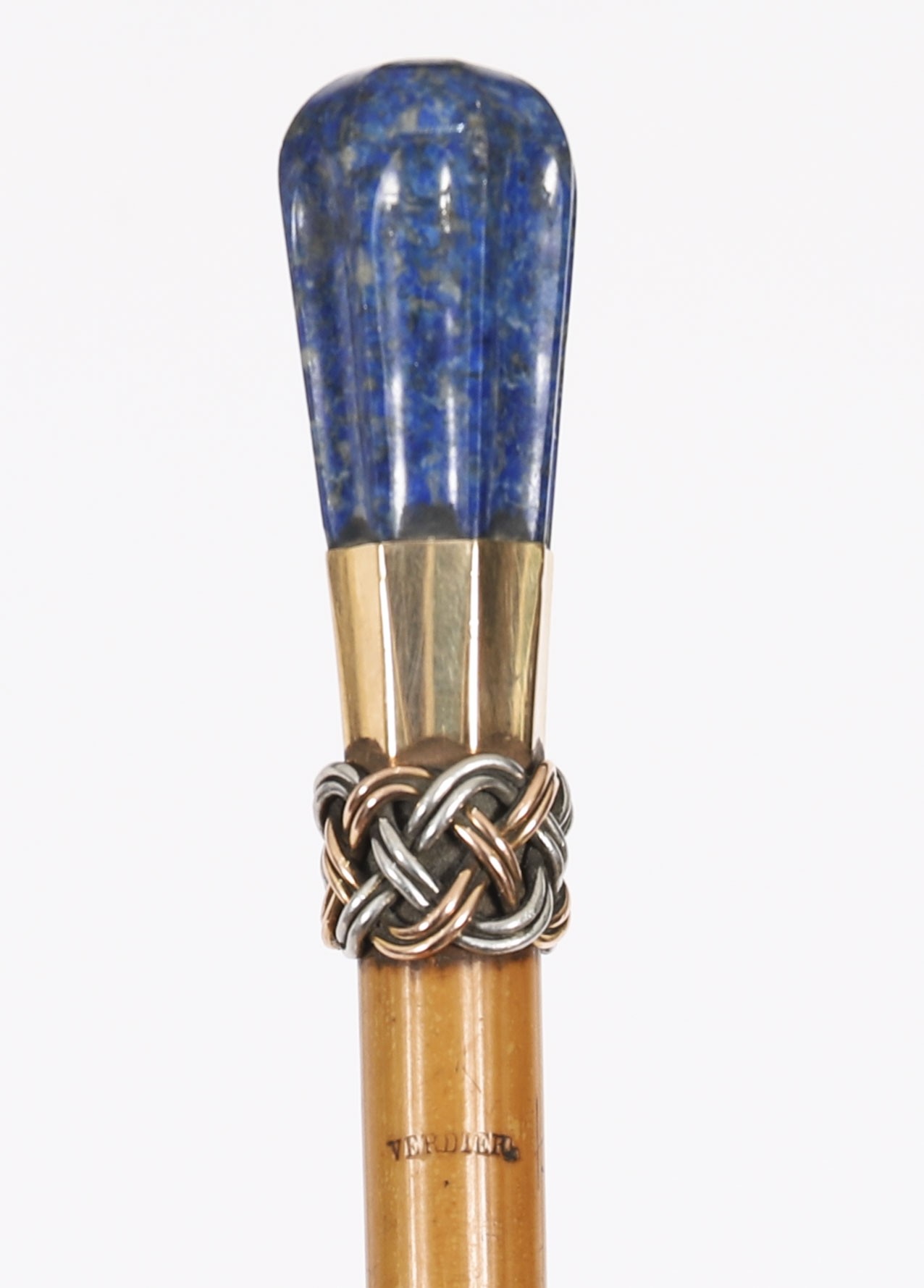
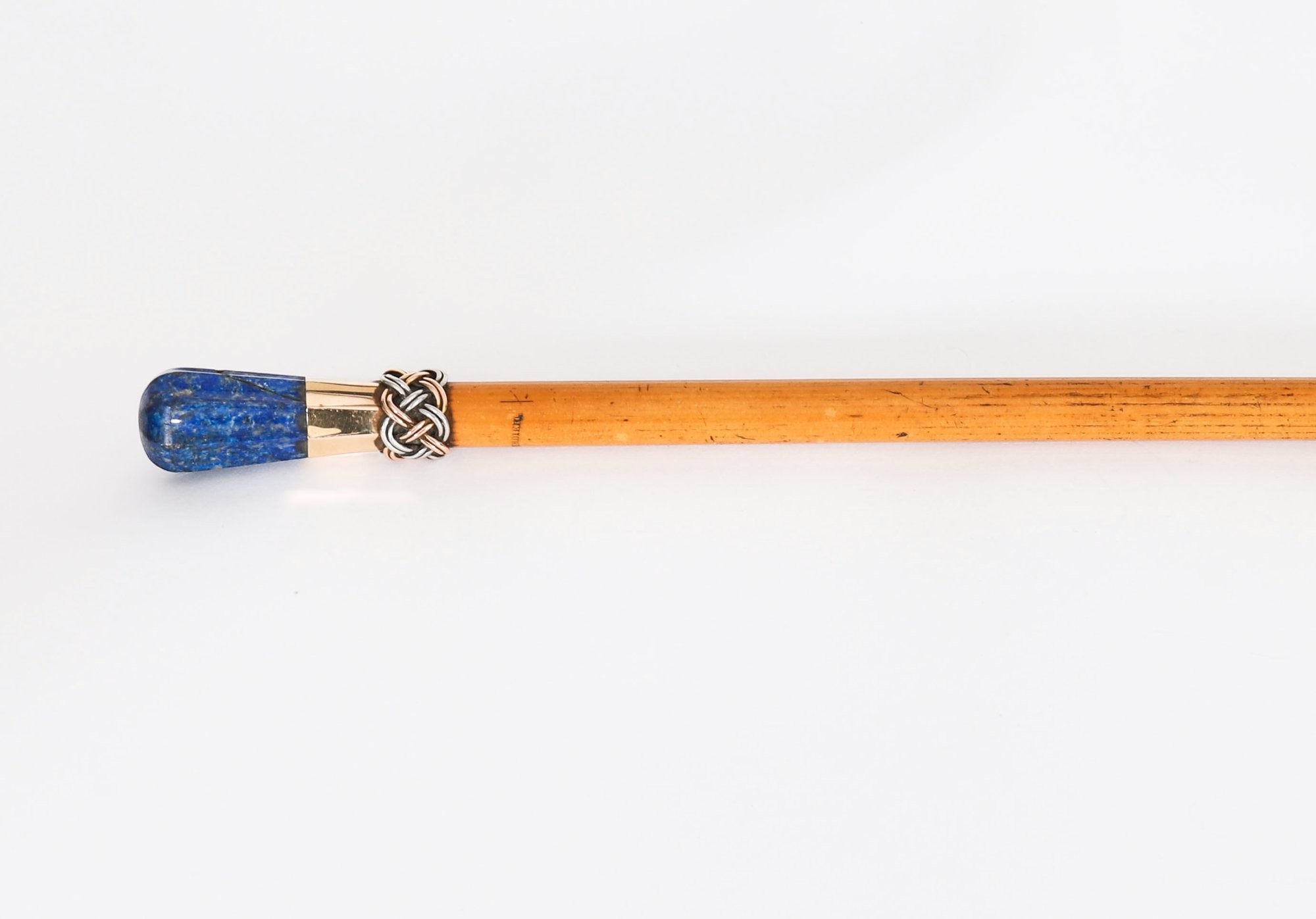
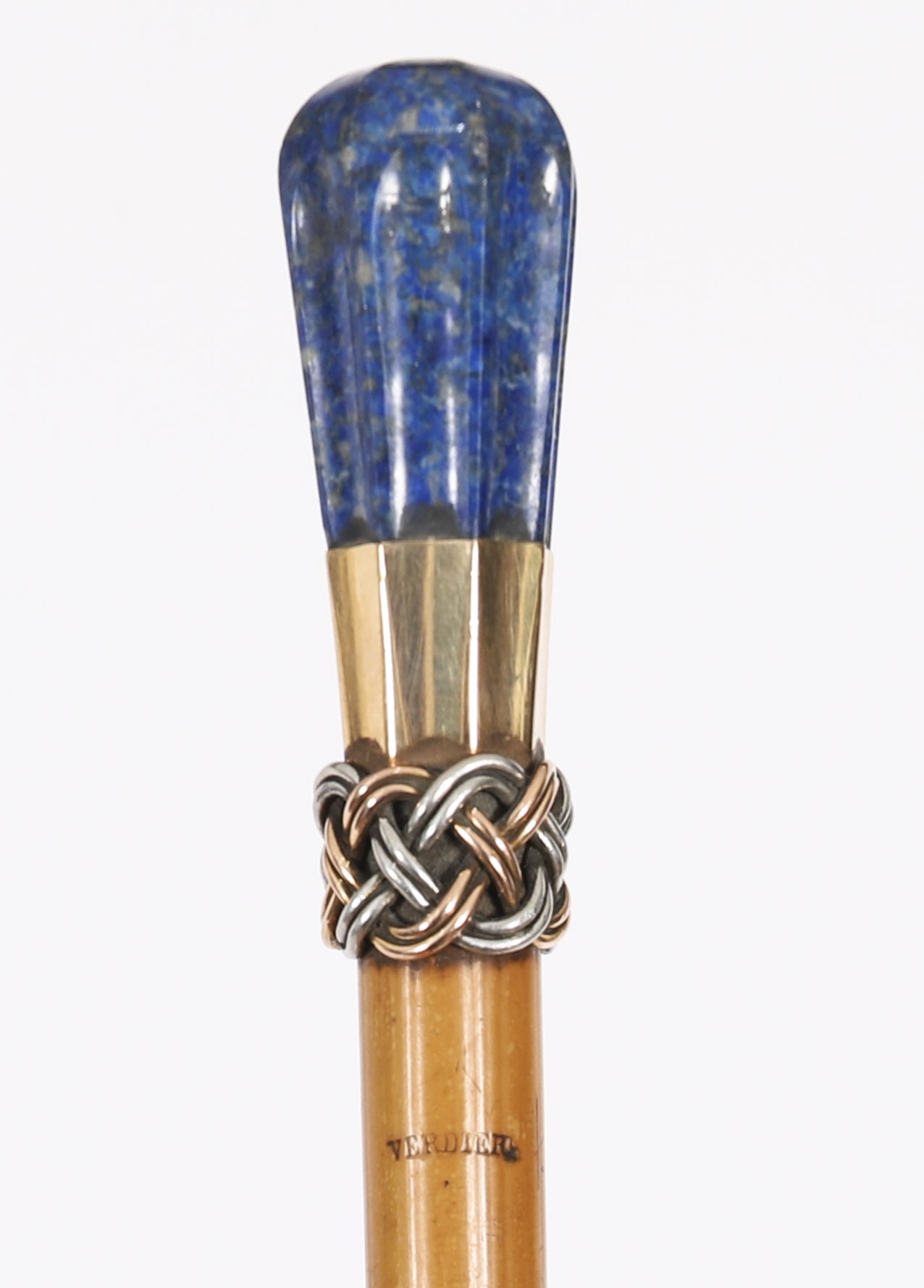
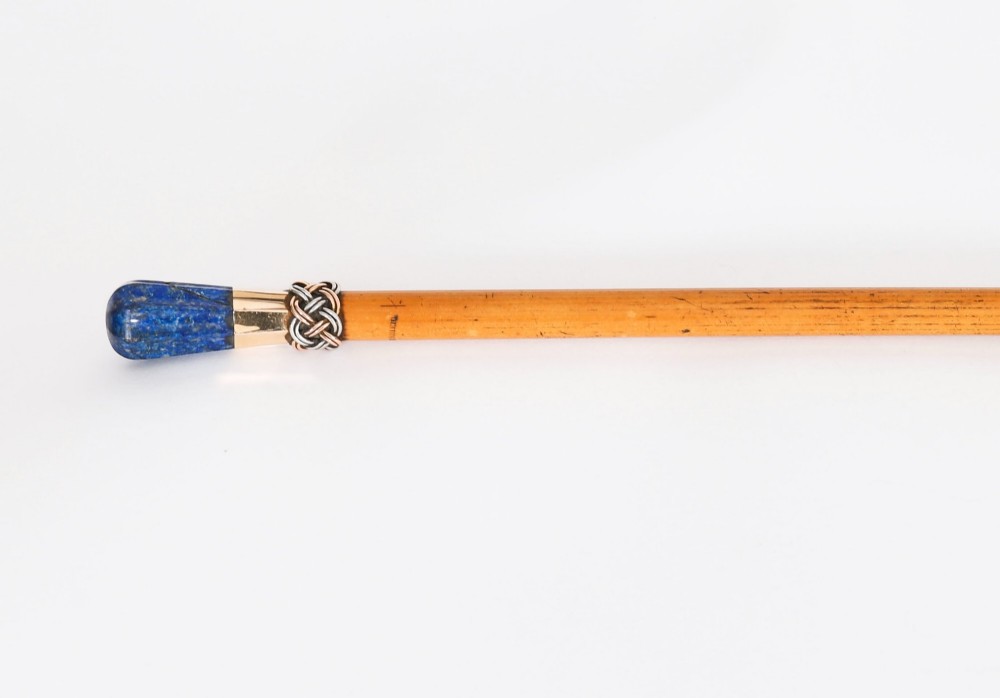
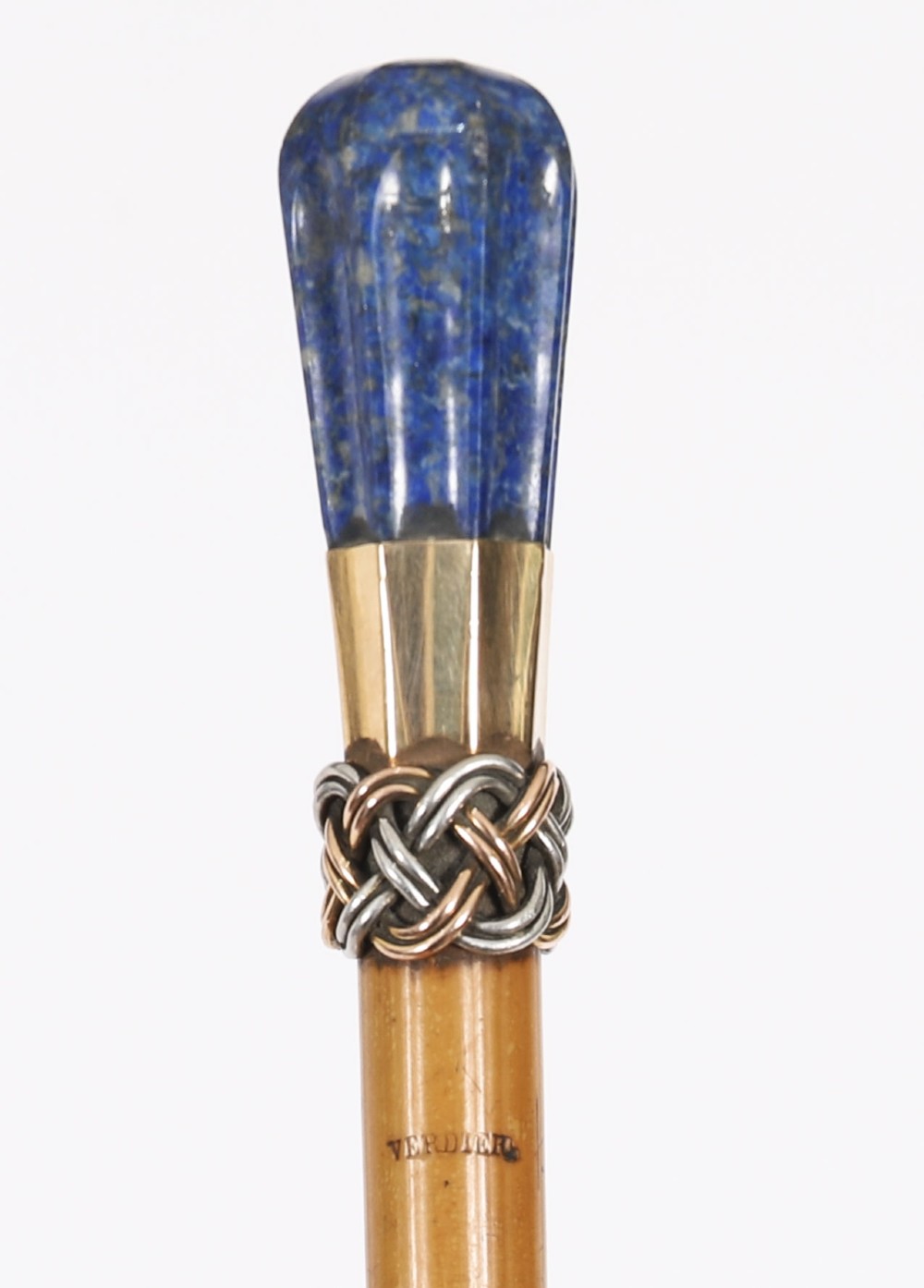
This is a superb French lapis lazuli and rose and white gold-mounted walking cane stamped Verdier, dating from Circa 1880.

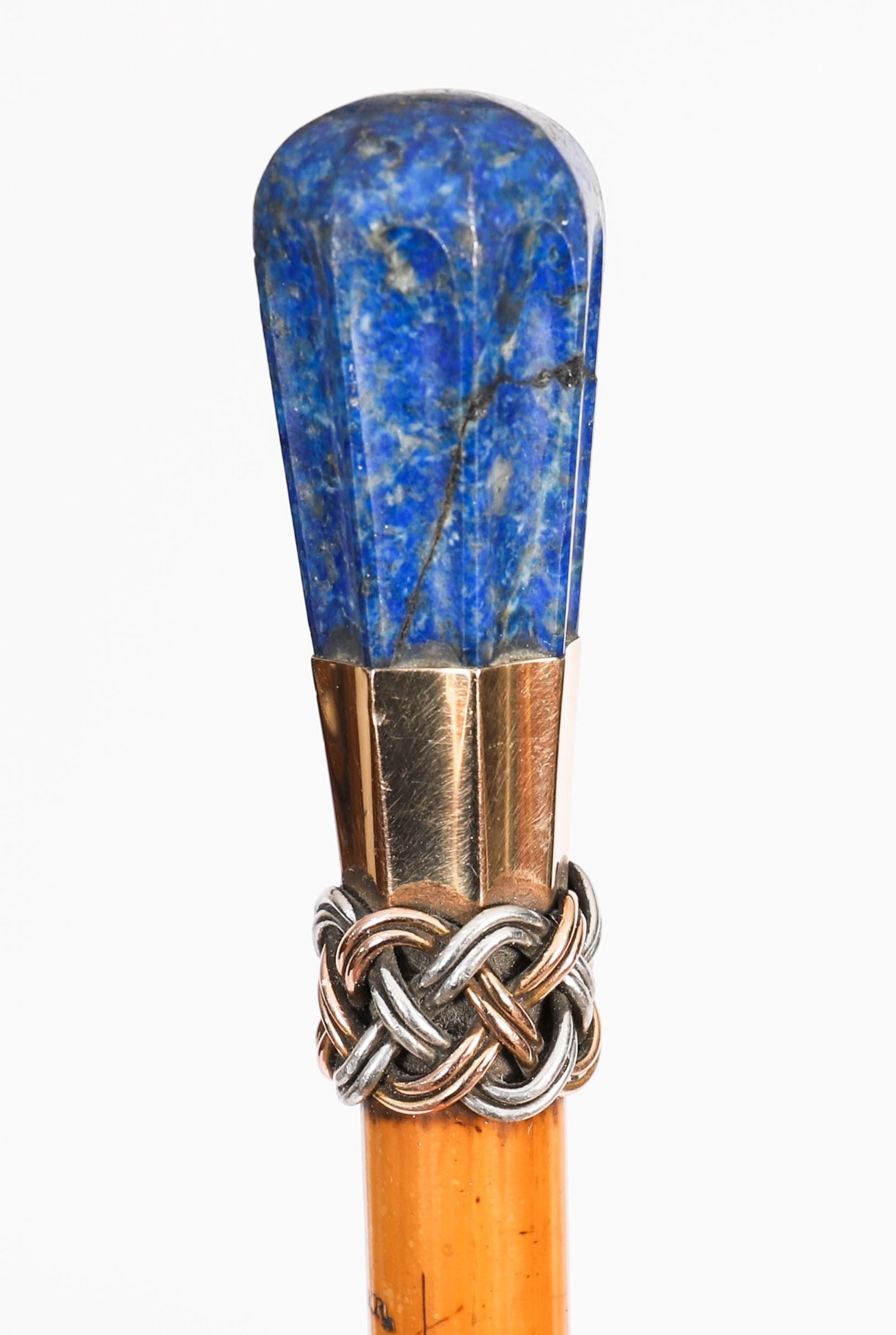
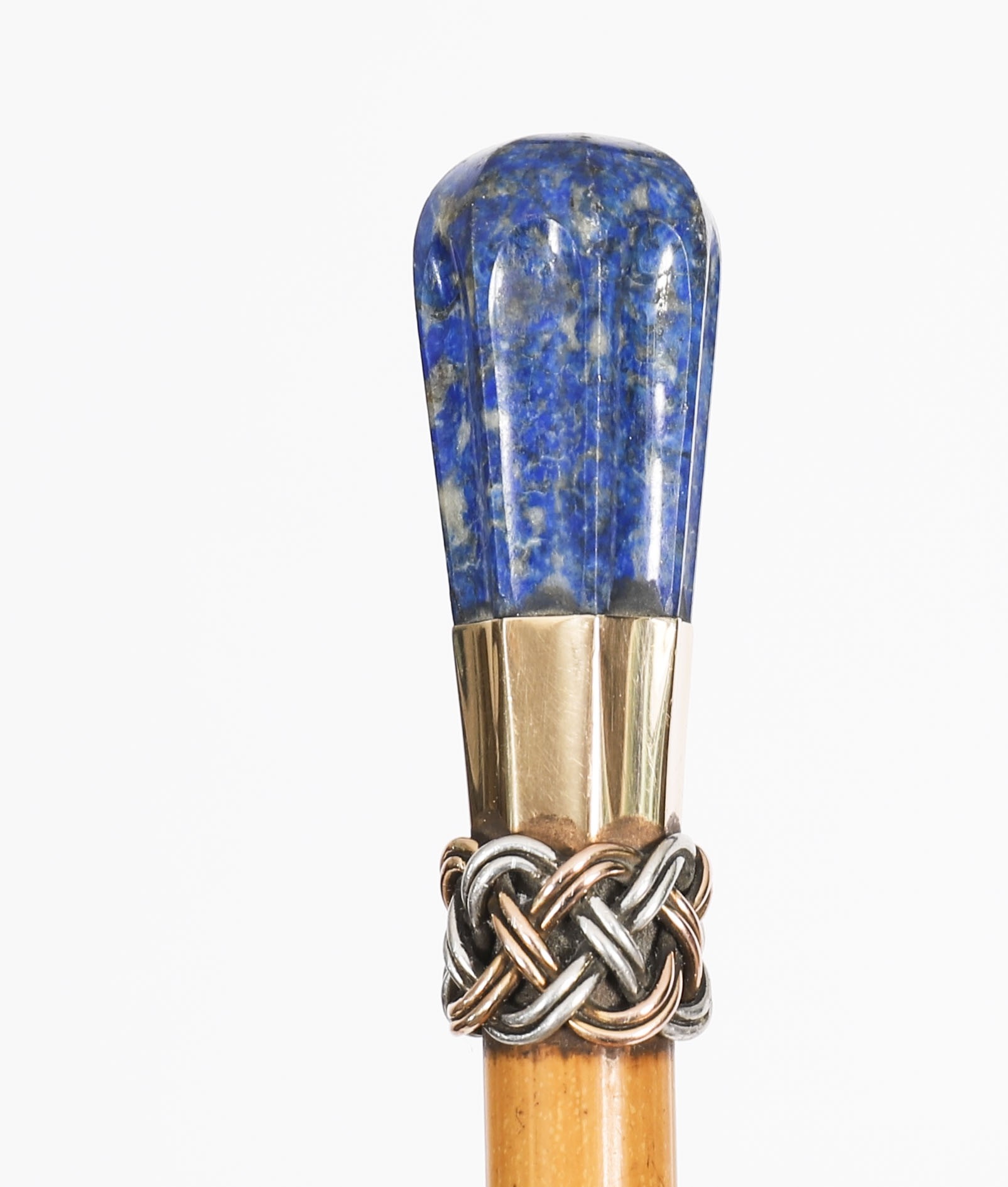
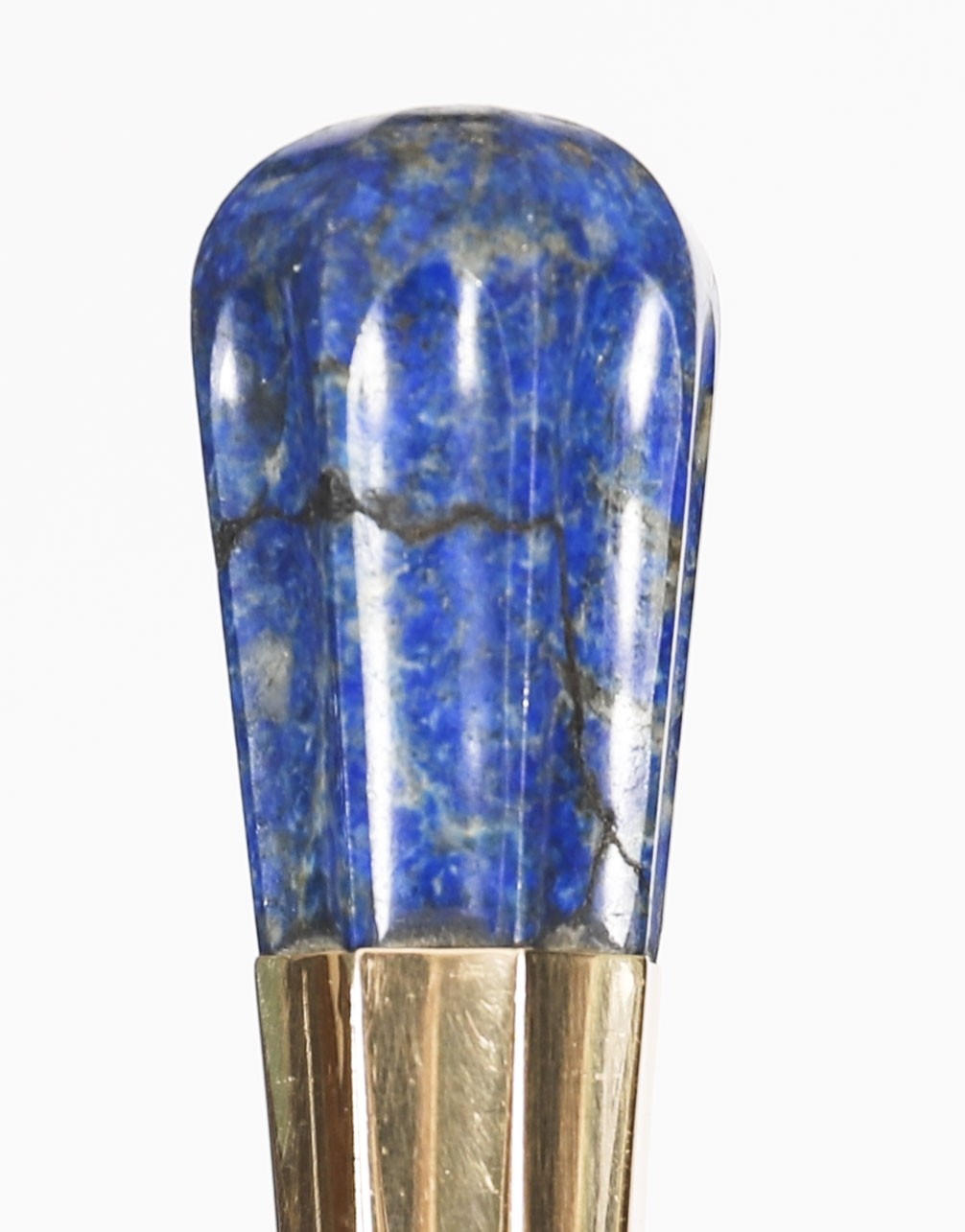
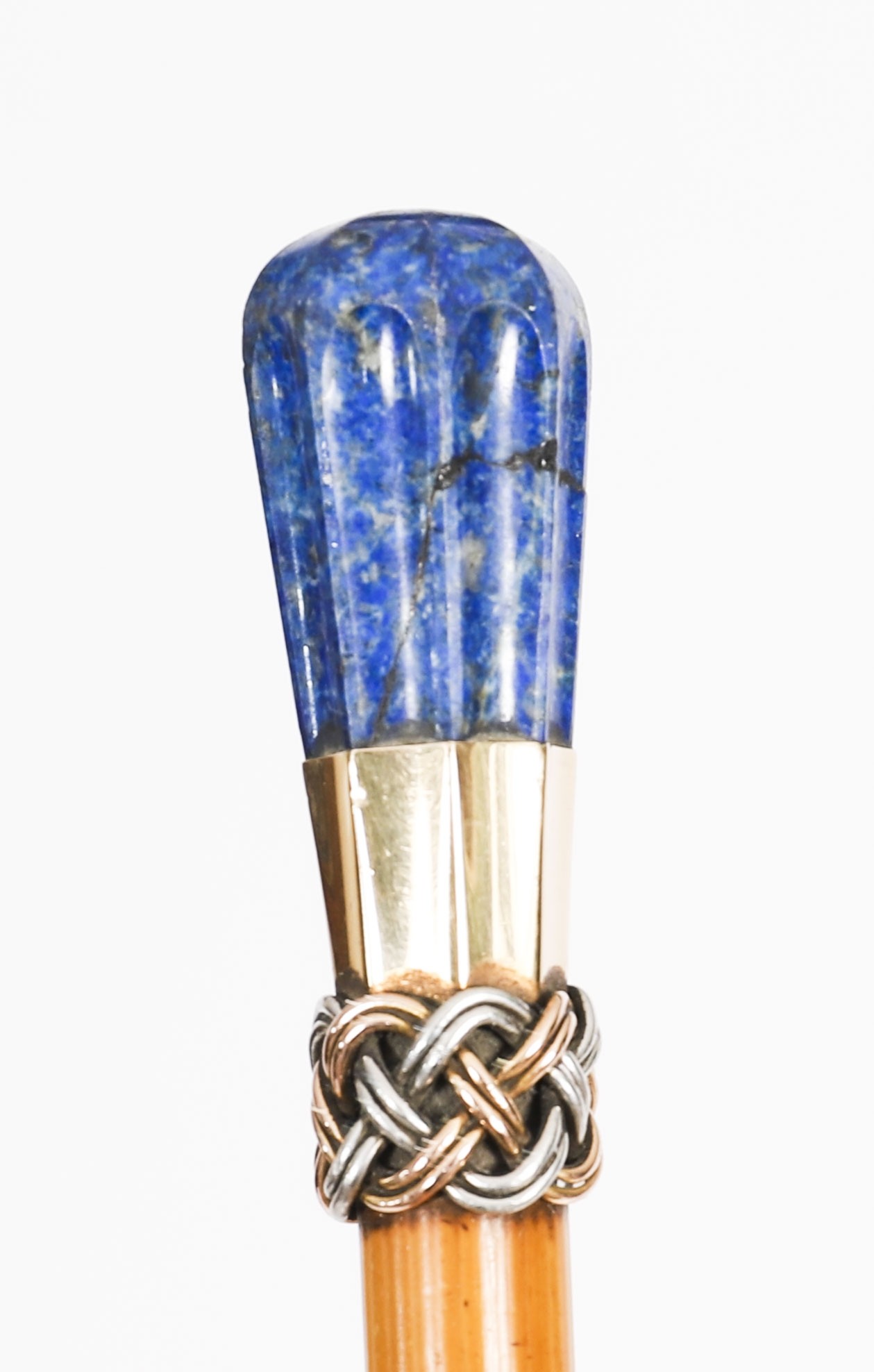
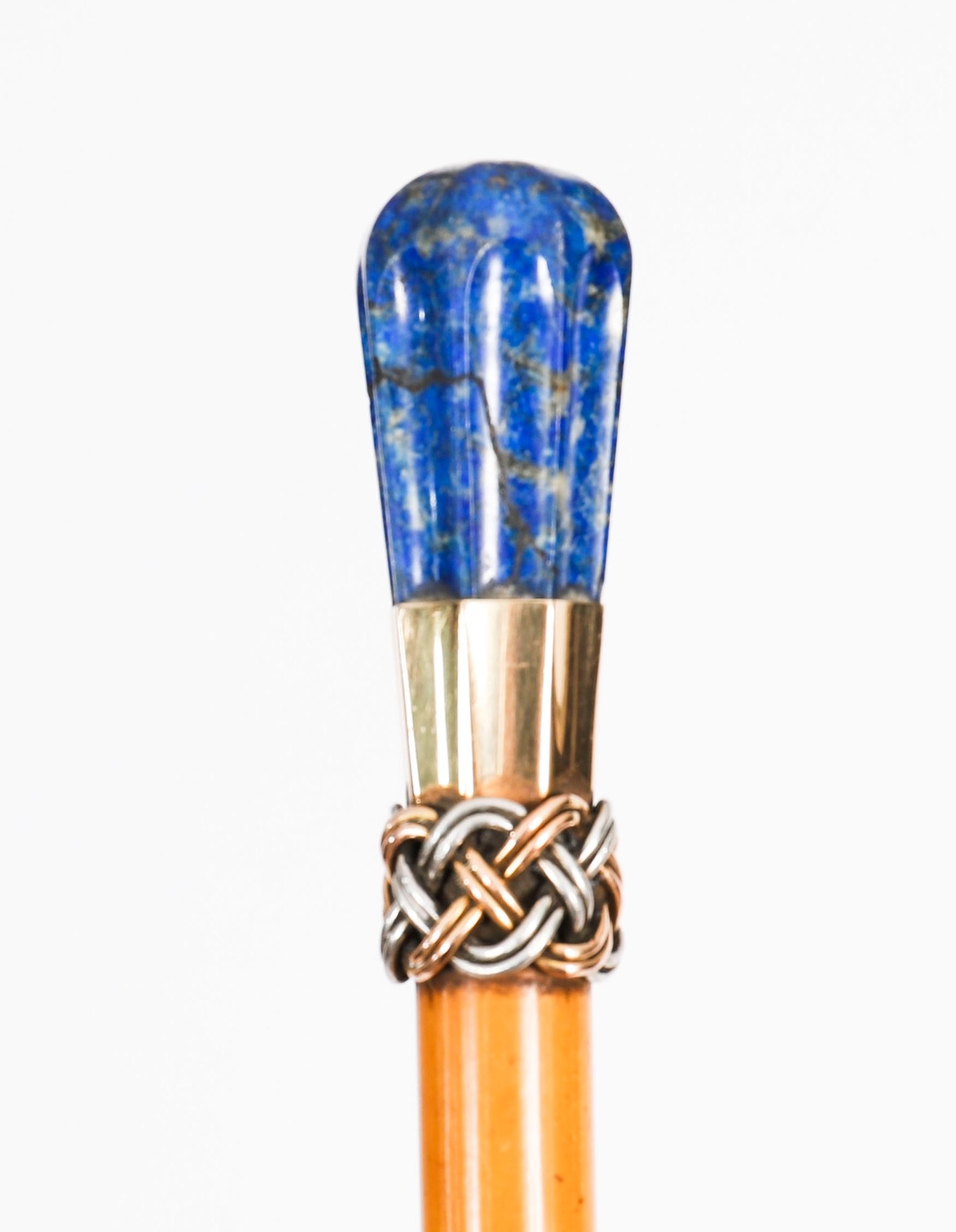
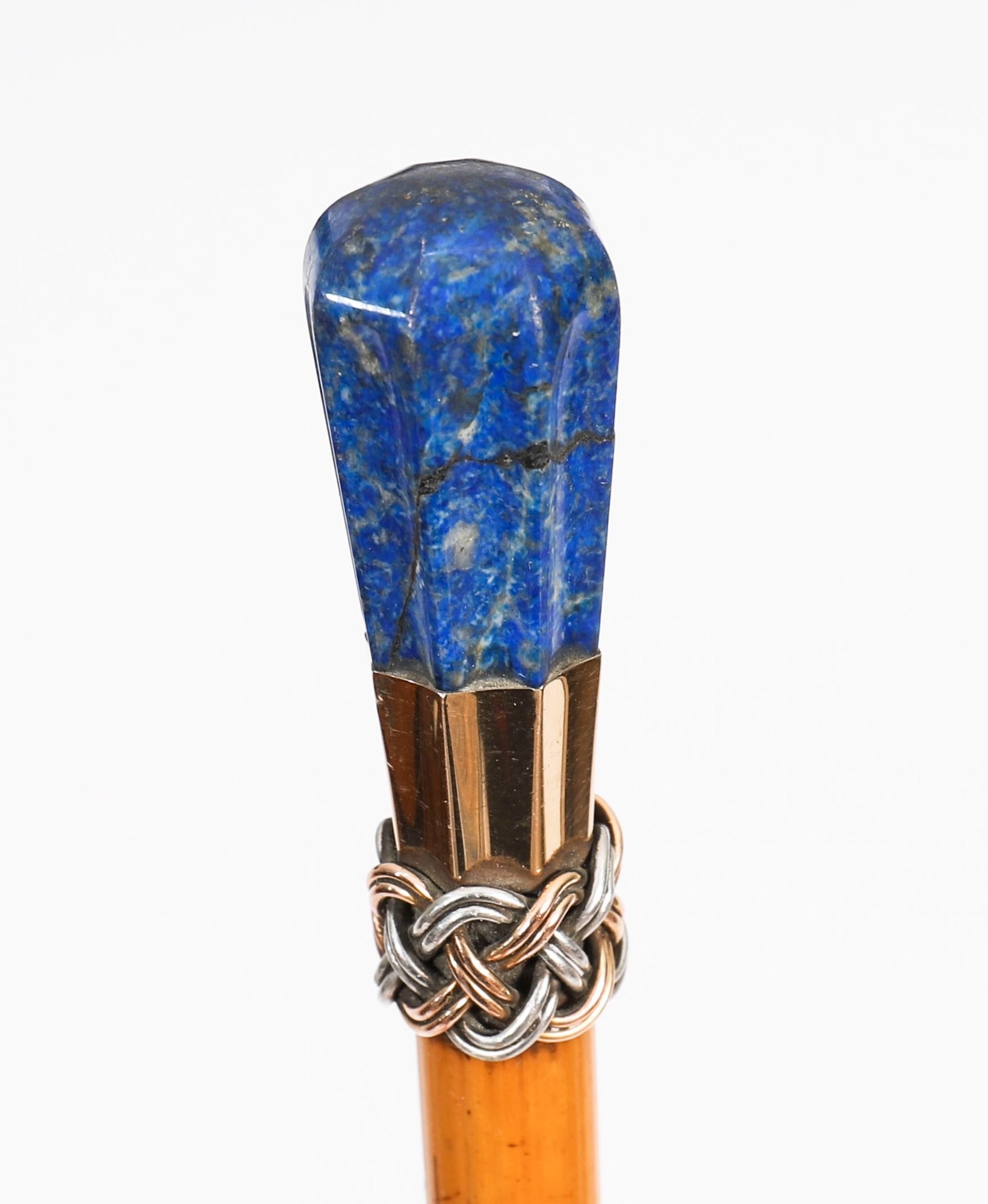
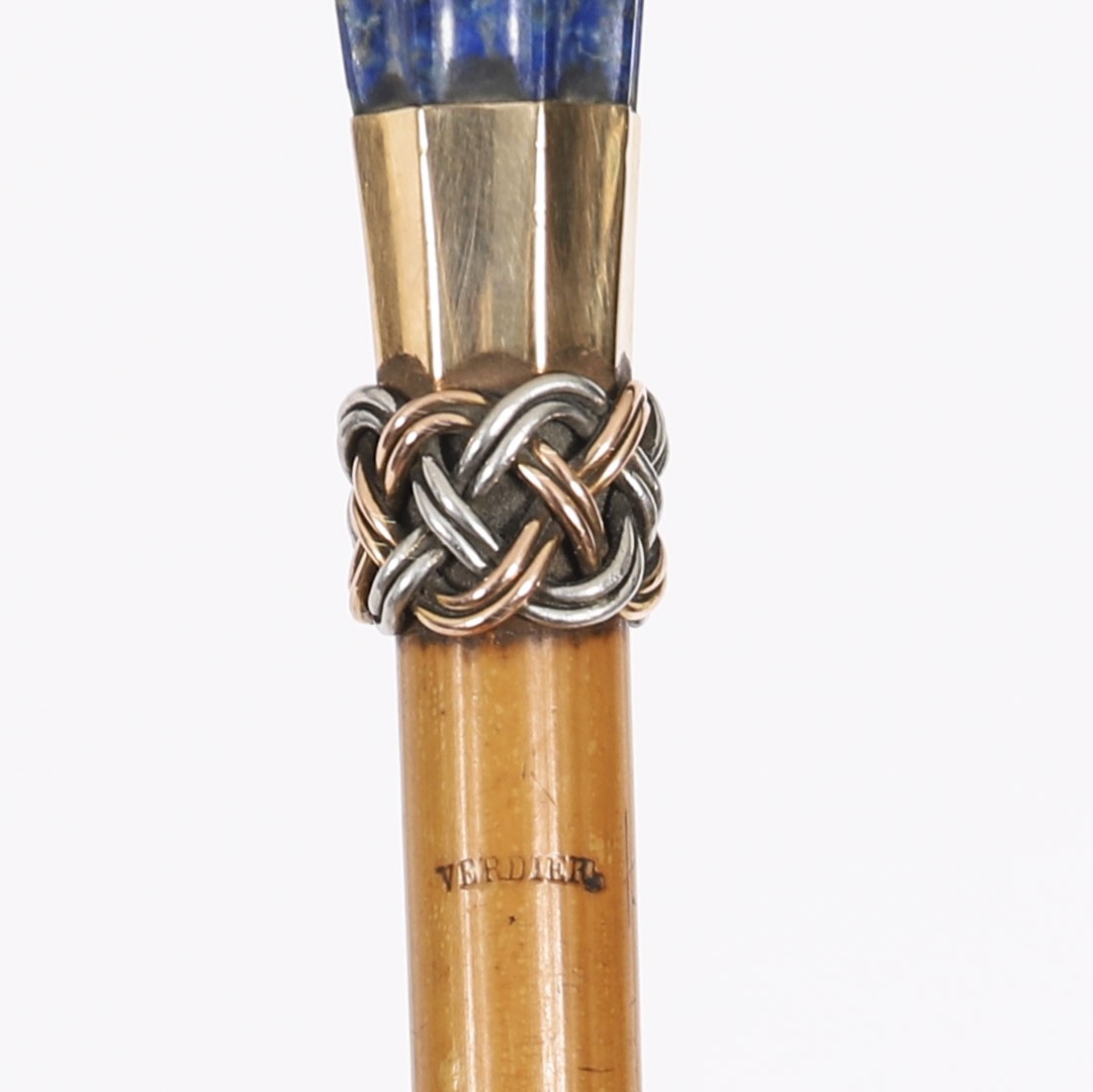
This decorative walking cane features a tapering fluted lapis lazuli handle above an interlaced rose and white gold band on a tapering Malacca shaft.

The gold has tested as 14k. A truly beautiful piece that would make a fine addition to any antique collection.

Condition:

In excellent condition with only minor signs of use commensurate with age, as seen in the accompanying photographs, the stick displays beautifully.

Dimensions in cm:

Height 94 cm x Width 3 cm x Depth 3 cm

Dimensions in inches:

Height 37 inches x Width 1 inch x Depth 1 inch

Verdier

Luxury French craftsmanship of walking Canes & canes badines: 19th-century French luxury walking sticks and canes (such as those mounted in lapis lazuli, rose and white gold, or featuring gold pommels) were frequently retailed or stamped by Verdier.

Lapis lazuli, or lapis for short, is a deep blue metamorphic rock used as a semi-precious stone that has been prized since antiquity for its intense color. As early as the 7th millennium BCE, lapis lazuli was mined in the Sar-i Sang mines, in Shortugai, and in other mines in Badakhshan province in northeast Afghanistan. Lapis was highly valued by the Indus Valley Civilisation (3300–1900 BC). Lapis beads have been found at Neolithic burials in Mehrgarh, the Caucasus, and even as far from Afghanistan as Mauritania. It was used in the funeral mask of Tutankhamun (1341–1323 BCE).

At the end of the Middle Ages, lapis lazuli began to be exported to Europe, where it was ground into powder and made into ultramarine, the finest and most expensive of all blue pigments. It was used by some of the most important artists of the Renaissance and Baroque, including Masaccio, Perugino, Titian, and Vermeer, and was often reserved for the clothing of the central figures of their paintings, especially the Virgin Mary.

Lapis takes an excellent polish and can be made into jewelry, carvings, boxes, mosaics, ornaments, small statues, and vases. During the Renaissance, Lapis was ground and processed to make the pigment ultramarine for use in frescoes and oil paintings. Its usage as a pigment in oil paint largely ended in the early 19th century when a chemically identical synthetic variety became available.

Malacca wood

Rare and exotic, also known as "King of canes," was the most commonly used material in making the cane shafts where the standard grip was rounded and metallic. Today, designer and collector canes have sterling silver handles, and are made with wooden shafts made from various woods, including Malacca and bamboo.

Ornate designs, such as animal heads, skulls, and various emblems, may also be carved into the wooden handles; these may make them harder to wield, but some find them more attractive.

Malacca is one species of rattan found on the coast of Sumatra. Rattan palms have long, slender stems, and are perfect for fashioning walking sticks. The stem is not round, but has a ridge or spine, often called a "teardrop," running along its length. It is very lightweight, yet strong, with no two specimens being alike. The stem is made up of links with joints or nodes at both ends, like bamboo. The bark is strong, with what appears to be a satiny, natural gloss or surface glaze. Color varies from brown to blond or reddish amber.

Size of cane that you need

Convert your height into inches. For example, if you are 5' 10" in your shoes, your height is 70 inches. Divide by two and then add ½ inch to determine your approximate cane size. In our example, if you are 70 inches tall (5' 10"), your approximate cane size would be 35" plus ½"= 35.5 inches.

Our reference: A5457

Date of Manufacture

Regent Antiques has dated this French Lapis Lazuli Walking Cane to the 1880s.

Independent Date Check ID 09714720
Dealer's Item Date1880s
Sellingantiques Date1880s
Sellingantiques agingItem 120-155 years old
Test ResultsPassed dating check
Why Sellingantiques dated this piece to THE 1880s:
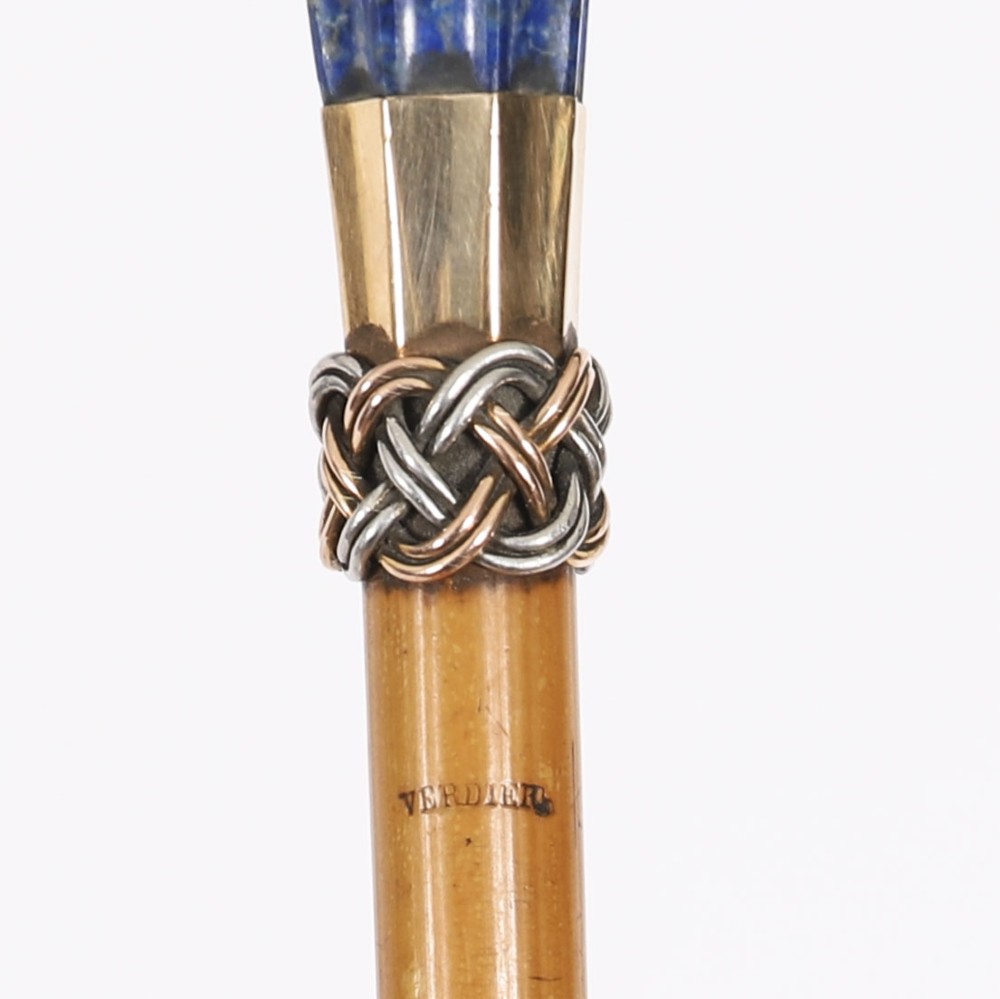
Stamped maker's mark VERDIER: renowned Parisian cane maker.
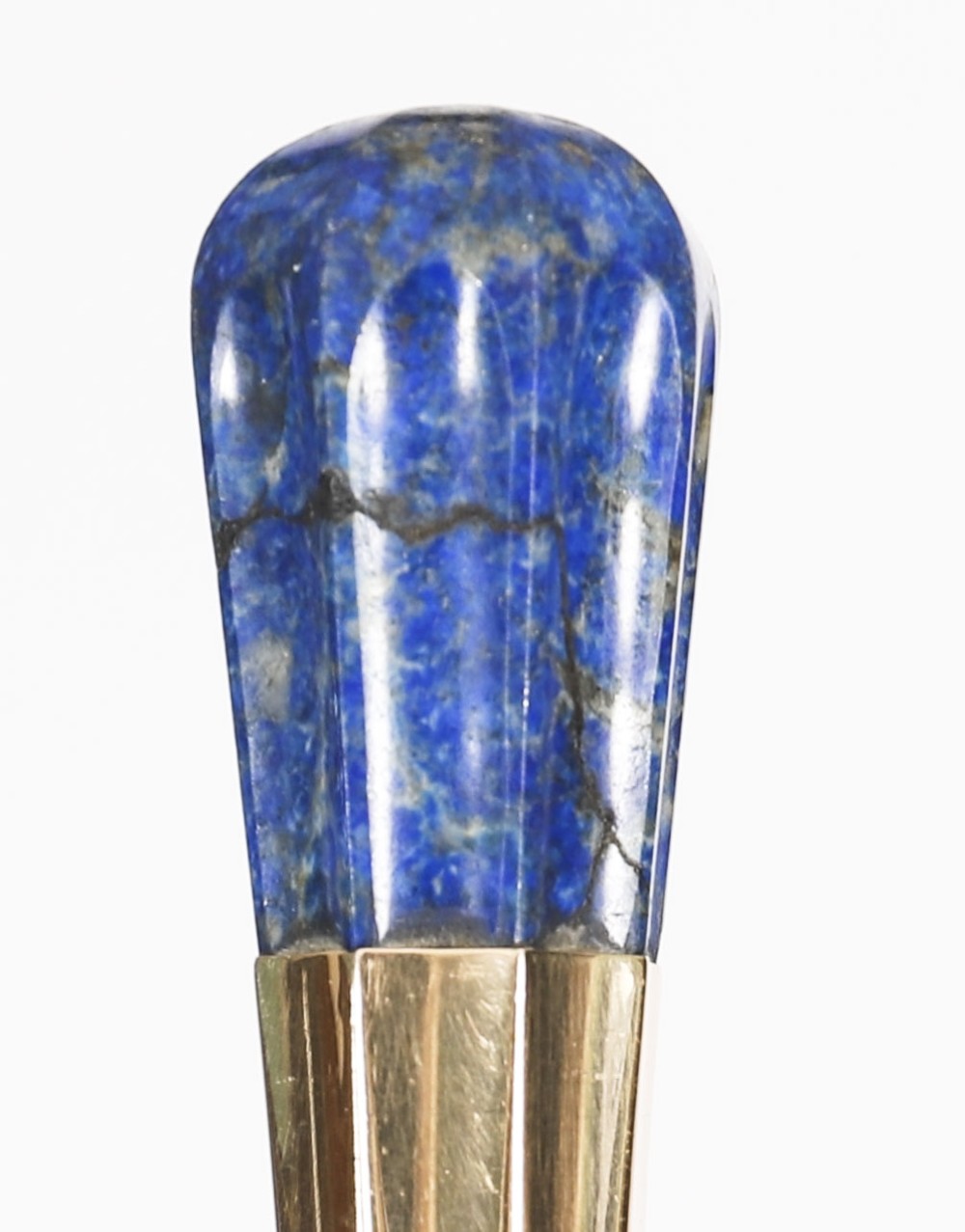
Hand-fluted lapis lazuli pommel: high-grade lapidary work.
Plaited wire knot collar in two-colour metal: complex fine jeweller's fabrication.
Gentle surface mellowing across the malacca cane: long and careful use.

This is an independent date report produced by Sellingantiques using its own proprietary system. The process uses the photographs shown on this page. The system is never told the date the dealer has declared. This report shows that the two dates corroborate.
Physical Dimensions
Height
94cm (37.01")
Width
3cm (1.18")
Depth
3cm (1.18")
Reference Numbers
Sellingantiques Reference
SA1244960
Dealers Internal Reference
A5457
Description
This is a superb French lapis lazuli and rose and white gold-mounted walking cane stamped Verdier, dating from Circa 1880.
“
This decorative walking cane features a tapering fluted lapis lazuli handle above an interlaced rose and white gold band on a tapering Malacca shaft.
Regent Antiques
fig 1. A 19th-century French walking stick featuring a carved blue fluted lapis lazuli handle, a gold ferrule with a braided metal band, and a light wood shaft stamped with the maker name Verdier.
fig 1. Antique French Lapis Lazuli & Gold Walking Stick by Verdier 94cm/ 37inch 19th C

The gold has tested as 14k. A truly beautiful piece that would make a fine addition to any antique collection.

Condition:

In excellent condition with only minor signs of use commensurate with age, as seen in the accompanying photographs, the stick displays beautifully.
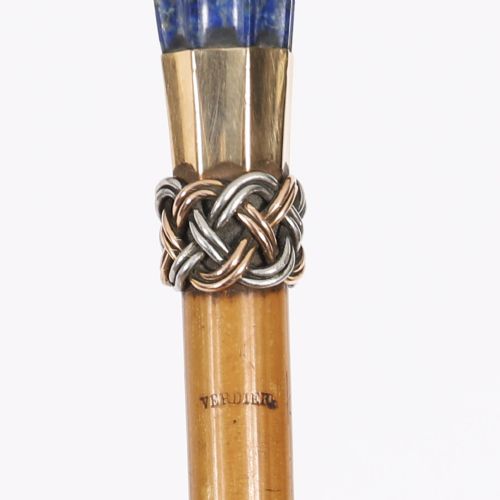
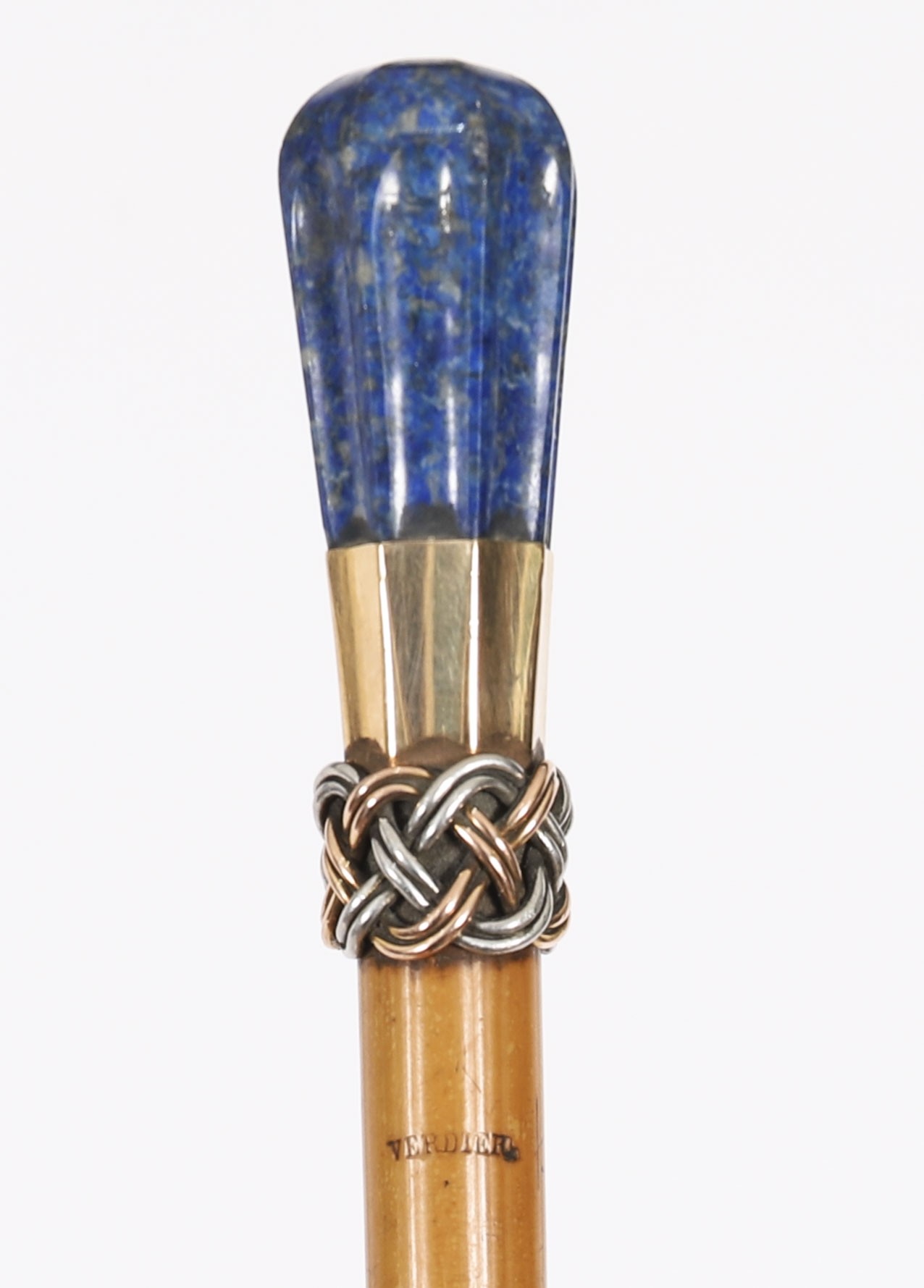
fig 2. A 19th-century French walking stick featuring a carved blue fluted lapis lazuli handle, a gold ferrule with a braided metal band, and a light wood shaft stamped with the maker name Verdier.
fig 2. Antique French Lapis Lazuli & Gold Walking Stick by Verdier 94cm/ 37inch 19th C

Dimensions in cm:

Height 94 cm x Width 3 cm x Depth 3 cm

Dimensions in inches:

Height 37 inches x Width 1 inch x Depth 1 inch

Verdier

Luxury French craftsmanship of walking Canes & canes badines: 19th-century French luxury walking sticks and canes (such as those mounted in lapis lazuli, rose and white gold, or featuring gold pommels) were frequently retailed or stamped by Verdier.
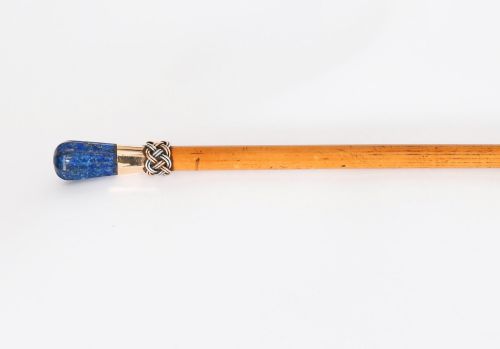
fig 3. A 19th-century French walking stick featuring a carved blue fluted lapis lazuli handle, a gold ferrule with a braided metal band, and a light wood shaft stamped with the maker name Verdier.
fig 3. Antique French Lapis Lazuli & Gold Walking Stick by Verdier 94cm/ 37inch 19th C

Lapis lazuli, or lapis for short, is a deep blue metamorphic rock used as a semi-precious stone that has been prized since antiquity for its intense color. As early as the 7th millennium BCE, lapis lazuli was mined in the Sar-i Sang mines, in Shortugai, and in other mines in Badakhshan province in northeast Afghanistan. Lapis was highly valued by the Indus Valley Civilisation (3300–1900 BC). Lapis beads have been found at Neolithic burials in Mehrgarh, the Caucasus, and even as far from Afghanistan as Mauritania. It was used in the funeral mask of Tutankhamun (1341–1323 BCE).
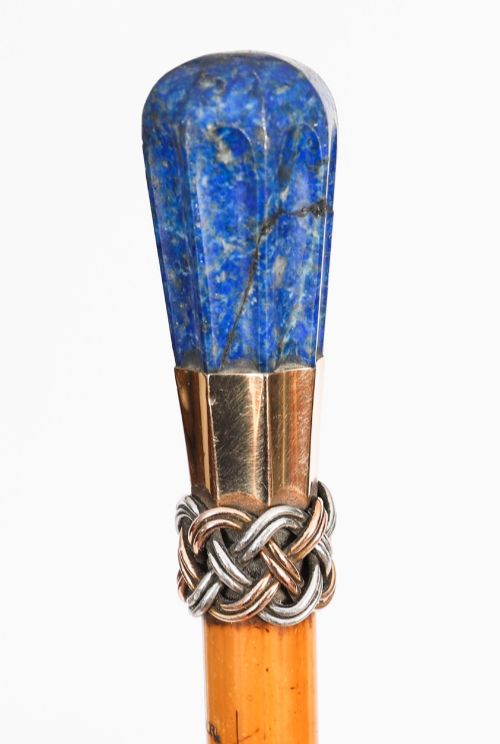
fig 4. A 19th-century French walking stick featuring a carved blue fluted lapis lazuli handle, a gold ferrule with a braided metal band, and a light wood shaft stamped with the maker name Verdier.
fig 4. Antique French Lapis Lazuli & Gold Walking Stick by Verdier 94cm/ 37inch 19th C

At the end of the Middle Ages, lapis lazuli began to be exported to Europe, where it was ground into powder and made into ultramarine, the finest and most expensive of all blue pigments. It was used by some of the most important artists of the Renaissance and Baroque, including Masaccio, Perugino, Titian, and Vermeer, and was often reserved for the clothing of the central figures of their paintings, especially the Virgin Mary.
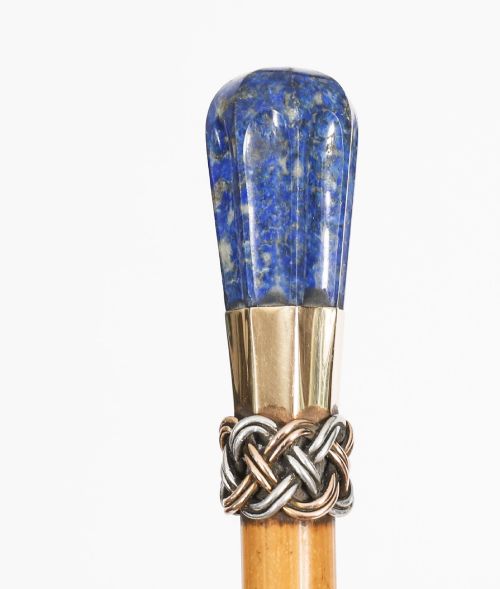
fig 5. A 19th-century French walking stick featuring a carved blue fluted lapis lazuli handle, a gold ferrule with a braided metal band, and a light wood shaft stamped with the maker name Verdier.
fig 5. Antique French Lapis Lazuli & Gold Walking Stick by Verdier 94cm/ 37inch 19th C

Lapis takes an excellent polish and can be made into jewelry, carvings, boxes, mosaics, ornaments, small statues, and vases. During the Renaissance, Lapis was ground and processed to make the pigment ultramarine for use in frescoes and oil paintings. Its usage as a pigment in oil paint largely ended in the early 19th century when a chemically identical synthetic variety became available.
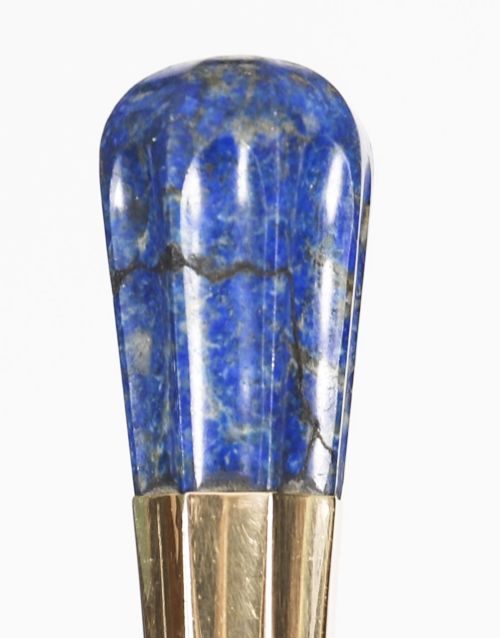
fig 6. A 19th-century French walking stick featuring a carved blue fluted lapis lazuli handle, a gold ferrule with a braided metal band, and a light wood shaft stamped with the maker name Verdier.
fig 6. Antique French Lapis Lazuli & Gold Walking Stick by Verdier 94cm/ 37inch 19th C

Malacca wood

Rare and exotic, also known as "King of canes," was the most commonly used material in making the cane shafts where the standard grip was rounded and metallic. Today, designer and collector canes have sterling silver handles, and are made with wooden shafts made from various woods, including Malacca and bamboo.
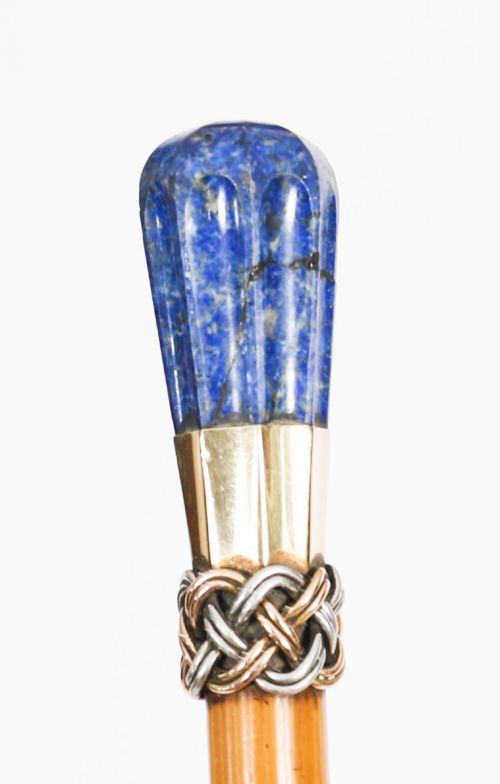
fig 7. A 19th-century French walking stick featuring a carved blue fluted lapis lazuli handle, a gold ferrule with a braided metal band, and a light wood shaft stamped with the maker name Verdier.
fig 7. Antique French Lapis Lazuli & Gold Walking Stick by Verdier 94cm/ 37inch 19th C

Ornate designs, such as animal heads, skulls, and various emblems, may also be carved into the wooden handles; these may make them harder to wield, but some find them more attractive.

Malacca is one species of rattan found on the coast of Sumatra. Rattan palms have long, slender stems, and are perfect for fashioning walking sticks. The stem is not round, but has a ridge or spine, often called a "teardrop," running along its length. It is very lightweight, yet strong, with no two specimens being alike. The stem is made up of links with joints or nodes at both ends, like bamboo. The bark is strong, with what appears to be a satiny, natural gloss or surface glaze. Color varies from brown to blond or reddish amber.
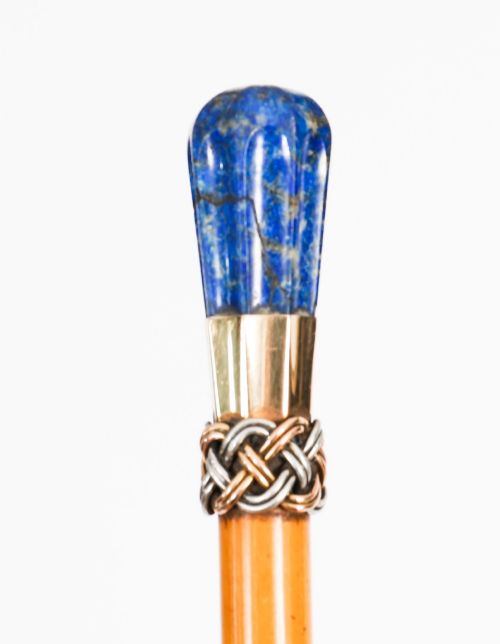
fig 8. A 19th-century French walking stick featuring a carved blue fluted lapis lazuli handle, a gold ferrule with a braided metal band, and a light wood shaft stamped with the maker name Verdier.
fig 8. Antique French Lapis Lazuli & Gold Walking Stick by Verdier 94cm/ 37inch 19th C

Size of cane that you need

Convert your height into inches. For example, if you are 5' 10" in your shoes, your height is 70 inches. Divide by two and then add ½ inch to determine your approximate cane size. In our example, if you are 70 inches tall (5' 10"), your approximate cane size would be 35" plus ½"= 35.5 inches.

Our reference: A5457

Date of Manufacture

Regent Antiques has dated this French Lapis Lazuli Walking Cane to the 1880s.

Independent Date Report ID 09714720
Dealer's Item Date1880s
Sellingantiques dating1880s
Sellingantiques agingItem 120-155 years old
Test ResultsPassed dating check
Why Sellingantiques dated this piece to the 1880s:
Stamped maker's mark VERDIER: renowned Parisian cane maker.
Hand-fluted lapis lazuli pommel: high-grade lapidary work.
Plaited wire knot collar in two-colour metal: complex fine jeweller's fabrication.
Gentle surface mellowing across the malacca cane: long and careful use.

This is an independent date report produced by Sellingantiques using its own proprietary system. The process uses the photographs shown on this page. The system is never told the date the dealer has declared. This report shows that the two dates corroborate.

Height
94cm (37.01")
Width
3cm (1.18")
Depth
3cm (1.18")
Reference Numbers
Sellingantiques Ref
SA1244960
Dealers Internal Ref
A5457
Regent Antiques
Regent Antiques
Sellingantiques verified Since Sep 2016

We specialise in english and continental furniture, silver, porcelain and decorative items.

Dealer Profile

You can view the stock and full dealer information on the Regent Antiques Profile Page

Trade Associations

Regent Antiques is a registered member of LAPADA  CINOA
PDF SHARE
SAVE
A 19th-century French walking stick featuring a carved blue fluted lapis lazuli handle, a gold ferrule with a braided metal band, and a light wood shaft stamped with the maker name Verdier.
1 / 12
Archive I A 19th-century French walking stick featuring a carved blue fluted lapis lazuli handle, a gold ferrule with a braided metal band, and a light wood shaft stamped with the maker name Verdier.

Antique French Lapis Lazuli & Gold Walking Stick by Verdier 94cm/ 37inch 19th C
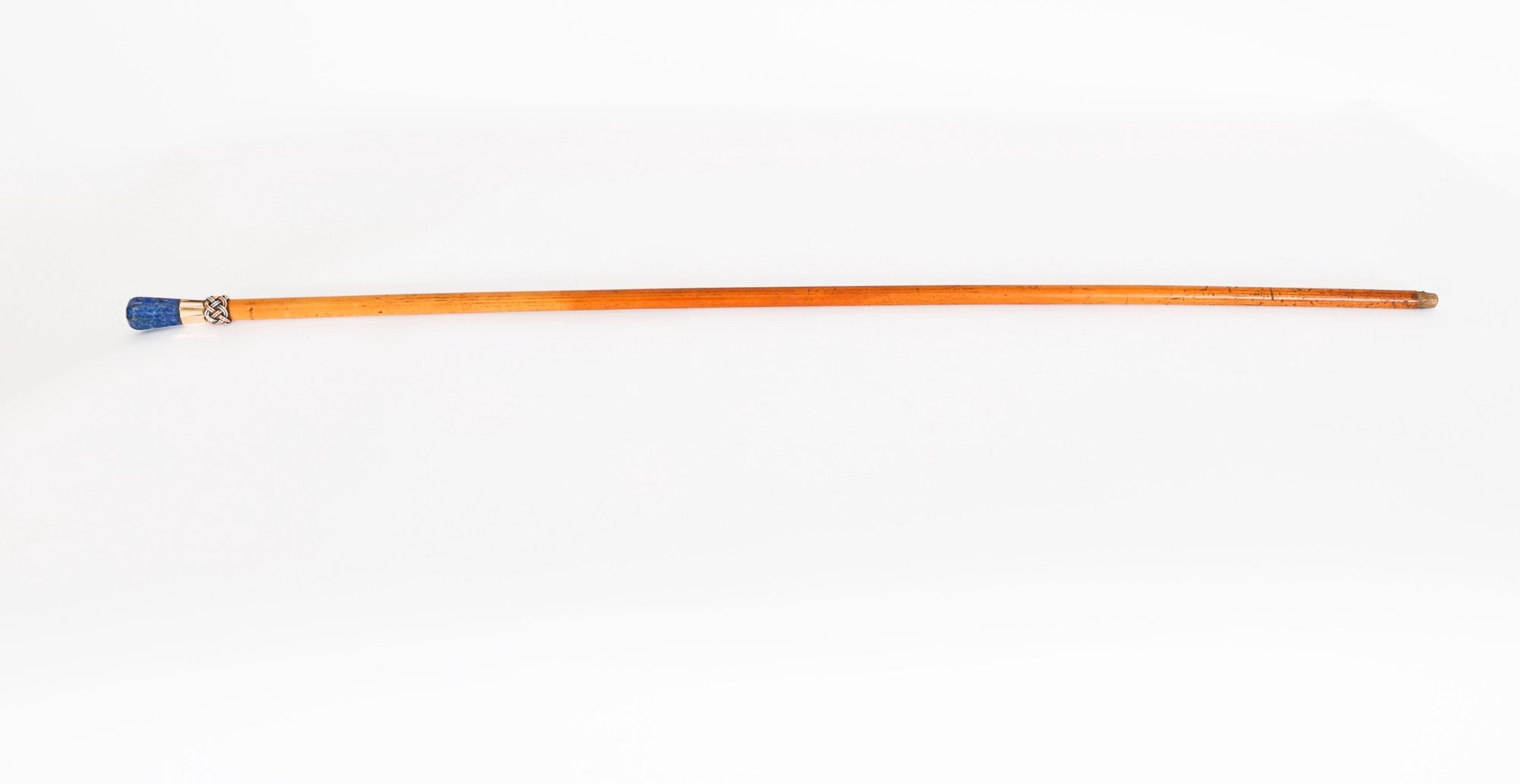
Archive II A 19th-century French walking stick featuring a carved blue fluted lapis lazuli handle, a gold ferrule with a braided metal band, and a light wood shaft stamped with the maker name Verdier. View II
Archive III A 19th-century French walking stick featuring a carved blue fluted lapis lazuli handle, a gold ferrule with a braided metal band, and a light wood shaft stamped with the maker name Verdier. View III
Archive IV A 19th-century French walking stick featuring a carved blue fluted lapis lazuli handle, a gold ferrule with a braided metal band, and a light wood shaft stamped with the maker name Verdier. View IV
Archive V A 19th-century French walking stick featuring a carved blue fluted lapis lazuli handle, a gold ferrule with a braided metal band, and a light wood shaft stamped with the maker name Verdier. View V
Archive VI A 19th-century French walking stick featuring a carved blue fluted lapis lazuli handle, a gold ferrule with a braided metal band, and a light wood shaft stamped with the maker name Verdier. View VI
Archive VII A 19th-century French walking stick featuring a carved blue fluted lapis lazuli handle, a gold ferrule with a braided metal band, and a light wood shaft stamped with the maker name Verdier. View VII
Archive VIII A 19th-century French walking stick featuring a carved blue fluted lapis lazuli handle, a gold ferrule with a braided metal band, and a light wood shaft stamped with the maker name Verdier. View VIII
Archive IX A 19th-century French walking stick featuring a carved blue fluted lapis lazuli handle, a gold ferrule with a braided metal band, and a light wood shaft stamped with the maker name Verdier. View IX
Archive X A 19th-century French walking stick featuring a carved blue fluted lapis lazuli handle, a gold ferrule with a braided metal band, and a light wood shaft stamped with the maker name Verdier. View X
Archive XI A 19th-century French walking stick featuring a carved blue fluted lapis lazuli handle, a gold ferrule with a braided metal band, and a light wood shaft stamped with the maker name Verdier. View XI
Archive XII A 19th-century French walking stick featuring a carved blue fluted lapis lazuli handle, a gold ferrule with a braided metal band, and a light wood shaft stamped with the maker name Verdier. View XII
Enlarged Archival View
Location
Manor Warehouse
318 Green Lanes
London
N4 1BX
United Kingdom
Verified Since Sep 2016
Items For Sale 654
Items Sold 2,726
Regent Antiques
Regent Antiques
Verified Since Sep 2016
View Dealer Info
Location: Manor Warehouse, 318 Green Lanes, London, N4 1BX, United Kingdom
Verified
Sep 2016
For Sale
654
Sold
2,726
A 19th-century French walking stick featuring a carved blue fluted lapis lazuli handle, a gold ferrule with a braided metal band, and a light wood shaft stamped with the maker name Verdier.
Antique French Lapis Lazuli & Gold Walking Stick by Verdier 94cm/ 37inch 19th C
Ref: SA1244960
A 19th-century French walking stick featuring a carved blue fluted lapis lazuli handle, a gold ferrule with a braided metal band, and a light wood shaft stamped with the maker name Verdier.
Detail View 1
Detail View 2
Detail View 3
Detail View 4
Detail View 5
Detail View 6
Detail View 7
Detail View 8
Detail View 9
Detail View 10
Detail View 11
Archival Detail
Every single antique dealer on our platform is individually approved by our internal team. We verify their professional trade history, ethical standards, and photographic quality to ensure a secure, high-standard buying environment. Upon joining, every dealer agrees to a strict 9-point code of conduct. While issues can occasionally arise, our dealers typically resolve them swiftly and directly with the buyer. In fact, since our founding in 2002, Sellingantiques has only had to step in to help resolve an issue on roughly five occasions—a true testament to the quality of our dealers and their dedication to your happiness.
Our dealers are highly experienced in packing and shipping fragile, high-value antiques. Because you are in direct contact with the dealer, you will be able to easily go through all available shipping and insurance options together to ensure your item arrives safely.
Antiques are the ultimate green purchase. By choosing historical pieces over newly manufactured goods, you completely eliminate the carbon footprint of modern mass production while preserving exceptional, timeless craftsmanship.
Written by Sellingantiques from the dealer’s photographs and listing
  • ObjectWalking Stick
  • Period19th century
  • Style19th Century French
  • MaterialLapis Lazuli, Gold, Wood
  • ColourBlue and Gold
  • MotifsFluted gemstone handle, Braided metal collar, Stamped maker mark
  • SizeH 94 cm (37 in) x W 3 cm (1 in) x D 3 cm (1 in)

This 19th-century French walking stick from Circa 1880 functions as a decorative accessory for a gentleman's library or beside the front door. The piece is crafted from lapis lazuli, rose gold, white gold, and wood, showcasing blue, gold, and light timber colours. The tapering handle consists of carved blue fluted lapis lazuli, mounted above an interlaced rose and white gold band on a tapering Malacca shaft. Additional details visible on the item include a braided metal collar, smooth gold ferrule sections, and a stamped maker mark reading Verdier on the wooden shaft. The walking stick measures 94 cm high, 3 cm wide, and 3 cm deep. In a contemporary home, this item would sit neatly in a hallway stand beside the front door or serve as a decorative display piece in a study. The construction displays minor signs of use commensurate with age, maintaining a clean polished finish on the stone handle and metallic mounts.

During the 19th century, decorative dress canes served primarily as fashion accessories and indicators of social status rather than functional mobility aids. Elite examples featured handles carved from semi-precious stones, precious metals, or organic materials paired with refined timber shafts.

Luxury walking sticks from this era commonly featured handles of carved lapis lazuli, agate, quartz, or porcelain, joined with gold or silver collars. The shafts were typically constructed from durable, lightweight woods such as malacca, bamboo, partridge wood, or ebony.

Authentic period canes often feature maker stamps or workshop names impressed into the wood or collar, alongside precious metal hallmarks. Genuine lapis lazuli handles display natural mineral variations and gold pyrite specks rather than uniform synthetic colouration.

Decorative walking canes can be displayed upright inside a vintage brass or ceramic umbrella stand near an entryway. Alternatively, they can be laid horizontally across a library shelf or mounted on wall brackets to create a focal point among curated historical objects.

Clean gemstone and gold components with a dry, soft microfibre cloth, avoiding chemical solvents that could alter the stone or finish. Keep the timber shaft in a climate-controlled room away from direct radiators or damp conditions to prevent cracking or warping.
items
Add keywords to the filter
Price
£100
£250000
Era
Period
Style
Material
Origin
Stock Location
Recently Added
Online Payments
Categories