




A 2026 Guide by Sellingantiques
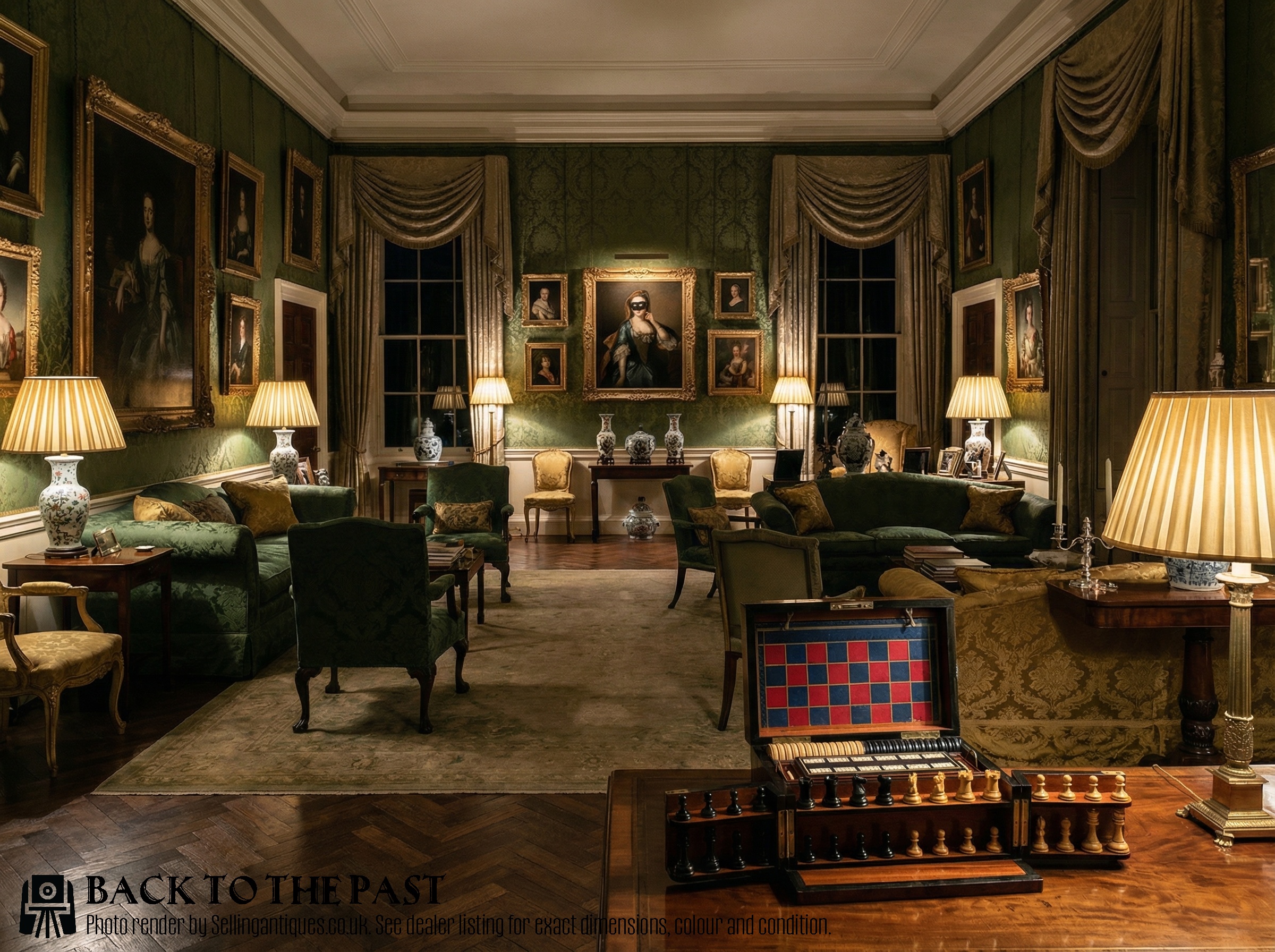
Victorian Burr Walnut Compendium of Games Box, Victorian
Priced at £2,950 from John Hubbard Antiques
Parlour games shifted from simple gambling dice to structured board play during the nineteenth century. Families started keeping boxed sets in the drawing room.
Look for printed rules pasted inside the lids. These paper labels often help date the set.
Chess sets became standardised around the mid-Victorian period. The Staunton pattern turned into the standard format for tournament play.
Before mass printing, many board games were hand-coloured map puzzles or instructional tracks printed on linen.
Certain folding boards combine chess on the outside with backgammon layouts on the interior surface.
Jaques of London produced thousands of games in the nineteenth century. They stamped their name on the white king in chess sets.
F.H. Ayres operated in Aldersgate and supplied quality games to major retailers. Their turned wooden pieces look very similar to Jaques designs.
William Lunn made chessmen for the local trade in the early nineteenth century. He worked from a workshop in St Luke's.
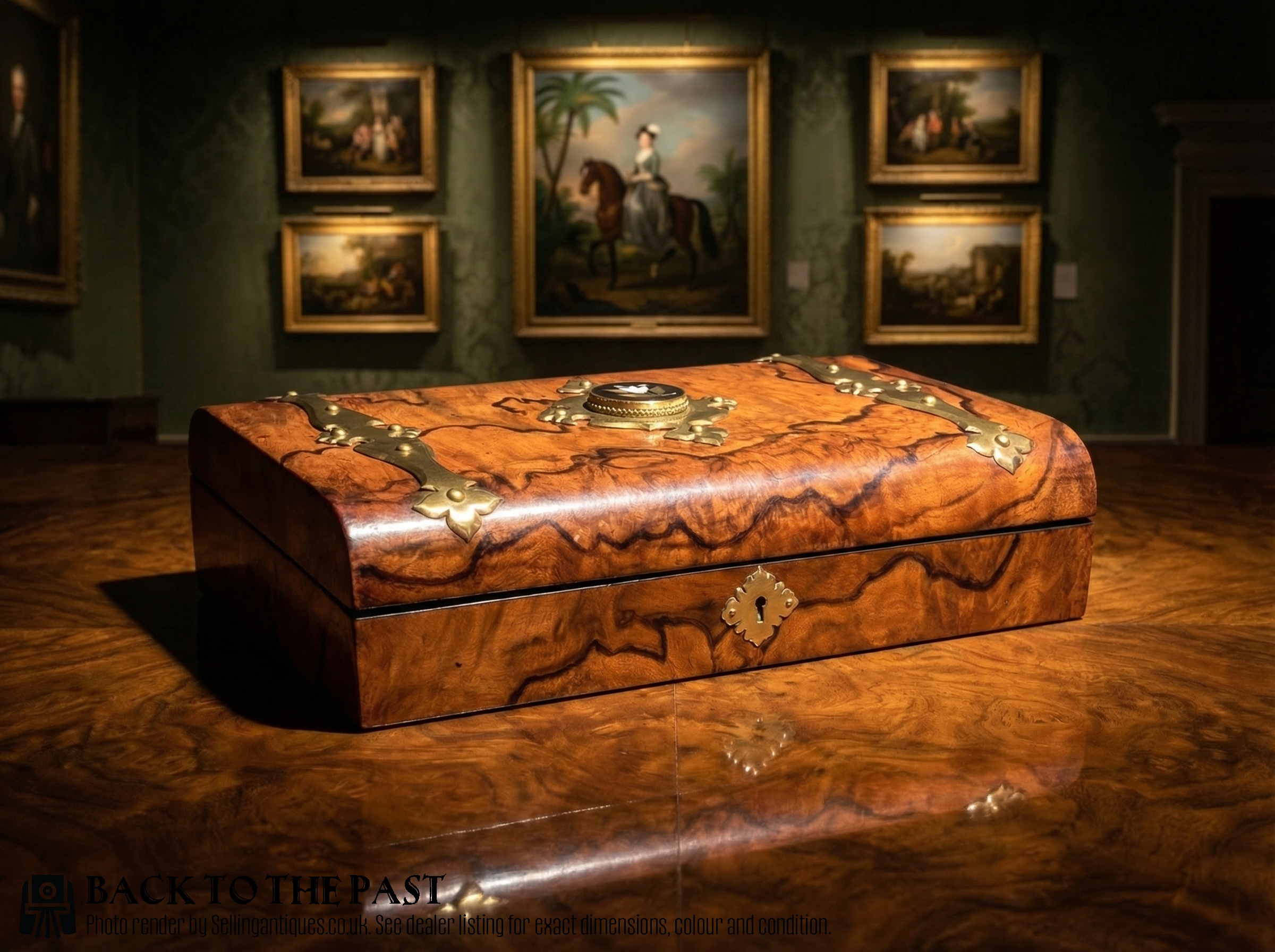
Brass Bound 'Figured' Walnut Card/games Box by George Betjemann, Victorian
Priced at £875 from Quiet Street Antiques of Bath
The 2026 retail price guide for Antique Games is drawn from a proprietary archive of over 1.1 million retail prices indexed by Sellingantiques since 2003. This guide relies exclusively on their own internal data; no external sources or auction records are used.
Analysing nearly 25 years of UK antique market history alongside current retail values, the data indicates that typical UK retail prices for Antique Games range between £500 and £3,300. Entry-level prices generally fall under £500 and premium examples upwards of £3,300.
Compendium boxes pull out to reveal multiple layers. They hold boards, dice and counters in tightly fitted compartments.
Cribbage boards drill down into solid timber or brass. Some have a hidden sliding panel underneath to store the pegs.
Check the folding hinges on travelling sets. Flush brass hinges let the board sit flat on a table.
Turners shaped round pieces on a foot-powered lathe. They used a chisel to cut the distinct collars and bases on each piece.
Knights were carved by hand rather than turned. The detail on the horse head reflects the training of the individual carver.
Paper game boards were backed with linen. Bookbinders cut the boards into sections so they could fold into slipcases.
"Travelling chess pieces sometimes have pegs on the bottom. These slot into holes on the board to keep the game steady on trains."
"Many Victorian parlour games taught moral lessons. The tracks rewarded good behaviour with extra turns and sent players backwards for imaginary misdeeds."
"Dice from the eighteenth century are often tiny. Players threw them across small tables where standard dice would bounce off the edge."
Based on almost 25 years of Sellingantiques UK antique market data, Antique Games appeared 5384 times (out of 1,100,000 antiques) which gives it a rarity score of 34/100.
This score measures scarcity within the Sellingantiques archive only and is not a survey of the entire antiques market, so these statistics may not be indicative of the general availability of Antique Games elsewhere.
A games compendium is a wooden cabinet or box fitted with trays holding multiple different games. They usually contain equipment for chess, draughts and various card games.
Manufacturers designed them for family use in the drawing room. More complex examples have doors at the front and a lid that opens to reveal the pieces neatly stored in individual bays.
Finding exact replacements for antique chessmen is difficult. Hand-turned pieces vary slightly even within the same original set.
You can sometimes source spare pieces from dealers who break up incomplete sets. Match the height and base diameter of the pawns first. You'll also need to check the exact profile of the collars and the turning style of the finials.
Another option is having a woodturner copy an existing piece. They can usually stain the new timber to match the aged colour of your set.
Early dice were cut by hand from solid bone or ivory. The maker filed them square using hand tools rather than precision machinery.
This manual process leaves slight variations in the dimensions of each face. The pips were drilled out individually, which also adds to the irregular appearance.
Leather points inside a folding board dry out and absorb damp if stored badly. Start by brushing out any loose dust with a soft, dry brush.
Don't use modern liquid cleaners or saddle soap. These introduce moisture that can lift the glue holding the leather to the timber backing. You can apply a very light coat of microcrystalline wax to condition the surface and seal out the damp smell.
Please note: This Antique Games guide and its associated pricing data are provided for general informational purposes only. It does not constitute formal financial, investment, or appraisal advice and should not be relied upon as the sole basis for any commercial activity, purchasing, or sales decisions. Sellingantiques.co.uk accepts no liability for any actions taken in reliance on this information. Always consult with a qualified professional or independent appraiser.
