


A 2026 Guide by Sellingantiques
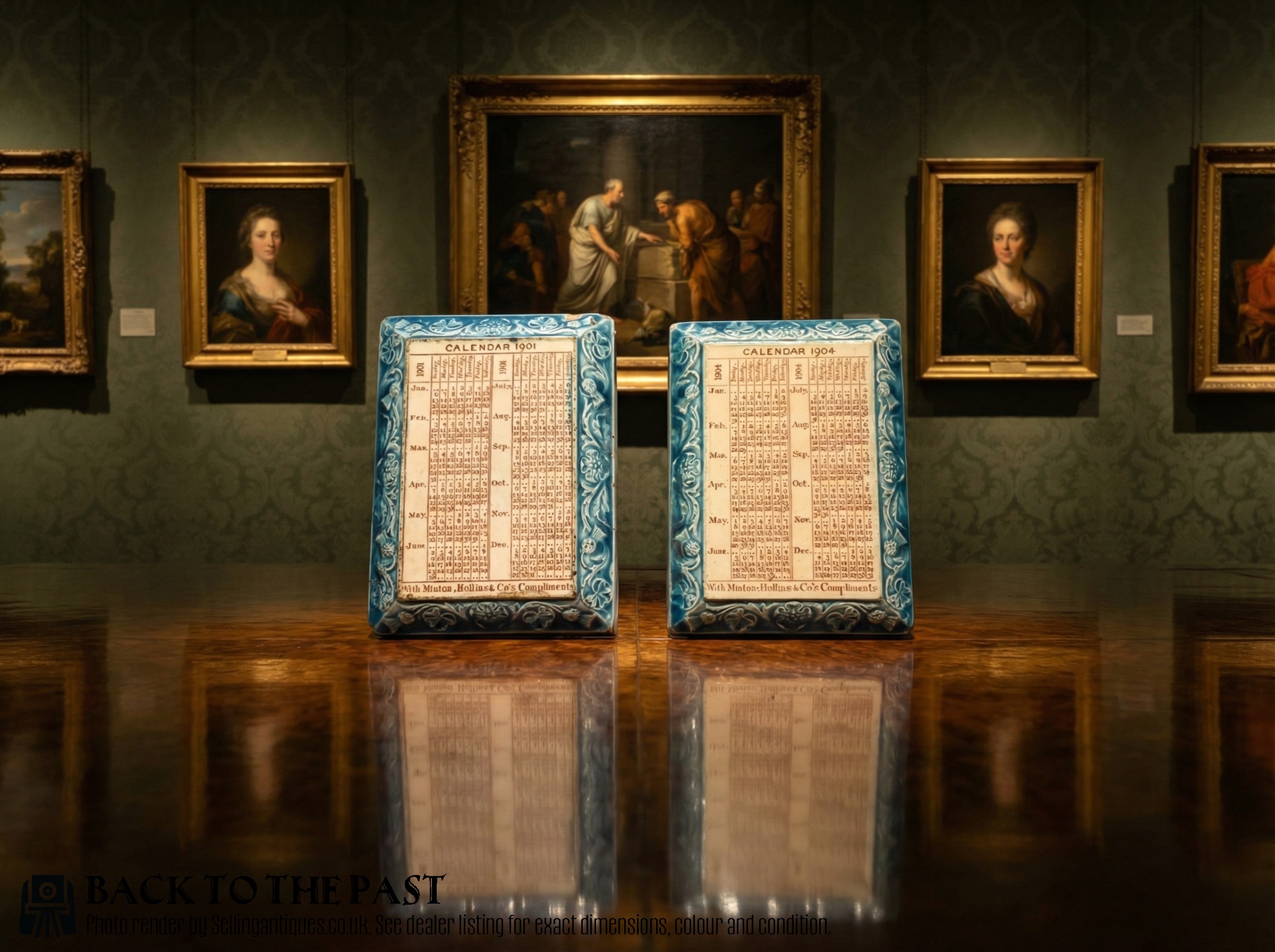
Antique “Minton Hollins” Tile Calendars1901 and 1904, Edwardian
Priced at £135 from Antoinettes Heirlooms
Tracking time shifted from religious necessity to commercial importance during the 18th century. Merchants needed reliable desk references.
Look for the shift from Julian to Gregorian dates in older pieces. The calendar change in 1752 altered how days were calculated across the British Empire.
Antique calendars evolved alongside clockmaking. Workshops treated them as complementary additions rather than standalone products.
Victorian industrialisation brought printed versions to the masses. Cardboard and tinplate models suddenly replaced expensive brass mechanisms in ordinary homes.
Thomas Tompion incorporated highly complex calendar actions into his later 17th-century clocks. His mechanisms set a standard that later London makers copied.
Look for Ithaca Calendar Clock Company on late 19th-century mechanical examples. They dominated the market with a patented mechanism driving independent paper rollers.
Regional clockmakers built their own simplified versions. You find unsigned painted dials from provincial towns across the Midlands.
The 2026 retail price guide for Antique Calendars is drawn from a proprietary archive of over 1.1 million retail prices indexed by Sellingantiques since 2003. This guide relies exclusively on their own internal data; no external sources or auction records are used.
Analysing nearly 25 years of UK antique market history alongside current retail values, the data indicates that typical UK retail prices for Antique Calendars range between £200 and £2,400. Entry-level prices generally fall under £200 and premium examples upwards of £2,400.
Moon phase apertures turn up on the better antique calendars. A painted disc rotates behind a shaped cut-out to show the lunar cycle.
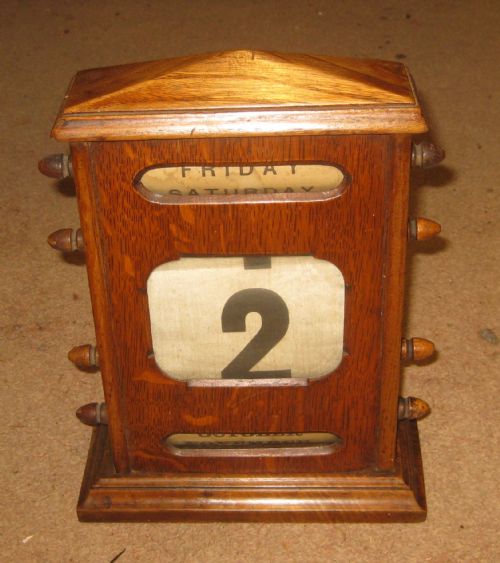
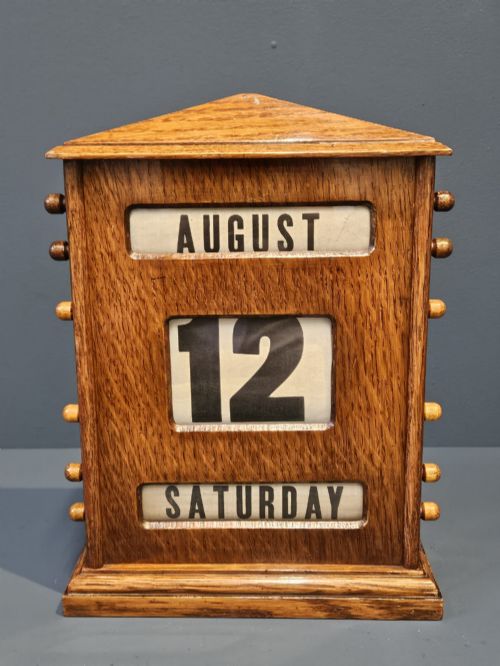
Some perpetual models rely on rolling fabric scrolls inside a wooden box. You'll adjust the day and month using small bone or brass knobs.
Leap year indicators separate complex mechanisms from basic ones. A small secondary dial tracks the four-year cycle.
Early brass dials rely on hand-engraved numerals. The craftsman cut each number with a burin and rubbed black wax into the recesses.
Mass production brought lithography to paper dials. This allowed for detailed decorative borders around the date tracks on Victorian antique calendars.
Turn a mechanical example over to inspect the gearing. Hand-filed teeth on the brass wheels indicate work done before automated milling machines.
"Many paper roll models have spare blank sections hidden at the end of the spool. Makers included this extra length to protect the printed dates from tearing."
"The earliest mechanical versions occasionally track the signs of the zodiac alongside the date. This helped farmers plan their agricultural year."
"Desk versions often hide a small compartment underneath. Businessmen used this space to store extra ink nibs or a dusting of pounce."
Based on almost 25 years of Sellingantiques UK antique market data, Antique Calendars appeared 810 times (out of 1,100,000 antiques) which gives it a rarity score of 85/100.
This score measures scarcity within the Sellingantiques archive only and is not a survey of the entire antiques market, so these statistics may not be indicative of the general availability of Antique Calendars elsewhere.
Paper conservation is possible for minor tears. Specialists use archival tissue and reversible wheat starch paste to bridge the gap from behind.
Major losses are harder to fix without replacing the entire roll. Most dealers prefer to leave a clean tear alone rather than risk poor repairs.
The linen fabric on those scroll calendars gets brittle with age. When it shrinks slightly over the decades, it binds against the wooden guide rails inside the case.
The brass pins holding the scroll to the wooden roller can also work loose. They catch on the inner framework as the roller turns, stopping the fabric from advancing properly.
Clockwork calendars require specific horological oils.
Leave them dry if they run smoothly.
That gap marks the British adoption of the Gregorian calendar. Eleven days were dropped from September 1752 to align the country with the rest of Europe.
Makers working during this transition had to build the skipped days into their mechanical calculations. It is a known feature of complex movements from that specific decade.
Please note: This Antique Calendars guide and its associated pricing data are provided for general informational purposes only. It does not constitute formal financial, investment, or appraisal advice and should not be relied upon as the sole basis for any commercial activity, purchasing, or sales decisions. Sellingantiques.co.uk accepts no liability for any actions taken in reliance on this information. Always consult with a qualified professional or independent appraiser.
