


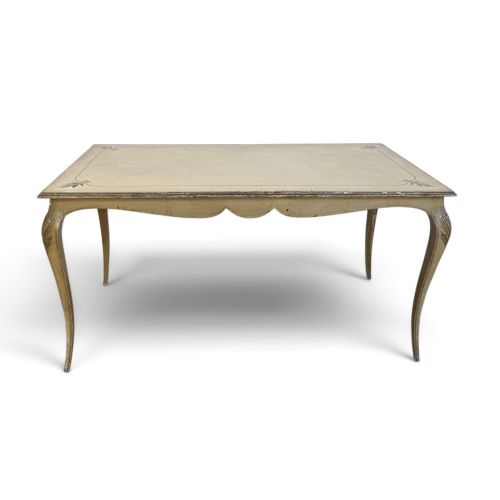
Antique Kitchen Tables
A long plank-topped table in pine or oak, built by country joiners for preparing and eating food in kitchens, farmhouses and service rooms rather than polite dining rooms.
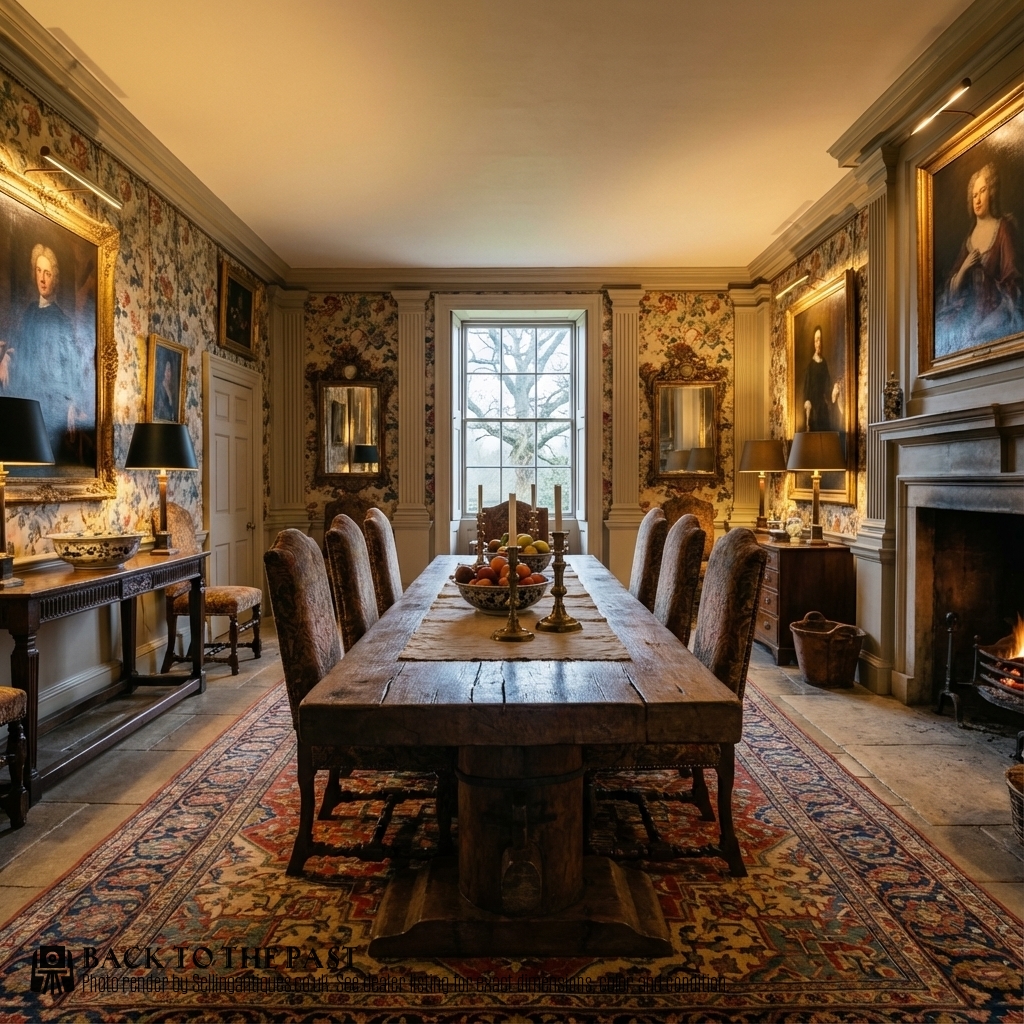
Antique Kitchen Tables
The category is defined by use more than form. Titles routinely give the same object three names at once: 501 say dining, 483 say farmhouse, and combinations like "farmhouse dining" or "oak refectory dining" show dealers hedging between all three. What links them is a scrubbed or waxed working top on a stout leg-and-stretcher or trestle frame.
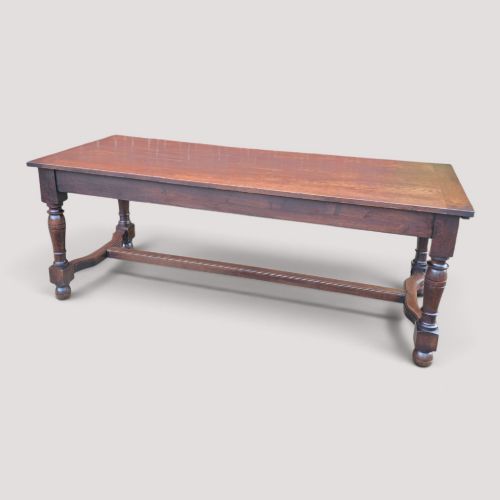
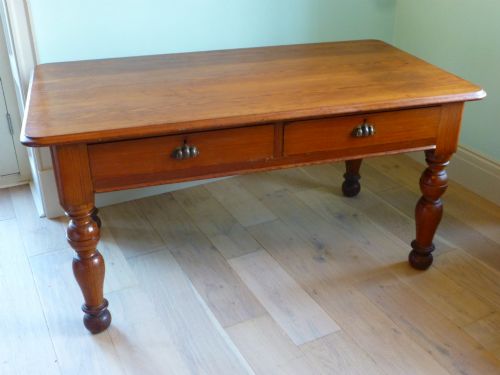
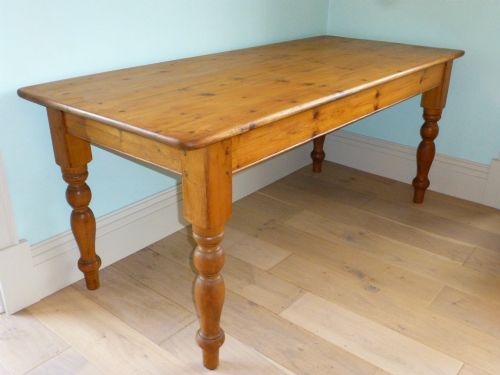
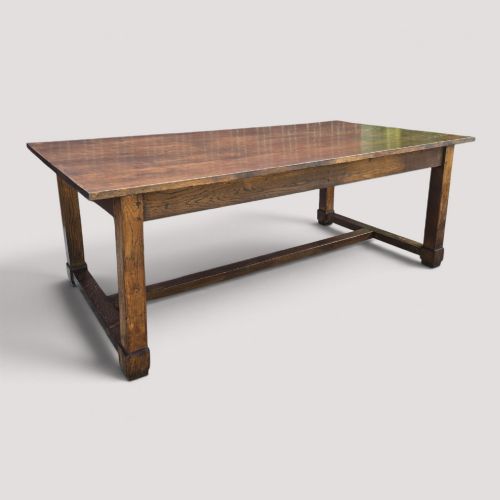
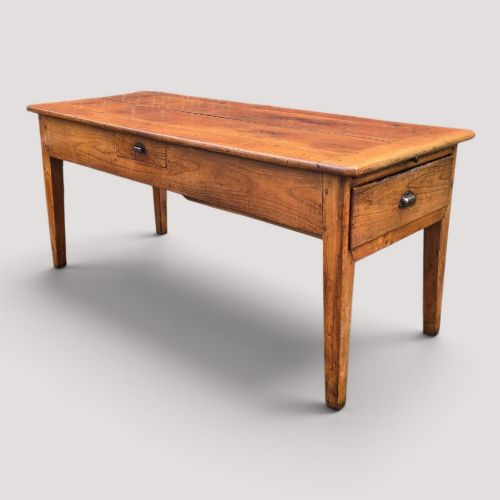
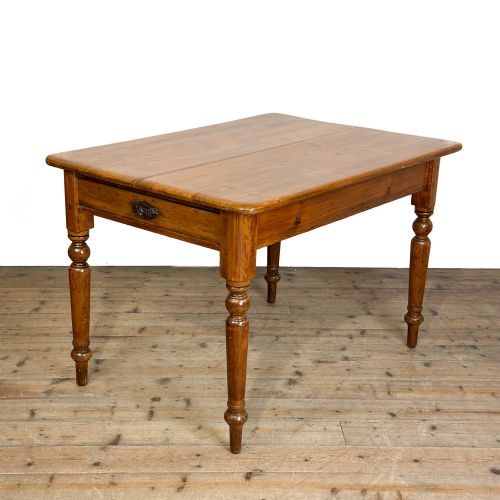
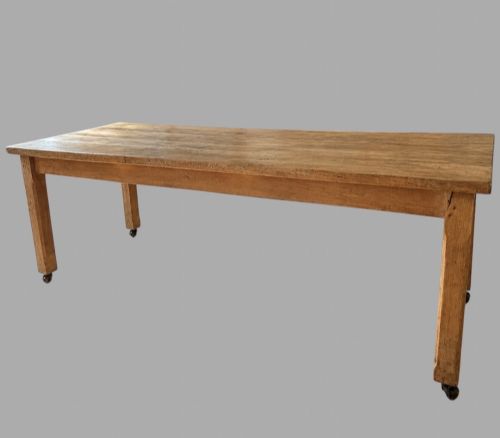
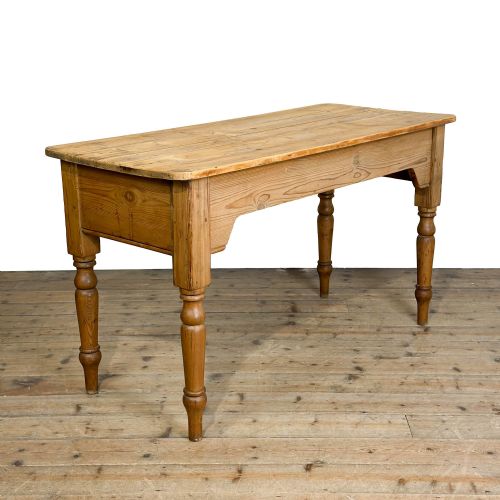
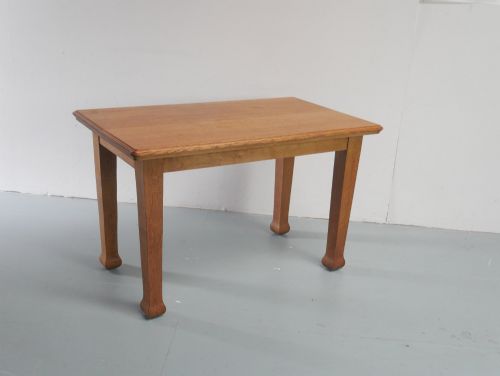
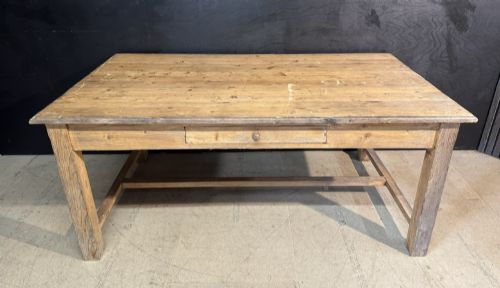
The form you'll meet most often is a rectangular plank-top table in pine or oak, four-legged, with turned or square legs and sometimes one or two end drawers. Pine appears in 435 titles and oak in 400, and the commonest single phrasing of all is a Victorian or 19th-century pine farmhouse kitchen table.
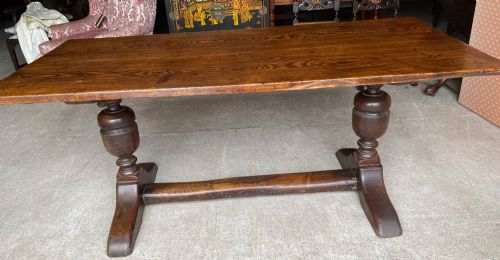
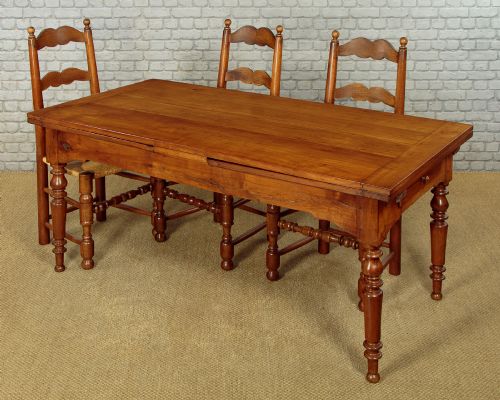
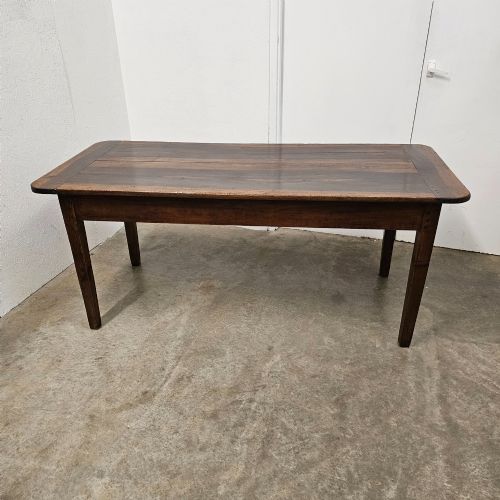
Four other strands run alongside it. Oak refectory and plank-top tables on trestle or stretchered supports make up about a quarter to a third. French provincial tables in fruitwood, cherry, oak and elm are close to a fifth. Extending, draw-leaf and drop-leaf tables form a small slice, and a persistent minority are trade tables: dairy, butcher's, bakers', patisserie, drapers', florists' and mill tables, all listed under the same heading.
Dating is broad rather than precise. "19th Century" and "Victorian" do most of the labelling work, so many pieces are placed only within a century or a reign. Where a decade is given, the 1920s is the largest at 114 listings, ahead of the 1900s and the 1880s, which makes the archive as much Edwardian-to-interwar as Victorian. Eighteenth and 17th-century entries exist but are scarce.

What Moves The Range
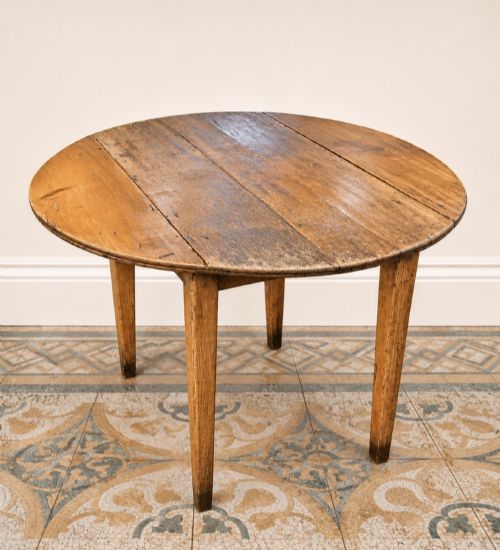
Length does most of the work. "Large" appears in 157 titles, and the upper reaches carry three- and four-metre tops, 8ft, 9.5ft and 12ft examples, and tables described as seating ten, twelve and eighteen. The tables tagged "small" cluster at the bottom of the range. A four-metre French oak drapers' table sits near the top, and the largest circular top is an eight-foot oak on a cruciform base.
Timber and top construction separate the middle from the top. Pine dominates the lower and middle ground; cherry, walnut, elm, chestnut and burr elm turn up in the highest-priced entries. Dealers also count boards, and they count them for a reason: single- and two-plank tops sit above three-plank and made-up tops.
Age pushes the same way. Seventeenth and 18th-century oak and elm refectory and farmhouse tables sit well above the Victorian and 1920s bulk. Surface matters too, and it's stated in the titles: original paint, layers of old paint, Falu paint, original finish, scrub top, bleached or limed oak.
Antique Kitchen Tables Retail Price Guide 2026
Typical UK retail prices for kitchen tables, calculated from the Sellingantiques database of over a million retail prices indexed since 2003. This retail price guide relies exclusively on Sellingantiques data; no external sources or auction records are used, so the figures do not describe the wider market.
The dated pieces on Sellingantiques run from 1750 to 1960, though most tables are placed within a century or a reign rather than a year.
The Antique Kitchen Tables Glossary
- Farmhouse table
- A plain, long country table on four legs or trestles, with 483 titles using the phrase. It often sits alongside "kitchen" and "dining" in the same line.
- Refectory table
- A long table on trestle or stretchered supports. It's spelled "refrectory" in 43 titles against 172 correct spellings, so a quarter of that group is invisible to anyone searching one spelling.
- Scrub top
- A top left bare and scrubbed rather than polished, in 34 titles and mostly pine. The finish follows from working use, the surface being cleaned instead of waxed.
- Plank top
- A top made from a few wide boards. Dealers count them in the title: "one plank top", "two plank", "3 plank".
- Draw leaf
- An extending mechanism where the leaves pull out from beneath the main top, named in 19 titles. Drop-leaf and gateleg tables, with hinged flaps and swinging supports, appear across the same strand.
- Bread slide
- A pull-out board fitted under the top, noted on French farmhouse tables. The English equivalent to look for in a description is a potboard, the low shelf running between the legs.
Antique Kitchen Tables: Frequently Asked Questions
What's the difference between farmhouse and refectory?
Refectory describes the support: a long top on trestles or stretchered end supports, most often in oak. Farmhouse is looser, covering plain long country tables on either four legs or trestles.
In practice the two words share titles. "Refectory farmhouse" and "oak refectory dining" both appear, which tells you dealers use them as overlapping descriptions of one object.
Are these tables mostly pine?
Pine is the single commonest timber, in 435 titles, with oak just behind at 400. The typical pine table is Victorian or broadly 19th-century, four-legged, with a scrubbed or painted surface.
The French strand brings cherry, cherrywood, fruitwood, oak and elm. Walnut, chestnut and burr elm turn up less often, and they turn up at the top of the range.
How old are kitchen tables on Sellingantiques?
The dated field runs from 1750 to 1960, though only 509 of 1,275 listings carry a clean year.
Most labelling is broad: "19th Century" on 349 and "Victorian" on 208. Where a decade is stated, the 1920s leads with 114, then the 1900s with 84 and the 1880s with 58.
Georgian appears in only 20 titles, and 17th-century examples are a handful.
Do any come with drawers?
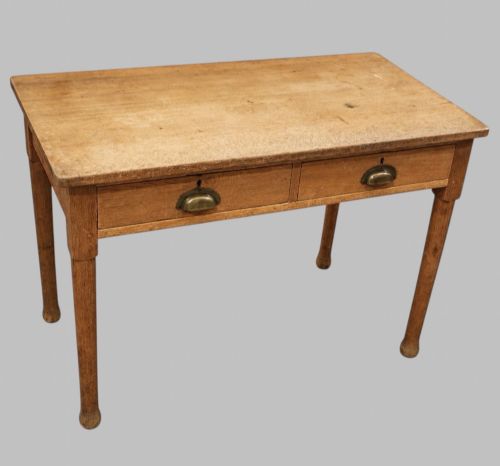
Some do. "Drawer" appears in 37 titles and "drawers" in 23, usually one or two set into the end or the frieze of a four-legged pine or oak table.
Small two-drawer cottage tables sit at the compact end of the category.
Which trade tables get listed as kitchen tables?
Quite a spread. Dairy, butcher's, bakers', patisserie, charcuterie, drapers', haberdashers', florists', chopping-block and mill tables all appear under this heading, along with kitchen islands and prep tables.
They're a modest but persistent minority. The largest of them, a four-metre French oak drapers' table, sits near the top of the range.
How big do these tables get?
Seating claims in titles run from four up to an eighteen-seat pine farmhouse table. Quoted lengths reach three and four metres, 9.5ft and 12ft.
The biggest round top recorded is eight feet in diameter, in oak on a cruciform base. Sizes appear only sporadically inside titles rather than as a consistent field.