
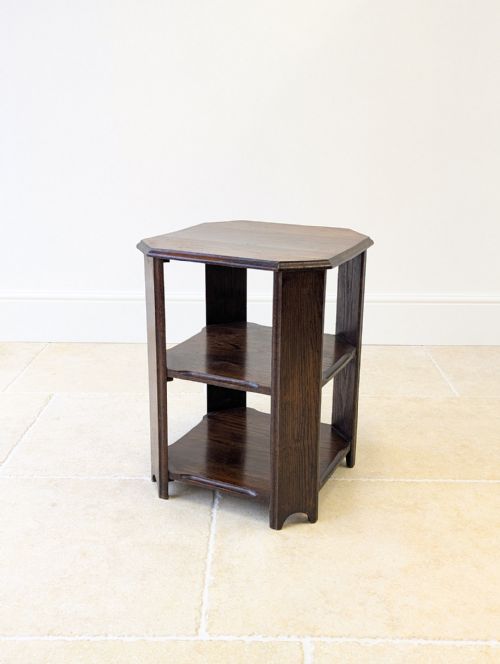
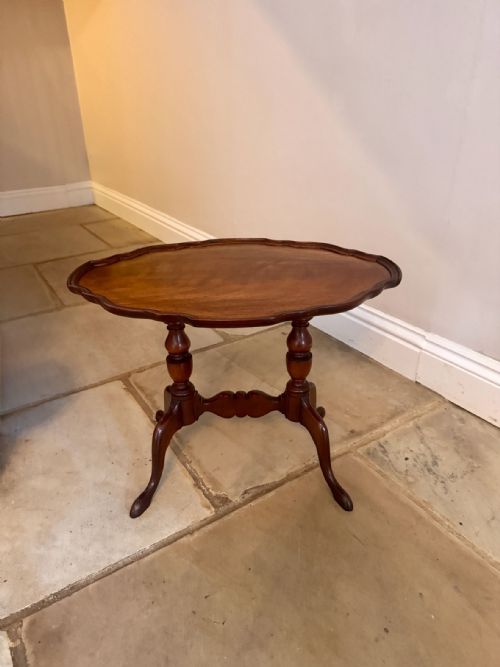
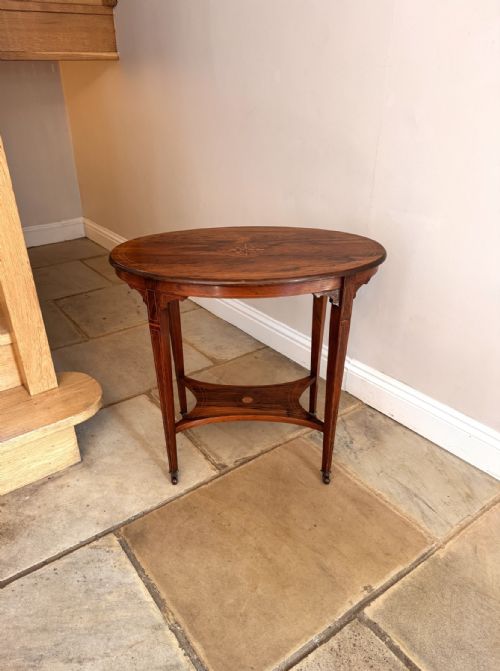
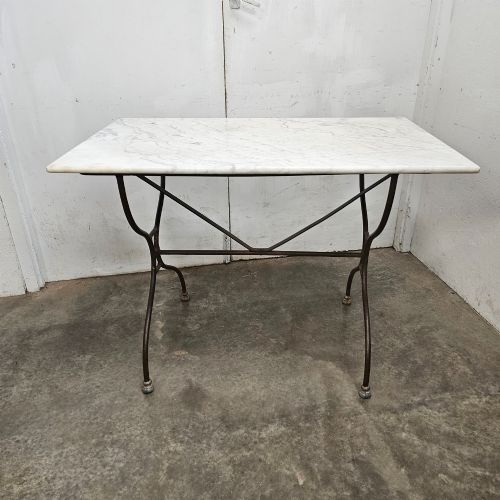
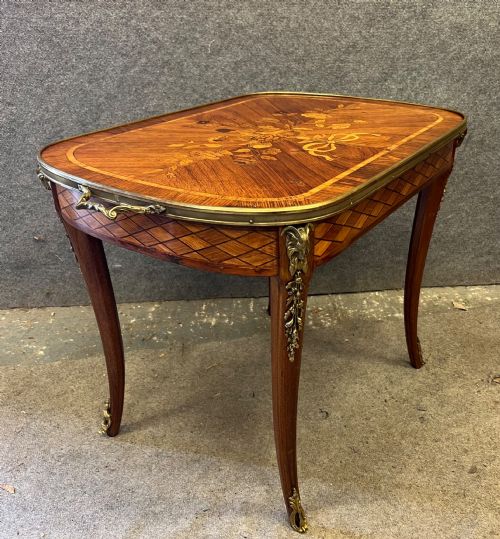
Antique Coffee Tables
A low table meant to stand in front of a sofa, either purpose-made from the early 20th century or an older table now used at that height.
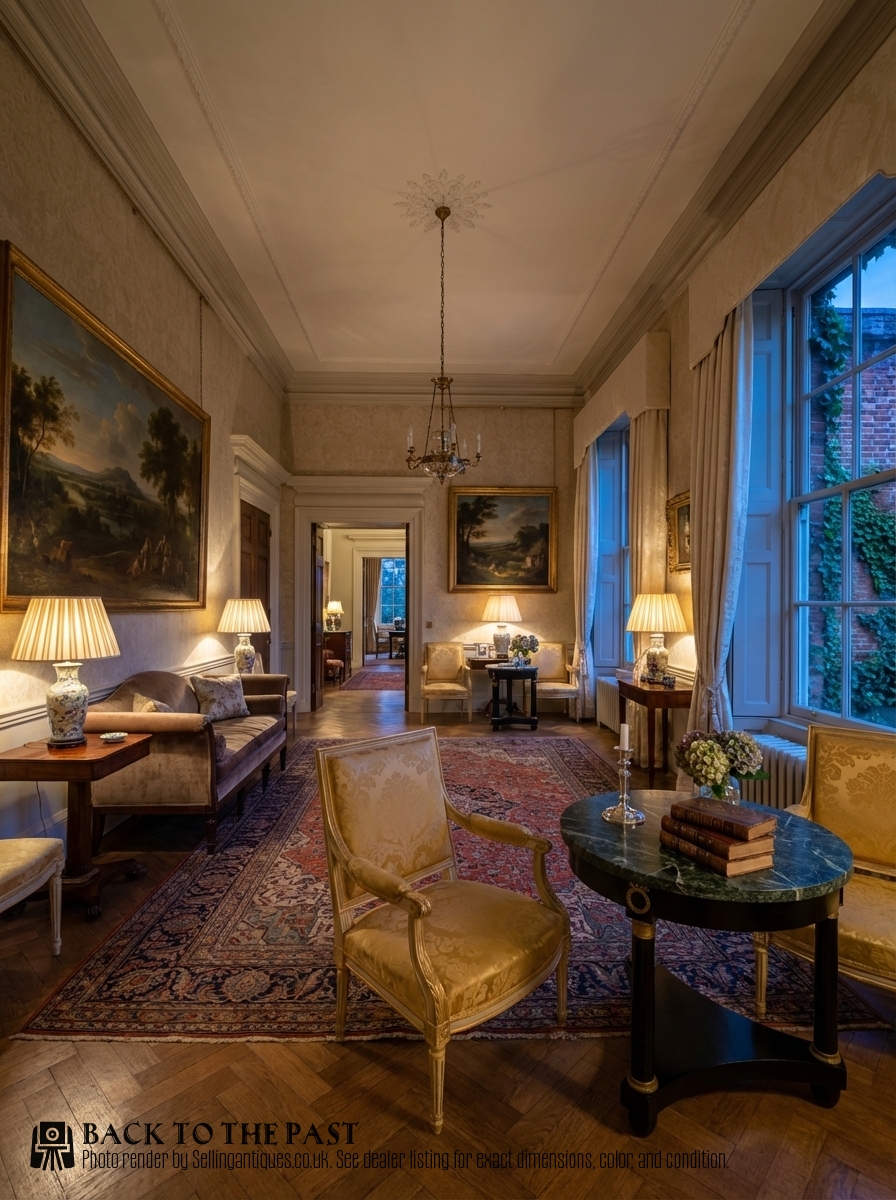
Antique Coffee Tables
The coffee table as a low table set before seating is a 20th-century domestic form, standard in British and European sitting rooms between the wars. That shows in the dating: of the listings carrying a clean year, the mass sits in the 1920s and 1930s, with the 1900s and 1910s filling the gap behind them.
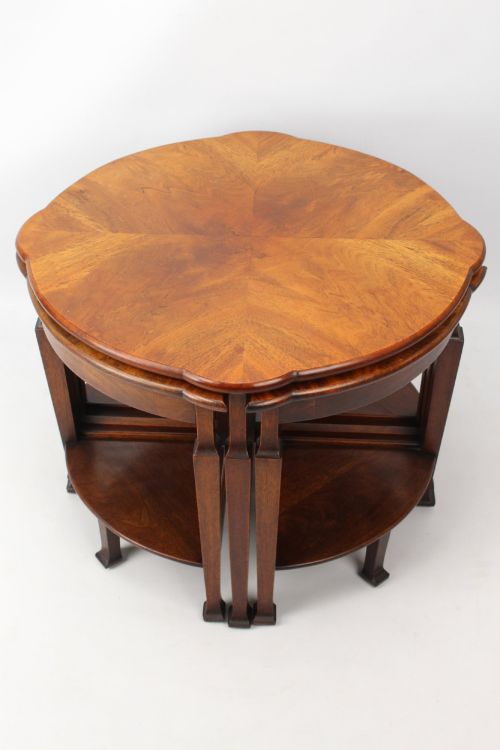
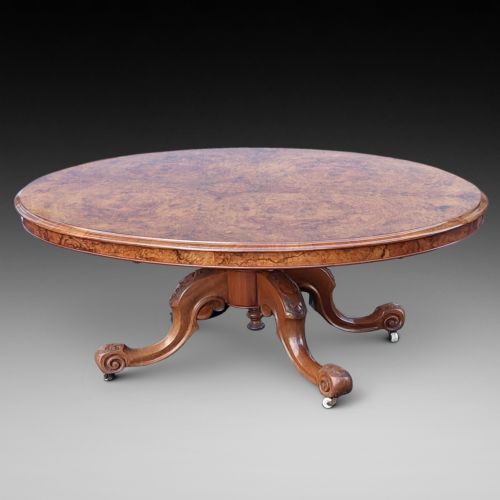
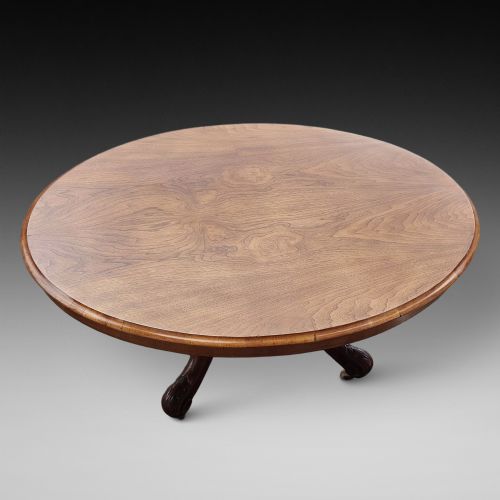
Walnut dominates, and burr walnut most of all - it's named outright in over five hundred titles. The pattern that repeats hardest is a 1920s-30s or Victorian burr-walnut low table with an oval or round top, sometimes on cabriole legs and described as Queen Anne style, which is a shape description rather than a date. Oak and mahogany are the other two staples.
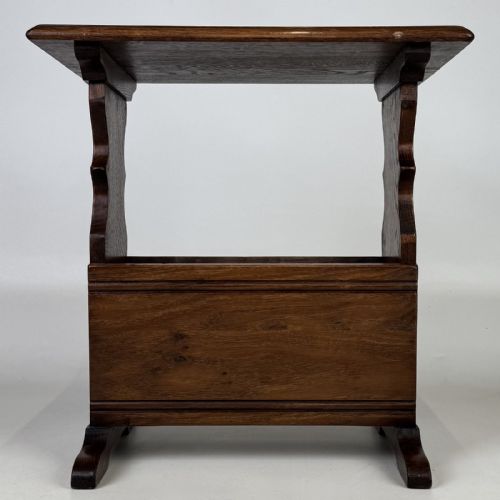
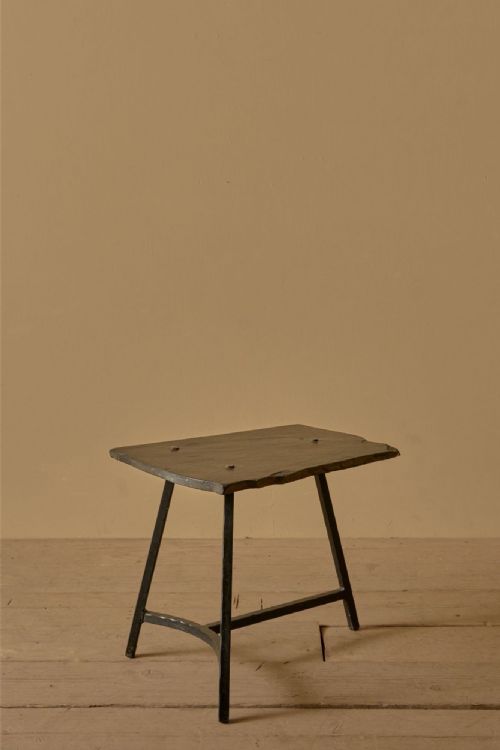
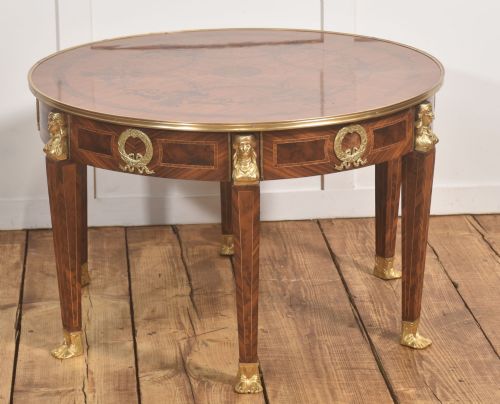
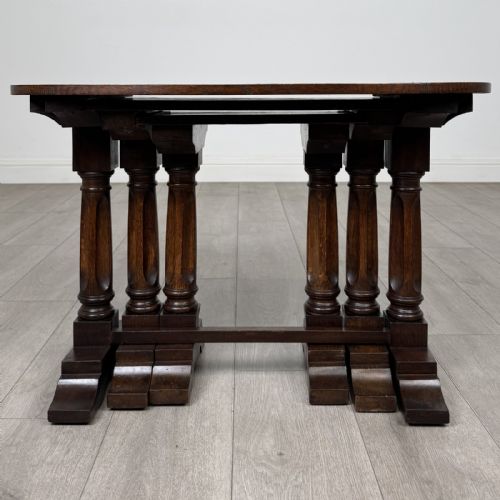
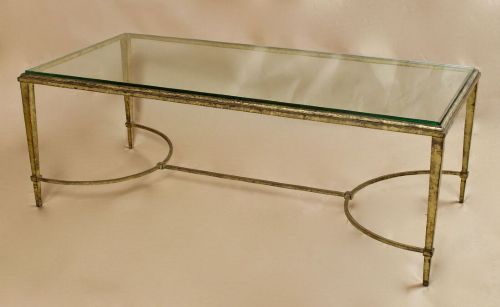
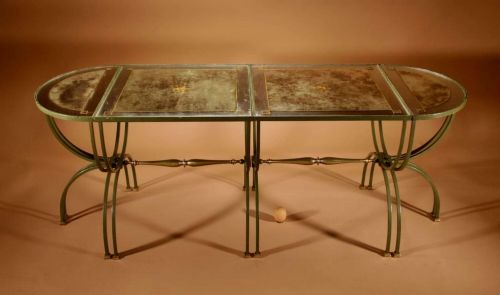
Beyond that core sit country oak and elm tables in plank, farmhouse and refectory forms; French provincial fruitwoods alongside marble-topped gilt and brass frames; mahogany English tables and graduated nests of three or four; Chinese kang and opium tables, Anglo-Indian and North African work; and Art Deco pieces in walnut, maple, macassar and birch.
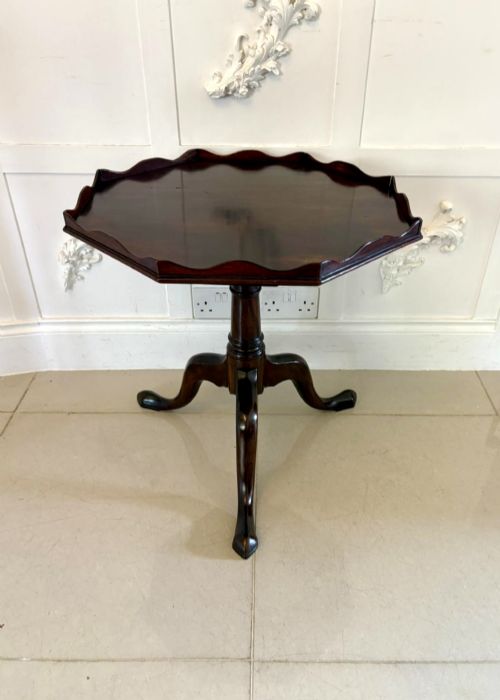
A good part of the category began life as something else. Victorian centre and low tables, tripod tables, kitchen and farmhouse tables and butler's trays on stands all get sold at coffee height, and titles sometimes say so - "Converted to Coffee Table", "(adapted)", "Reduced", "Georgian and Later". Titles also double the function, "Coffee / Occasional Table", because the same object is offered under several names.

Where The Range Splits
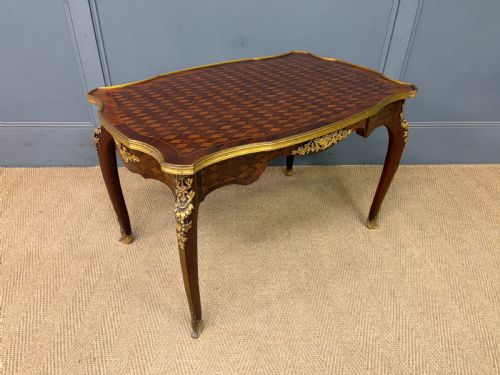
Timber does most of the work. Burr and named exotic veneers - satinwood, amboyna, birds eye maple, macassar - sit at the top, and plain oak and pine at the bottom. Decoration follows the same line: marquetry inlay, carving, ormolu mounts and stone tops, from ordinary French marble up through onyx, travertine, pietra dura and specimen marble.
Size divides the category more than you'd expect. "Large" appears in more than twice as many titles as "small", and the biggest examples get called centre tables as often as coffee tables. Completeness counts too: nests of four or five, and pairs, sit above single tables of the same wood.
Then there's how the table came to be low. Purpose-made and unaltered pieces sit above comparable tables whose titles admit a conversion, a reduced top or a lowered base. That wording is a normal part of the category, not an oddity, but it shows in where a piece lands.
Antique Coffee Tables Retail Price Guide 2026
Typical UK retail prices for coffee tables, calculated from the Sellingantiques database of over a million retail prices indexed since 2003. This retail price guide relies exclusively on Sellingantiques data; no external sources or auction records are used, so the figures do not describe the wider market.
Waring and Gillow is the name that turns up from the most dealers on Sellingantiques in this category.

Waring and Gillow
The Antique Coffee Tables Glossary
- Burr
- Veneer cut from a knotty growth on the trunk, giving swirled figure. It's in more than five hundred titles, nearly always burr walnut.
- Figured
- Timber with pronounced natural pattern short of burr, used on around seventy titles.
- Nest of tables
- A graduated set, usually three or four, that stack under one another. Sets of four and five are sometimes called quartetto and quintetto.
- Occasional table
- A general-purpose small table. Around a hundred and sixty titles use the phrase, often paired with "coffee" in the same line.
- Tray top
- A top with a raised rim, or a detachable tray. The group includes butler's trays set on stands.
- Kang or opium table
- A Chinese low table made for a platform bed, now sold as a coffee table.
Antique Coffee Tables: Frequently Asked Questions
What wood are they usually made from?
Walnut leads by a wide margin, and burr walnut is named in over five hundred titles on Sellingantiques. Oak and mahogany are the next two staples.
After those come elm and solid oak in country pieces, French fruitwoods like cherry and chestnut, Oriental hardwoods, and Art Deco timbers such as maple, macassar and birch.
How old is an antique coffee table?
The dated listings run from 1750 to 1960, so two centuries of furniture sit under one modern name.
The bulk is interwar: the 1920s and 1930s carry the most dated entries, with the 1900s and 1910s behind them. Anything before about 1800 is scarce, and the few 17th-century entries are older tables now used low.
Why are so many described as converted or adapted?
Because the low table in front of a sofa is a 20th-century idea. Earlier furniture that suits the height - centre tables, tripod tables, farmhouse and kitchen tables, Oriental low tables - gets sold for the job.
Titles are often open about it, with wording like "Converted to Coffee Table", "Reduced", "Lowered" or "Georgian and Later". Those pieces sit lower in the range than comparable untouched ones.
What is a nest of tables?
A graduated set that stacks under one another, usually three or four tables. Around a hundred and twenty titles use the term.
Sets of four and five appear as quartetto and quintetto. Complete nests sit above single tables of the same wood.
Are marble-topped versions common?
They're a small but conspicuous group, with marble named in around a hundred and twenty-six titles, mostly on French gilt and brass frames.
The stone ranges from plain French marble to onyx, travertine, Carrara, Scagliola, pietra dura and specimen marble, the last near the top of the range.
Do unusual examples turn up?
Now and then. Recorded singly are a grape-vine sculptural table, a verdigris pineapple glass table, a Japanese hibachi table, a mother-of-pearl inlaid folding Damascus table and a carved African tribal table.
The Oriental and colonial group is steadier: Chinese kang, hongmu and huanghuali tables, Anglo-Indian elephant-leg and takhat forms, Kashmiri and Damascus work, Benares brass and Berber trays.