
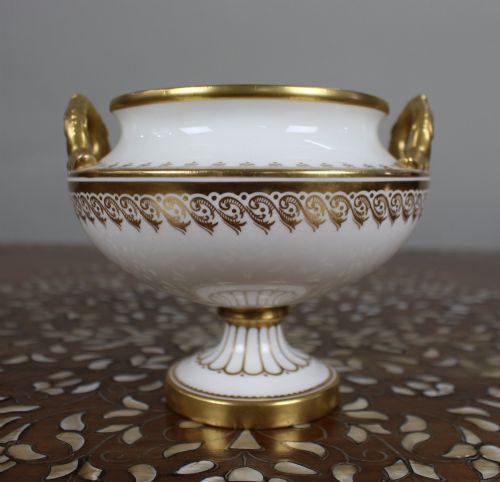
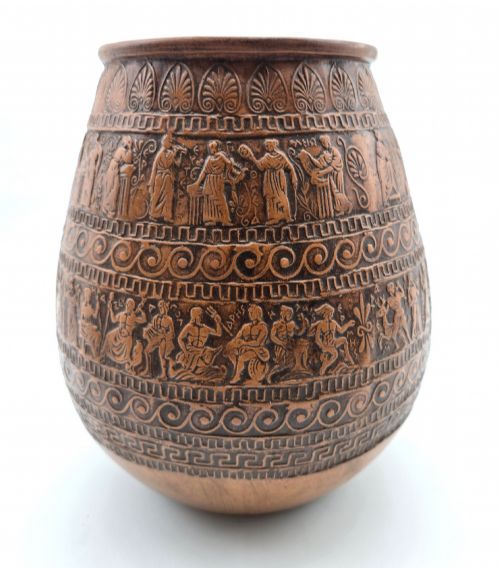


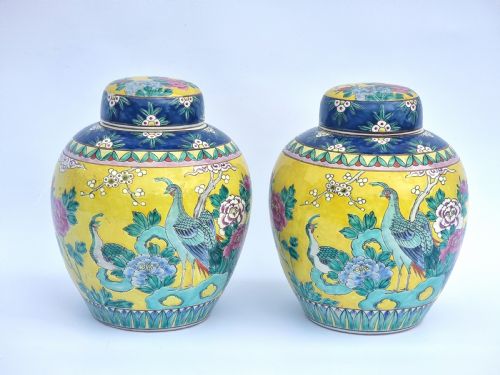


A 2026 Guide by Sellingantiques

Antique Victorian Quality Continental Porcelain Lidded Vase, 1880
Priced at £365 from Unique Antiques by Emma Jade
Neoclassical taste revived these forms in the eighteenth century. Designers borrowed heavily from ancient Greek and Roman excavated vessels.
Grand dining rooms needed impressive serving equipment. Large pairs often sat on pedestals at the end of the room to hold iced water.
Look at garden design during the Regency period. Cast iron and stone variants became outdoor focal points.
Victorians brought garden aesthetics indoors. Smaller antique urns started appearing on mantelpieces purely as decorative objects.
Eleanor Coade ran a successful artificial stone manufactory in London from 1769. Her firm produced many weather-resistant garden urns.
Matthew Boulton made good ormolu-mounted Blue John examples in Birmingham during the late eighteenth century.
Regional foundries cast tons of iron versions. The Coalbrookdale Company issued large catalogues of cast iron garden vessels in the mid-nineteenth century.
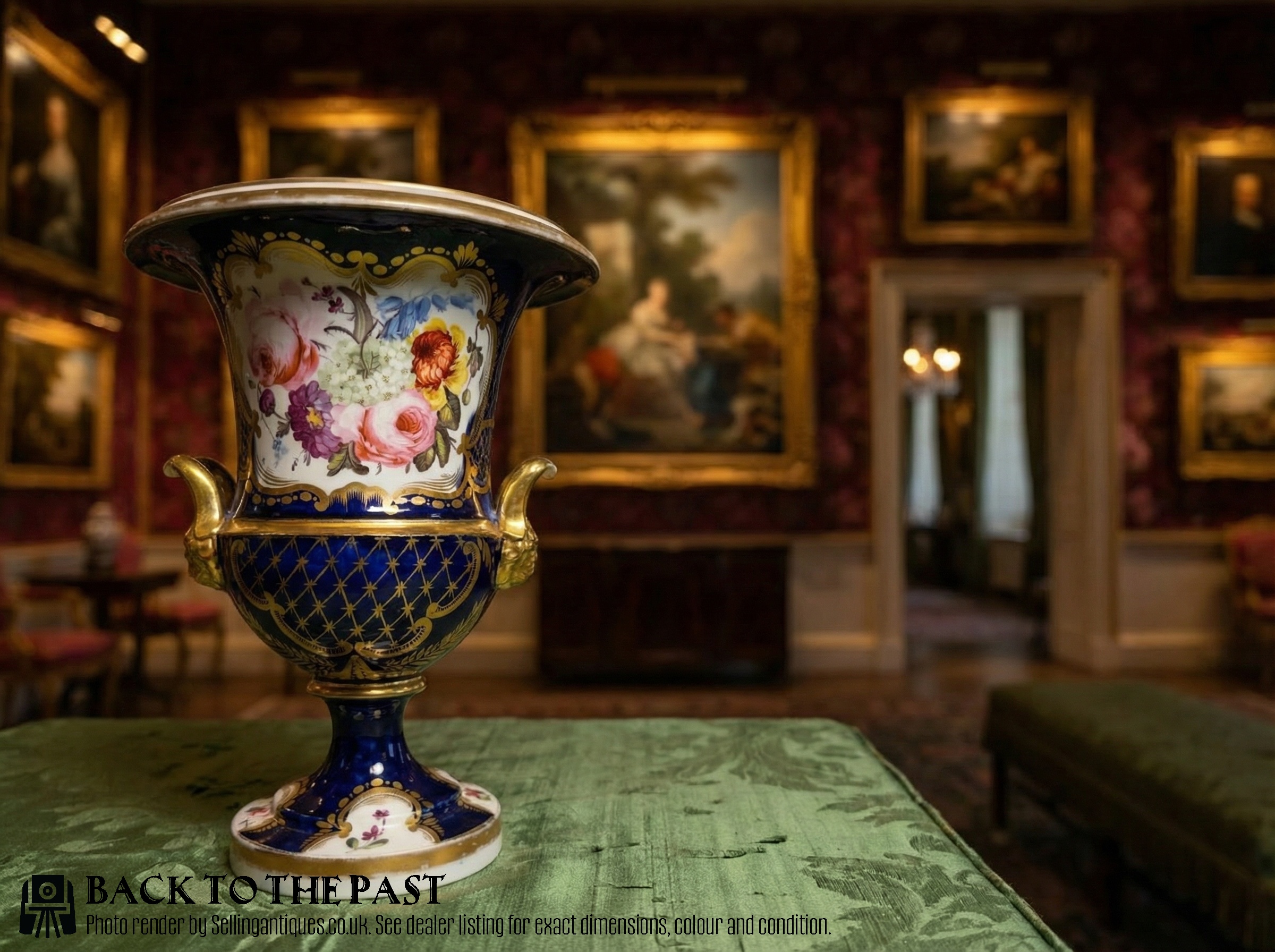
19th Century Coalport 'Campagna' Urn, 19th Century
Priced at £960 from Treaders Collectables
The 2026 retail price guide for Antique Urns is drawn from a proprietary archive of over 1.1 million retail prices indexed by Sellingantiques since 2003. This guide relies exclusively on their own internal data; no external sources or auction records are used.
Analysing nearly 25 years of UK antique market history alongside current retail values, the data indicates that typical UK retail prices for Antique Urns range between £500 and £3,500. Entry-level prices generally fall under £500 and premium examples upwards of £3,500.
The classic campana shape mimics an inverted bell. This wide-mouthed form stems directly from ancient Roman kraters.
Finials often crown the lids of covered vessels. Pineapples and acorns appear regularly as symbols of hospitality and strength.
Notice the handles. Twin loop handles or mounted masks are standard additions to the sides of most metal and ceramic urns.
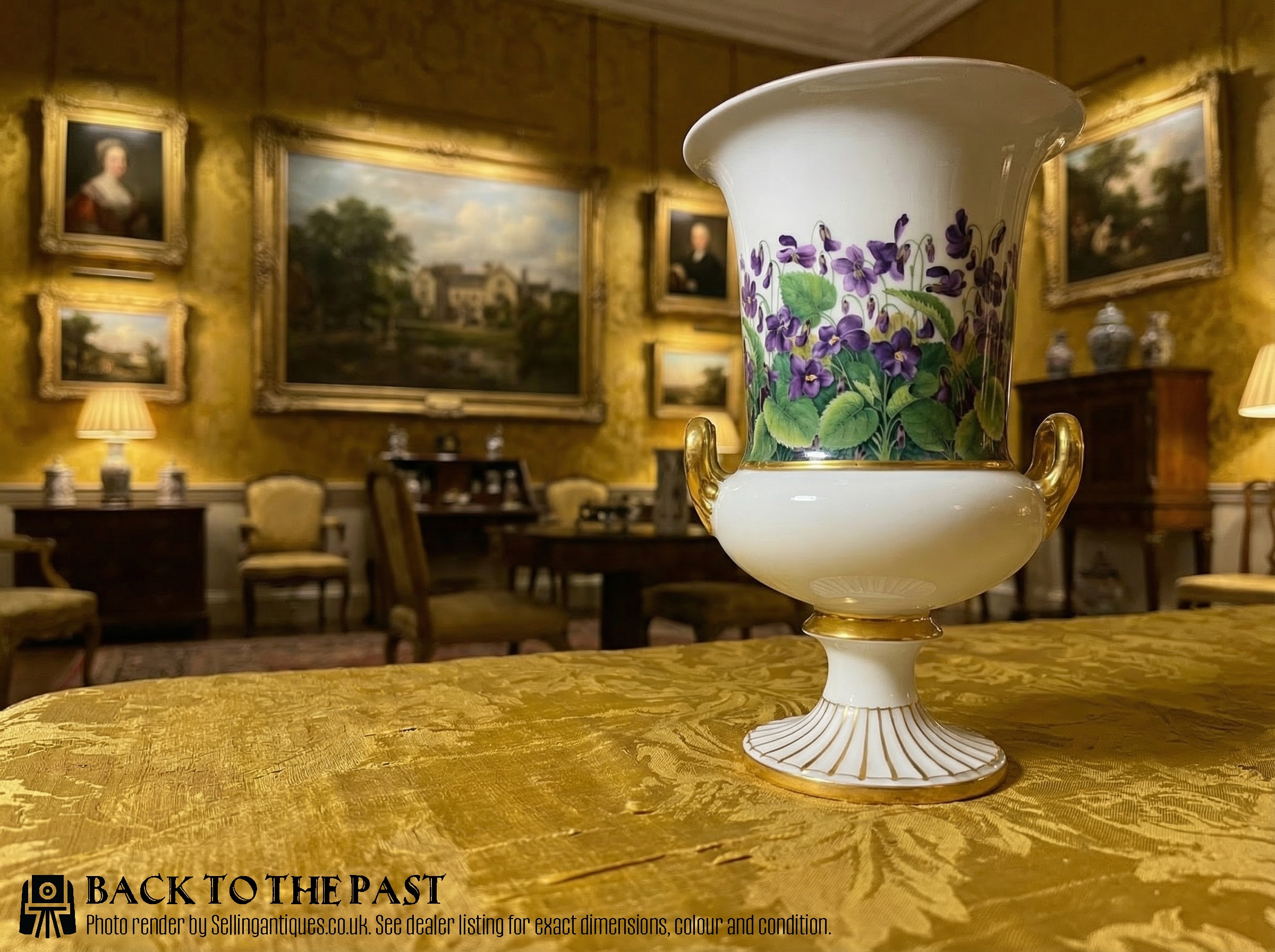
19th Century Meissen Porcelain Urn, 1880
Priced at £1,500 from Treaders Collectables
Wooden urns required complex cooperage techniques. Cabinetmakers glued vertical staves together before turning the rough hollow shape on a lathe.
Sand casting was standard for heavy iron garden antiques. Molten metal poured into sand moulds left a slightly pitted surface texture.
Silversmiths raised metal bodies from flat sheets. Hammering over a patterned anvil created the swelling shapes seen on neoclassical tea urns.
"Dining room knife urns often contain fitted wooden matrices inside. These slots kept silver cutlery standing upright and separated."
"Many heavy stone garden variants come apart into three or four separate stacking sections to make moving them possible."
"Tea urns from the Georgian period feature a central hollow tube. A heated iron rod dropped down this tube kept the water hot."
Based on almost 25 years of Sellingantiques UK antique market data, Antique Urns appeared 5880 times (out of 1,100,000 antiques) which gives it a rarity score of 31/100.
This score measures scarcity within the Sellingantiques archive only and is not a survey of the entire antiques market, so these statistics may not be indicative of the general availability of Antique Urns elsewhere.
Dusting with a soft brush usually does the trick for spelter and bronze. Harsh chemical cleaners strip away the aged patina that gives these pieces their character.
Silver and copper examples might need a gentle polish if they look too tarnished. Use a mild paste and work it carefully into the flat surfaces.
Stripping old paint off cast iron can reveal crisp casting details that multiple coats have hidden. You can use chemical strippers, but it is a messy job requiring good ventilation and protective gear.
Many collectors prefer the weathered look for outdoor settings. It adds texture and looks appropriate against garden planting. Leaving the paint alone avoids the risk of trapping moisture under a fresh layer of paint, which causes rust.
Most indoor wooden or base metal variants leak. They were designed for display or to hold dry goods rather than liquids.
If you want to display fresh flowers, slip a glass jar or plastic liner inside. This protects the historic surface from water damage and condensation.
Many wooden dining room urns have a clever lifting mechanism inside. The lid connects to a central wooden stem that requires a straight, firm pull upwards rather than a twisting motion.
Sometimes the timber swells due to humidity changes. Moving them to a drier room for a few weeks might shrink the wood enough to release the joint naturally.
Please note: This Antique Urns guide and its associated pricing data are provided for general informational purposes only. It does not constitute formal financial, investment, or appraisal advice and should not be relied upon as the sole basis for any commercial activity, purchasing, or sales decisions. Sellingantiques.co.uk accepts no liability for any actions taken in reliance on this information. Always consult with a qualified professional or independent appraiser.
