

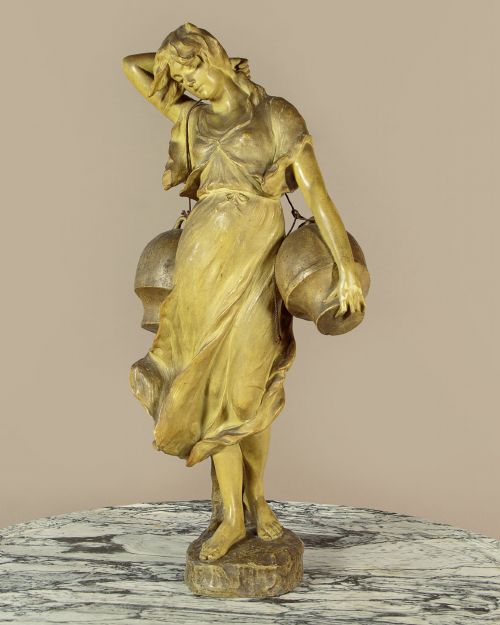


A 2026 Guide by Sellingantiques
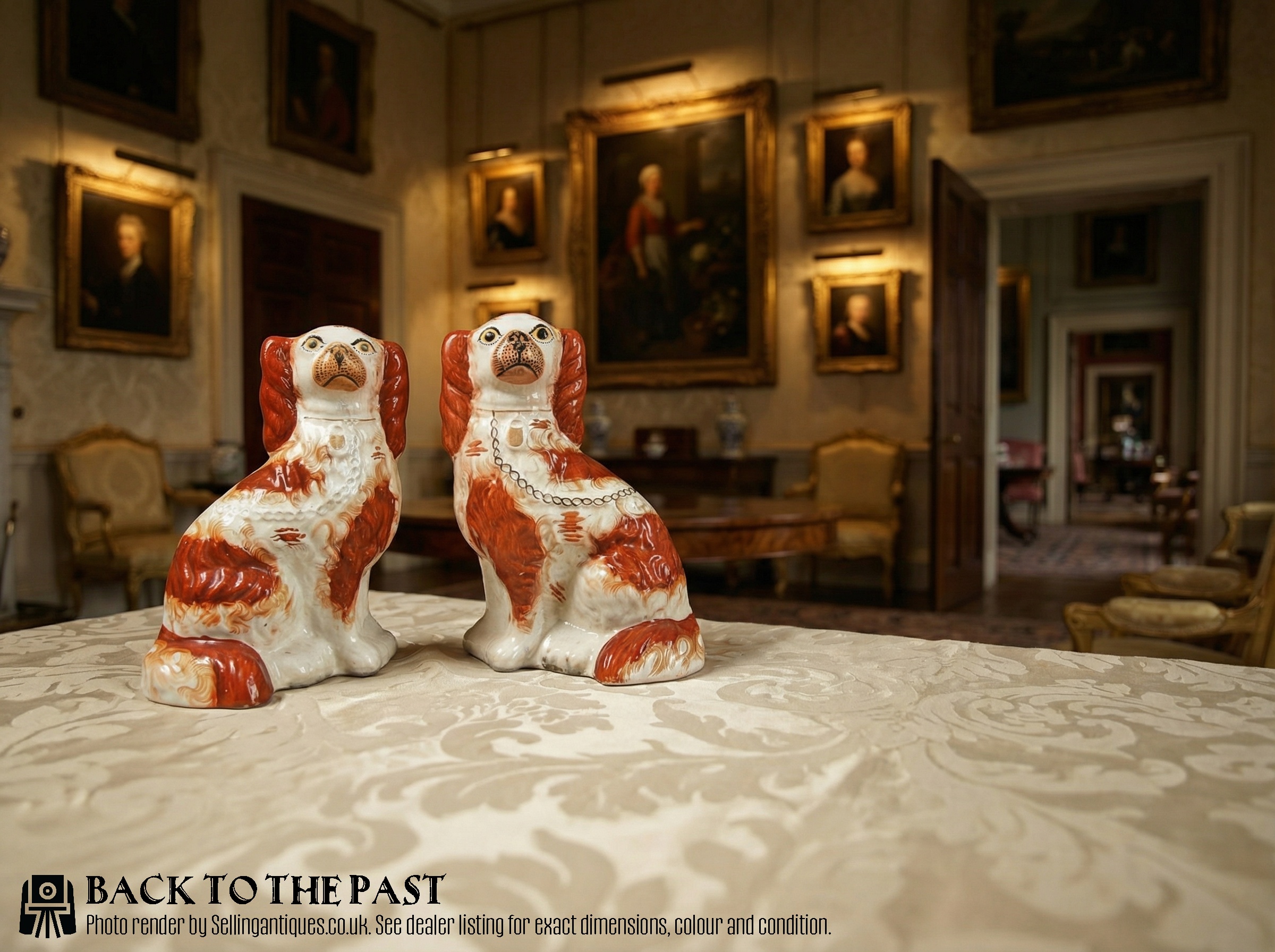
2 19th Century Staffordshire Spaniel Dogs, 19th Century
Priced at £120 from Abersoch Antiques
Wealthy households started collecting porcelain figures in the eighteenth century. Look at the early European factories trying to copy imported Asian wares.
Production boomed during the nineteenth century. Expanding middle classes wanted antique figurines to decorate their new parlour rooms.
Subjects shifted over the decades. Classical gods gave way to romanticised peasants and literary characters as public taste changed.
Different countries developed distinct traditions. Staffordshire potteries turned out flatbacks by the thousand while French foundries focused on cast bronze.
Meissen dominated early European porcelain. Johann Joachim Kändler modelled hundreds of figures for them during the mid-eighteenth century.
Sèvres produced unglazed biscuit porcelain figurines from the 1750s. Etienne-Maurice Falconet served as their director of sculpture for over a decade.
Minton made majolica and Parian ware figures in England. They often employed established sculptors to design their nineteenth-century exhibition pieces.

Pair of Antique Staffordshire Spaniel Dogs, 1860
Priced at £495 from London City Antiques
The 2026 retail price guide for Antique Figurines is drawn from a proprietary archive of over 1.1 million retail prices indexed by Sellingantiques since 2003. This guide relies exclusively on their own internal data; no external sources or auction records are used.
Analysing nearly 25 years of UK antique market history alongside current retail values, the data indicates that typical UK retail prices for Antique Figurines range between £300 and £3,000. Entry-level prices generally fall under £300 and premium examples upwards of £3,000.
Bases usually tell you a lot. Many antique figurines stand on integral plinths shaped like grassy mounds or architectural pedestals.
Look for makers' marks stamped or painted underneath. Factories often used crossed swords or crown motifs to identify their output.
Hand-painted details bring the ceramic pieces to life. Gilding frequently highlights the edges of clothing or the scrolling on the base.

18th Century Meissen Figurine of a Lady, 1750
Priced at £2,000 from Treaders Collectables
Moulding allowed factories to produce identical antique figurines. Workers pressed wet clay into plaster segments before joining the sections together with slip.
Bronze figures rely on the lost-wax casting method. Founders pour molten metal into a heat-resistant mould once the internal wax model melts away.
Check the hollow interiors of ceramic figures. Vent holes let trapped air escape during firing so the piece does not explode in the kiln.
"Early dinner guests enjoyed tables decorated with sugar sculptures. Porcelain factories stepped in to create permanent versions of these edible table ornaments."
"Foundries offered the same bronze figure in several different sizes. Customers could choose the exact scale to fit their specific display cabinet."
"Paint recipes varied between regions. Some factories created highly distinct local colour palettes based on the specific minerals they could dig up nearby."
Based on almost 25 years of Sellingantiques UK antique market data, Antique Figurines appeared 3531 times (out of 1,100,000 antiques) which gives it a rarity score of 49/100.
This score measures scarcity within the Sellingantiques archive only and is not a survey of the entire antiques market, so these statistics may not be indicative of the general availability of Antique Figurines elsewhere.
Dust them with a soft makeup brush first. This dislodges loose dirt without scratching the glaze or catching on sharp edges.
For stubborn grime on glazed pieces, use a cotton swab dipped in warm water and mild soap. Do not submerge the figure, as water can get trapped inside the hollow base through the vent hole.
Weight is your best initial guide. Bronze feels heavy for its size and stays quite cold to the touch. Spelter is a zinc alloy that feels noticeably lighter and warms up quickly in your hand.
Look closely at the surface finish. Bronze develops a complex patina over time. Spelter figures were often painted or given a surface wash to mimic bronze, and this coating frequently flakes off to reveal dull grey metal underneath.
Turn the piece over to check the underside of the base. If you see a bright silvery-grey scratch where it has rubbed against tables, it is likely spelter.
Bocage is the leafy background support found on many early pottery and porcelain figures. Modellers created these intricate trees by pressing clay into small moulds and attaching the leaves one by one.
They served a practical purpose in the kiln. The network of branches helped prop up the main figure during firing, stopping the softening clay from slumping under its own weight.
Factories designed a lot of figures to face each other on a mantelpiece. These pairs usually share matching decorative themes, like seasonal clothing or complementary poses.
Over the centuries, pairs often got separated as estates were divided up among relatives. Finding an original left and right facing pair that have stayed together since they left the factory is uncommon.
Some models were sold as larger garnitures of three or five pieces. The central figure would stand taller, flanked by smaller complementary subjects.
Please note: This Antique Figurines guide and its associated pricing data are provided for general informational purposes only. It does not constitute formal financial, investment, or appraisal advice and should not be relied upon as the sole basis for any commercial activity, purchasing, or sales decisions. Sellingantiques.co.uk accepts no liability for any actions taken in reliance on this information. Always consult with a qualified professional or independent appraiser.
