


A 2026 Guide by Sellingantiques
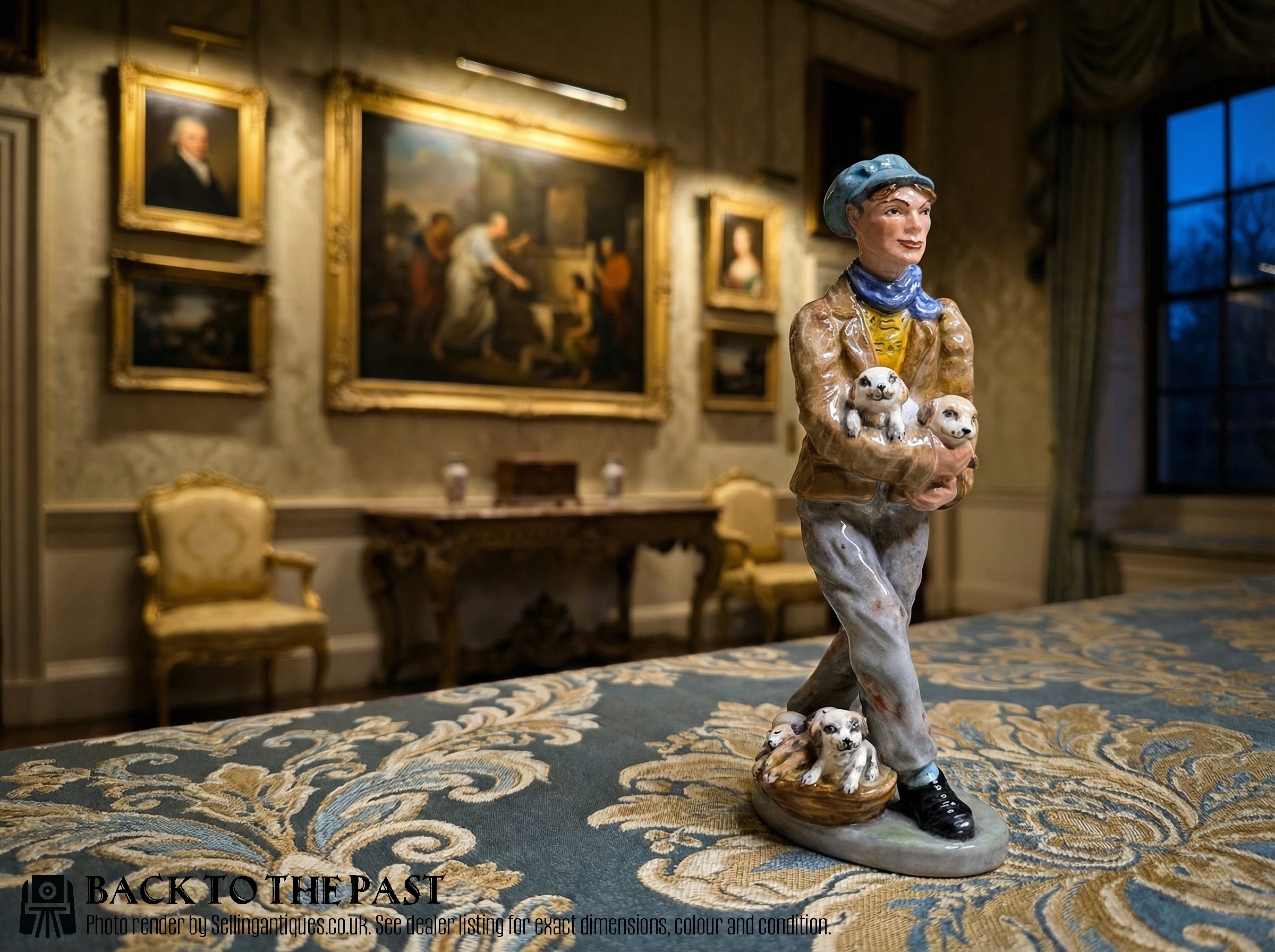
A Rare Edwardian Wedgwood & Co. Ltd China Figure of the Puppy Seller., 1910
Priced at £295 from Robert Belcher Antiques
European factories spent decades trying to copy imported Asian ceramics. They didn't crack the formula until the eighteenth century.
Look at the shift in dining habits. As tea drinking expanded, demand for domestic antique china soared.
Factories often sprang up near coalfields and clay deposits. Staffordshire became the dominant hub for British production.
Early porcelain was for the wealthy. Later industrial methods brought printed earthenwares into middle-class homes.
Nineteenth-century mass production. This shifted habits from mismatched pots towards uniform dinner services.
Josiah Wedgwood pioneered new ceramic bodies. His creamware became a standard across late eighteenth-century Europe.
Meissen established the first hard-paste porcelain factory in Europe. They operated from 1710 and dominated early table fashions.
Spode perfected the bone china formula. They produced vast quantities of blue and white transferware.
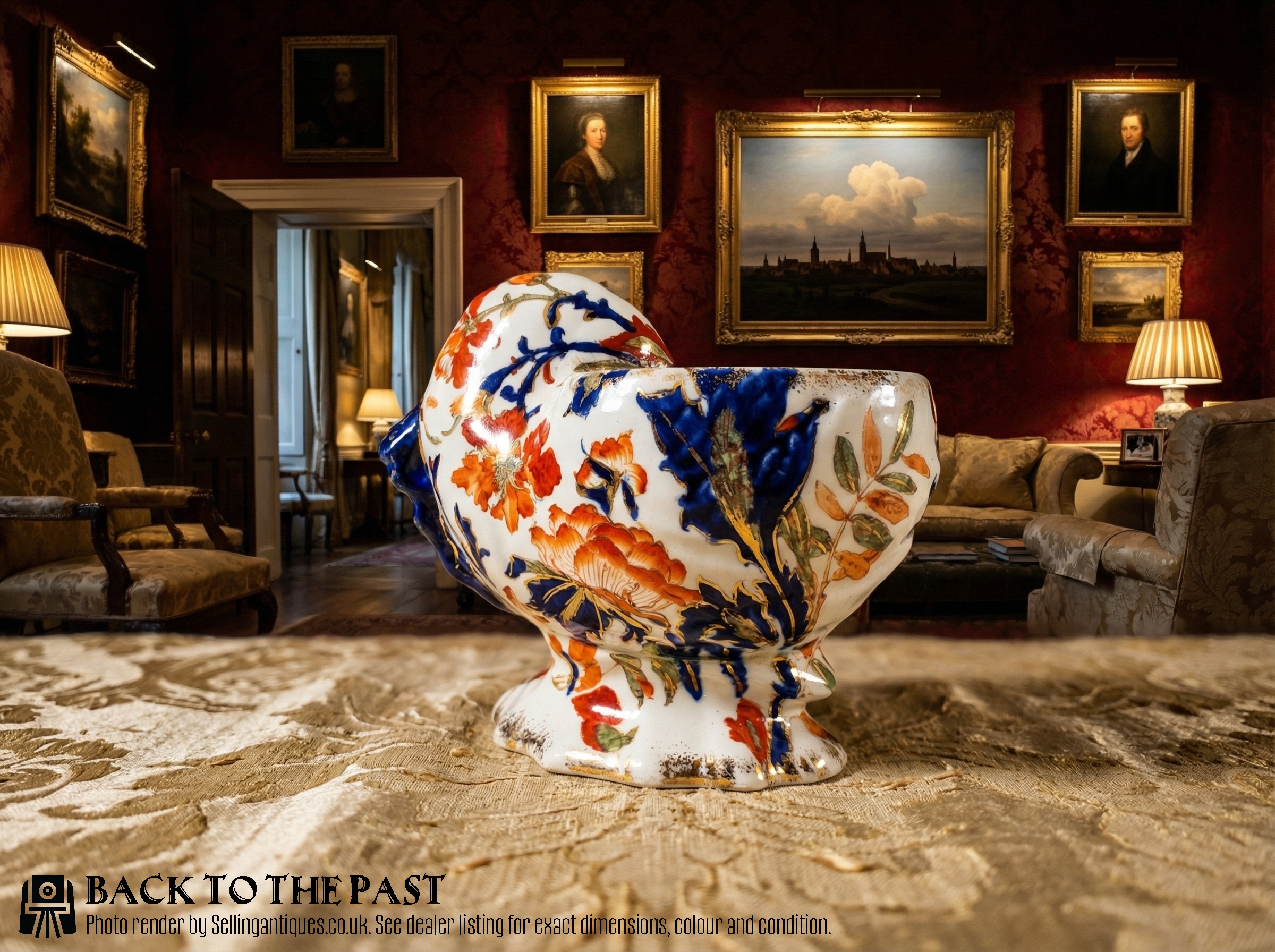
Rare Antique Victorian Ridgways China Spoon Warmer – Circa 1890, 1890
Priced at £195 from Kingsdown Antiques
The 2026 retail price guide for Antique China is drawn from a proprietary archive of over 1.1 million retail prices indexed by Sellingantiques since 2003. This guide relies exclusively on their own internal data; no external sources or auction records are used.
Analysing nearly 25 years of UK antique market history alongside current retail values, the data indicates that typical UK retail prices for Antique China range between £300 and £3,300. Entry-level prices generally fall under £300 and premium examples upwards of £3,300.
Translucency is the classic test for true porcelain. Hold a plate to the light and look for shadows.
Transfer printing replaced hand painting on everyday wares. A copper plate pressed a design onto tissue for transferring.
Foot rims usually lack glaze. This stops the piece fusing to the kiln shelf, so you'll feel a rough edge.
Throwing on a wheel gave way to press moulding. Workers pushed flat sheets of clay into plaster shapes.
Slipcasting allowed complex shapes. Liquid clay poured into a mould sets at the edges before the rest drains away.
Enamel colours required a third firing at lower heat. They sit on top of the glaze rather than sinking in.
"Painters often marked their work with a tiny isolated number. You can sometimes trace a piece to a specific decorator."
"Tea bowls originally lacked handles to follow Asian traditions. They fit into the palm to warm the hands."
"Many factories sold blank wares to outside decorators. These independent studios created highly individual patterns."
Based on almost 25 years of Sellingantiques UK antique market data, Antique China appeared 3575 times (out of 1,100,000 antiques) which gives it a rarity score of 49/100.
This score measures scarcity within the Sellingantiques archive only and is not a survey of the entire antiques market, so these statistics may not be indicative of the general availability of Antique China elsewhere.
Wash them by hand in warm soapy water. Modern dishwashers run too hot and use aggressive detergents that strip away overglaze enamels.
Use a soft cloth rather than abrasive pads. If the piece has existing crazing, avoid soaking it for long periods to stop water seeping into the clay body.
Those brown marks are usually organic matter trapped under the surface. This happens when the glaze crazes and allows liquids to penetrate the porous clay body beneath.
You cannot wash these out with normal soap. Some restorers use a prolonged soaking process in a weak hydrogen peroxide solution to draw the staining out safely.
Most antique dining wares handle warm food without issue. They were designed for daily meals.
Sudden temperature shocks are the main risk. Avoid moving a cold plate straight into a hot oven.
That translucency points to a porcelain body rather than standard earthenware. When held to a light source, true hard-paste or bone china allows shadows to pass through the vessel walls.
Potteries achieved this by firing specific mixtures of clay at very high temperatures. It creates a vitrified body that is strong enough to be potted thinly.
Please note: This Antique China guide and its associated pricing data are provided for general informational purposes only. It does not constitute formal financial, investment, or appraisal advice and should not be relied upon as the sole basis for any commercial activity, purchasing, or sales decisions. Sellingantiques.co.uk accepts no liability for any actions taken in reliance on this information. Always consult with a qualified professional or independent appraiser.
