36,740  PAGES BROWSED TODAY PAGES TODAY • 118 ANTIQUES UPLOADED TODAYNEW ARRIVALS
GIFTS
118 ITEMS ADDED TODAY
Sort Order
Items Per Page
Browse Categories
Sort order
Relevant Links
Items per page
ID #SA943904
SOLD
Email Phone
Save
Late Victorian Henley’s Universal Discharger by C Gerhardt of Bonn
Sold by Jason Clarke Antiques
sold SA943904
Sorry, but this item has been sold.
Jason Clarke Antiques

Jason Clarke Antiques

Sellingantiques Verified Since Jul 2015
Browse dealers 78 items
Id #SA943904
PDF SHARE
SAVE

Late Victorian Henley’s Universal Discharger by C Gerhardt of Bonn

19th century
Sold 25 November 2024 · Jason Clarke Antiques
This “Late Victorian Henley’s Universal Discharger by C Gerhardt of Bonn” found a buyer.

It was listed by Jason Clarke Antiques. Sold pieces stay on Sellingantiques as a record of what has passed through, and the next one is rarely far away.

Description

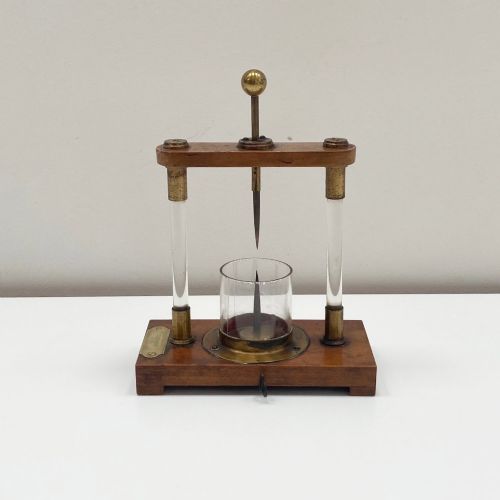
For sale, a late Victorian Henley’s Universal Discharger by C Gerhardt of Bonn.

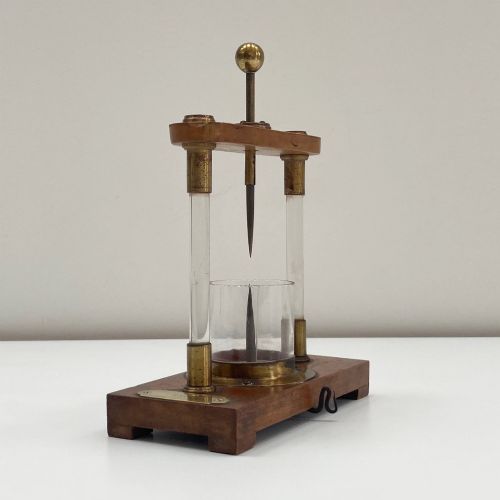
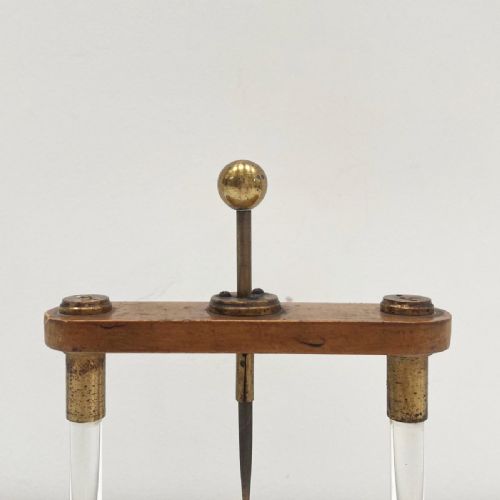
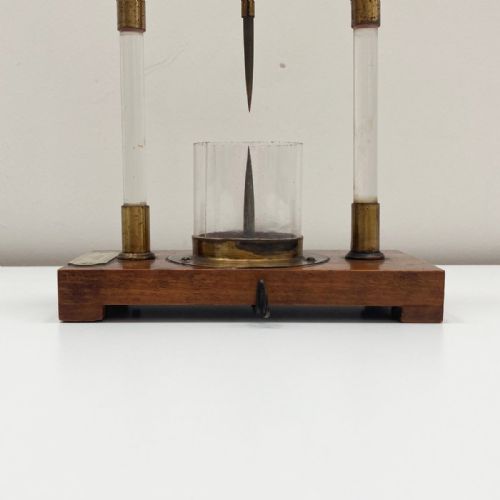
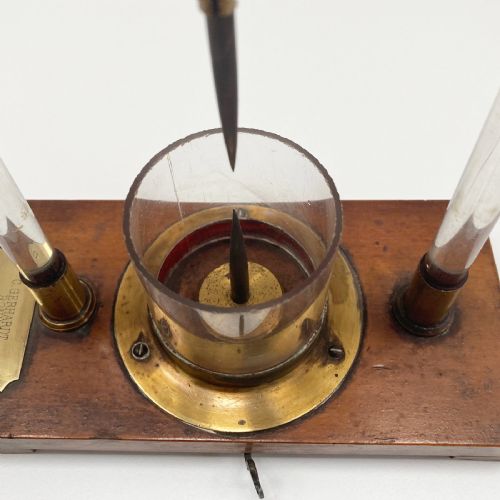
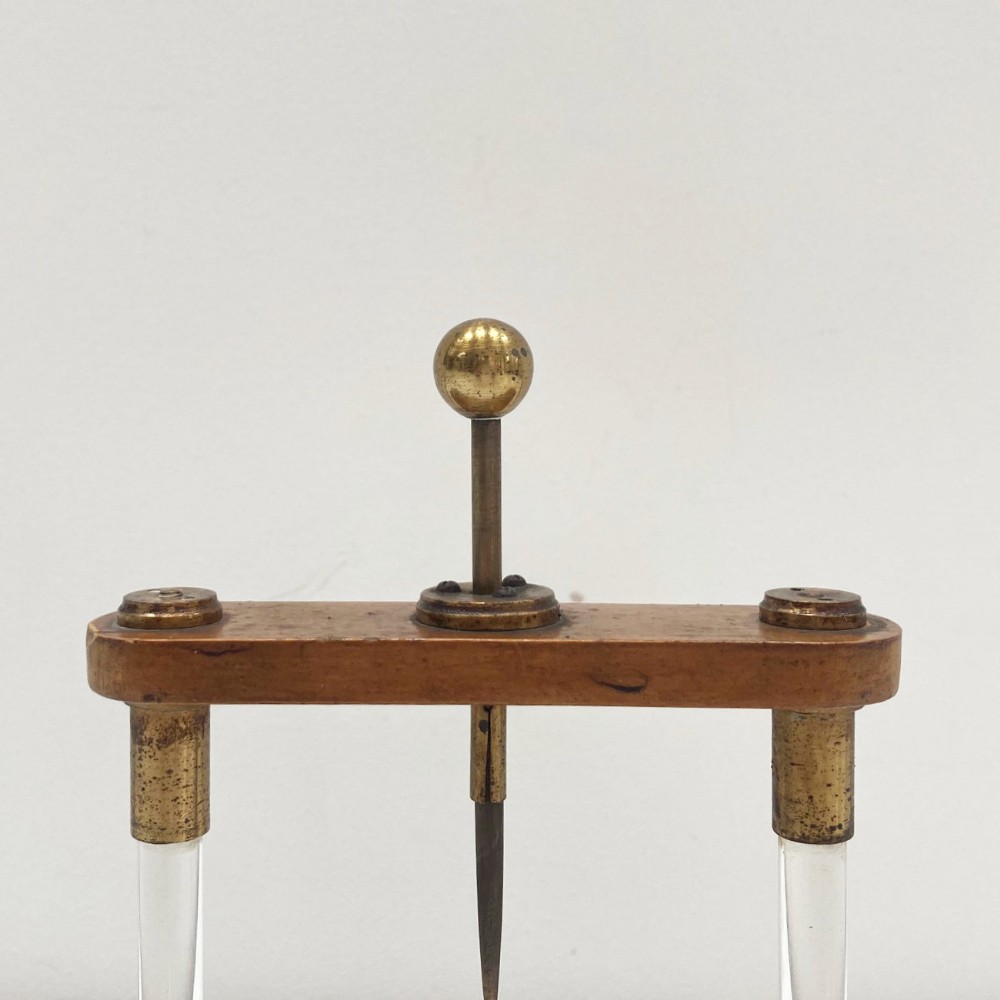
The instrument consists of a walnut base with vertical glass rods supported by brass ferrules to each side. The rods support a walnut platform into which an up and down adjustable discharge rod is placed through the centre.
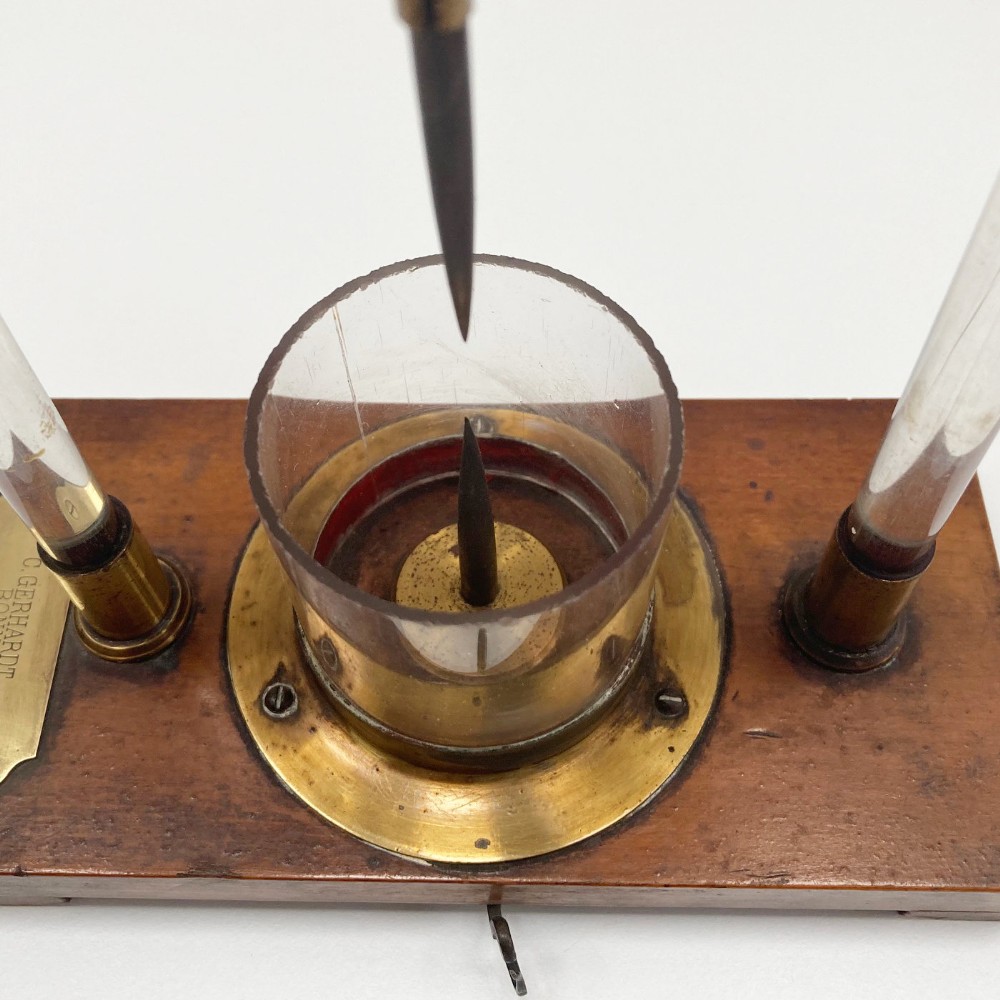
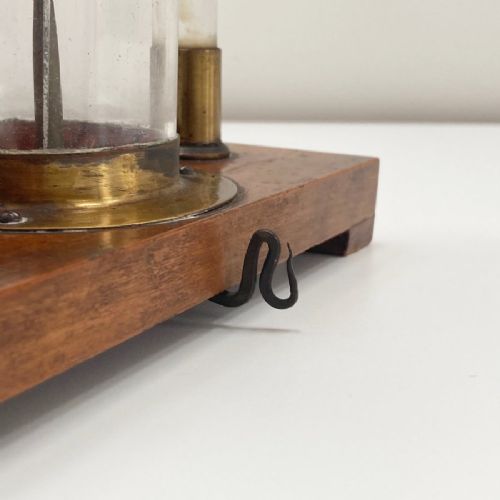
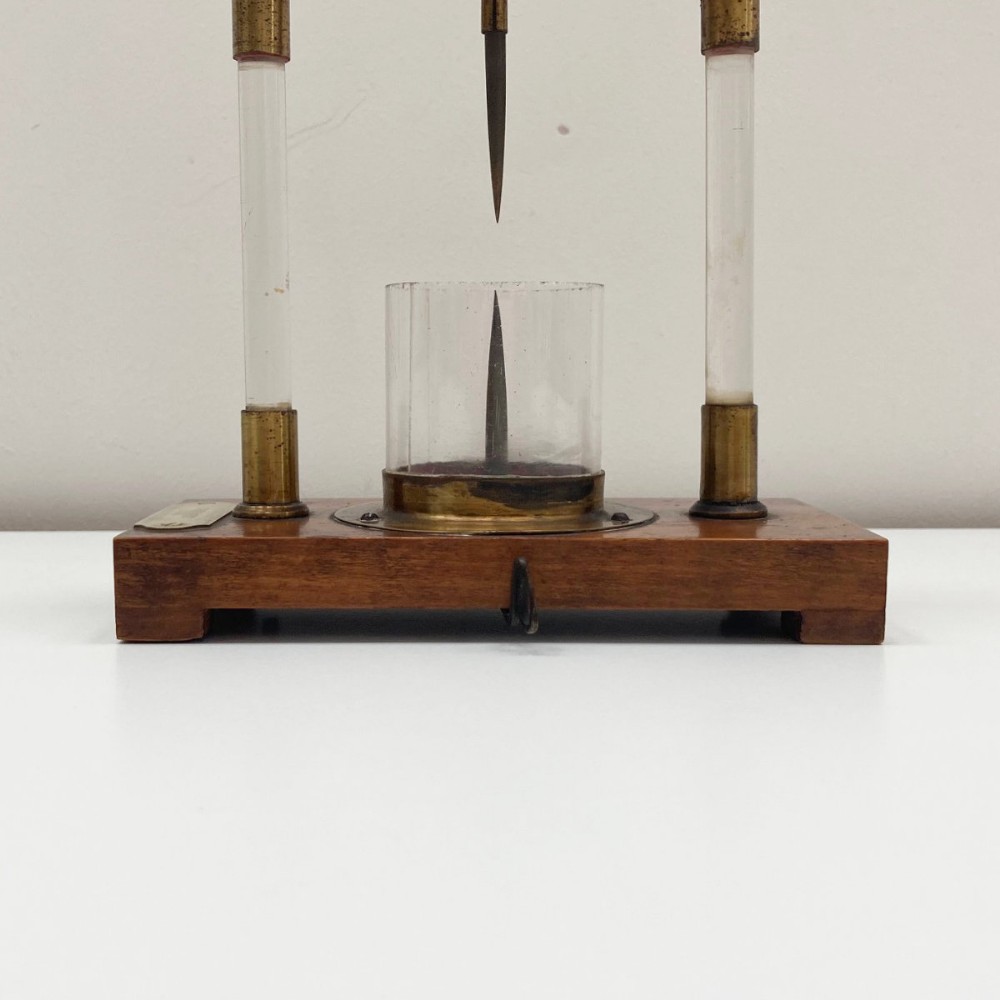
To the centre of the base below is a second, fixed discharge rod pointing upwards to meet the other and with a piece of glass tube fixed within a brass base surround. A hook to the front centre of the base is provided to allow electric charge to be sent to the lower rod from a Leyden Jar.
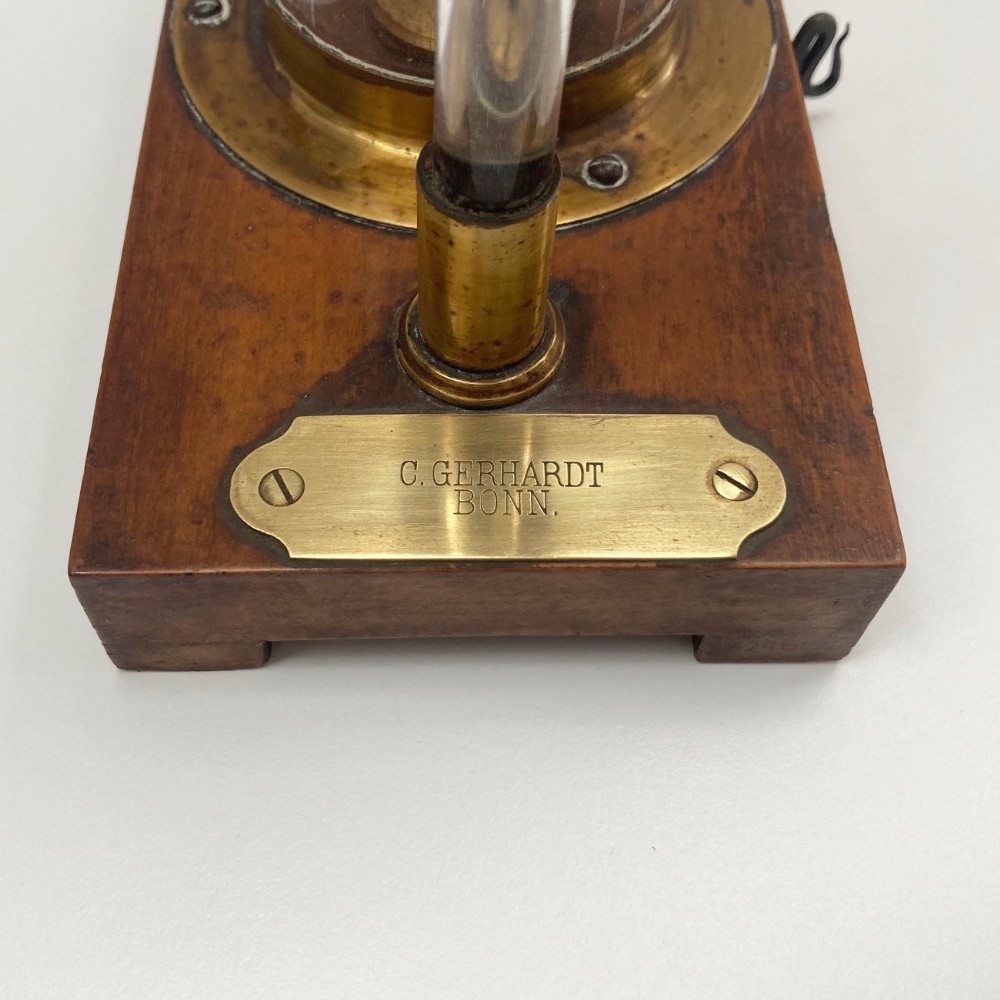
The base is complete with its original brass plaque engraved to the maker, C. Gerhardt, Bonn.

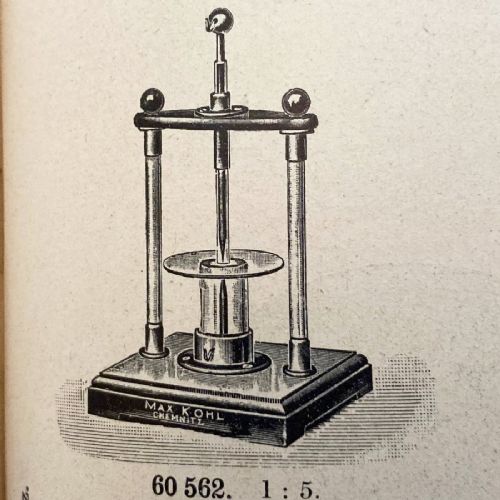
The purpose of the glass tube is clearly demonstrated in Max Kohl’s catalogues (see images) where it is described as, “Apparatus for piercing glass up to a thickness of 2mm”. A small disc of glass is intended to rest upon the tube which acts as a table support after which electrostatic charge can be applied and the glass disc is perforated as a result.
Although the design is somewhat different from most Universal Dischargers which sport a central table and a discharge rod to each side, the principles and intent is the same, namely, to show the effects of deflagration on various materials. In this case, it seems to have been designed specifically for demonstrating the perforation of glass by means of electrostatic charge.
The German maker, Charles Gerhardt was born in Bonn in 1846, the same year in which the chemistry outfitter, “Marquarts’s Lager Chemischer Utensilien” was formed. Gerhardt eventually joined the firm as an apprentice and later acquired the business in 1872. It was originally based at 100 Bornheimer Street in Bonn.
In 1884 he became the first to produce apparatus to support the German Chemist, Johan Kjeldahl’s newly discovered method for identifying the amount of nitrogen contained within various organic materials (The Kjeldahl method). His relationship was seemingly close with Kjeldahl, as he also produced digestion and distillation equipment for the scientist during the same decade.
Gerhardt died at a reasonably young age in 1907 where after the company was renamed to C. Gerhardt, Fabrik und Lager Chemischer Apparate by his son. Under Walter Gerhardt’s stewardship, the company gained worldwide recognition. Charles’s daughter also lived at the Bornheimer Street site where she married the German Expressionist painter August Macke. Many of his paintings feature the premises in which this instrument was made.

For reasons unknown, the company was eventually passed through the female line of the Gerhardt family, and it continues to be owned and managed by the Macke family to this day. Quite understandably, it maintains strong links between the science, arts and the environment.

Circa 1880

Physical Dimensions
Height
23cm (9.06")
Width
16cm (6.30")
Depth
8cm (3.15")
Declaration

Jason Clarke Antiques has dated this Antique Henleys Universal Discharger to the 1880s.

Reference Numbers
Sellingantiques Reference
SA943904
Description
For sale, a late Victorian Henley’s Universal Discharger by C Gerhardt of Bonn.
“
The instrument consists of a walnut base with vertical glass rods supported by brass ferrules to each side.
Jason Clarke Antiques

The rods support a walnut platform into which an up and down adjustable discharge rod is placed through the centre.

fig 1. A late Victorian Henleys universal discharger featuring a wooden base, glass columns, and brass adjustment components.
fig 1. Late Victorian Henley’s Universal Discharger by C Gerhardt of Bonn

To the centre of the base below is a second, fixed discharge rod pointing upwards to meet the other and with a piece of glass tube fixed within a brass base surround. A hook to the front centre of the base is provided to allow electric charge to be sent to the lower rod from a Leyden Jar.

fig 2. A late Victorian Henleys universal discharger featuring a wooden base, glass columns, and brass adjustment components.
fig 2. Late Victorian Henley’s Universal Discharger by C Gerhardt of Bonn

The base is complete with its original brass plaque engraved to the maker, C. Gerhardt, Bonn.

The purpose of the glass tube is clearly demonstrated in Max Kohl’s catalogues (see images) where it is described as, “Apparatus for piercing glass up to a thickness of 2mm”. A small disc of glass is intended to rest upon the tube which acts as a table support after which electrostatic charge can be applied and the glass disc is perforated as a result.

fig 3. A late Victorian Henleys universal discharger featuring a wooden base, glass columns, and brass adjustment components.
fig 3. Late Victorian Henley’s Universal Discharger by C Gerhardt of Bonn

Although the design is somewhat different from most Universal Dischargers which sport a central table and a discharge rod to each side, the principles and intent is the same, namely, to show the effects of deflagration on various materials. In this case, it seems to have been designed specifically for demonstrating the perforation of glass by means of electrostatic charge.

fig 4. A late Victorian Henleys universal discharger featuring a wooden base, glass columns, and brass adjustment components.
fig 4. Late Victorian Henley’s Universal Discharger by C Gerhardt of Bonn

The German maker, Charles Gerhardt was born in Bonn in 1846, the same year in which the chemistry outfitter, “Marquarts’s Lager Chemischer Utensilien” was formed. Gerhardt eventually joined the firm as an apprentice and later acquired the business in 1872. It was originally based at 100 Bornheimer Street in Bonn.

fig 5. A late Victorian Henleys universal discharger featuring a wooden base, glass columns, and brass adjustment components.
fig 5. Late Victorian Henley’s Universal Discharger by C Gerhardt of Bonn

In 1884 he became the first to produce apparatus to support the German Chemist, Johan Kjeldahl’s newly discovered method for identifying the amount of nitrogen contained within various organic materials (The Kjeldahl method). His relationship was seemingly close with Kjeldahl, as he also produced digestion and distillation equipment for the scientist during the same decade.

fig 6. A late Victorian Henleys universal discharger featuring a wooden base, glass columns, and brass adjustment components.
fig 6. Late Victorian Henley’s Universal Discharger by C Gerhardt of Bonn

Gerhardt died at a reasonably young age in 1907 where after the company was renamed to C. Gerhardt, Fabrik und Lager Chemischer Apparate by his son. Under Walter Gerhardt’s stewardship, the company gained worldwide recognition. Charles’s daughter also lived at the Bornheimer Street site where she married the German Expressionist painter August Macke. Many of his paintings feature the premises in which this instrument was made.

fig 7. A late Victorian Henleys universal discharger featuring a wooden base, glass columns, and brass adjustment components.
fig 7. Late Victorian Henley’s Universal Discharger by C Gerhardt of Bonn

For reasons unknown, the company was eventually passed through the female line of the Gerhardt family, and it continues to be owned and managed by the Macke family to this day. Quite understandably, it maintains strong links between the science, arts and the environment.

Circa 1880

Height
23cm (9.06")
Width
16cm (6.30")
Depth
8cm (3.15")
Date of Manufacture

Jason Clarke Antiques has dated this Antique Henleys Universal Discharger to the 1880s.

Reference Numbers
Sellingantiques Ref
SA943904
Jason Clarke Antiques
Sellingantiques verified Since Jul 2015
Dealer Profile

You can view the stock and full dealer information on the Jason Clarke Antiques Profile Page
PDF SHARE
SAVE
A late Victorian Henleys universal discharger featuring a wooden base, glass columns, and brass adjustment components. SOLD6+ MONTHS AGO
1 / 9
Archive I A late Victorian Henleys universal discharger featuring a wooden base, glass columns, and brass adjustment components. SOLD6+ MONTHS AGO

Late Victorian Henley’s Universal Discharger by C Gerhardt of Bonn
Archive II A late Victorian Henleys universal discharger featuring a wooden base, glass columns, and brass adjustment components. View II
Archive III A late Victorian Henleys universal discharger featuring a wooden base, glass columns, and brass adjustment components. View III
Archive IV A late Victorian Henleys universal discharger featuring a wooden base, glass columns, and brass adjustment components. View IV
Archive V A late Victorian Henleys universal discharger featuring a wooden base, glass columns, and brass adjustment components. View V
Archive VI A late Victorian Henleys universal discharger featuring a wooden base, glass columns, and brass adjustment components. View VI
Archive VII A late Victorian Henleys universal discharger featuring a wooden base, glass columns, and brass adjustment components. View VII
Archive VIII A late Victorian Henleys universal discharger featuring a wooden base, glass columns, and brass adjustment components. View VIII
Archive IX A late Victorian Henleys universal discharger featuring a wooden base, glass columns, and brass adjustment components. View IX
Enlarged Archival View
Telephone 07815 046645
Location
Newbury
Berkshire
United Kingdom
Verified Since Jul 2015
Items For Sale 78
Items Sold 609
Jason Clarke Antiques
Verified Since Jul 2015
View Dealer Info
Location: Newbury, Berkshire, United Kingdom
Verified
Jul 2015
For Sale
78
Sold
609
A late Victorian Henleys universal discharger featuring a wooden base, glass columns, and brass adjustment components.
Late Victorian Henley’s Universal Discharger by C Gerhardt of Bonn
Ref: SA943904
A late Victorian Henleys universal discharger featuring a wooden base, glass columns, and brass adjustment components.
Detail View 1
Detail View 2
Detail View 3
Detail View 4
Detail View 5
Detail View 6
Detail View 7
Detail View 8
Archival Detail
Every single antique dealer on our platform is individually approved by our internal team. We verify their professional trade history, ethical standards, and photographic quality to ensure a secure, high-standard buying environment. Upon joining, every dealer agrees to a strict 9-point code of conduct. While issues can occasionally arise, our dealers typically resolve them swiftly and directly with the buyer. In fact, since our founding in 2002, Sellingantiques has only had to step in to help resolve an issue on roughly five occasions—a true testament to the quality of our dealers and their dedication to your happiness.
Our dealers are highly experienced in packing and shipping fragile, high-value antiques. Because you are in direct contact with the dealer, you will be able to easily go through all available shipping and insurance options together to ensure your item arrives safely.
Antiques are the ultimate green purchase. By choosing historical pieces over newly manufactured goods, you completely eliminate the carbon footprint of modern mass production while preserving exceptional, timeless craftsmanship.
Written by Sellingantiques from the dealer’s photographs and listing
  • ObjectScientific Instruments
  • Period19th century
  • StyleVictorian & Gothic
  • MaterialBrass, Hardwood, Glass
  • ColourWarm Brown
  • MotifsTurned brass columns, Adjustable spark gap, Glass insulation pillars, Maker plaque
  • SizeH 23 cm (9 in) x W 16 cm (6 in) x D 8 cm (3 in)

Preservation involves keeping the object in a stable environment away from direct sunlight and high humidity, dusting gently with a dry microfibre cloth, and avoiding chemical polishes that can remove historical patina.

Placed on a desk, bookshelf, or mantelpiece, such an item adds industrial and academic character, serving as an intriguing focal point within a study or living space.

Authentic pieces often feature period maker signatures, traditional hand-turned brass work, minor surface oxidisation appropriate to their age, and construction methods characteristic of 19th-century workshop production.

These instruments were typically constructed using a combination of turned brass components, mahogany or hardwood bases, glass insulators, and delicate metallic adjustment pins.

A Henleys universal discharger is a 19th-century scientific instrument utilised in physics laboratories and lecture demonstrations to discharge Leyden jars and study electrical phenomena.
items
Add keywords to the filter
Price
£100
£250000
Era
Period
Style
Material
Origin
Stock Location
Recently Added
Online Payments
Categories