11,034  PAGES BROWSED TODAY PAGES TODAY 48 ANTIQUES UPLOADED TODAYNEW ARRIVALS
48 ITEMS ADDED TODAY
Sort Order
Items Per Page
Browse Categories
Sort order
Relevant Links
Items per page
ID #SA846647
FOR SALE
£1,495
Email Buy
Save
Victorian Black Glass Artificial Horizon Set by John Lilley & Son London
Jason Clarke Antiques
for sale €1,749     $1,899
£1,495
Jason Clarke Antiques

Jason Clarke Antiques

Sellingantiques Verified Since Jul 2015
View Dealers Stock Page
Id #SA846647
PDF SHARE
SAVE

Victorian Black Glass Artificial Horizon Set by John Lilley & Son London

19th century
Description

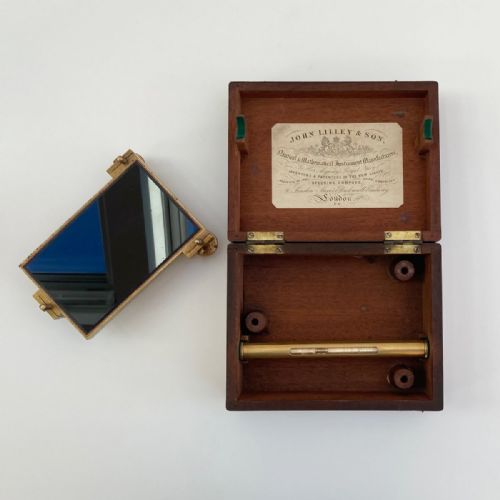
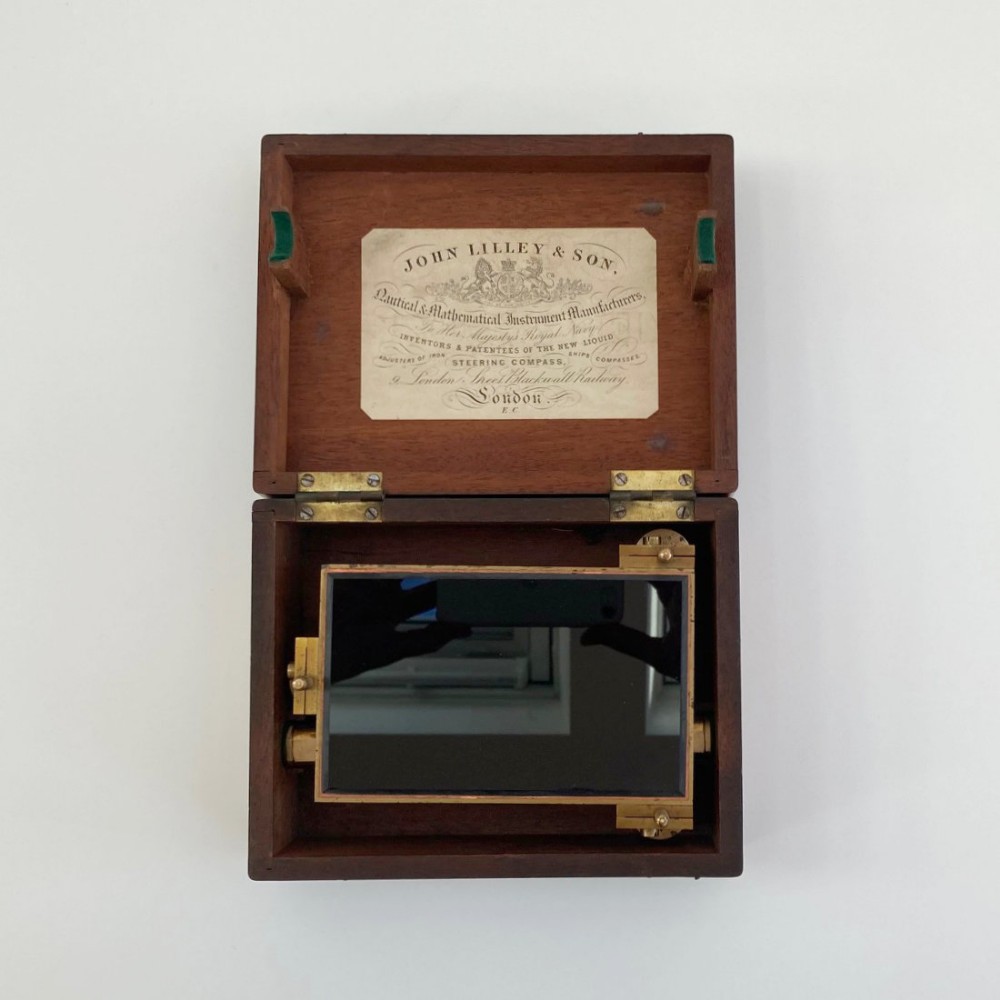
For sale, an exquisite maritime black glass artificial horizon set by John Lilley & Son, London

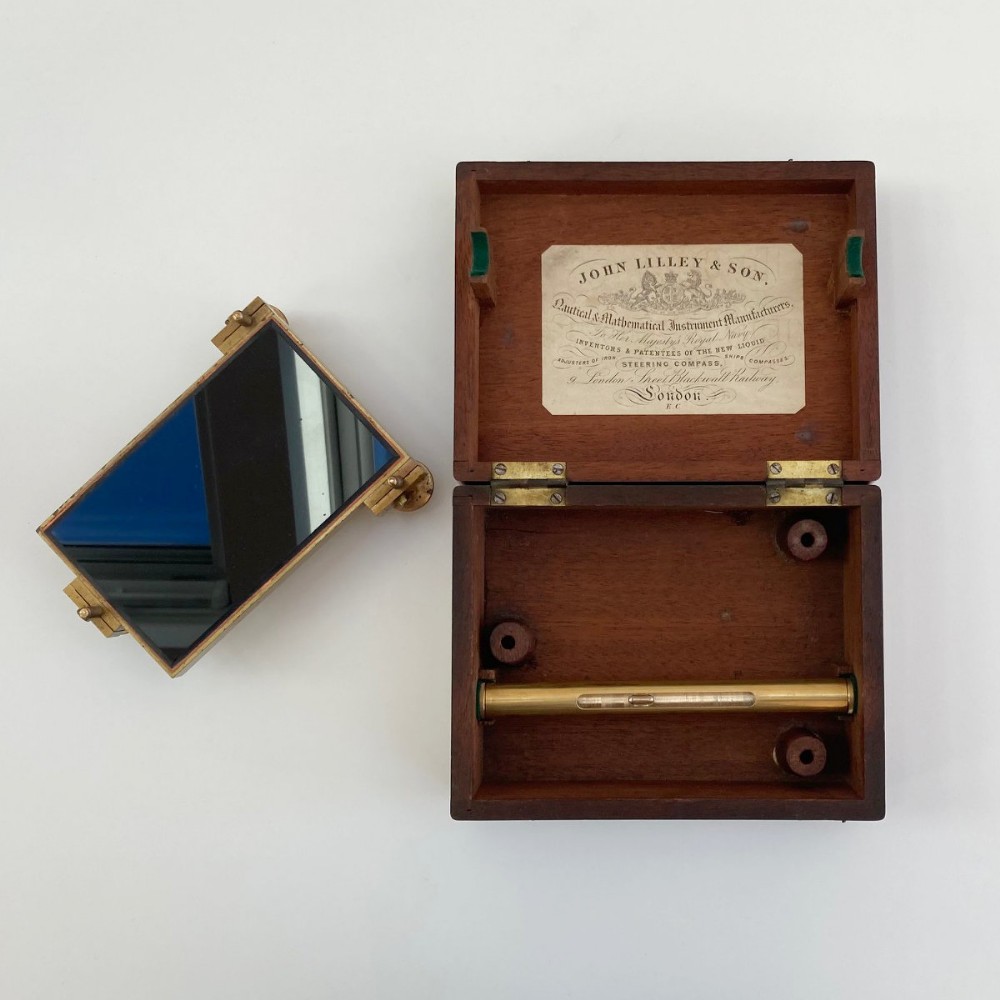
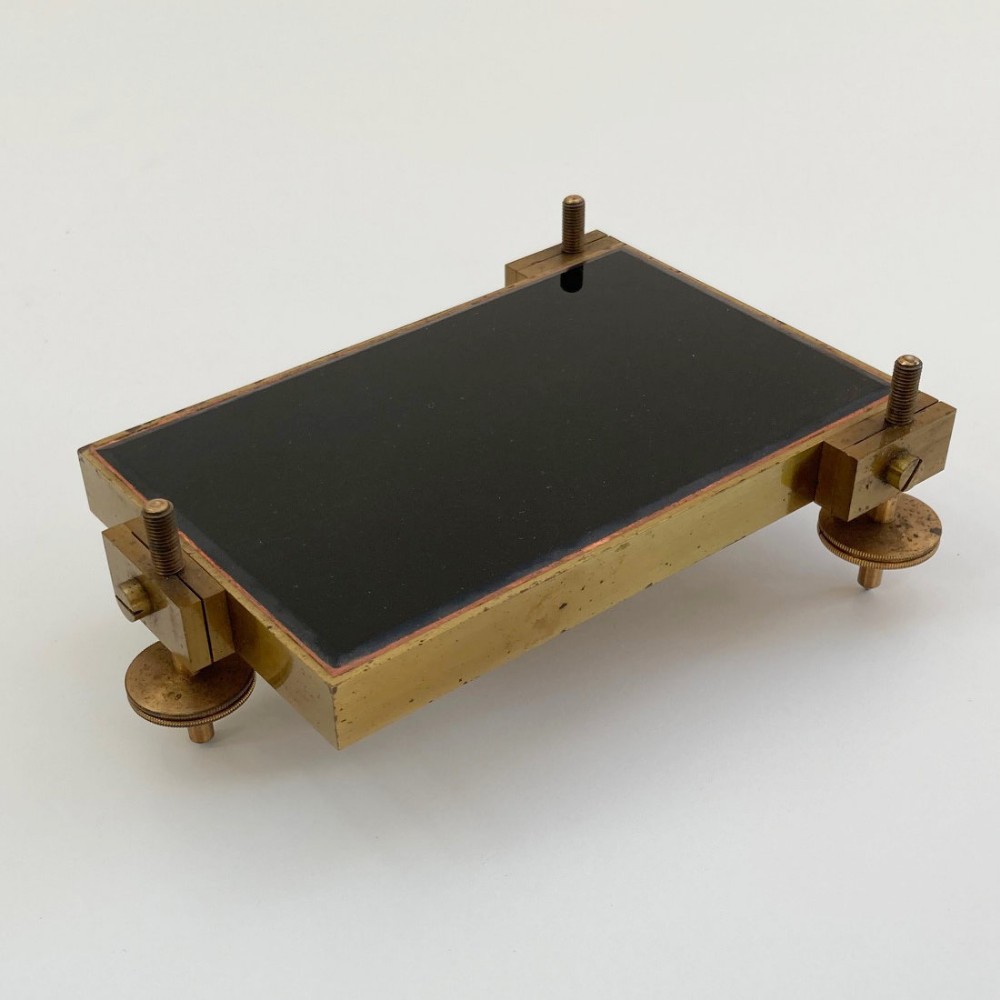
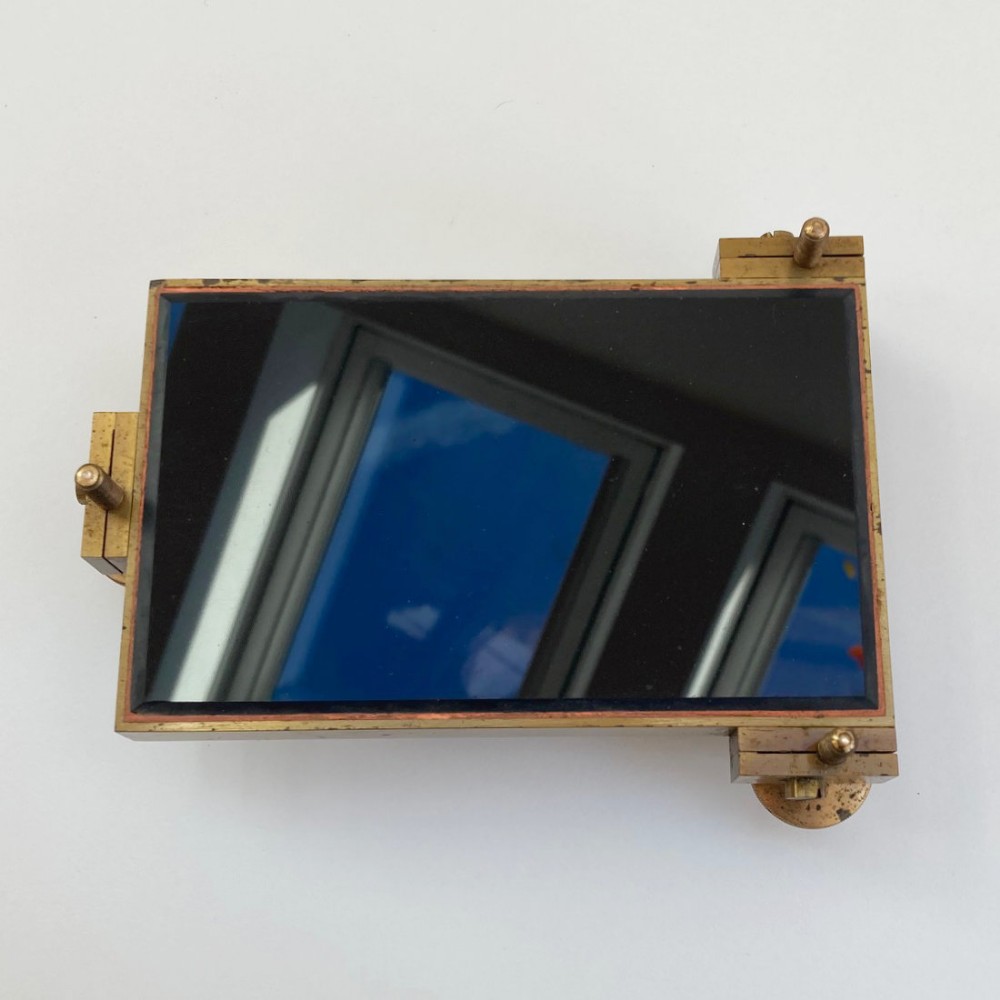
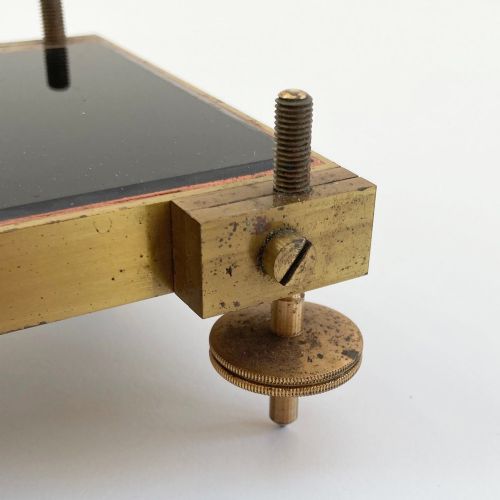
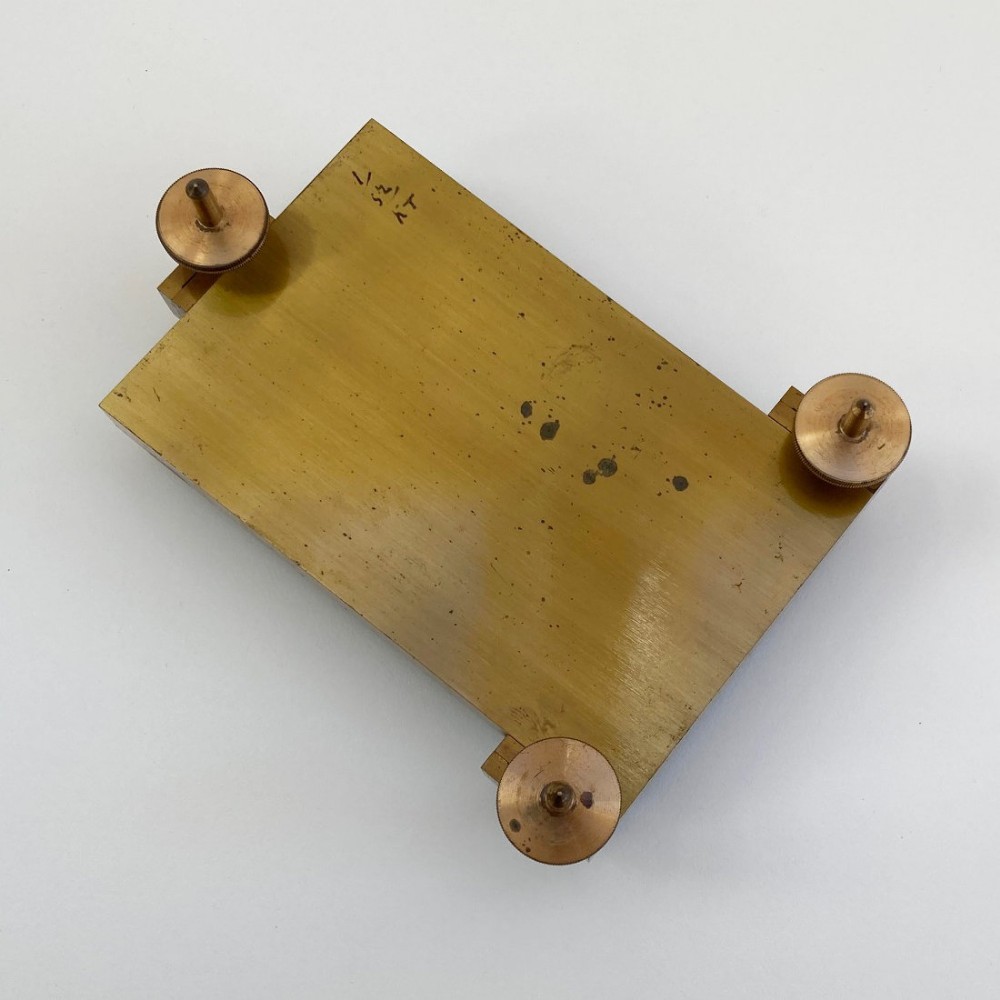
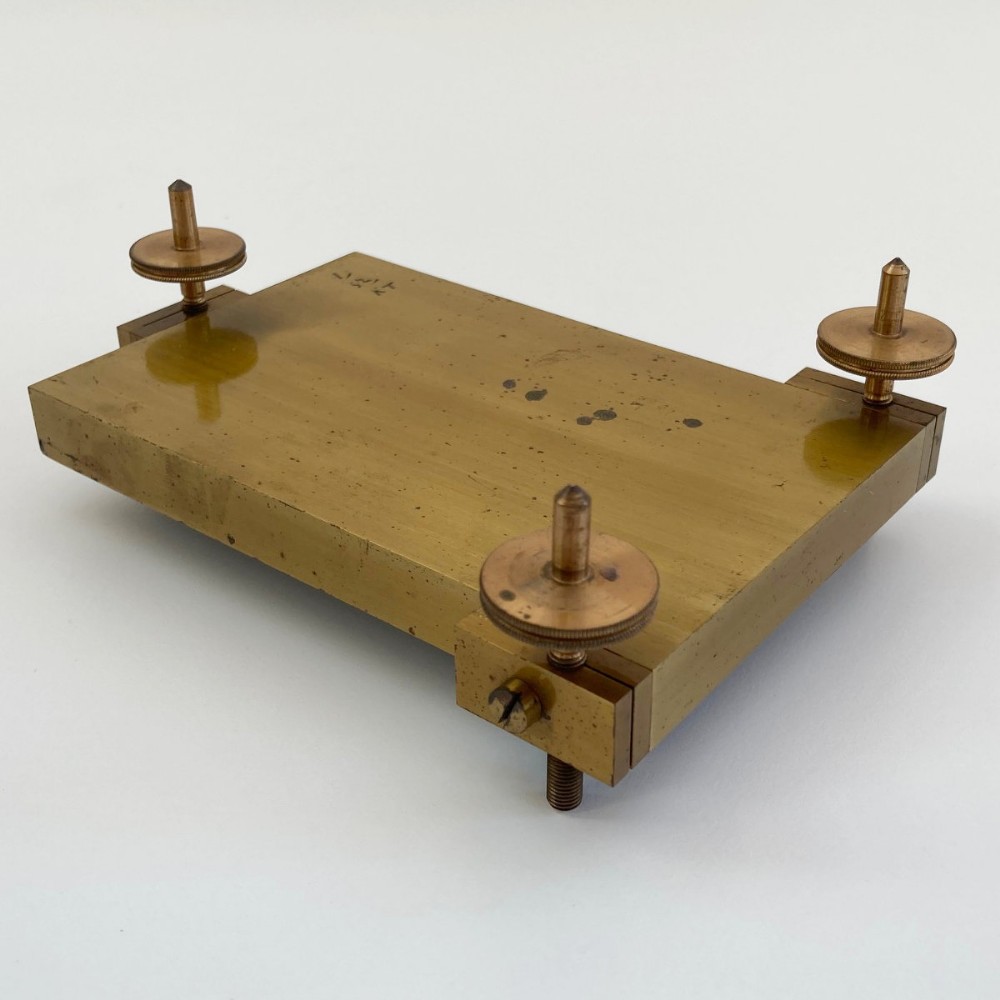
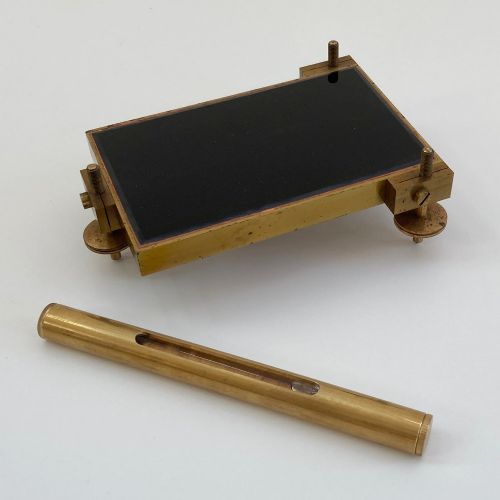
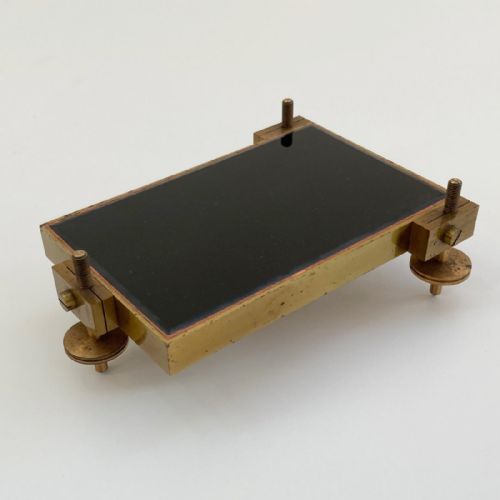
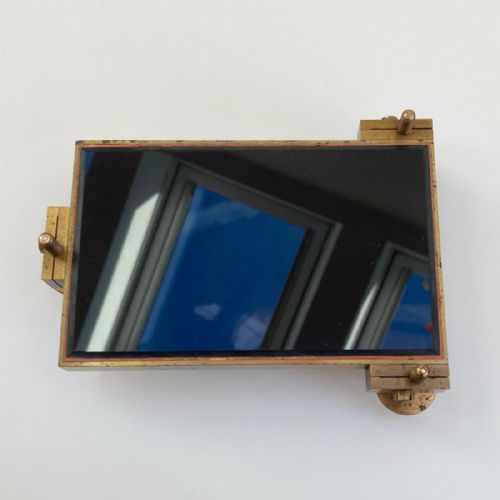
The base of the instrument takes the form of a brass rectangular tray which is inset with a mirror finished black glass plate with bevelled edge. The plate three pointed feet which are clamped to each side and screw threaded in order that they can be adjusted to a level position.
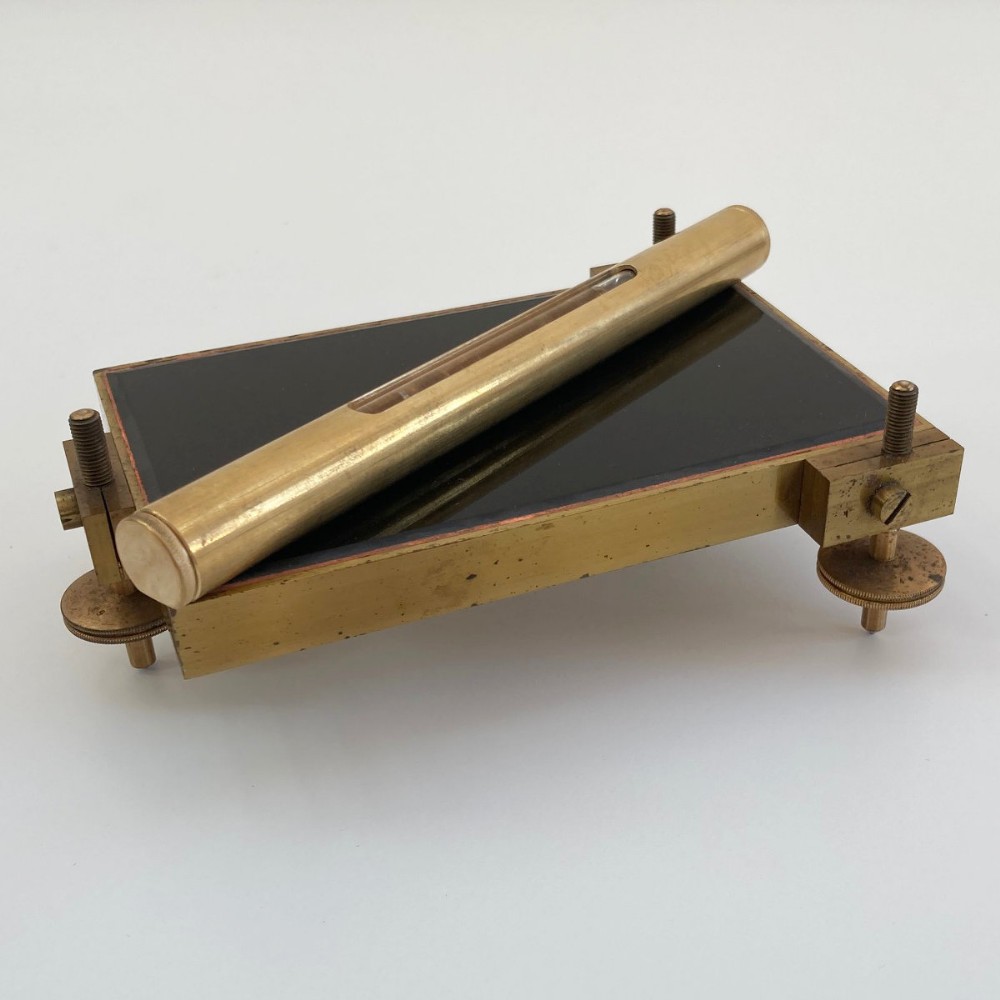
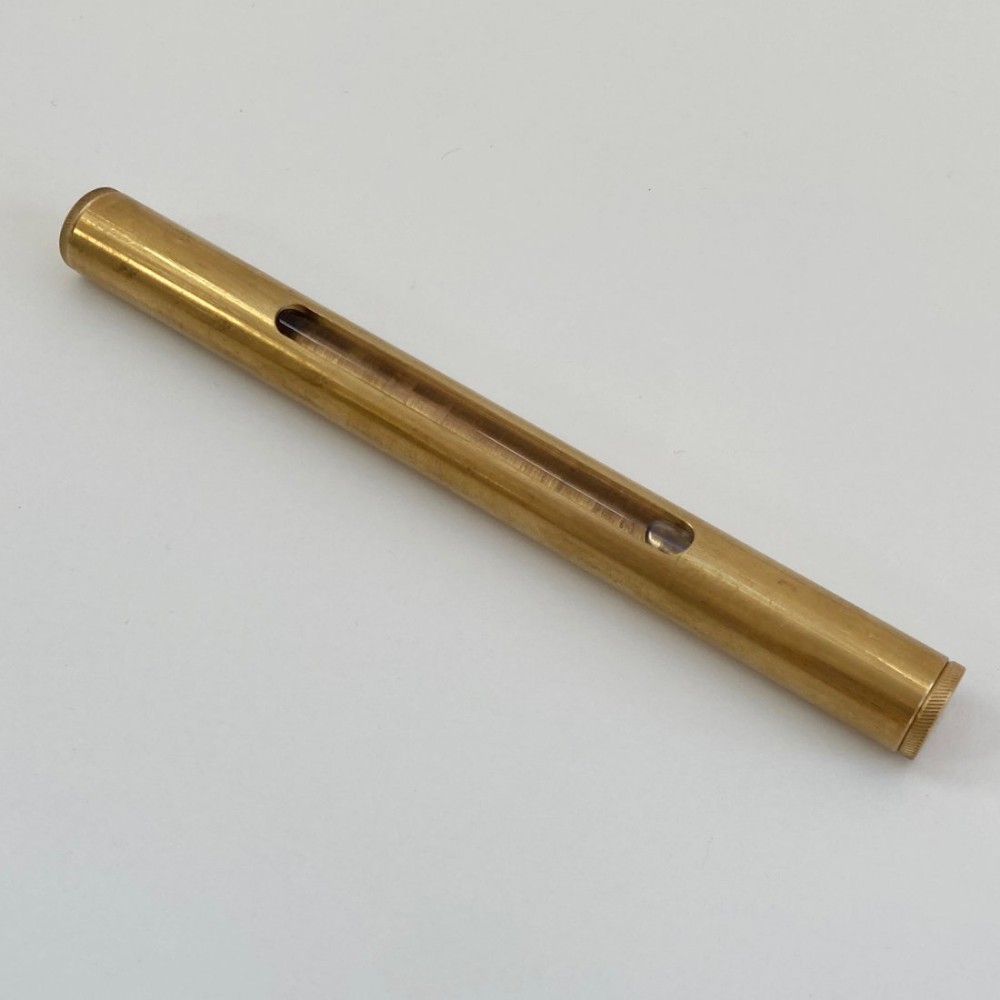
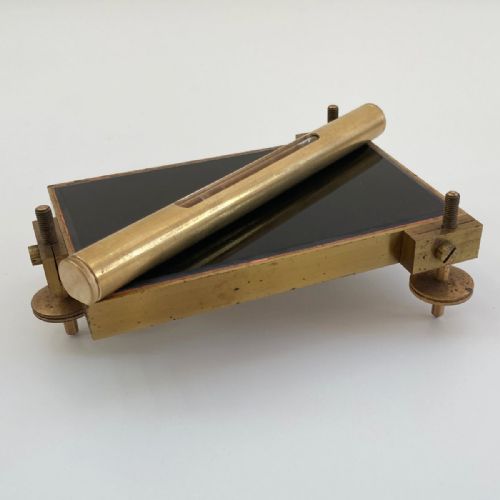
The plate is accompanied by a large brass spirit level with a flattened base so that it can be rested upon the plate to assist the use in creating a level platform for navigational observations.

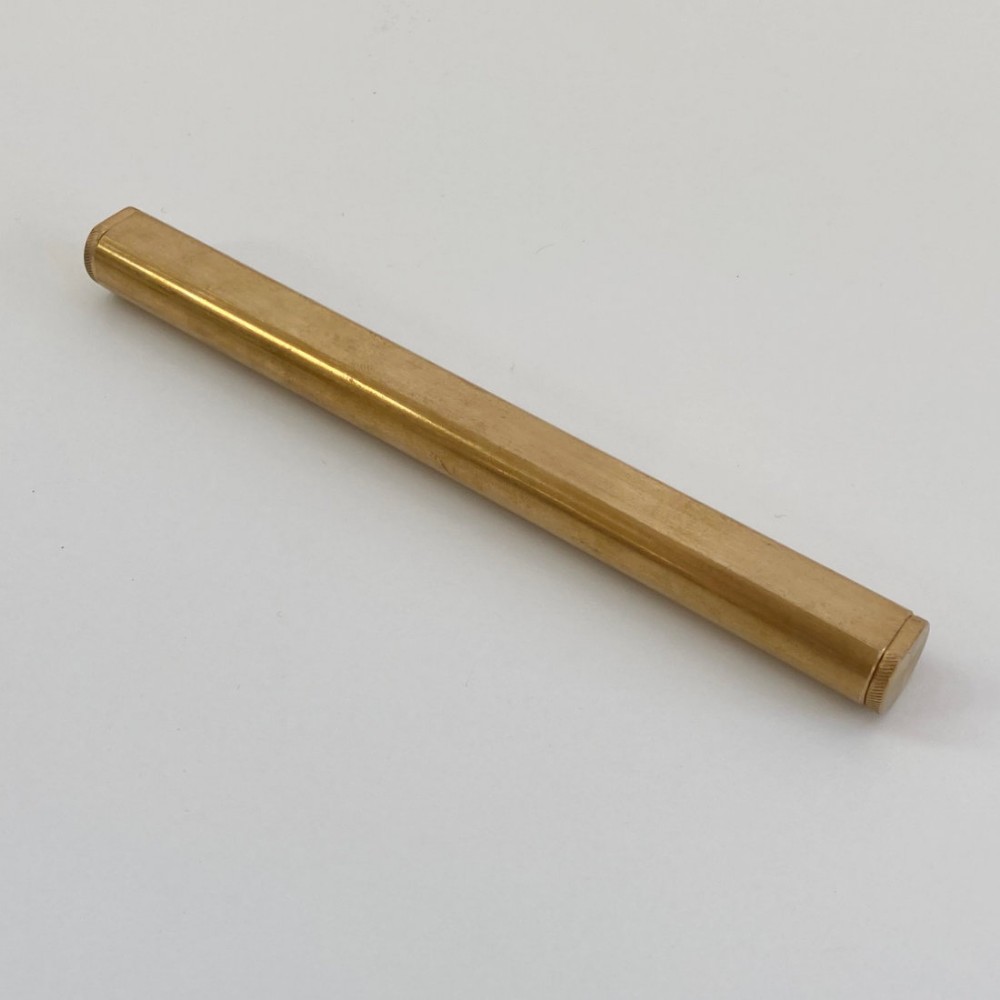
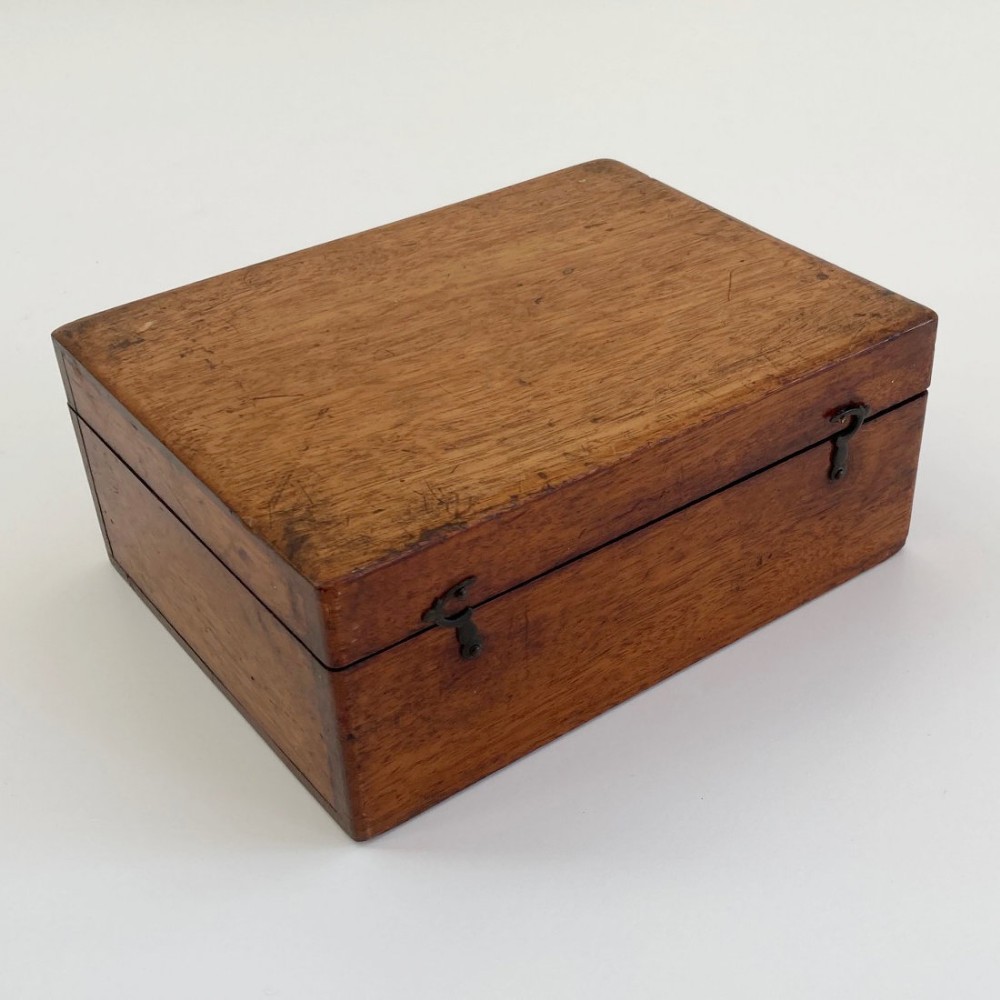
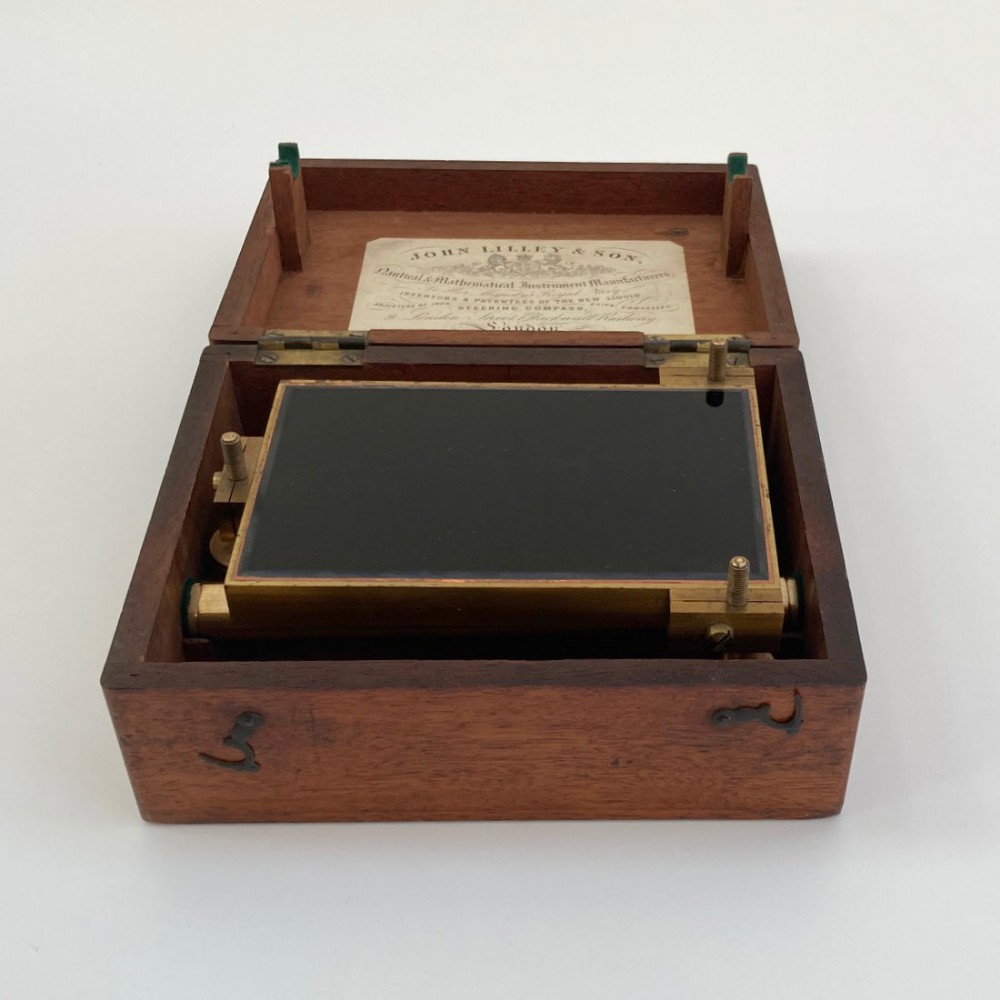
The instrument is housed in a superb fitted mahogany case which provides three stabilisers for the feet of the instrument to reduce movement in transit and a semi-circular mount on each side of the case to hold the level in place underneath. The baize lined struts that emanate out from the lid also close over the top of the level effectively locking its position.
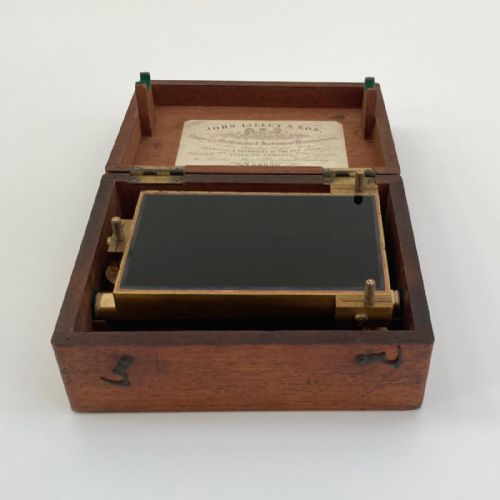
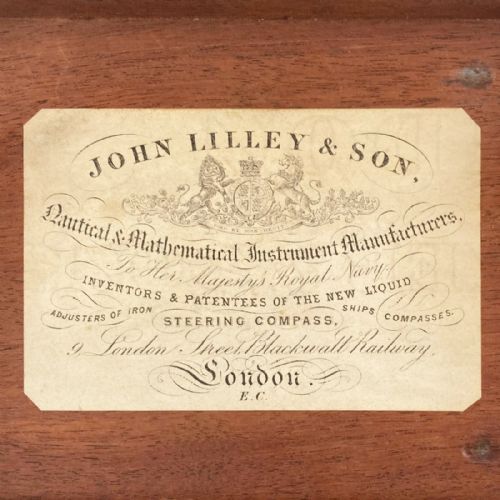
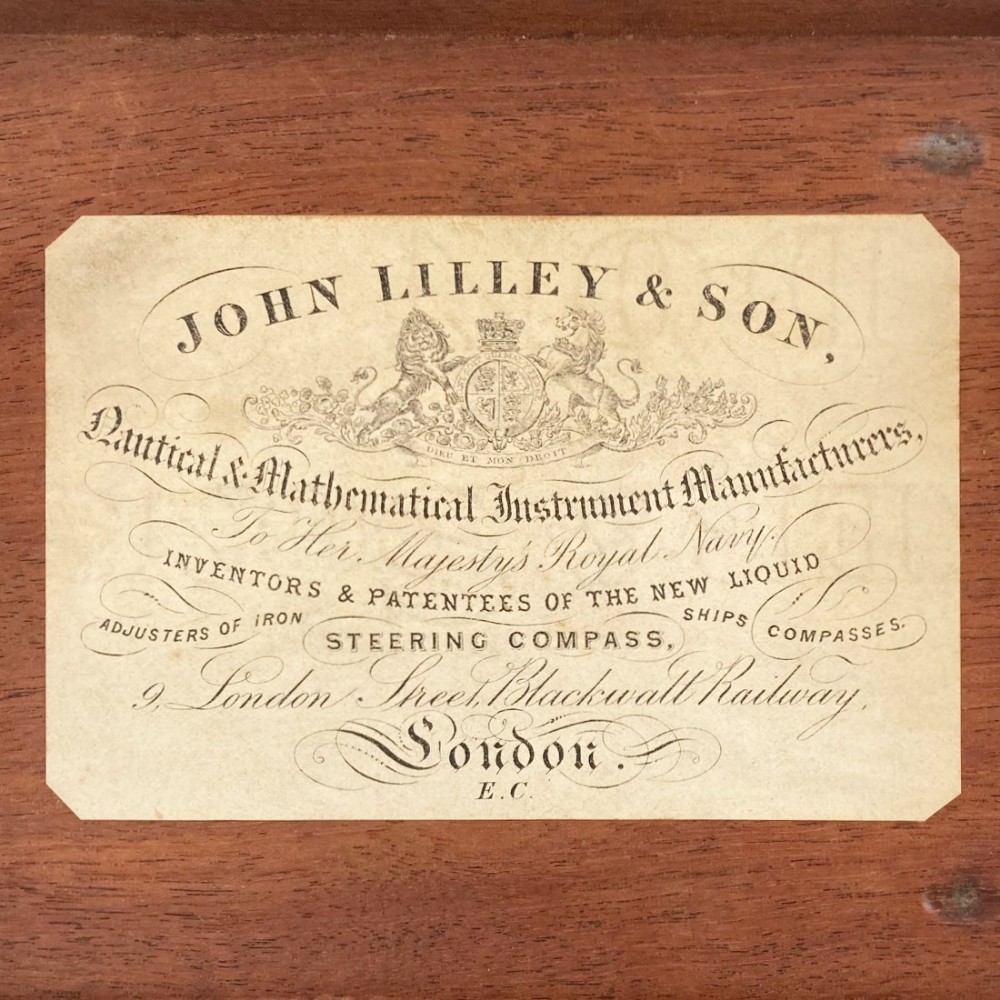
The lid also bears a wonderfully complete trade label stating:

“John Lilley & Son

Nautical & Mathematical Instrument Manufacturers to Her Majesty’s Royal Navy.

Inventors & Patentees of the New Liquid Steering compass.
Adjusters of Iron Ships Compasses.

9 London Street, Blackwall Railway, London E.C.”

The history of the artificial horizon can be traced back to the sixteenth century but developments were largely popularised in the eighteenth century by John Hadley, John Elton and by the famous instrument maker, George Adams, the latter of whom is merited in 1738 with inventing the mercury trough of which this is a development intended to avoid the shake of the mercury encountered during the motion of a ship. It was devised as a means of navigation when the horizon was obscured by darkness.
Its principle was based upon the first law of optics, that the angle of reflection from a mirror is equal to the angle of incidence, therefore a sextant would be employed to measure the angle between the stars and their reflection on mercury or a glass plate.
The manufacturing company, John Lilley & Son was established in 1812 by John Lilley. His son (also John Lilley) was apprenticed and brought into partnership in 1846 and the company were established enough to receive appointments from both the Royal Navy and The East India Company.
The founder died in 1859 but his son continued to trade under the original name and took out two patents during the 1850’s and 1860’s relating to improvements to compasses. In 1865, the company moved to the London Street address. John Lilley Junior died in 1881, leaving the business to his son George Charles Lilley and the firm is documented as being involved in chronometer trials at the turn of the century.
In 1911, George Lilley went into partnership with John Wilson Gillie to form John Lilley & Son Limited and in 1943 after entering into voluntary liquidation it moved to form a new company of John Lilley & Gillie Limited. The company still exists today as a manufacturer of marine instruments

This horizon retains almost all of its original lacquer, a fine and large example of its type.

Circa 1865

Physical Dimensions
Height
7.5cm (2.95")
Width
18.5cm (7.28")
Depth
14cm (5.51")
Declaration

Jason Clarke Antiques has dated this Victorian Artificial Horizon Set to the 1860s.

Reference Numbers
Sellingantiques Reference
SA846647
Description
For sale, an exquisite maritime black glass artificial horizon set by John Lilley & Son, London
The base of the instrument takes the form of a brass rectangular tray which is inset with a mirror finished black glass plate with bevelled edge.
Jason Clarke Antiques

The plate three pointed feet which are clamped to each side and screw threaded in order that they can be adjusted to a level position.

fig 1. A Victorian artificial horizon set featuring a black glass mirror framed in brass, set inside an open mahogany wooden box with a printed maker label inside the lid.
fig 1. Victorian Black Glass Artificial Horizon Set by John Lilley & Son London

The plate is accompanied by a large brass spirit level with a flattened base so that it can be rested upon the plate to assist the use in creating a level platform for navigational observations.

The instrument is housed in a superb fitted mahogany case which provides three stabilisers for the feet of the instrument to reduce movement in transit and a semi-circular mount on each side of the case to hold the level in place underneath. The baize lined struts that emanate out from the lid also close over the top of the level effectively locking its position.

fig 2. A Victorian artificial horizon set featuring a black glass mirror framed in brass, set inside an open mahogany wooden box with a printed maker label inside the lid.
fig 2. Victorian Black Glass Artificial Horizon Set by John Lilley & Son London

The lid also bears a wonderfully complete trade label stating:

“John Lilley & Son

Nautical & Mathematical Instrument Manufacturers to Her Majesty’s Royal Navy.

Inventors & Patentees of the New Liquid Steering compass.

fig 3. A Victorian artificial horizon set featuring a black glass mirror framed in brass, set inside an open mahogany wooden box with a printed maker label inside the lid.
fig 3. Victorian Black Glass Artificial Horizon Set by John Lilley & Son London

Adjusters of Iron Ships Compasses.

9 London Street, Blackwall Railway, London E.C.”

The history of the artificial horizon can be traced back to the sixteenth century but developments were largely popularised in the eighteenth century by John Hadley, John Elton and by the famous instrument maker, George Adams, the latter of whom is merited in 1738 with inventing the mercury trough of which this is a development intended to avoid the shake of the mercury encountered during the motion of a ship. It was devised as a means of navigation when the horizon was obscured by darkness.

fig 4. A Victorian artificial horizon set featuring a black glass mirror framed in brass, set inside an open mahogany wooden box with a printed maker label inside the lid.
fig 4. Victorian Black Glass Artificial Horizon Set by John Lilley & Son London

Its principle was based upon the first law of optics, that the angle of reflection from a mirror is equal to the angle of incidence, therefore a sextant would be employed to measure the angle between the stars and their reflection on mercury or a glass plate.

fig 5. A Victorian artificial horizon set featuring a black glass mirror framed in brass, set inside an open mahogany wooden box with a printed maker label inside the lid.
fig 5. Victorian Black Glass Artificial Horizon Set by John Lilley & Son London

The manufacturing company, John Lilley & Son was established in 1812 by John Lilley. His son (also John Lilley) was apprenticed and brought into partnership in 1846 and the company were established enough to receive appointments from both the Royal Navy and The East India Company.

fig 6. A Victorian artificial horizon set featuring a black glass mirror framed in brass, set inside an open mahogany wooden box with a printed maker label inside the lid.
fig 6. Victorian Black Glass Artificial Horizon Set by John Lilley & Son London

The founder died in 1859 but his son continued to trade under the original name and took out two patents during the 1850’s and 1860’s relating to improvements to compasses. In 1865, the company moved to the London Street address. John Lilley Junior died in 1881, leaving the business to his son George Charles Lilley and the firm is documented as being involved in chronometer trials at the turn of the century.

fig 7. A Victorian artificial horizon set featuring a black glass mirror framed in brass, set inside an open mahogany wooden box with a printed maker label inside the lid.
fig 7. Victorian Black Glass Artificial Horizon Set by John Lilley & Son London

In 1911, George Lilley went into partnership with John Wilson Gillie to form John Lilley & Son Limited and in 1943 after entering into voluntary liquidation it moved to form a new company of John Lilley & Gillie Limited. The company still exists today as a manufacturer of marine instruments

This horizon retains almost all of its original lacquer, a fine and large example of its type.

Circa 1865

Height
7.5cm (2.95")
Width
18.5cm (7.28")
Depth
14cm (5.51")
Date of Manufacture

Jason Clarke Antiques has dated this Victorian Artificial Horizon Set to the 1860s.

Reference Numbers
Sellingantiques Ref
SA846647
Jason Clarke Antiques
Sellingantiques verified Since Jul 2015
Dealer Profile

You can view the stock and full dealer information on the Jason Clarke Antiques Profile Page
PDF SHARE
SAVE
A Victorian artificial horizon set featuring a black glass mirror framed in brass, set inside an open mahogany wooden box with a printed maker label inside the lid.
1 / 14
Archive I A Victorian artificial horizon set featuring a black glass mirror framed in brass, set inside an open mahogany wooden box with a printed maker label inside the lid.

Victorian Black Glass Artificial Horizon Set by John Lilley & Son London
Archive II A Victorian artificial horizon set featuring a black glass mirror framed in brass, set inside an open mahogany wooden box with a printed maker label inside the lid. View II
Archive III A Victorian artificial horizon set featuring a black glass mirror framed in brass, set inside an open mahogany wooden box with a printed maker label inside the lid. View III
Archive IV A Victorian artificial horizon set featuring a black glass mirror framed in brass, set inside an open mahogany wooden box with a printed maker label inside the lid. View IV
Archive V A Victorian artificial horizon set featuring a black glass mirror framed in brass, set inside an open mahogany wooden box with a printed maker label inside the lid. View V
Archive VI A Victorian artificial horizon set featuring a black glass mirror framed in brass, set inside an open mahogany wooden box with a printed maker label inside the lid. View VI
Archive VII A Victorian artificial horizon set featuring a black glass mirror framed in brass, set inside an open mahogany wooden box with a printed maker label inside the lid. View VII
Archive VIII A Victorian artificial horizon set featuring a black glass mirror framed in brass, set inside an open mahogany wooden box with a printed maker label inside the lid. View VIII
Archive IX A Victorian artificial horizon set featuring a black glass mirror framed in brass, set inside an open mahogany wooden box with a printed maker label inside the lid. View IX
Archive X A Victorian artificial horizon set featuring a black glass mirror framed in brass, set inside an open mahogany wooden box with a printed maker label inside the lid. View X
Archive XI A Victorian artificial horizon set featuring a black glass mirror framed in brass, set inside an open mahogany wooden box with a printed maker label inside the lid. View XI
Archive XII A Victorian artificial horizon set featuring a black glass mirror framed in brass, set inside an open mahogany wooden box with a printed maker label inside the lid. View XII
Archive XIII A Victorian artificial horizon set featuring a black glass mirror framed in brass, set inside an open mahogany wooden box with a printed maker label inside the lid. View XIII
Archive XIV A Victorian artificial horizon set featuring a black glass mirror framed in brass, set inside an open mahogany wooden box with a printed maker label inside the lid. View XIV
Enlarged Archival View
Telephone 07815 046645
Location
Newbury
Berkshire
United Kingdom
Verified Since Jul 2015
Items For Sale 81
Items Sold 606
Jason Clarke Antiques
Verified Since Jul 2015
View Dealer Info
Location: Newbury, Berkshire, United Kingdom
Verified
Jul 2015
For Sale
81
Sold
606
A Victorian artificial horizon set featuring a black glass mirror framed in brass, set inside an open mahogany wooden box with a printed maker label inside the lid.
Victorian Black Glass Artificial Horizon Set by John Lilley & Son London
Ref: SA846647
A Victorian artificial horizon set featuring a black glass mirror framed in brass, set inside an open mahogany wooden box with a printed maker label inside the lid.
Detail View 1
Detail View 2
Detail View 3
Detail View 4
Detail View 5
Detail View 6
Detail View 7
Detail View 8
Detail View 9
Detail View 10
Detail View 11
Detail View 12
Detail View 13
Archival Detail
Every single antique dealer on our platform is individually approved by our internal team. We verify their professional trade history, ethical standards, and photographic quality to ensure a secure, high-standard buying environment. Upon joining, every dealer agrees to a strict 9-point code of conduct. While issues can occasionally arise, our dealers typically resolve them swiftly and directly with the buyer. In fact, since our founding in 2002, Sellingantiques has only had to step in to help resolve an issue on roughly five occasions—a true testament to the quality of our dealers and their dedication to your happiness.
Our dealers are highly experienced in packing and shipping fragile, high-value antiques. Because you are in direct contact with the dealer, you will be able to easily go through all available shipping and insurance options together to ensure your item arrives safely.
Antiques are the ultimate green purchase. By choosing historical pieces over newly manufactured goods, you completely eliminate the carbon footprint of modern mass production while preserving exceptional, timeless craftsmanship.

A black glass artificial horizon is a 19th-century navigational instrument used alongside a sextant to measure celestial altitudes on land or when the natural ocean horizon is obscured. The dark glass surface reduces glare while providing a perfectly flat reflective plane.

These instruments typically feature polished black glass or mercury trays mounted in heavy brass frames, stored inside fitted mahogany or oak cases to protect the optics during transport.

Authentic Victorian examples feature precision brass thumbscrews, heavy glass plates, finely machined brass components, and trade labels from established London instrument makers pasted inside the wooden case lid.

A boxed artificial horizon serves as a refined accent piece on an office desk, bookshelf, or console, adding historical scientific character to classic or eclectic room schemes.

Keep the timber case in a climate-controlled space away from moisture, clean the glass mirror gently with non-abrasive optical cloths, and apply microcrystalline wax sparingly to the brass components to prevent excess oxidisation.
items
Add keywords to the filter
Price
£100
£250000
Era
Movements
Material
Origin
Stock Location
Freshness
Online Payments
Categories