





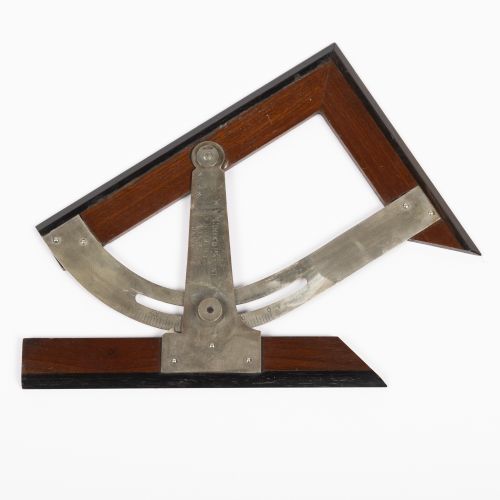
Antique Surveying Equipment
Antique surveying equipment brings brass and mahogany instruments of measure into the room, built to map estates and navigate oceans.
Antique Surveying Equipment
Antique surveying equipment encompasses the brass and glass instruments used across the nineteenth and early twentieth centuries for mapping, leveling, and navigation. Buyers exploring this category encounter theodolites, compasses, levels, and clinometers alongside specialised drafting tools.
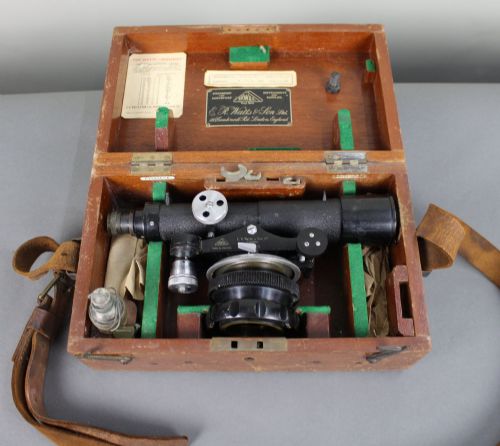
The pieces appearing here span from the Georgian era through the Victorian period and into Edwardian times, reflecting the industrial expansion of instrument making. Most examples remain housed in fitted wooden cases of mahogany or boxwood, frequently complete with original retail labels.
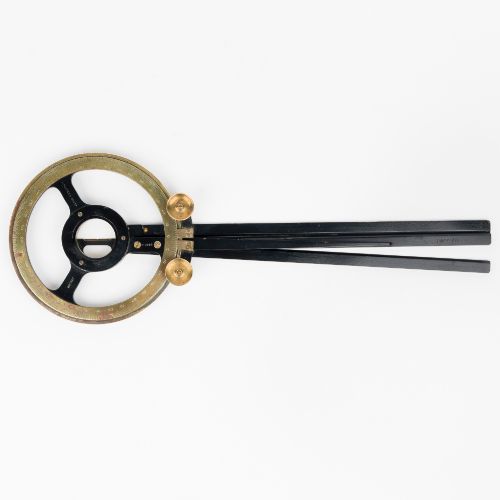
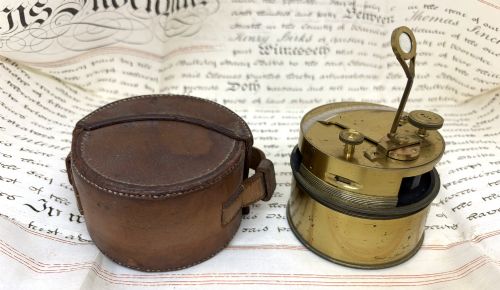
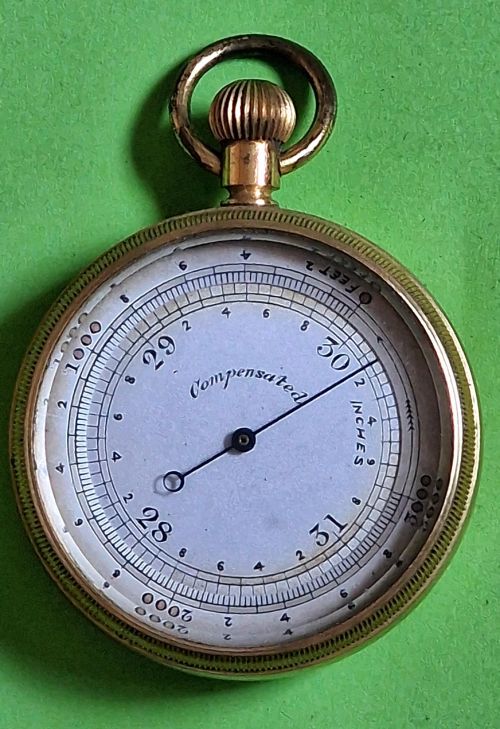
The selection ranges from pocket barometers and portable transit instruments to heavy field theodolites by notable makers. Each item serves a distinct recording function, whether measuring angles in the field or establishing artificial horizons for observations.
Materials and construction
Makers relied primarily on polished brass, gilt brass, and lacquered metal to form the durable bodies and delicate dials of these instruments. Silvered metal dials provide sharp legibility for graduations, while glass protects sensitive compass needles and spirit levels.
Casing and mounting required dense timbers like mahogany and boxwood, turned and fitted to secure each instrument during transport. Leather components and fitted straps frequently accompanied portable field instruments for protection against the elements.
Antique Surveying Equipment Retail Price Guide 2026
Typical asking prices for surveying equipment among the pieces listed under this phrase on Sellingantiques today, from the lower quarter to the upper quarter. They describe what is for sale here now, not the wider market.
Early field surveyors relied on pocket barometers that doubled as pocket altimeters to guess if rain would ruin the map.
Distinctions in quality
Quality rests in the precision of the engraved graduations and the smoothness of the mechanical movements, such as rack and pinion adjustments on theodolites. Finer examples exhibit crisp lettering signed by established makers rather than anonymous workshop production.
The survival of original fitted wooden cases and complete subsidiary lenses or compass components elevates an instrument. Superior execution involves robust casting, minimal wear to the lacquered metal surfaces, and clear, legible silvered scales.
W S Jones·L Casella & Co·Alexander Adie·W H Harling·John Lilley & Son·Barker & Son
The Antique Surveying Equipment Glossary
- Theodolite
- A precision optical instrument for measuring horizontal and vertical angles. It mounts on a tripod and forms the centerpiece of topographical mapping.
- Clinometer
- A tool for measuring angles of slope, elevation, or depression of an object with respect to gravity. These often combine with compasses or folding rulers.
- Pantograph
- An instrument linked in a parallelogram pattern used for copying maps and plans on a different scale. It relies on precise mechanical pivot points.
- Altazimuth
- A directional mount for an instrument that allows movement in both horizontal and vertical axes. It appears on portable field instruments from the early nineteenth century.
Antique Surveying Equipment: Frequently Asked Questions
What is antique surveying equipment used for?
These historical instruments served field surveyors, engineers, and navigators in measuring land boundaries, calculating elevations, and plotting maps. They translated physical terrain into precise mathematical data before the advent of digital electronics.
Today, collectors appreciate them as desk ornaments, conversation pieces, or study objects representing the peak of nineteenth century mechanical and optical engineering.
How do I date a brass theodolite?
Dating relies on maker signatures, address changes in the engraving, and stylistic shifts in the brass casting and mahogany housing. Victorian examples often display lacquered finishes and specific thumb-screw designs characteristic of mid-nineteenth century production.
Comparing the serial number or patent details with known working dates of firms like Baker or Adie narrows the manufacturing decade.
Are these instruments still accurate?
While many retain functional movement in their compass needles and leveling vials, they are collected primarily for historical study and display. Calibration may drift over the decades, and optical components serve better for observation than precise modern measurement.
Gentle handling preserves the delicate silvered metal scales and original lacquer without risking the alignment of internal prisms and mirrors.
How should I clean brass surveying instruments?
Maintenance requires only gentle dusting with a soft, dry cloth to protect the aged patina and original lacquer on the metal. Avoid metal polishes, as abrasive compounds remove the historic surface finish and obliterate traces of the original manufacturing process.
Wooden cases benefit from occasional feeding with appropriate wax to prevent the mahogany or boxwood from drying out in heated rooms.