

Antique Brass Weights
Antique brass weights provide a glimpse into past commerce and domestic life, offering heavy utility cast in polished metal.
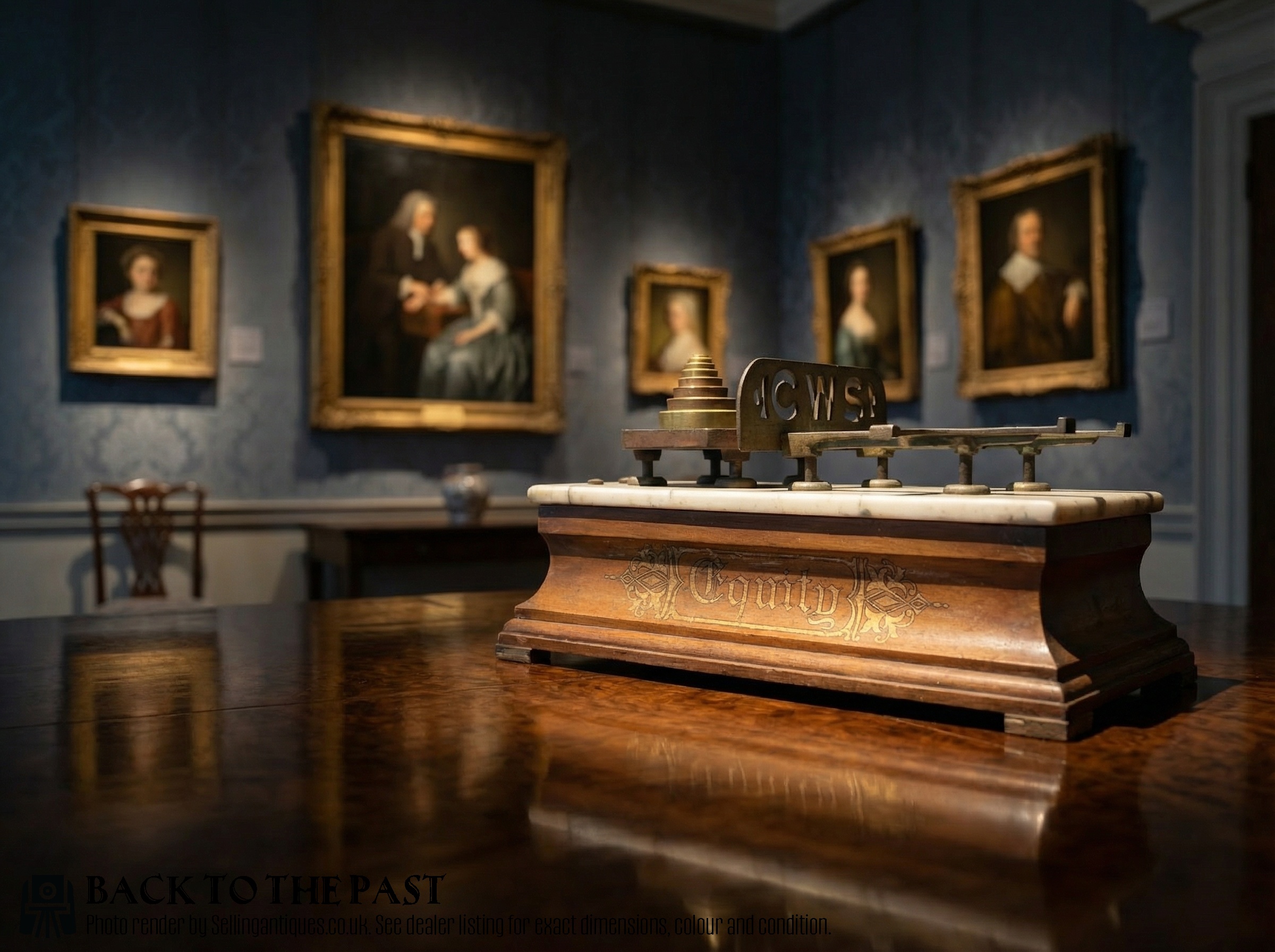
Antique Brass Weights
When you search for antique brass weights, you encounter functional objects designed for trade, postal sorting, kitchen preparation, and timekeeping. These pieces span the Georgian, Victorian, and Edwardian periods, appearing alongside scales, clocks, and doorstops.
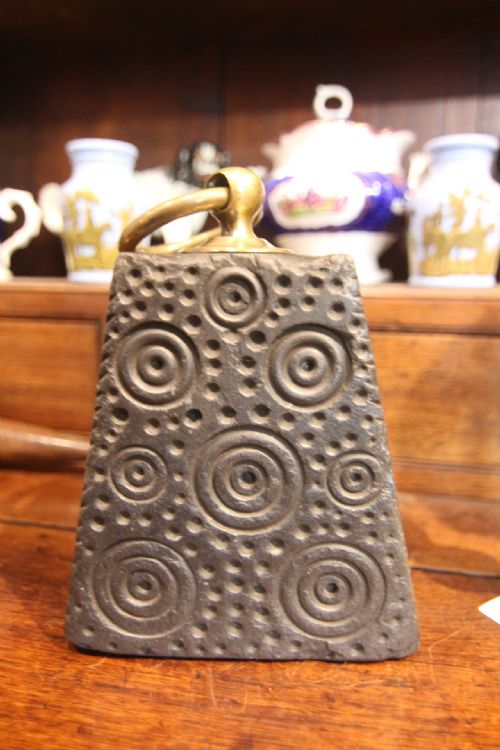
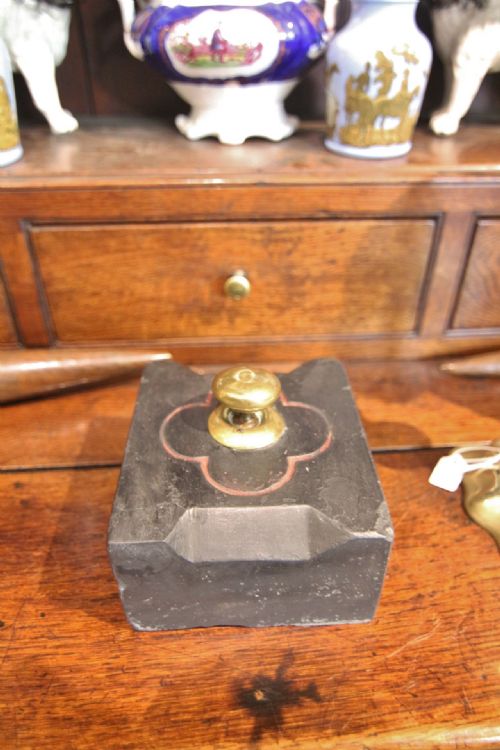
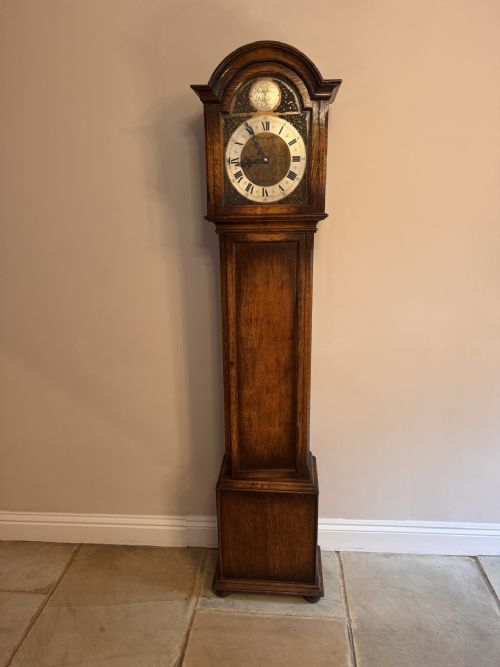
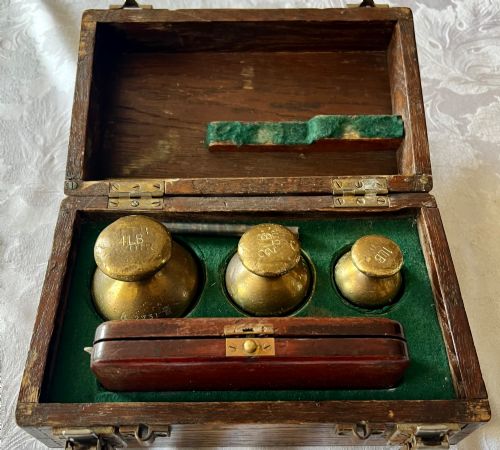
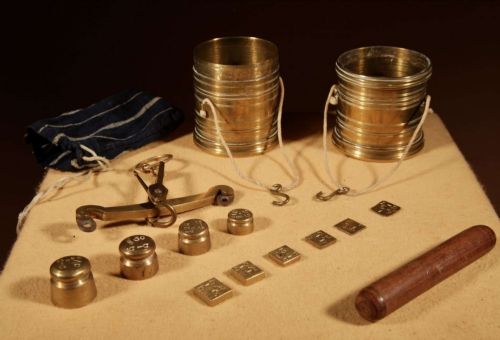
The items on this page range from nested bell weights used in kitchens to postal dump weights and clock weights cast in solid brass. Many survive in complete sets, occasionally retaining their original wooden bases or fitted boxes.
Domestic and commercial examples dominate the selection, reflecting the rigorous standardisation demands of nineteenth and twentieth-century markets. Collectors find both utilitarian sets bearing borough stamps and decorative forms designed for daily service.
How they were made
Production relied primarily on sand casting molten brass, a copper and zinc alloy chosen for its durability and resistance to corrosion. Once cast, the blanks were turned on lathes to achieve precise mass and smooth exterior profiles.
Makers applied adjustment cavities filled with lead shot on the underside of larger pieces to calibrate the mass accurately. Final surfaces were polished, stamped with verification marks, and occasionally engraved with cipher or regional ownership details.
Antique Brass Weights Retail Price Guide 2026
Typical asking prices for brass weights among the pieces listed under this phrase on Sellingantiques today, from the lower quarter to the upper quarter. They describe what is for sale here now, not the wider market.
Listings feature brass weights spanning the Georgian, Victorian, and Edwardian eras alongside mahogany scales and iron components.
What varies in quality
Quality rests in the crispness of the original cast and the legibility of official verification stamps. Superior examples retain their intended mass without excessive wear or aggressive polishing that obliterates early cipher marks.
The presence of a matched set housed in its original fitted wooden block or mahogany base elevates a grouping significantly. Pieces exhibiting deliberate turning work and balanced proportions demonstrate superior workshop execution.
W and T Avery·S Mordan London·De Grave Short and Co·Robert Brettell Bate·Day and Millward
The Antique Brass Weights Glossary
- Bell weight
- A traditional bell-shaped brass weight featuring a looped handle at the top, commonly found in kitchen and trade scales.
- Dump weight
- A short, heavy, cylindrical or waisted brass weight designed for postal scales, offering a compact footprint.
- Verification mark
- An official stamp or crown cipher punched into the brass surface to denote legal compliance for trade use.
- Troy weight
- A system of units of mass used for precious metals, distinct from avoirdupois standards.
- Nested weight
- A set of hollow cup-shaped brass weights designed to fit inside one another under a protective lid.
Antique Brass Weights: Frequently Asked Questions
Are these weights still accurate for weighing?
Over generations of use and polishing, many pieces lose minute amounts of metal. They serve primarily as decorative objects and historical artefacts rather than certified instruments.
Collectors prize them for their craftsmanship and provenance rather than modern calibration accuracy. Treat them as display pieces rather than kitchen tools.
What are verification marks on brass weights?
Inspectors punched crown ciphers and regional stamps into the metal to certify correct mass for commercial trade. These marks often include reigning monarch ciphers that help date the object.
Traces of old paint or inspector stamps provide valuable clues about the working life of the piece. Clear verification marks generally enhance the historical interest of the set.
How do I identify bell weights?
Look for the characteristic flared base and arched metal handle cast as an integral part of the body. They were designed to lift easily and stack neatly during busy market days.
Kitchen scales from the Victorian era frequently accompany these distinct geometric forms. Their silhouettes remained largely unchanged across multiple reigns.