



Antique Brass Scales
Antique brass scales combine utilitarian precision with the warm metal tones of the nineteenth and early twentieth centuries.
Antique Brass Scales
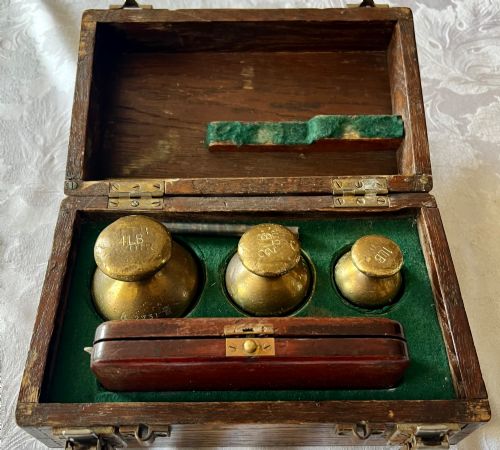
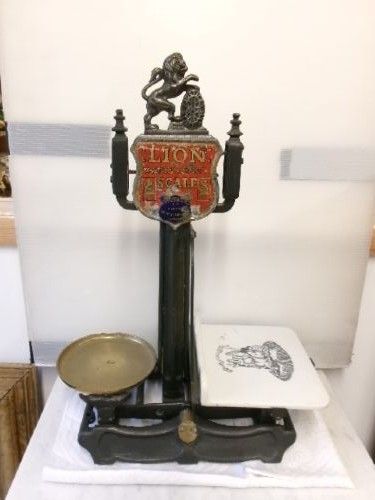
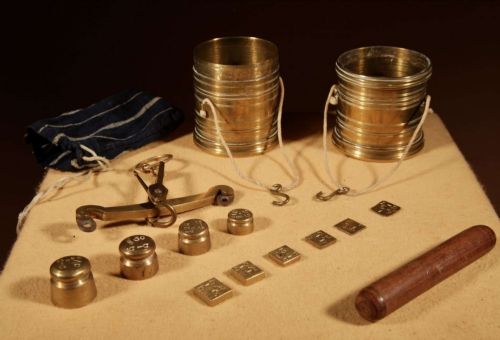
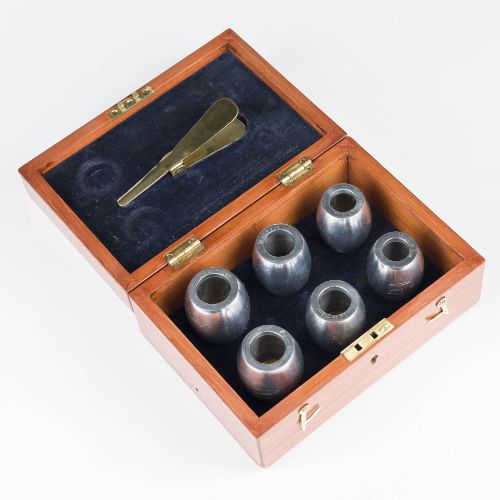
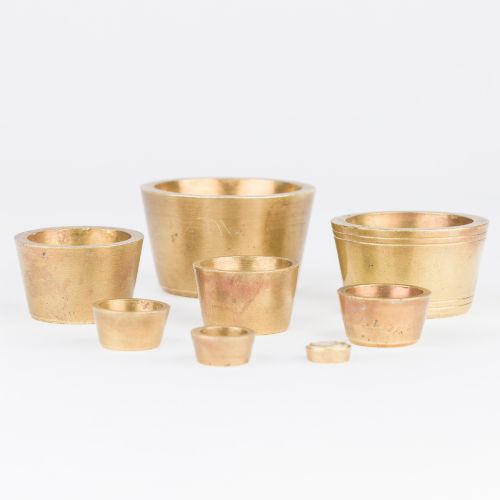
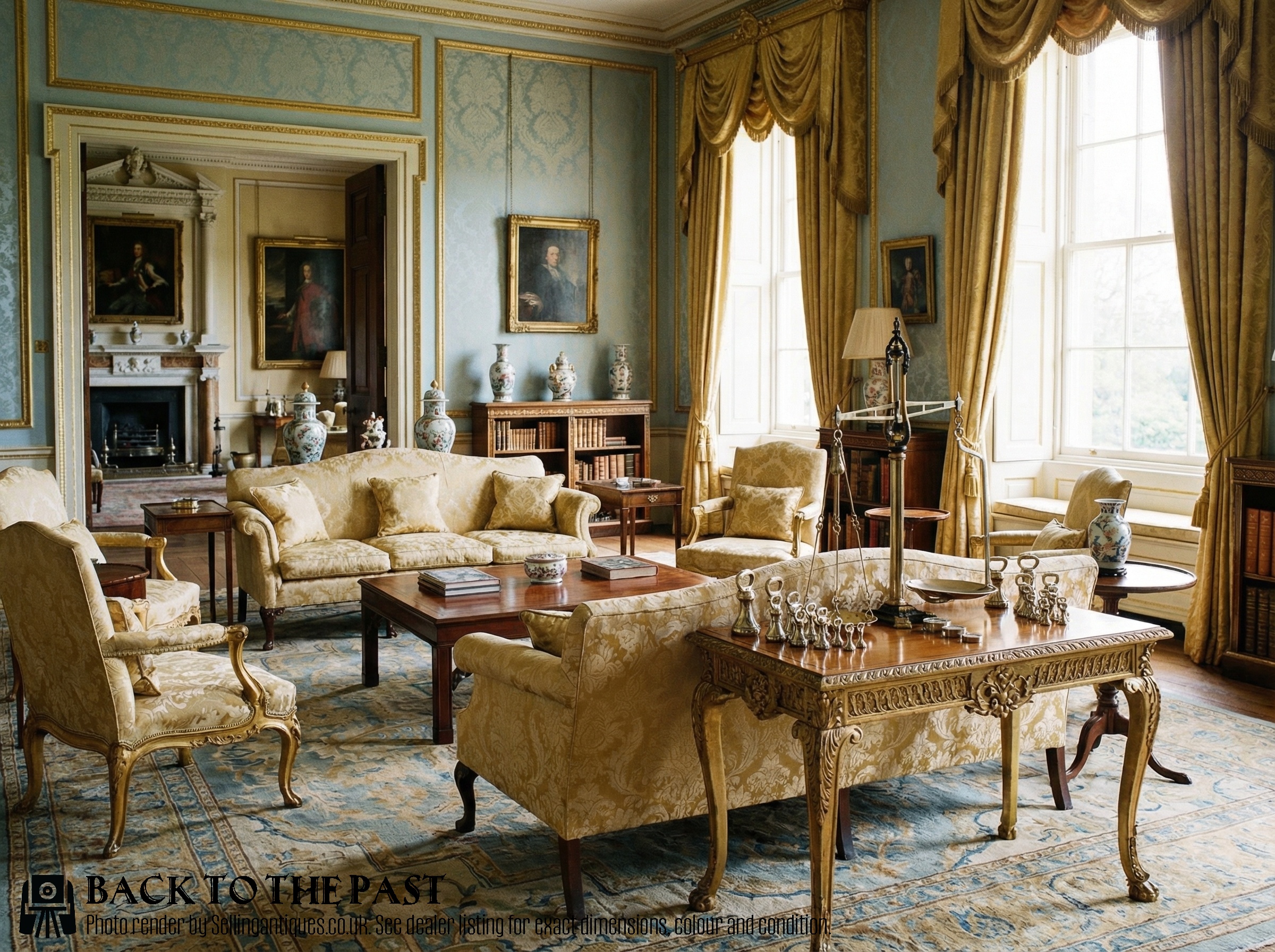
Postal varieties frequently incorporate matching sets of brass weights designed to sit neatly within the wooden plinth. Larger commercial and butcher scales often present robust cast iron components paired with gleaming brass beams and pans.
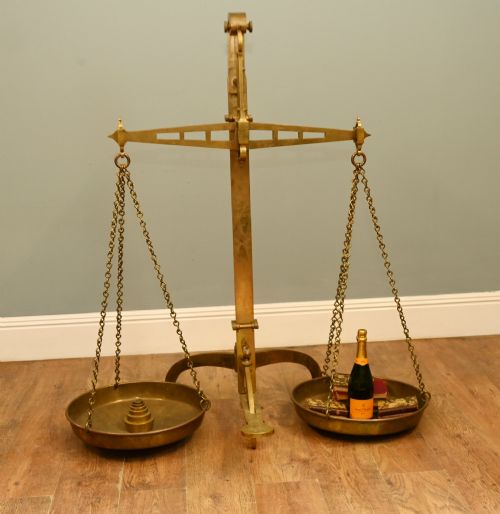
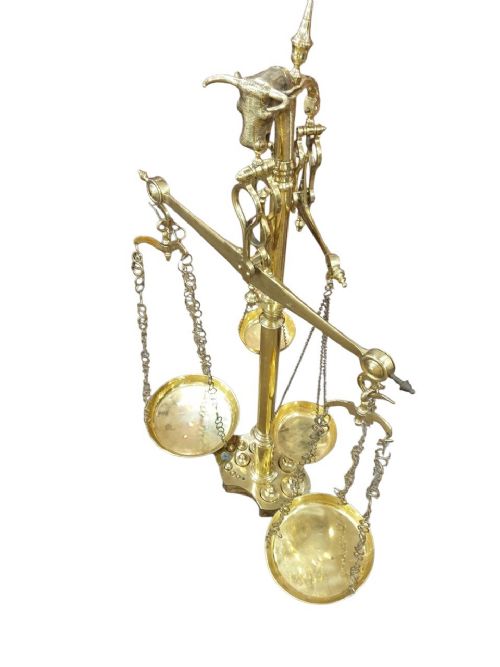
Origins range from English workshop productions to Dutch bushel balances and French maritime examples. Form follows function closely, with domestic variants prioritising compact elegance while trade pieces emphasise capacity and endurance.
Materials and construction
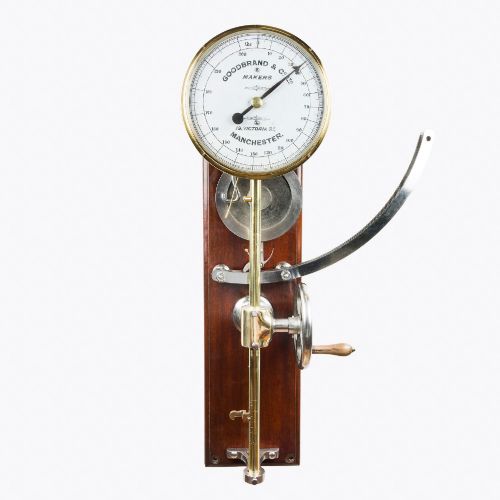
Makers relied primarily on cast and turned brass for the beams, pans, and indicator needles, prized for its resistance to corrosion and ability to take a fine polish. This metalwork was frequently mounted upon seasoned mahogany, walnut, or oak bases, sometimes accented with inset ceramic panels or glass elements.
Structural rigidity in larger trade models required supplementary cast iron and steel components to bear heavier loads without flexing. Joinery on wooden bases utilised traditional techniques like dovetailing and precise housing to support the weight of the metal mechanisms over decades of daily use.
Antique Brass Scales Retail Price Guide 2026
Typical asking prices for brass scales among the pieces listed under this phrase on Sellingantiques today, from the lower quarter to the upper quarter. They describe what is for sale here now, not the wider market.
Early postal scales occasionally doubled as decorative desk ornaments, proving that Victorian letter writing demanded both precision and style.
Determinants of quality
Quality in these instruments rests upon the crispness of the casting, the responsiveness of the pivot points, and the survival of matching sets of original weights. Maker attribution also elevates certain pieces, particularly those bearing stamps from recognised balance makers or retailers.
Finer examples display careful hand-finishing on the brass surfaces and harmonious proportions between the wooden plinth and the metal superstructure. Retaining original paint on iron components or matching maker marks across both the scale and its weights distinguishes superior survivals from composite assemblies.
De Grave Short And Co·W And T Avery·Day And Millward·S Mordan And Co·Parnall And Sons
The Antique Brass Scales Glossary
- Balance scale
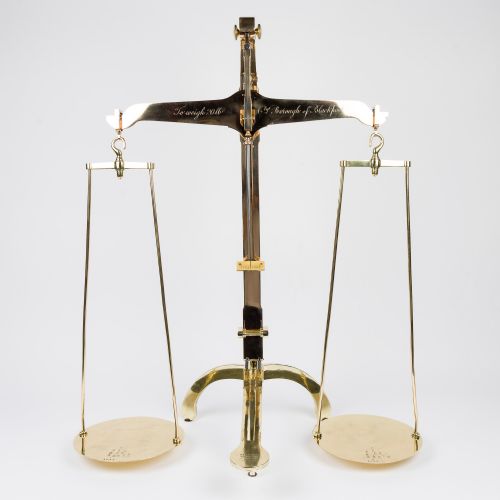
- A weighing device operating on the principle of equal arms, where an object of unknown mass is placed in one pan and standard weights in the other.
- Postal scales
- Compact domestic weighing devices specifically calibrated for letters and parcels, usually featuring a flat platform or small top pan and graduated weights.
- Apothecary balance
- Sensitive scales utilised by chemists for measuring medicine and dry ingredients, frequently housed in fitted wooden travelling boxes with specialised micro-weights.
- Bushel balance
- A heavy-duty trade instrument designed to measure dry volume quantities of grain or produce rather than simple mass.
- Waisted dump weight
- A specific cylindrical brass weight featuring a pinched or curved middle profile, commonly found accompanying nineteenth-century letter scales.
Antique Brass Scales: Frequently Asked Questions
How do I date antique brass scales?
Dating relies on a combination of registration marks, maker signatures, and stylistic shifts in the wooden bases. Victorian examples often feature ornate cast brass decoration and mahogany plinths, while Edwardian pieces can exhibit simpler, cleaner lines.
Stamped stamps from known retailers or government verification ciphers also provide narrower chronological windows for specific pieces.
Are original weights important?
Retaining the correct matching set of weights significantly enhances both the completeness and utility of the instrument. Many postal and apothecary scales were manufactured with fitted recesses specifically sized for their original brass weights.
Finding a complete set bearing matching fractional markings confirms the apparatus remains together as originally issued.
How should I clean antique brass?
Gentle dusting and occasional wiping with a soft cloth are generally sufficient to maintain the aged patina that collectors value. Avoid harsh chemical polishes that strip away historical character and leave an overly bright, unnatural finish on the metal.
Preserving the natural oxidation around engraved lettering and pivot points helps maintain the visual integrity of the piece.
Were these used in homes or shops?
Brass scales served diverse roles across both domestic and commercial environments depending entirely on their size and capacity. Smaller letter scales sat on writing desks in Victorian and Edwardian libraries for daily correspondence.
Larger beam scales and postal instruments populated grocers, butchers, and shipping offices to handle trade commodities.