57,064  PAGES BROWSED TODAY PAGES TODAY 103  ANTIQUES UPLOADED TODAY NEW ARRIVALS
ID #SA1211652
FOR SALE
£695
Email Buy
Save
Pre Imperial Act Improved Portable Chondrometer by Robert Brettell Bate of 17 Poultry London
Jason Clarke Antiques
for sale €813     $883
£695
Jason Clarke Antiques

Jason Clarke Antiques

Sellingantiques Verified Since Jul 2015
View Dealers Stock Page
Relevant Links
Id #SA1211652
PDF SHARE
SAVE

Pre Imperial Act Improved Portable Chondrometer by Robert Brettell Bate of 17 Poultry London

19th century
Description

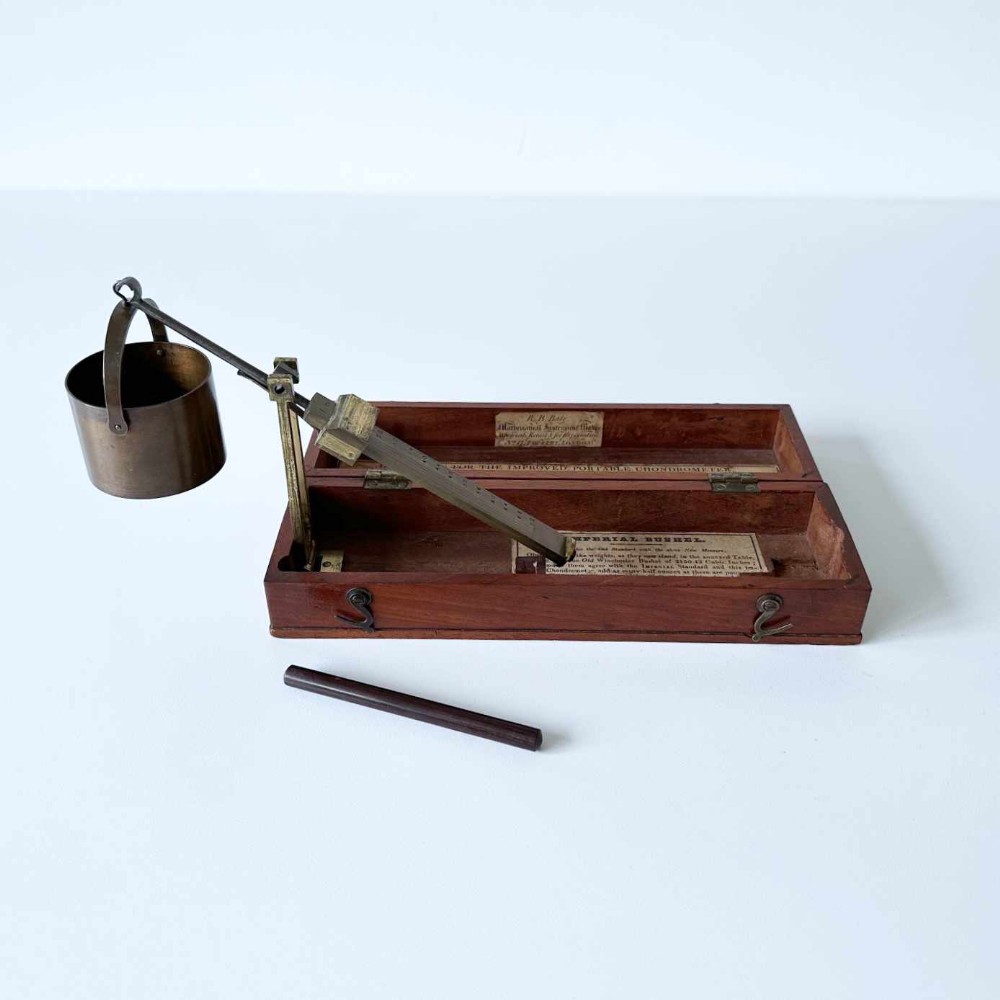
For sale, a rare pre-Imperial “Improved Portable Chondrometer” by Robert Brettell Bate of 17 Poultry, London.

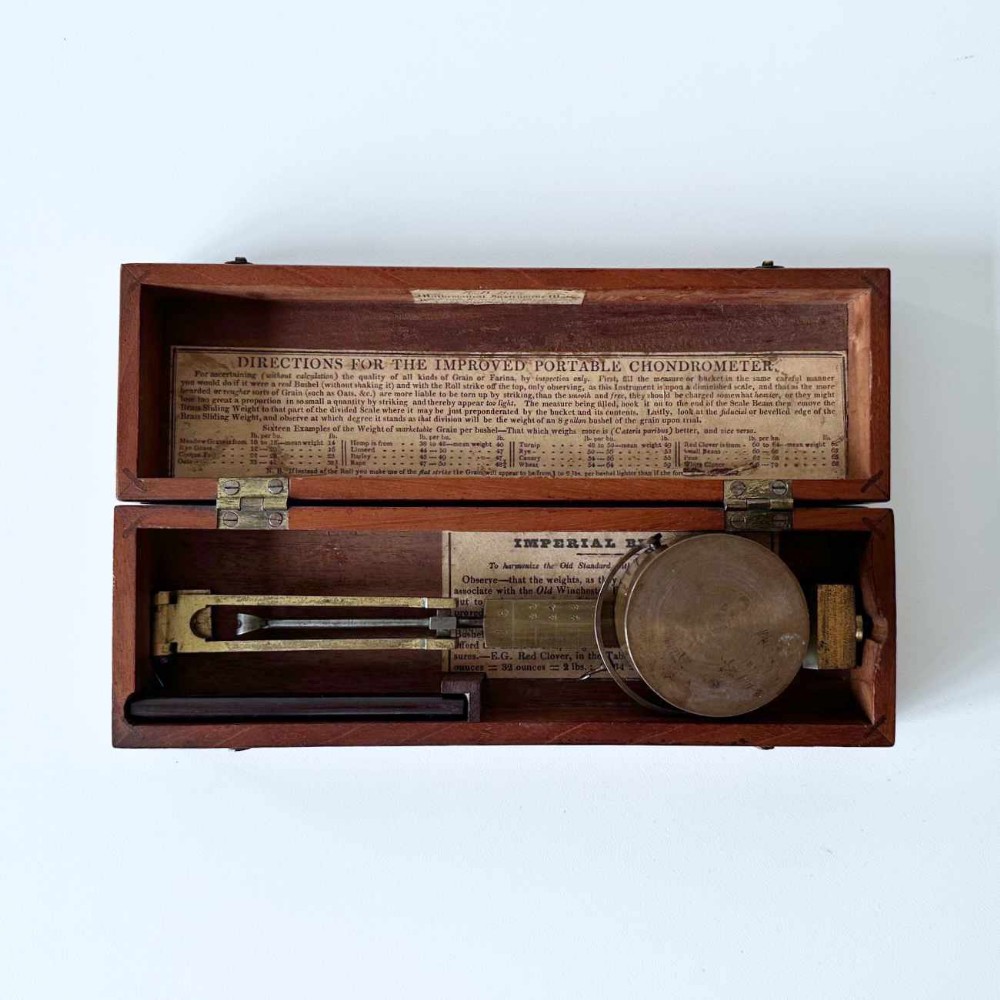
This style of chondrometer or grain scale became largely popularised following an Act of Parliament on the 1st of January 1826 introducing the imperial form of measurement under George IV. The steelyard type scale was primarily used as a measure of the bulk density of grain and therefore quality of the product. Most examples come with separate stand, balance arm and measuring receptacle but this early Bate example is highly unusual as it clearly dates to prior to the Act of Parliament that formalised the new standards on January 1st 1826.
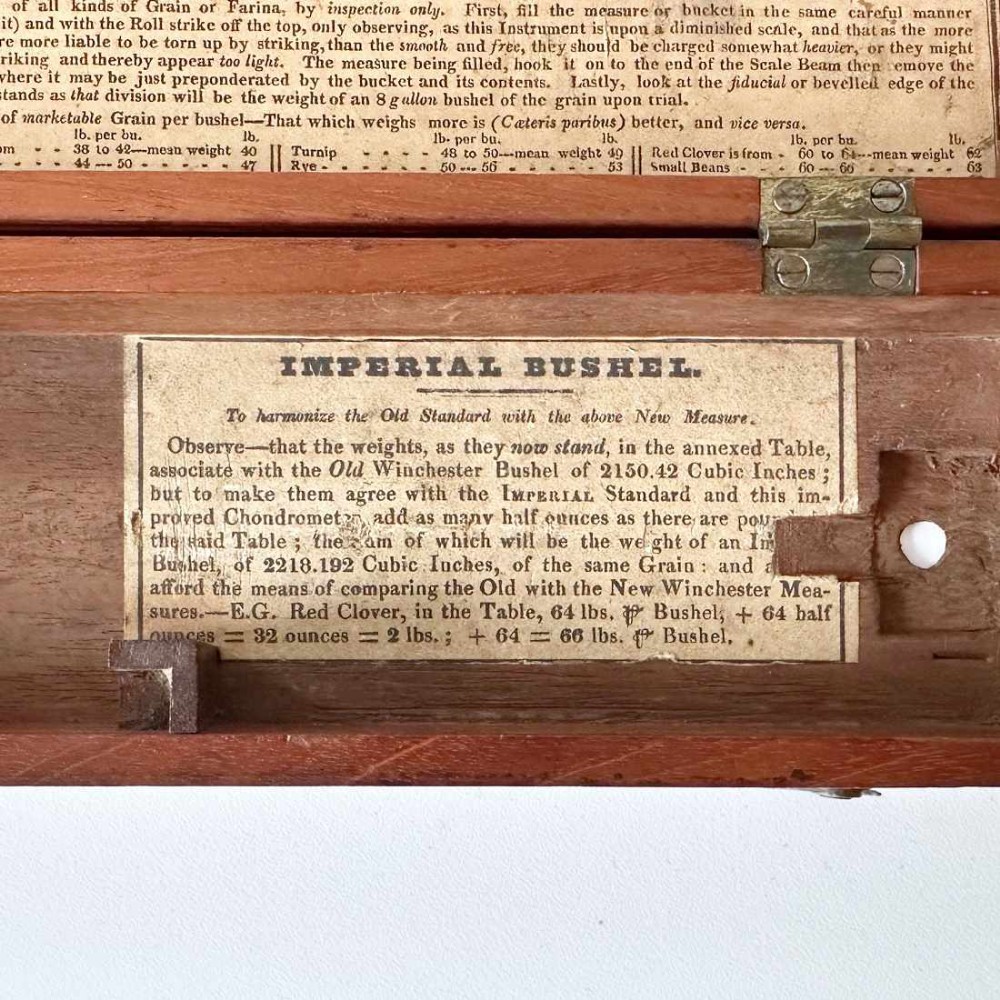
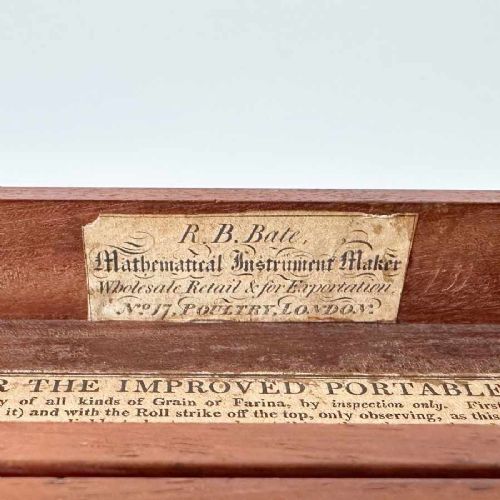
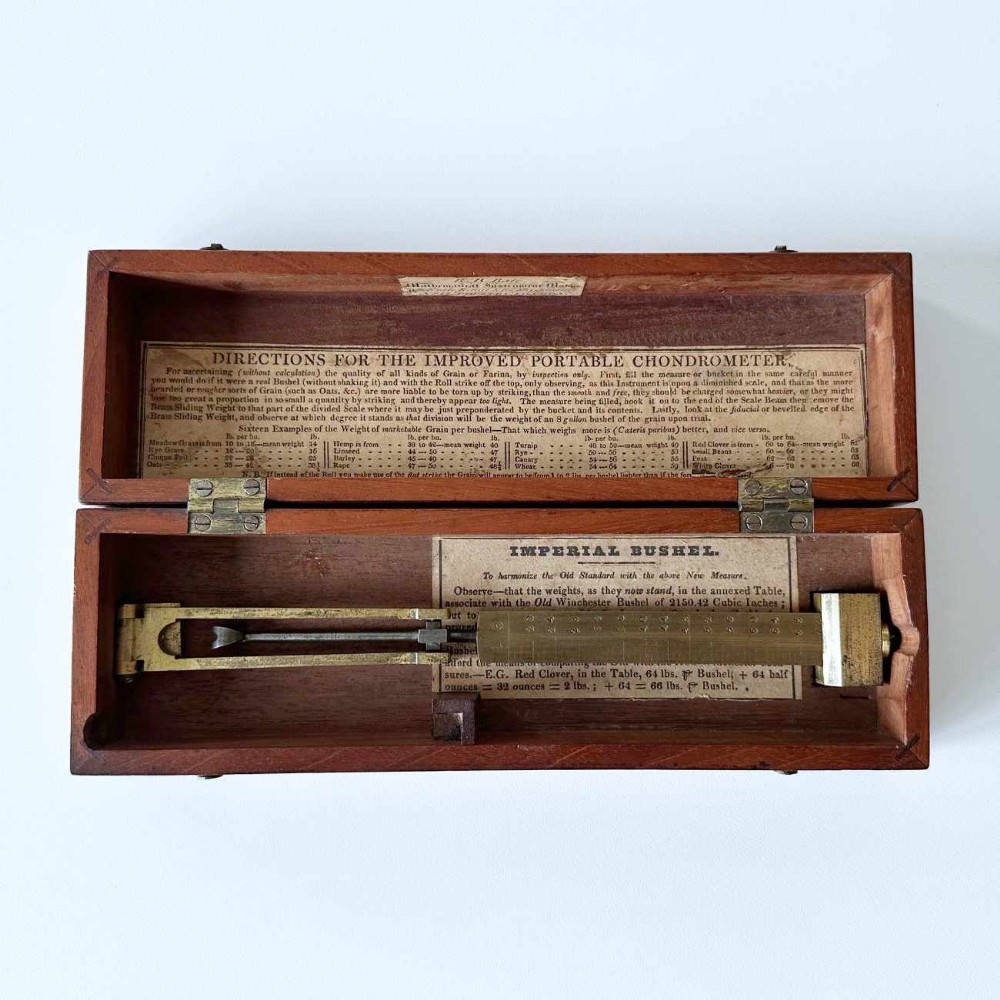
It is first evident from the paper inlay within the lid that outlines the Directions for the Improved Portable Chondrometer, where the weight examples differ from those which are ordinarily found on Bate “Post Act” chrondrometers. My suspicion is that this chondrometer was manufactured just prior to the Weights & Measures Act of 1824 and its accession to Parliament in January 1826. It is likely to have been a time of significant disruption in the UK and the addition of the label stating “Imperial Bushel” in the base of the case provided instructions on how to harmonise the old Winchester standard bushel with its imperial replacement would have been essential for customers and for selling old stock. Further support for the date theory is the trade label in the lid stating, “RB Bate, Mathematical Instrument Maker, Wholesale Retail & for exportation, No 17 Poultry, London. This early address was used prior to his move to 20/21 Poultry around 1824.
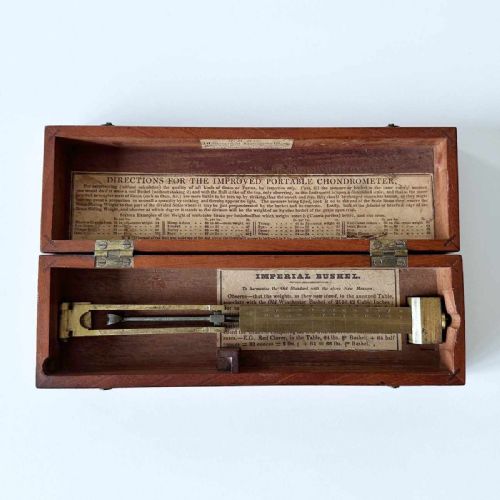
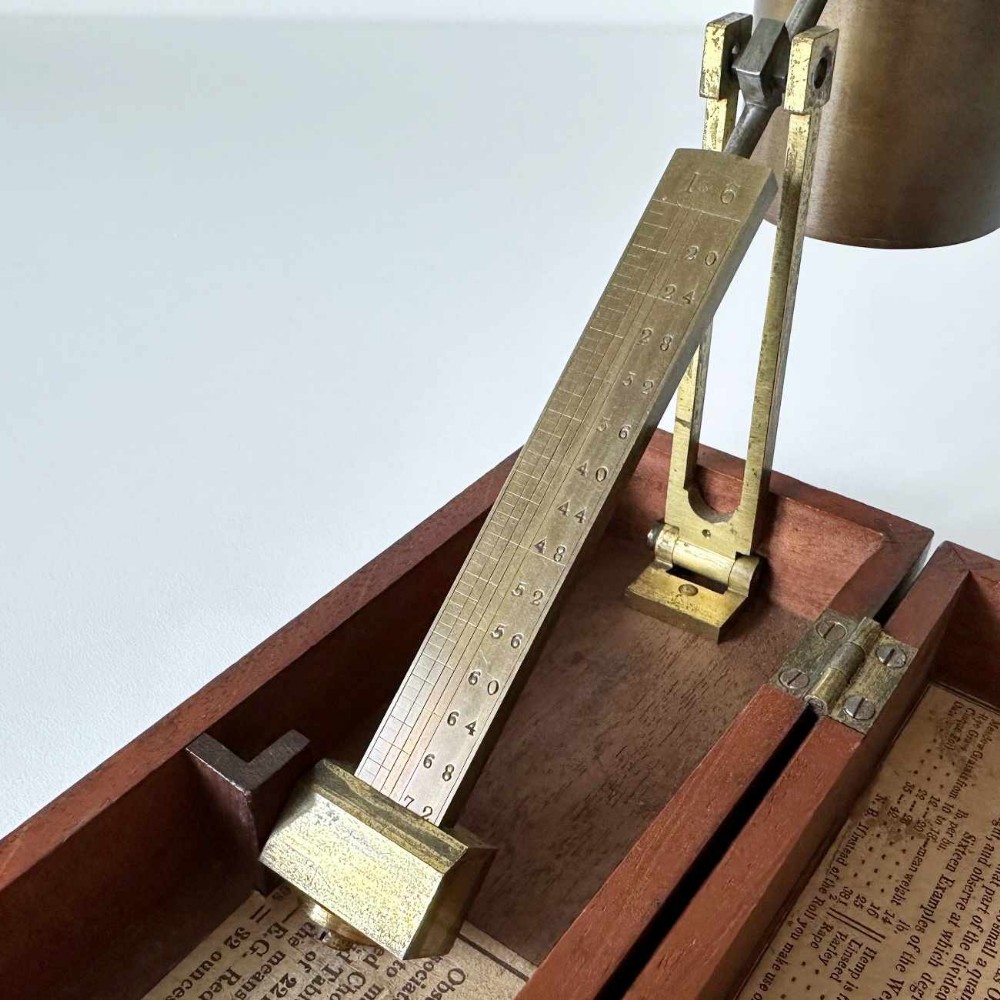
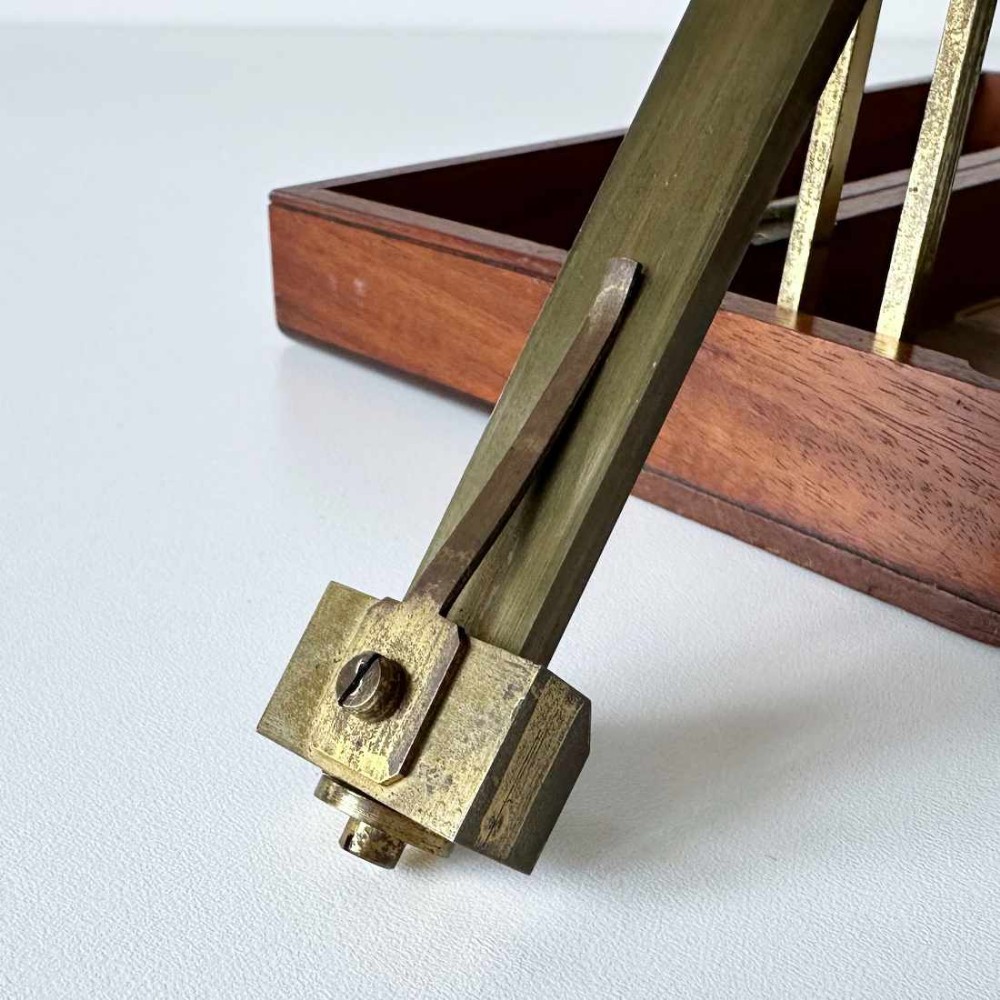
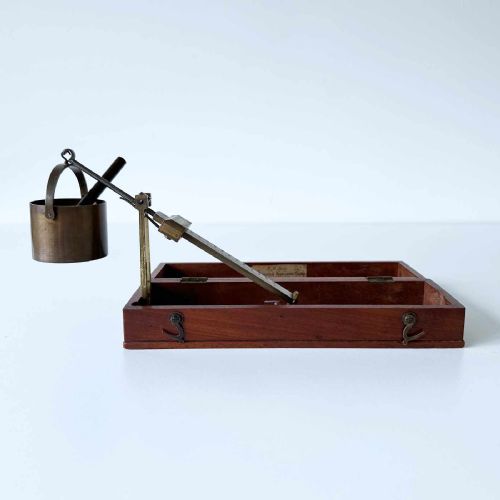
The design of the chondrometer is also unusual. This “portable” example is smaller than most of Bate’s grain scales I’ve previously encountered, and it is designed with both the stand and the weighted steelyard balance fixed and hinged to the case so that no separate parts are required except the grain bucket. The stand is simply lifted, the balance raised and the instrument is prepared for use. A rather neat design which may well have been the forerunner to what eventually became Bate’s more standard design. It is interesting to note that this example only contains a wooden roller to flatten the grain once the bucket is filled for weighing as opposed to the flat edge strickle and roller.
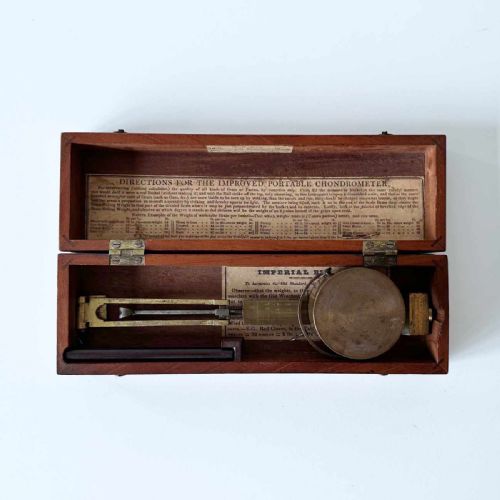
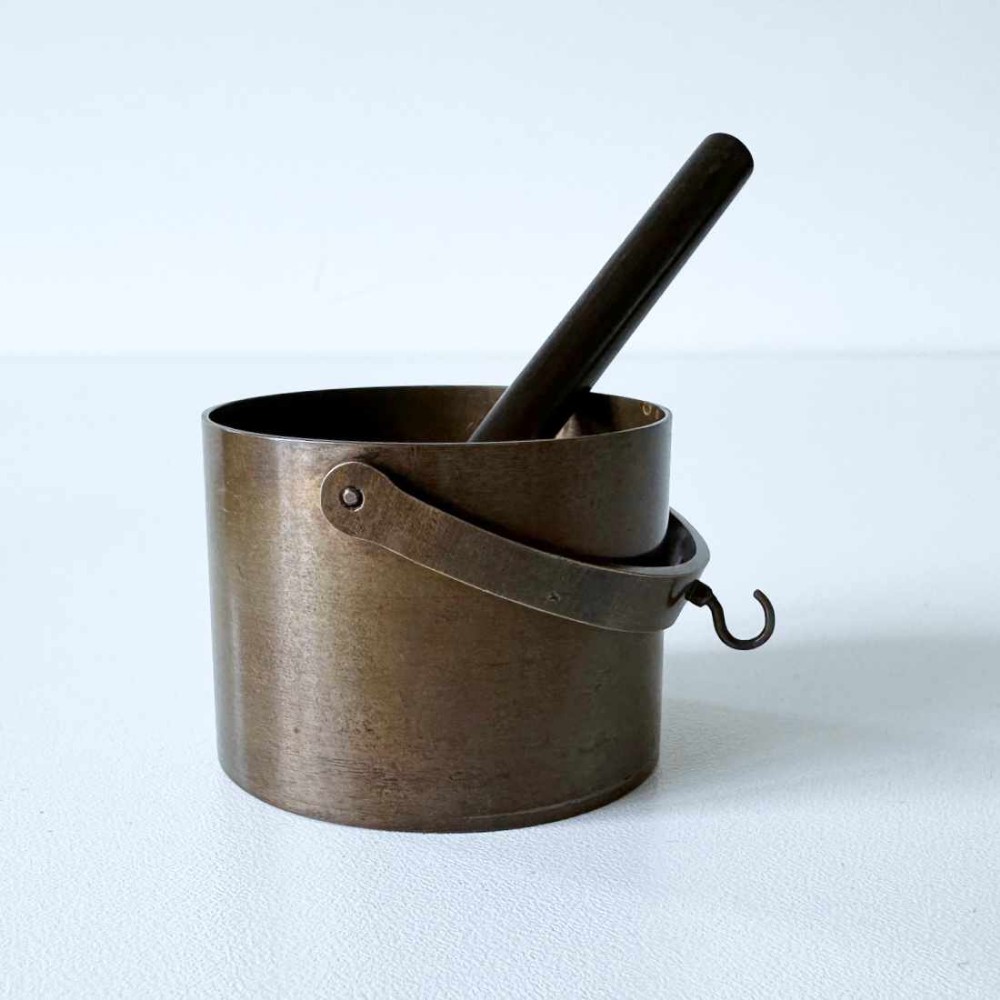
To use the scale, the brass measuring cylinder was placed upon the scale arm and filled to the brim with a sample of grain and levelled using the roller. The weight was identified by means of the sliding weight on the arm of the scale and was repeated several times to ensure accuracy of measurement. The outcome would determine price and space required to store the crop in question.
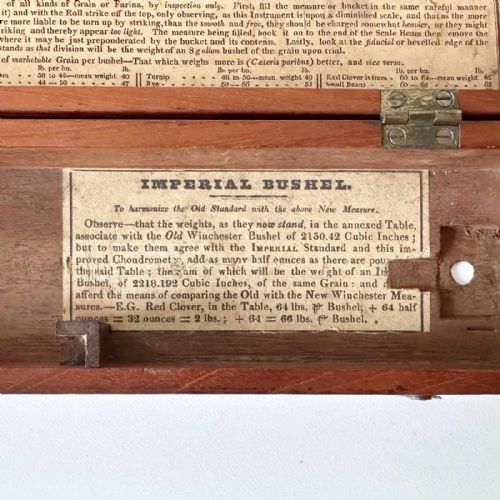
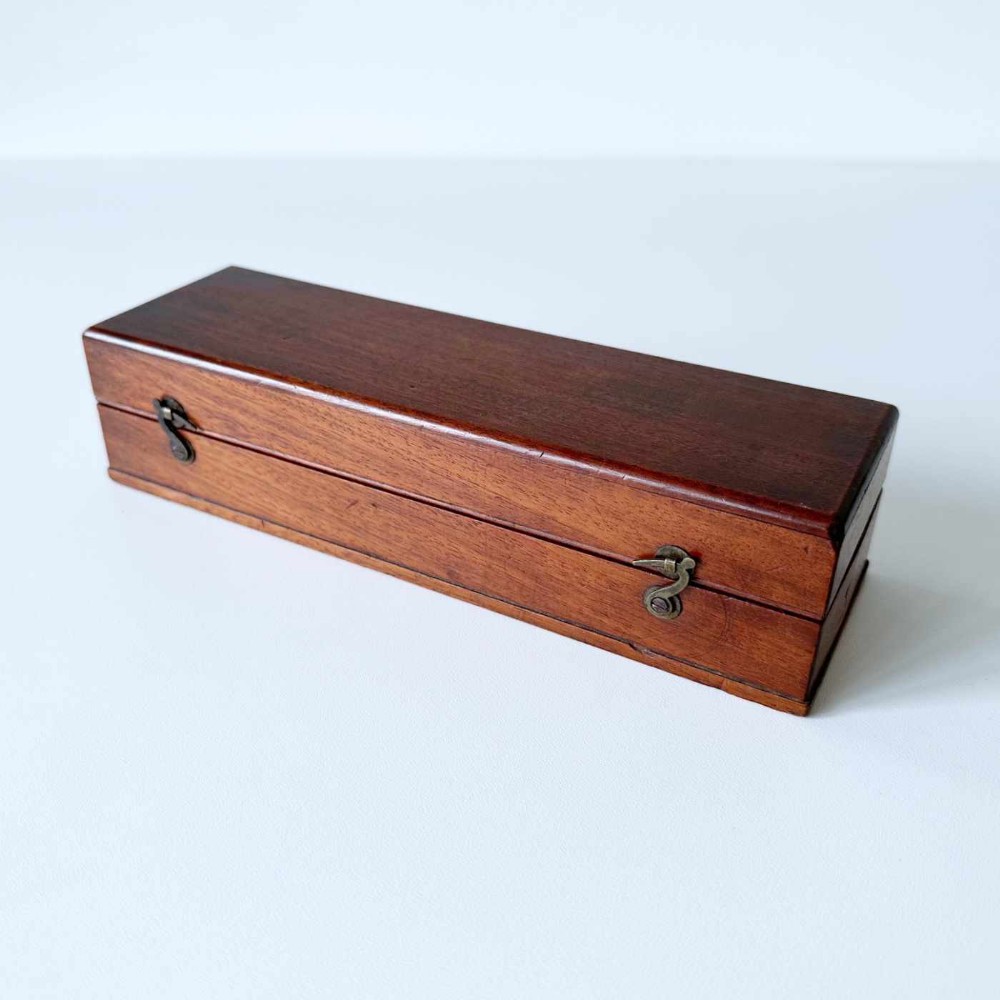
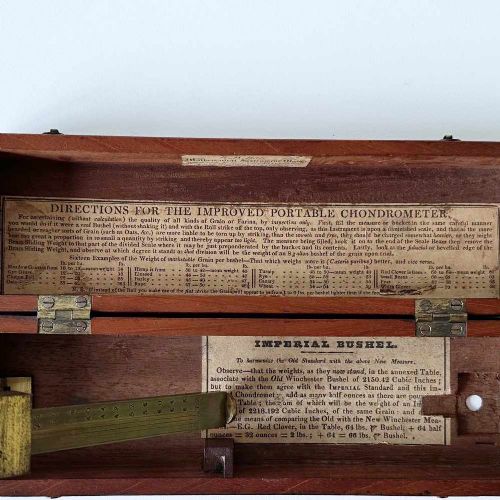
This very rare early example is housed within its original mahogany case with paper instructional label giving bushel conversions for sixteen types of grain.

The maker, Robert Brettell Bate was a very high-quality manufacturer of scientific instruments working in the early part of the Nineteenth Century. Born in 1782, to a family of Bankers in Stourbridge, he initially travelled to London to become a Haberdasher under his Uncle Robert Brettell. His Aunt also living in London was married to Bartholomew Sikes, famous for winning favour with The Board of Excise for his hydrometer design in 1802.
In 1804, Robert Bate married his cousin, the daughter of his aunt Mary and Bartholomew Sikes, however it was followed quite shortly with the sudden death of Sikes. Supported by his newly widowed Aunt, Bate took over Sike’s business and its government commission and successfully persuaded the Board of Excise to adopt the “improved” hydrometer that his Father-in-Law had been working on before his untimely death.

At this time, the company was being run at 17 Poultry where in 1814 he became a member of the Spectacle Maker’s Company of London, by 1824 his reputation was such th

Physical Dimensions
Height
5cm (1.97")
Width
23cm (9.06")
Depth
7cm (2.76")
Declaration

Jason Clarke Antiques has dated this Antique Brass Chondrometer Scale to the 1800s.

Reference Numbers
Sellingantiques Reference
SA1211652
Description
For sale, a rare pre-Imperial “Improved Portable Chondrometer” by Robert Brettell Bate of 17 Poultry, London.
This style of chondrometer or grain scale became largely popularised following an Act of Parliament on the 1st of January 1826 introducing the imperial form of measurement under George IV.
Jason Clarke Antiques

The steelyard type scale was primarily used as a measure of the bulk density of grain and therefore quality of the product. Most examples come with separate stand, balance arm and measuring receptacle but this early Bate example is highly unusual as it clearly dates to prior to the Act of Parliament that formalised the new standards on January 1st 1826.

fig 1. An antique brass portable chondrometer scale featuring a small bucket suspended from a graduated beam, resting within a fitted mahogany case with printed paper labels.
fig 1. Pre Imperial Act Improved Portable Chondrometer by Robert Brettell Bate of 17 Poultry London

It is first evident from the paper inlay within the lid that outlines the Directions for the Improved Portable Chondrometer, where the weight examples differ from those which are ordinarily found on Bate “Post Act” chrondrometers. My suspicion is that this chondrometer was manufactured just prior to the Weights & Measures Act of 1824 and its accession to Parliament in January 1826. It is likely to have been a time of significant disruption in the UK and the addition of the label stating “Imperial Bushel” in the base of the case provided instructions on how to harmonise the old Winchester standard bushel with its imperial replacement would have been essential for customers and for selling old stock. Further support for the date theory is the trade label in the lid stating, “RB Bate, Mathematical Instrument Maker, Wholesale Retail & for exportation, No 17 Poultry, London. This early address was used prior to his move to 20/21 Poultry around 1824.

fig 2. An antique brass portable chondrometer scale featuring a small bucket suspended from a graduated beam, resting within a fitted mahogany case with printed paper labels.
fig 2. Pre Imperial Act Improved Portable Chondrometer by Robert Brettell Bate of 17 Poultry London

The design of the chondrometer is also unusual. This “portable” example is smaller than most of Bate’s grain scales I’ve previously encountered, and it is designed with both the stand and the weighted steelyard balance fixed and hinged to the case so that no separate parts are required except the grain bucket. The stand is simply lifted, the balance raised and the instrument is prepared for use. A rather neat design which may well have been the forerunner to what eventually became Bate’s more standard design. It is interesting to note that this example only contains a wooden roller to flatten the grain once the bucket is filled for weighing as opposed to the flat edge strickle and roller.

fig 3. An antique brass portable chondrometer scale featuring a small bucket suspended from a graduated beam, resting within a fitted mahogany case with printed paper labels.
fig 3. Pre Imperial Act Improved Portable Chondrometer by Robert Brettell Bate of 17 Poultry London

To use the scale, the brass measuring cylinder was placed upon the scale arm and filled to the brim with a sample of grain and levelled using the roller. The weight was identified by means of the sliding weight on the arm of the scale and was repeated several times to ensure accuracy of measurement. The outcome would determine price and space required to store the crop in question.

fig 4. An antique brass portable chondrometer scale featuring a small bucket suspended from a graduated beam, resting within a fitted mahogany case with printed paper labels.
fig 4. Pre Imperial Act Improved Portable Chondrometer by Robert Brettell Bate of 17 Poultry London

This very rare early example is housed within its original mahogany case with paper instructional label giving bushel conversions for sixteen types of grain.

The maker, Robert Brettell Bate was a very high-quality manufacturer of scientific instruments working in the early part of the Nineteenth Century. Born in 1782, to a family of Bankers in Stourbridge, he initially travelled to London to become a Haberdasher under his Uncle Robert Brettell. His Aunt also living in London was married to Bartholomew Sikes, famous for winning favour with The Board of Excise for his hydrometer design in 1802.

fig 5. An antique brass portable chondrometer scale featuring a small bucket suspended from a graduated beam, resting within a fitted mahogany case with printed paper labels.
fig 5. Pre Imperial Act Improved Portable Chondrometer by Robert Brettell Bate of 17 Poultry London

In 1804, Robert Bate married his cousin, the daughter of his aunt Mary and Bartholomew Sikes, however it was followed quite shortly with the sudden death of Sikes. Supported by his newly widowed Aunt, Bate took over Sike’s business and its government commission and successfully persuaded the Board of Excise to adopt the “improved” hydrometer that his Father-in-Law had been working on before his untimely death.

At this time, the company was being run at 17 Poultry where in 1814 he became a member of the Spectacle Maker’s Company of London, by 1824 his reputation was such th

Height
5cm (1.97")
Width
23cm (9.06")
Depth
7cm (2.76")
Date of Manufacture

Jason Clarke Antiques has dated this Antique Brass Chondrometer Scale to the 1800s.

Reference Numbers
Sellingantiques Ref
SA1211652
Jason Clarke Antiques
Sellingantiques verified Since Jul 2015
Dealer Profile

You can view the stock and full dealer information on the Jason Clarke Antiques Profile Page
Relevant Links
PDF SHARE
SAVE
An antique brass portable chondrometer scale featuring a small bucket suspended from a graduated beam, resting within a fitted mahogany case with printed paper labels.
1 / 11
Archive I An antique brass portable chondrometer scale featuring a small bucket suspended from a graduated beam, resting within a fitted mahogany case with printed paper labels.

Pre Imperial Act Improved Portable Chondrometer by Robert Brettell Bate of 17 Poultry London
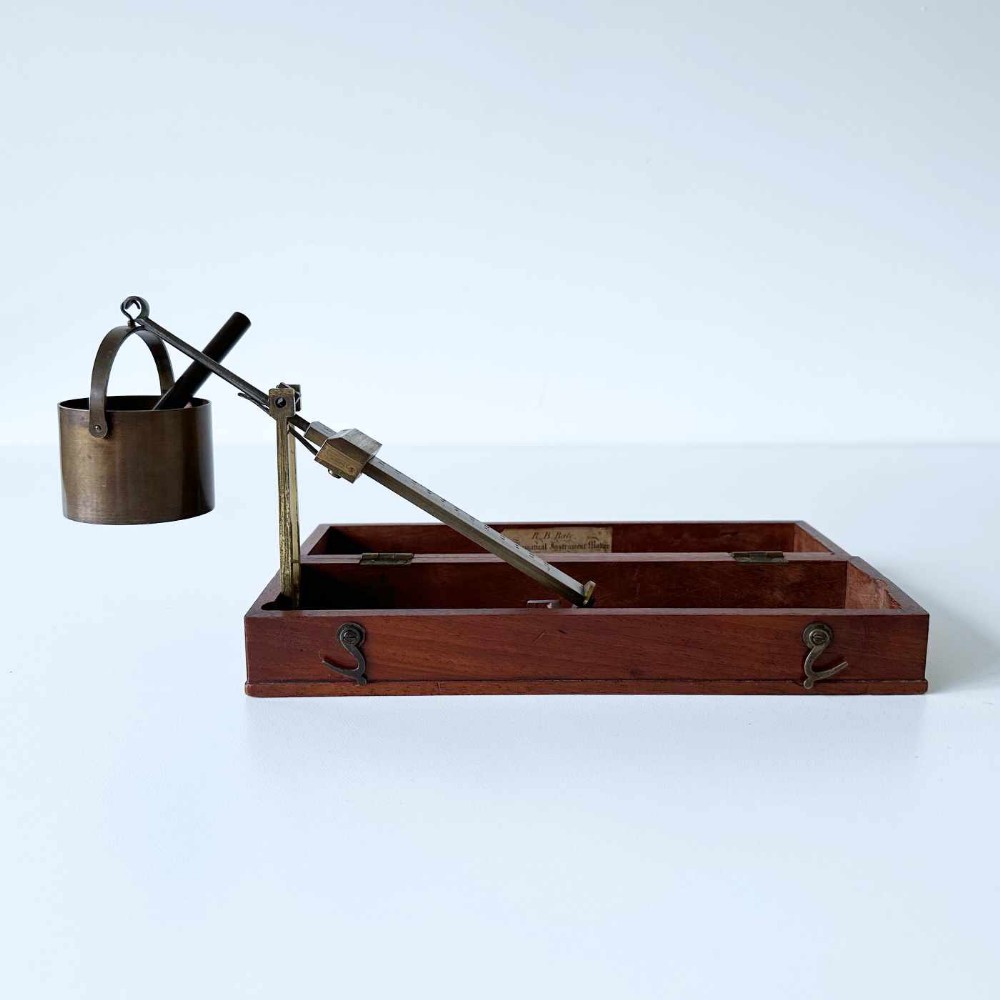
Archive II An antique brass portable chondrometer scale featuring a small bucket suspended from a graduated beam, resting within a fitted mahogany case with printed paper labels. View II
Archive III An antique brass portable chondrometer scale featuring a small bucket suspended from a graduated beam, resting within a fitted mahogany case with printed paper labels. View III
Archive IV An antique brass portable chondrometer scale featuring a small bucket suspended from a graduated beam, resting within a fitted mahogany case with printed paper labels. View IV
Archive V An antique brass portable chondrometer scale featuring a small bucket suspended from a graduated beam, resting within a fitted mahogany case with printed paper labels. View V
Archive VI An antique brass portable chondrometer scale featuring a small bucket suspended from a graduated beam, resting within a fitted mahogany case with printed paper labels. View VI
Archive VII An antique brass portable chondrometer scale featuring a small bucket suspended from a graduated beam, resting within a fitted mahogany case with printed paper labels. View VII
Archive VIII An antique brass portable chondrometer scale featuring a small bucket suspended from a graduated beam, resting within a fitted mahogany case with printed paper labels. View VIII
Archive IX An antique brass portable chondrometer scale featuring a small bucket suspended from a graduated beam, resting within a fitted mahogany case with printed paper labels. View IX
Archive X An antique brass portable chondrometer scale featuring a small bucket suspended from a graduated beam, resting within a fitted mahogany case with printed paper labels. View X
Archive XI An antique brass portable chondrometer scale featuring a small bucket suspended from a graduated beam, resting within a fitted mahogany case with printed paper labels. View XI
Enlarged Archival View
Telephone 07815 046645
Location
Newbury
Berkshire
United Kingdom
Verified Since Jul 2015
Items For Sale 82
Items Sold 605
Jason Clarke Antiques
Verified Since Jul 2015
View Dealer Info
Location: Newbury, Berkshire, United Kingdom
Verified
Jul 2015
For Sale
82
Sold
605
An antique brass portable chondrometer scale featuring a small bucket suspended from a graduated beam, resting within a fitted mahogany case with printed paper labels.
Pre Imperial Act Improved Portable Chondrometer by Robert Brettell Bate of 17 Poultry London
Ref: SA1211652
An antique brass portable chondrometer scale featuring a small bucket suspended from a graduated beam, resting within a fitted mahogany case with printed paper labels.
Detail View 1
Detail View 2
Detail View 3
Detail View 4
Detail View 5
Detail View 6
Detail View 7
Detail View 8
Detail View 9
Detail View 10
Archival Detail
Every single antique dealer on our platform is individually approved by our internal team. We verify their professional trade history, ethical standards, and photographic quality to ensure a secure, high-standard buying environment. Upon joining, every dealer agrees to a strict 9-point code of conduct. While issues can occasionally arise, our dealers typically resolve them swiftly and directly with the buyer. In fact, since our founding in 2002, Sellingantiques has only had to step in to help resolve an issue on roughly five occasions—a true testament to the quality of our dealers and their dedication to your happiness.
Our dealers are highly experienced in packing and shipping fragile, high-value antiques. Because you are in direct contact with the dealer, you will be able to easily go through all available shipping and insurance options together to ensure your item arrives safely.
Antiques are the ultimate green purchase. By choosing historical pieces over newly manufactured goods, you completely eliminate the carbon footprint of modern mass production while preserving exceptional, timeless craftsmanship.

Developed in the late eighteenth century, a chondrometer was designed to measure the density and bulk weight of grain, allowing merchants to determine crop quality before standardized trade laws.

These instruments were predominantly constructed from cast and turned brass for the measuring beam and bucket, mounted within a fitted mahogany or oak storage box to protect the delicate balance points.

Authentic pieces usually feature engraved maker signatures on the brass beam, intact printed instruction labels inside the timber box lid, and specific calibration markings matching pre-Imperial or Imperial measurement acts.

Chondrometers and historical measuring apparatus are ideal accent pieces for curating a Gentlemans Library or modern study aesthetic, displayed open on a bookshelf, desk, or mantelpiece.

Preserve the historical value by keeping the metal dry and unpolished to retain its natural oxidised patina, while using a microfibre cloth to dust the timber case and fragile paper labels gently.
items
Add keywords to the filter
Price
£100
£250000
Era
Movements
Material
Origin
Stock Location
Freshness
Online Payments
Categories