



Brass Counter Scales
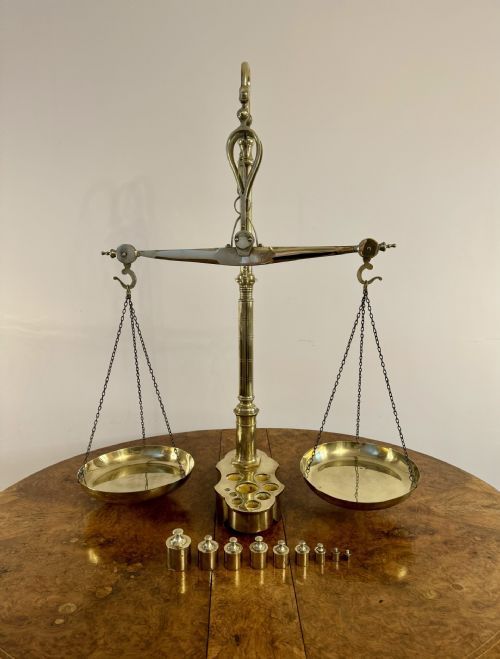
Brass counter scales are robust commercial weighing instruments that bring genuine nineteenth and early twentieth century mercantile character into modern interiors.
Brass Counter Scales
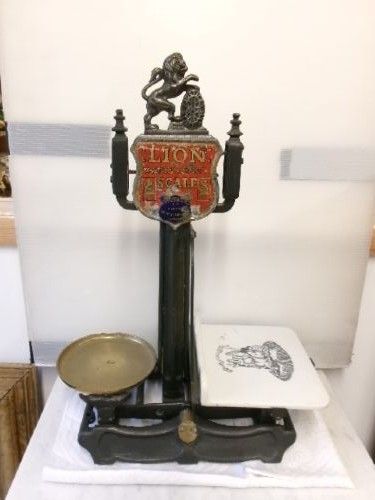
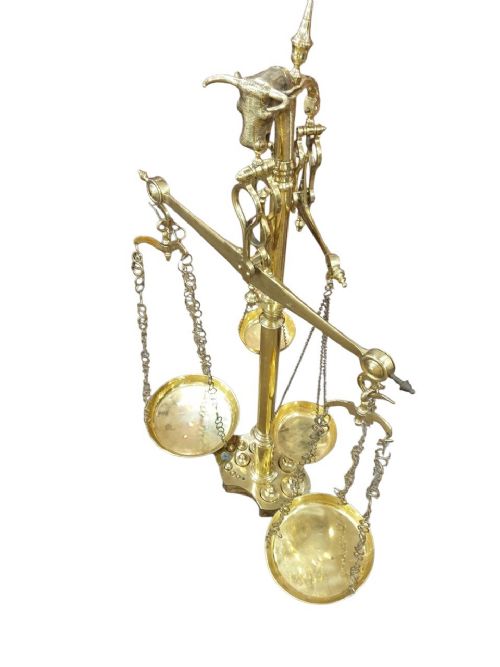
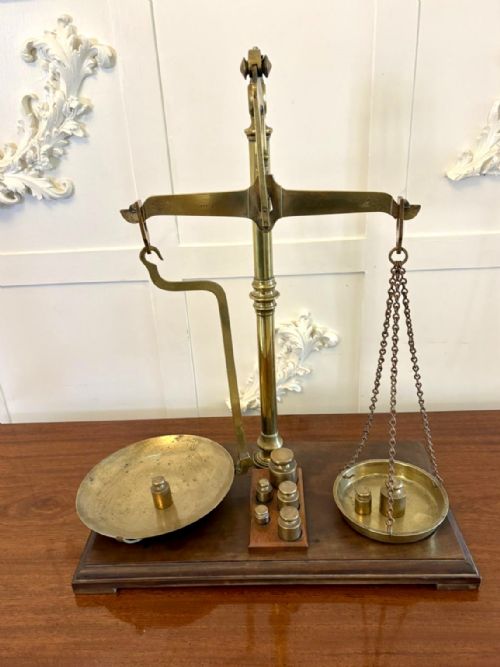
Brass counter scales are traditional weighing devices designed for shops, grocers, and apothecaries during the Victorian and Edwardian periods. These functional objects range from simple apothecary balances to substantial butcher's beam scales mounted on polished wooden bases.
The versions most commonly encountered on this page date from the late nineteenth and early twentieth centuries, often originating from British commercial centres and makers. They combine polished brass pans and beams with materials like mahogany and cast iron.
Surviving examples frequently retain their original weights or period markings, linking them directly to historic businesses, co-operatives, and municipal authorities. Their sturdy construction reflects a time when shop equipment was built for daily, heavy-duty service.
Materials and construction
The manufacture of these instruments relies on the combination of cast or spun brass components with structural timber and iron. Brass is utilised for beams, pans, and indicator pointers because it resists corrosion and takes a bright polish.
Brass Counter Scales Retail Price Guide 2026
Typical asking prices for brass counter scales among the pieces listed under this phrase on Sellingantiques today, from the lower quarter to the upper quarter. They describe what is for sale here now, not the wider market.
The site records specialised measuring equipment including apothecary balances, linen testers, and grocers scales alongside matching weight sets.
Assessing quality and finish
Quality in these commercial scales is determined by the crispness of the casting work and the grade of materials chosen for the base and beam. Finer examples display refined turning on the brass pillars and carefully dovetailed or moulded mahogany plinths.
Proportion and completeness also separate standard utility items from superior pieces designed for prominent display on high-end merchant counters. The presence of matching contemporary weights and legible maker inscriptions elevates an instrument's standing.
Casartelli Manchester·Day & Millward·Parnall & Sons of Bristol·De Grave·Bartlett & Sons
The Brass Counter Scales Glossary
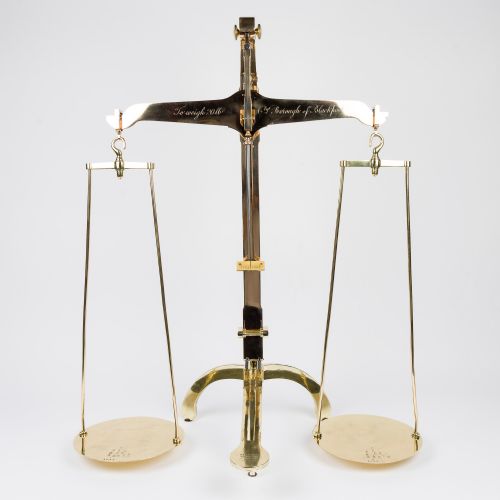
- Beam scale
- A weighing device consisting of a central pivoting lever from which two pans are suspended at equal distances. This traditional design operates on the principle of moment equilibrium.
- Apothecary balance
- A sensitive scale traditionally utilised by pharmacists and physicians for measuring small quantities of medicinal ingredients. These instruments often feature enclosed glass cases and delicate brass weights.
- Avoirdupois
- The system of weights and measures commonly used for general goods and commerce in the British Isles. The term derives from Anglo-Norman French and governs standard pound and ounce measurements.
- Cast iron
- An iron-carbon alloy poured into moulds to create rigid structural parts and heavy bases. It provides the necessary mass and stability for commercial shop scales.
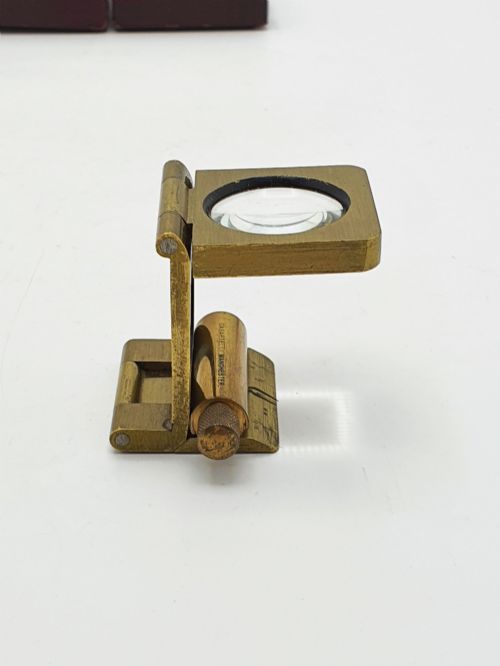
- Loupe
- A small magnifying glass used to examine fine details, sometimes found associated with measuring scales and testing equipment. It assists in reading small stamped inscriptions and calibration marks.
Brass Counter Scales: Frequently Asked Questions
How do brass counter scales work?
These balances operate by placing an object on one pan and matching weights on the other until the central pointer aligns vertically. The precision of the measurement depends on the equal length of the beam arms from the central pivot.
Friction is minimised through knife-edge bearings resting on hardened plates, allowing the beam to tilt freely at the slightest difference in weight.
Can I use them for daily weighing?
While these instruments were originally built for rigorous daily commerce, surviving antique examples are best treated as decorative or display items. Over the decades, wear to the delicate pivot points can affect their precise calibration.
Modern domestic or commercial scales should be used if exact measurements are required for cooking or postage.
How should I clean brass components?
Dust the brass and wood gently with a soft, dry cloth to prevent the accumulation of grime. Avoid harsh chemical polishes that can strip away the aged patina accumulated over a century.
Leaving a natural, mellow surface honours the history of the object and maintains its authentic character.
What indicates an Edwardian piece?
Edwardian scales, dating from the early twentieth century, often exhibit slightly more streamlined designs compared to ornate Victorian predecessors. They frequently feature machine-tooled components and standardised municipal stamps.
Maker plaques and style cues help distinguish them from earlier nineteenth-century workshop productions.