




Victorian Shop Scales
Victorian shop scales are robust commercial balances built to weigh goods accurately, combining solid brass and iron with practical utility for any interior.
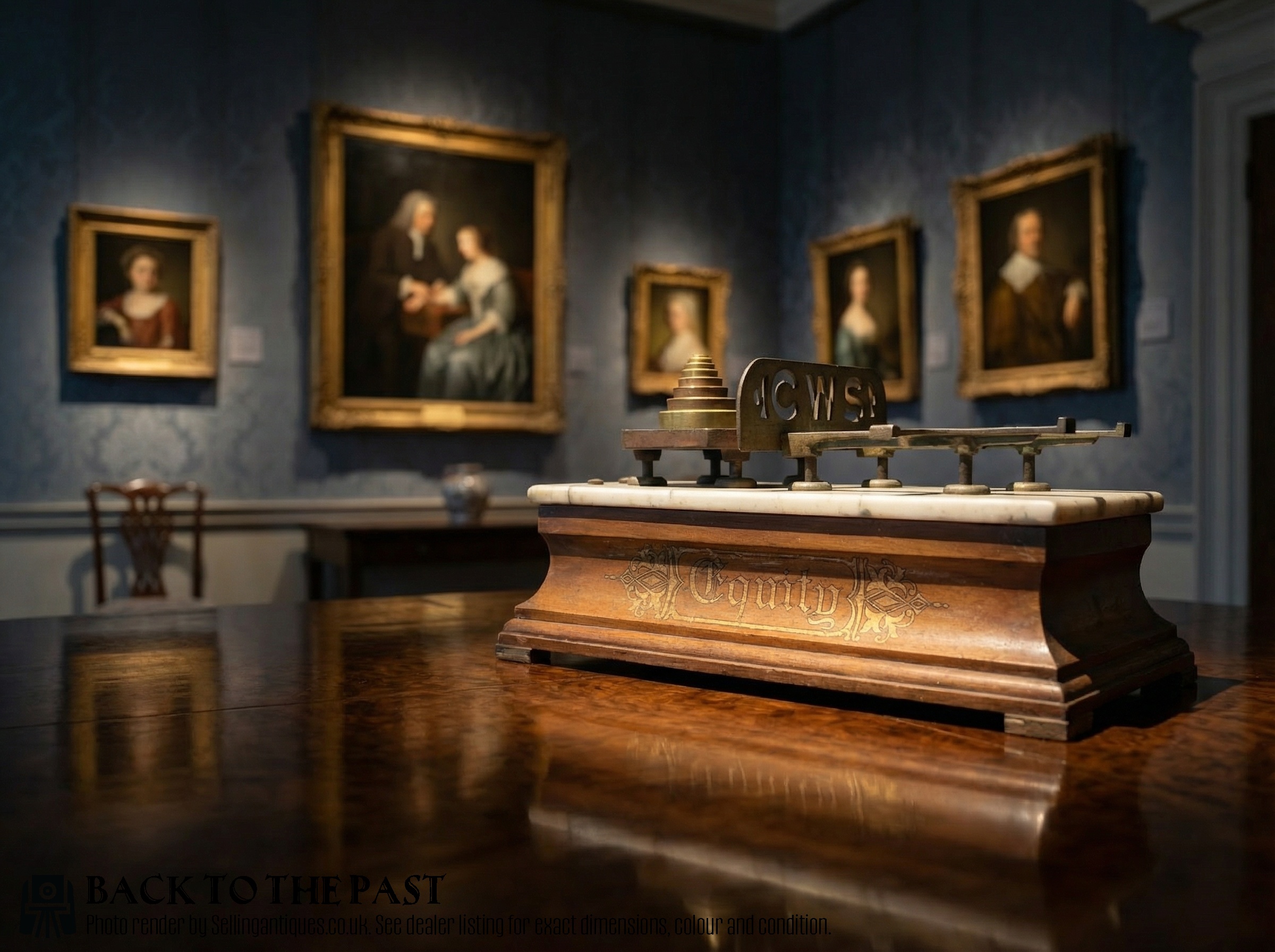
Victorian Shop Scales
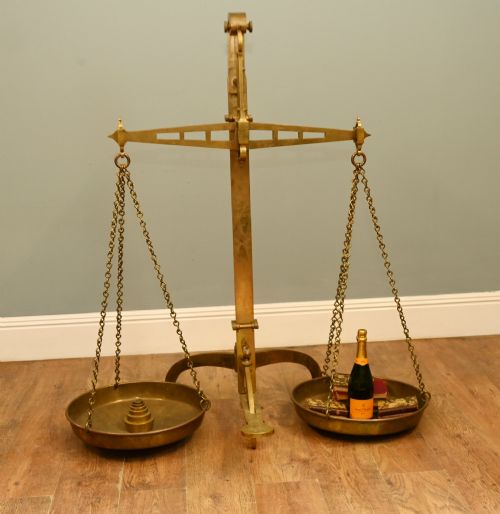
Victorian shop scales comprise heavy-duty balance scales, grocers scales, and butcher scales designed for rigorous daily mercantile use. The examples appearing on this page span from the 1870s through to the 1930s, reflecting various commercial trades.
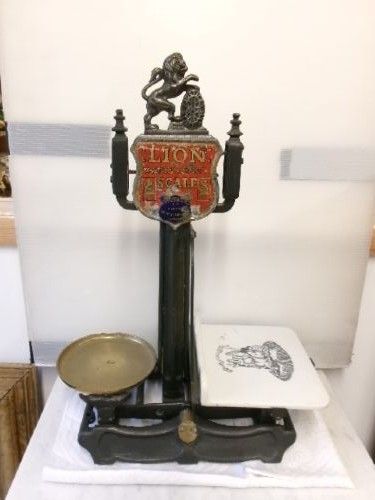
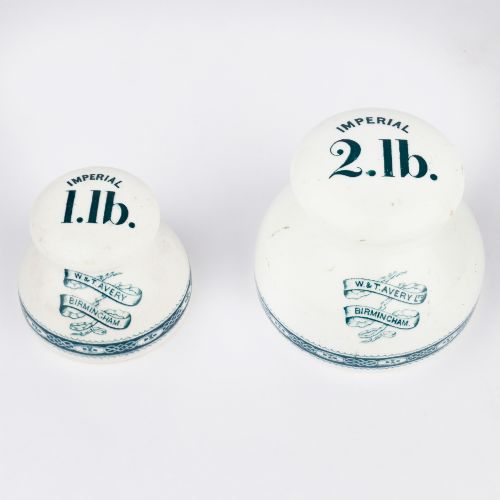
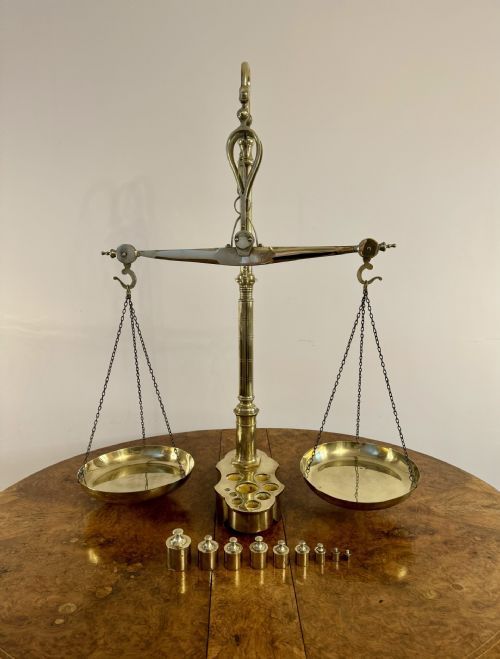
Most pieces combine cast iron bases with polished brass beams and pans, often accompanied by ceramic scale plates or dedicated calibration weights. These utilitarian instruments served grocers, butchers, and sweet shops across Britain.
Buyers frequently encounter brass beam scales alongside specialised advertising ceramic scale plates bearing maker names and trade details. Floor standing models and smaller counter sets both appear within this selection.
How they were made
Makers utilised durable cast iron for heavy structural bases and frames, providing the necessary weight and stability for commercial weighing. Brass was selected for beams, pans, and adjustment fittings due to its resilience and bright finish.
Ceramic and ironstone elements, including glazed ceramic scale pans and advertising plates, were produced by potteries to withstand constant cleaning in retail environments. Mahogany wooden bases also appear in select configurations.
Components were assembled with precise mechanical tolerances to ensure accurate balance and calibration over years of heavy usage in shops.
Victorian Shop Scales Retail Price Guide 2026
Typical asking prices for victorian shop scales among the pieces listed under this phrase on Sellingantiques today, from the lower quarter to the upper quarter. They describe what is for sale here now, not the wider market.
Materials across this selection include brass, iron, mahogany, and glazed ceramic ironstone.
What varies in quality
The degree of original finish preservation separates standard commercial items from exceptional survivals, particularly regarding the polish of the brass and the crispness of maker inscriptions. Finely cast ironwork with intricate detail demonstrates superior workshop standards.
Completeness alters the character of a set, as surviving matched brass weights or original ceramic advertising plates elevate the historical integrity of the piece. The presence of documented makers and patent marks adds distinction to individual scales.
W & T Avery·Day & Millward·Parnall & Sons of Bristol·G Story·Hunt & Co London
The Victorian Shop Scales Glossary
- Balance scales
- A weighing device operating on the principle of equal arms, suspending pans from a central pivoting beam to compare masses.
- Scale plate
- A flat ceramic or metal tray designed to hold loose goods during the weighing process on a counter scale.
- Ironstone
- A type of durable commercial pottery developed in Britain, frequently utilised for robust advertising scale plates and platters.
- Calibration weight
- A standardised mass used to test and adjust the accuracy of commercial weighing scales.
- Beam
- The horizontal metal bar that pivots on a central fulcrum in a balance scale.
Victorian Shop Scales: Frequently Asked Questions
How do these scales work?
These balances operate by placing an item on one pan and matching calibration weights on the other until the beam levels. The pivoting brass beam ensures an even distribution of weight.
Most sets rely on gravity and precise counterweights rather than internal springs, maintaining accuracy over decades of commercial service.
Where were these scales used?
Shopkeepers utilised these instruments across various Victorian retail environments, including grocers, butchers, and sweet shops. They sat prominently on wooden counters for daily customer transactions.
Larger floor-standing models served heavier trades, while smaller brass beam scales measured precise quantities of dry goods or confections.
How do I clean brass parts?
Maintenance involves gentle dusting and occasional cleaning with a non-abrasive metal polish specifically formulated for brass. Care must be taken around stamped makers marks and applied patination.
Preserving the original aged surface is often preferred by collectors over achieving a bright, modern shine.
Are original weights included?
Some listings include matching sets of brass or iron calibration weights, while others offer the scale mechanism alone. Descriptions specify whether standard borough weights or ceramic weight components accompany the main unit.
Complete sets featuring matched weights and original advertising plates remain particularly sought after by collectors.