


Brass Surveying Instrument
A brass surveying instrument is an essential piece of precision engineering that brings period cartography and field measurement into the modern study.
What these pieces are
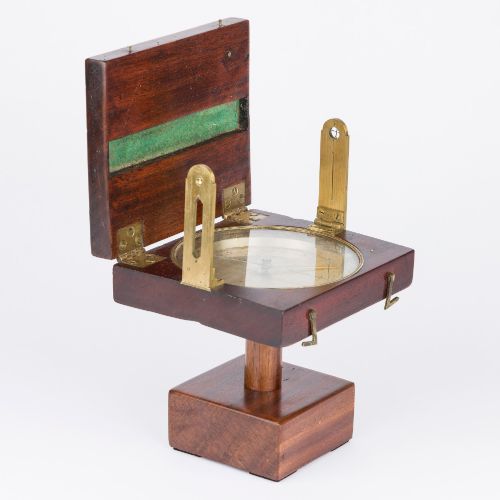
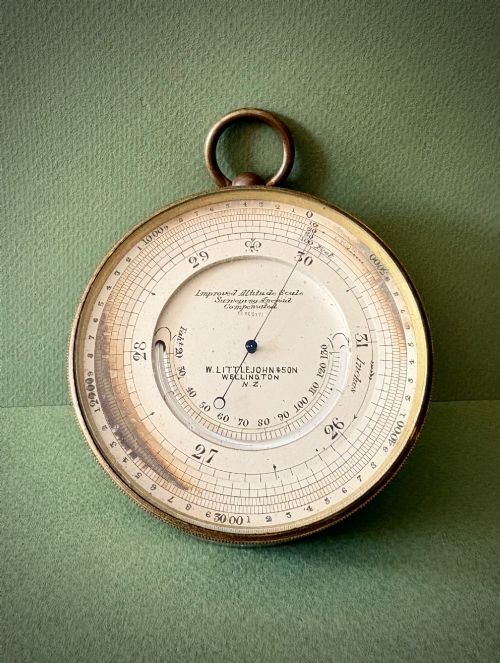
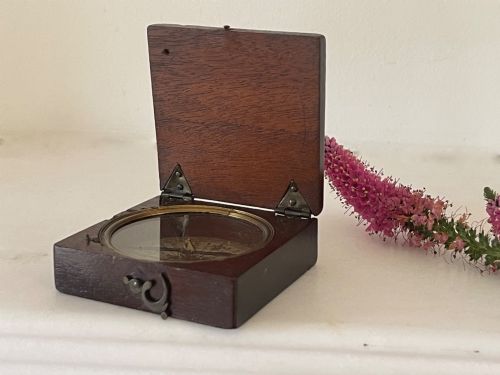
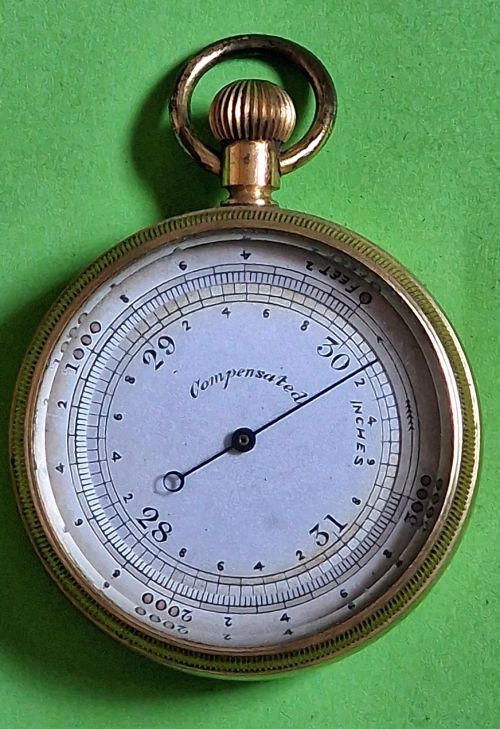
A brass surveying instrument is an optical or magnetic device used for measuring angles, distances and elevations in cartography, architecture and civil engineering. When you search for this phrase, you encounter specialist field equipment spanning the Georgian, Victorian, Edwardian and early twentieth-century periods. These items range from portable pocket compasses and rolling rulers to complex transit instruments, clinometers and theodolites housed in fitted wooden cases.
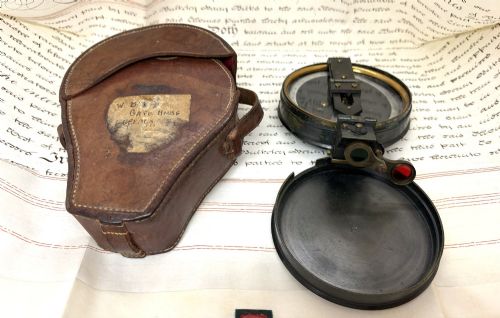
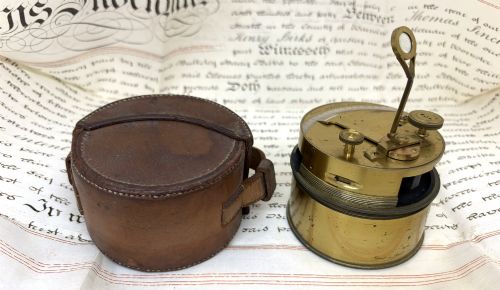
The objects listed on this page represent diverse manufacturing origins, featuring works by notable British and colonial makers such as P. Orr of Madras, W&S Jones, Alexander Adie of Edinburgh, W. H. Harling, and Barker & Son. The selection includes specific patented designs such as Latimer Clark's portable transit instrument and Cook's patent clinometer. Most pieces combine polished metal casings with glass optics and retain their original protective housings in mahogany or leather.
How they were made
These instruments are constructed primarily from cast and turned brass, often accented with silvered metal dials, nickel silver components, and ebony detailing. The materials are chosen for durability and resistance to thermal expansion in outdoor field conditions. Glass protects delicate compass needles, bubble levels, and graduated vernier scales.
Makers housed these precision devices in fitted mahogany or leather cases designed to protect sensitive optical alignments and needle pivots during transport. Patent mechanisms and specialised components, such as prism assemblies and folding sighting vanes, reflect advanced mechanical engineering of the nineteenth and early twentieth centuries.
Retail Price Guide 2026
Typical UK retail prices for brass surveying instrument, calculated from the Sellingantiques database of over a million retail prices indexed since 2003. This retail price guide relies exclusively on Sellingantiques data; no external sources or auction records are used, so the figures do not describe the wider market.
The listings span from the Georgian period through the Victorian, Edwardian, and early twentieth-century eras, incorporating mahogany and leather cases.
What varies in quality
Quality in a brass surveying instrument rests upon the crispness of the engraved graduations and the smoothness of the mechanical movements, such as leveling screws, focusing rings, and compass pivots. Finer examples retain their original silvered finishes on the degree circles and bear the engraved signatures of respected scientific instrument makers rather than remaining anonymous.
P. Orr Madras·W&S Jones·Alexander Adie·W. H. Harling·Barker & Son
The Brass Surveying Instrument Glossary
- Transit Instrument
- A specialised telescope designed to rotate in the meridian plane for timing and astronomical observations or precise land alignment. Latimer Clark's patent version represents a portable evolution of this observatory equipment.
- Clinometer
- A tool used for measuring angles of slope, elevation, or depression with respect to gravity. Cook's patent version demonstrates specialised gradient calculation in the field.
- Prismatic Compass
- A magnetic compass fitted with a prism that allows the user to view the magnetic bearing and the sighting object simultaneously. This design ensures accurate directional readings during rapid field mapping.
- Altazimuth
- An instrument mounting that allows the telescope to rotate in both altitude and azimuth axes. This configuration supports coordinate measurements in astronomy and advanced surveying.
Frequently Asked Questions
What is a brass surveying instrument used for?
These devices were utilised by cartographers, architects, and engineers to measure angles, elevations, and distances for map-making and construction. Field surveyors relied upon them to establish precise boundaries and topographical layouts.
Today, they serve as decorative and historical objects that highlight the evolution of nineteenth and early twentieth-century scientific technology.
How do I identify the date of a theodolite?
Dating relies upon stylistic cues in the brass casting, the design of the mounting screws, and any engraved maker signatures or patent dates on the silvered scales. Georgian and Victorian instruments often feature distinct hand-engraved lettering and specific mahogany case joinery.
Comparing the maker's recorded trading period helps narrow down the exact decade of manufacture.
Are these scientific instruments still accurate?
While many retain their mechanical functionality and precise movement, they are collected primarily as historical artefacts rather than for modern commercial surveying. The delicate compass needles and optical alignments require careful handling and professional calibration if used.
Most owners display them as sculptural pieces of industrial history.
How should I clean a vintage brass instrument?
Polishing antique scientific equipment is generally discouraged because it removes the historical patina and softens sharp edges on engraved divisions. Dusting with a soft brush and occasionally treating wooden cases with appropriate wax preserves the piece safely.
Leaving the brass untouched maintains the integrity and historical character of the object.