



Brass Navigation Instrument
A brass navigation instrument is a precision tool used for finding position at sea, combining utility with mechanical beauty.
Brass Navigation Instrument
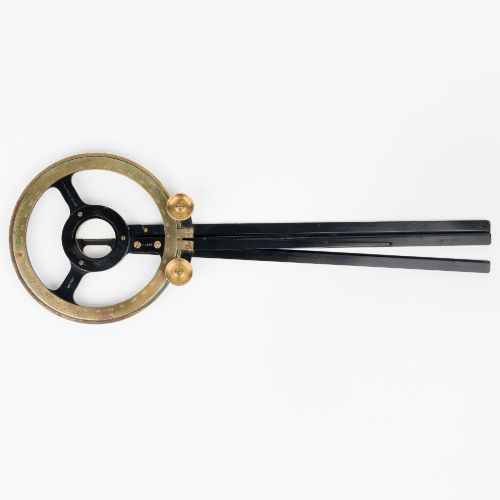
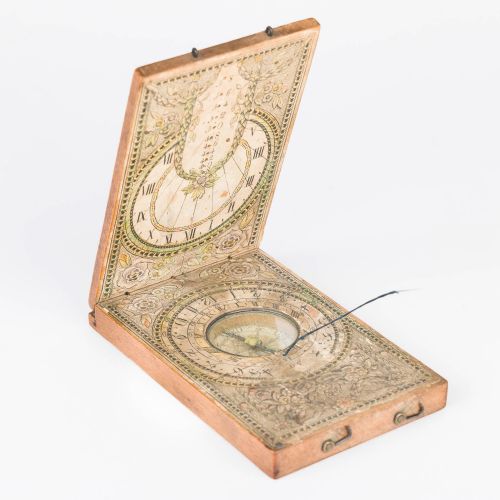
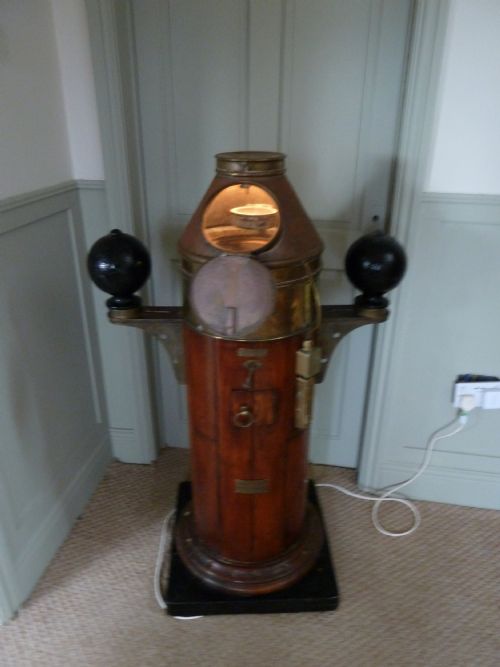
A brass navigation instrument represents the height of maritime technology from past centuries, designed for plotting courses and reading positions. When searching for a brass navigation instrument, collectors encounter items ranging from portable sundials and military compasses to ships binnacles and complex octants.
The pieces listed here span the nineteenth and twentieth centuries, taking forms such as station pointers, rolling rulers, clinometers, and celestial globes. Victorian and Edwardian examples predominate, reflecting periods of intense maritime expansion and scientific instrument development.
Origins vary from English workshops to French presentations, with makers producing specialised tools for cartographers, explorers, and naval officers. Each object serves a specific observational function, whether measuring angles, calculating time, or determining horizon alignment.
Materials and construction
Brass forms the primary structural material across these items, often paired with glass for dial covers and optical elements. Lacquered metal, nickel, and iron also appear in mechanisms, providing durability and precision.
Listings feature items dated from eighteen hundred through nineteen forty, incorporating materials such as brass, mahogany, glass, and boxwood.
Assessing quality
Quality in these instruments rests on the precision of the engraved scales, the smoothness of mechanical movements, and the clarity of the glass optics. Superior examples retain original fitted wooden cases and legible maker inscriptions.
The integrity of the brass components, whether polished or retaining an aged patina, distinguishes standard utility pieces from presentation items of higher artistic and mechanical ambition.
Hughes And Son·Henri De Magnac·A Hurlimann Paris·Latimer Clark·John Lilley And Son·Thomas Mercer
The Brass Navigation Instrument Glossary
- Binnacle
- A housing built on the deck of a ship to hold the steering compass and protect it from weather and iron interference.
- Octant
- A navigational instrument used to measure the angle between an astronomical object and the horizon to determine latitude.
- Clinometer
- An instrument used for measuring angles of slope or tilt relative to gravity.
- Station pointer
- A three-armed protractor used in hydrographic surveying to fix a position from three known landmarks.
- Artificial horizon
- A device used to determine the horizontal plane when the natural horizon is obscured by fog or darkness.
Brass Navigation Instrument: Frequently Asked Questions
What is a brass navigation instrument used for?
These tools were essential for calculating position, time, and direction during maritime travel and land surveying. Sailors and explorers relied on them to safely navigate uncharted waters.
Today, they serve as decorative display pieces and historical artefacts for collectors interested in maritime history and Victorian science.
How do I date a brass navigation instrument?
Dating relies on maker signatures, patent dates, and stylistic markers associated with Victorian, Edwardian, and early twentieth-century manufacturing.
Materials like mahogany cases and paper dials also provide clues to the era of production.
Are these instruments still accurate?
While many retain their mechanical functionality, they are primarily collected as historical antiques rather than precise modern tools.
Wear from use and changes in magnetic north over time mean they are unsuited for actual navigation today.
How should I clean a brass navigation instrument?
Most collectors prefer to leave the natural aged patina on brass and wood surfaces rather than polishing them to a bright shine.
Gentle dusting with a dry cloth is sufficient to maintain the condition without harming delicate paper scales or engraved markings.