


Antique Naval Telescope
These antique naval telescope pieces are maritime instruments designed for navigation and watchkeeping, prized for their historic brass and leather construction.
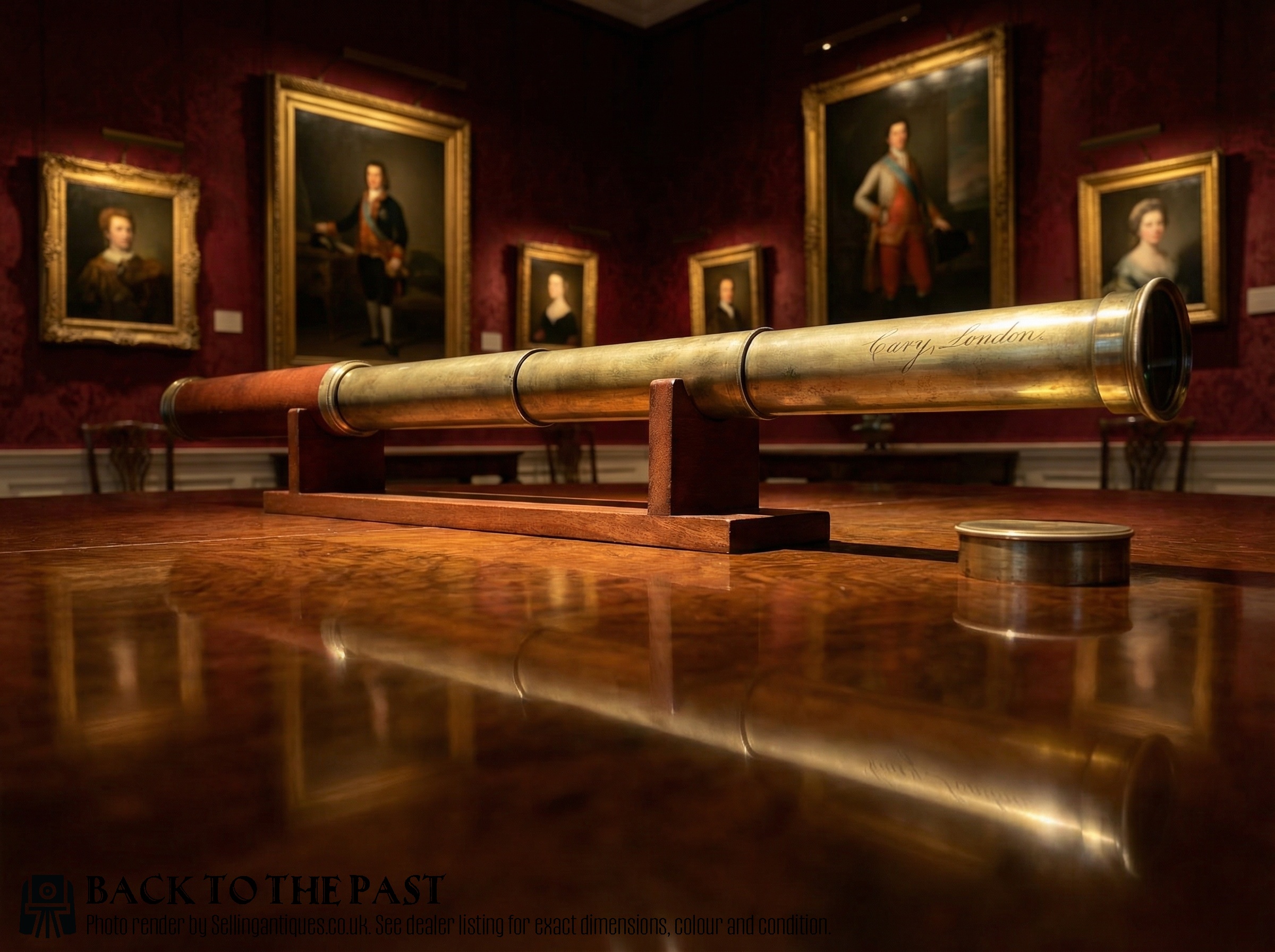
Antique Naval Telescope
When searching for an antique naval telescope, a buyer looks at extending marine instruments used for navigation and watchkeeping at sea. The versions most likely to be met on this page span the Georgian, Regency, Victorian, and Edwardian periods, alongside early twentieth-century examples.
These instruments appear in forms such as single draw, two-draw, and three-draw telescopes, often described as spyglass or day or night models. Some pieces originate from English makers, while others emerge from German and French workshops.
Navigational instruments and scientific instruments form the primary categories alongside related marine instruments. Occasionally, related oil painting works depicting naval figures accompany the physical hardware in the listings.
Materials and construction
Makers construct these instruments primarily from polished brass, frequently pairing the metal tubes with stitched leather casing or mahogany, oak, walnut, and other wood finishes. Glass lenses provide the optical magnification required for marine use.
Extending draw tubes allow the instrument to collapse for storage and expand for focus. Nickel components also appear alongside glass and brass on specific twentieth-century pieces.
One exceptional nineteenth-century tube breaks convention by featuring nine distinct flat sides instead of the usual round barrel.
Factors of quality
The distinction between tiers rests upon the precision of the mechanics in the draw tubes and the clarity of the glass optics. Instruments bearing signatures from recognised makers command greater interest among collectors.
The integrity of the external materials, such as tight leather dressing and sound wood panels, separates well-preserved examples from those showing heavy wear.
Voigtländer and Sohn AG·Ross of London·Richardson·Cary London·A Hurlimann Paris·E and W Seagrove·Cox Devonport
The Antique Naval Telescope Glossary
- Draw
- A sliding tube section that extends from the main body of the telescope. Multiple draws allow a long instrument to collapse into a compact size.
- Spyglass
- A small, handheld refracting telescope used historically at sea and on land. The term frequently describes single or multi-draw portable instruments.
- Day or night
- A specific optical configuration designed to gather more light in low visibility conditions. These models often feature larger objective lenses for dawn and dusk watchkeeping.
- Objective lens
- The primary glass lens at the front of the telescope that collects light. Its quality and diameter determine the brightness of the image.
Antique Naval Telescope: Frequently Asked Questions
How do you use a multi-draw telescope?
Extend all the brass draw sections fully until the instrument locks into its rigid viewing position. Adjust the final smaller eyepiece tube gently until the distant object comes into sharp focus.
Keep the lenses clean using a soft cloth and collapse the draws carefully before storing the instrument away in its resting place.
What is the difference between single and multi-draw telescopes?
Single draw instruments feature one sliding tube moving within the main barrel, offering a simpler mechanism and robust build. Multi-draw versions incorporate two or three extending sections for greater compactness when closed.
Multi-draw models achieve a longer focal length when fully extended while remaining portable enough to store in a pocket or jacket.
How are periods told apart on these instruments?
Georgian and Regency pieces often display simpler wooden barrels and hand-engraved maker signatures near the eyepiece. Victorian and Edwardian examples frequently incorporate leather dressings and standardised brass component manufacturing.
Twentieth-century instruments introduce nickel finishes and specific military markings, reflecting shifting naval requirements leading up to the First World War.
Where were naval telescopes kept on a ship?
Officers of the watch kept these instruments readily accessible on the bridge or quarterdeck for spotting land, signals, and other vessels. Portable pocket versions travelled with officers during boarding duties and shore excursions.
Below deck, they rested in secured wooden cabinetry or storage racks designed to protect the brass and glass from rolling seas.