
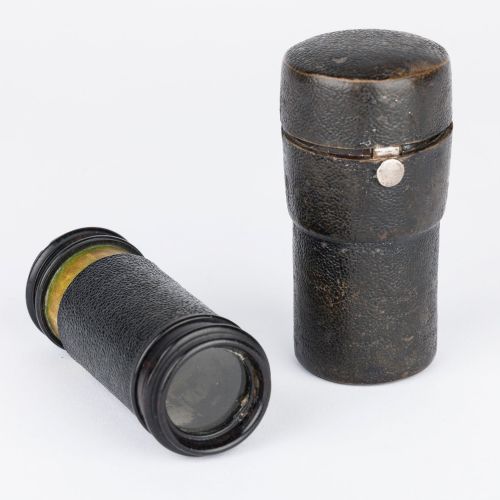


Maritime Brass Spyglass
A maritime brass spyglass brings the age of navigation to your desk, offering both optical utility and the weight of history.
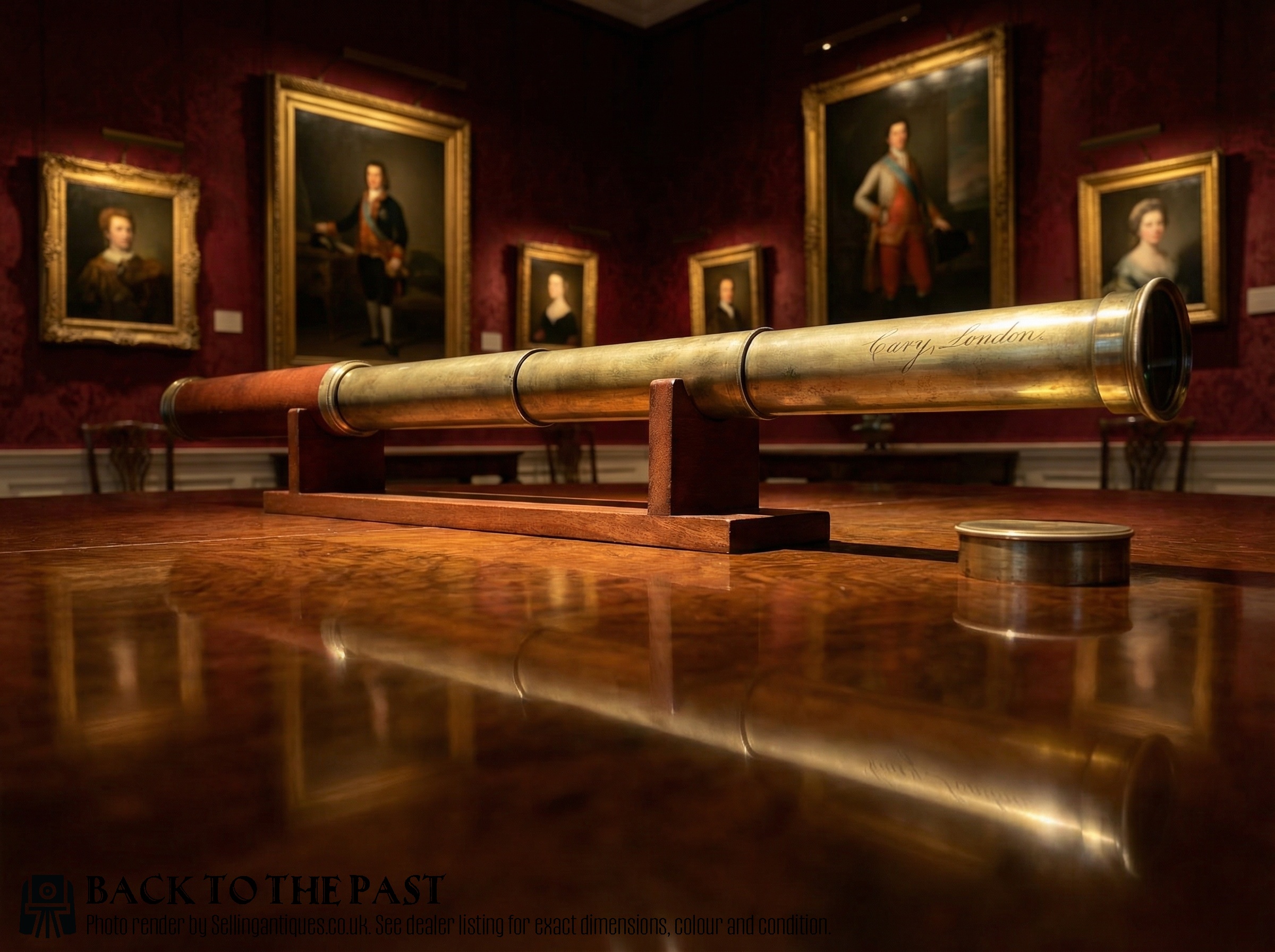
Maritime Brass Spyglass
A maritime brass spyglass is an extending telescope designed for navigation, exploration, and naval watch duties across the eighteenth, nineteenth, and early twentieth centuries. These instruments appear in forms ranging from single-draw pocket versions to multi-draw officer of the watch models.
The pieces on this page span Georgian, Regency, Victorian, and Edwardian periods, alongside early twentieth-century examples. You will frequently encounter multi-draw brass telescopes, sometimes dressed in leather or wood, bearing the signatures of notable London makers.
Tabletop versions and specialised naval instruments also feature among the selection, reflecting the practical optical needs of historical mariners and explorers. Each maritime brass spyglass represents the intersection of scientific instrument making and maritime heritage.
How they were made
Makers constructed the body tubes primarily from polished brass, often combining multiple sliding draws to allow the instrument to collapse into a compact size. Glass lenses focused the terrestrial and celestial views, while internal cardboard or spacer elements maintained alignment within the draws.
Exterior grips frequently utilised stitched leather or turned wood casings such as mahogany, oak, and walnut to protect the metal and improve handling at sea. Nickel plating also appears on later twentieth-century variations to alter the finish and durability of the brass components.
Materials recorded across the inventory include brass, glass, leather, wood, oak, mahogany, nickel, and cardboard.
What varies in quality
Quality in a maritime brass spyglass rests upon the precision of its optical builder and the mechanical execution of its draw tubes. Instruments bearing the signatures of established makers demonstrate superior lens clarity and smoother sliding action between the brass sections.
The choice of exterior materials and the crispness of maker engravings further distinguish finer examples from standard utilitarian gear. Superior specimens retain their original leather bindings, tight joints, and clear, unclouded glass that preserves the historical viewing experience.
Ross of London·Voigtländer and Sohn AG·W and T Gilbert·Clarkson·Richardson·Newton and Co·Broadhurst Clarkson and Co·Cary London·L Casella·Dollond·Davis of London·John Gilbert
The Maritime Brass Spyglass Glossary
- Draw
- A sliding tube section of a telescope that extends outward to focus the instrument. Multi-draw designs allow longer focal lengths to collapse into portable lengths.
- Achromatic
- An optical lens design corrected to bring red and blue light to the same focal point, reducing false colour fringes around images. This development improved clarity in later historical spyglasses.
- Officer of the watch telescope
- A specialised marine telescope utilised by naval personnel to scan the horizon during watch duties. These typically offer robust construction and wide fields of view.
- Terrestrial telescope
- An optical instrument configured to produce an upright, non-inverted image for viewing objects on land or sea. This setup is essential for navigation and spotting distant ships.
- Non-achromatic
- An earlier optical configuration lacking colour correction, common in eighteenth-century instruments. These lenses offer a direct window into early scientific manufacturing methods.
Maritime Brass Spyglass: Frequently Asked Questions
How do I focus a multi-draw spyglass?
Extend all the brass draws fully until the instrument reaches its maximum length. Adjust the smallest eyepiece draw inward or outward until the distant view sharpens into focus.
Ensure the internal lenses remain clean and the brass sections align straight during extension to maintain a clear image.
What is the difference between a spyglass and a telescope?
In historical terminology, a spyglass typically refers to a portable, handheld extending telescope used for terrestrial viewing. A telescope often encompasses larger stationary or tabletop scientific instruments.
Both terms describe similar optical principles, though maritime spyglasses prioritize portability and durability for use aboard ship.
Can I use these antique spyglasses outside?
These historical instruments remain functional optical devices that can resolve distant objects outdoors. Care must be taken with vintage glass and historic materials during handling.
Exposing fragile leather casings or historic brass to harsh weather or drops risks damaging the antique integrity of the piece.
How do I date an antique spyglass?
Examine the maker signature, the number of draw tubes, and the materials used in the construction. Georgian and Regency pieces often show different proportions compared to Victorian or Edwardian examples.
Maker directories and recorded workshop dates provide a reliable baseline for narrowing down the decade of manufacture.