


Maritime Navigation Instrument
These maritime navigation instrument examples combine brass, wood, and glass to chart courses across open water.
Maritime Navigation Instrument
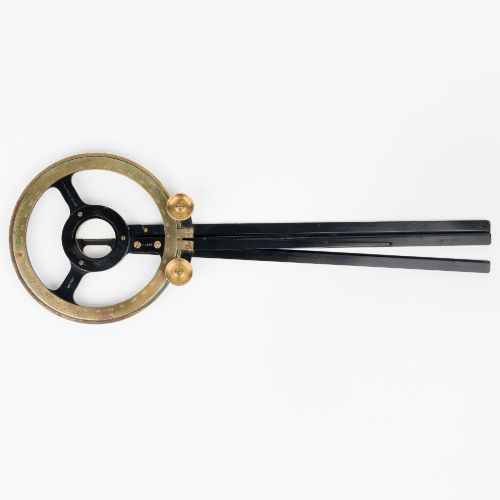
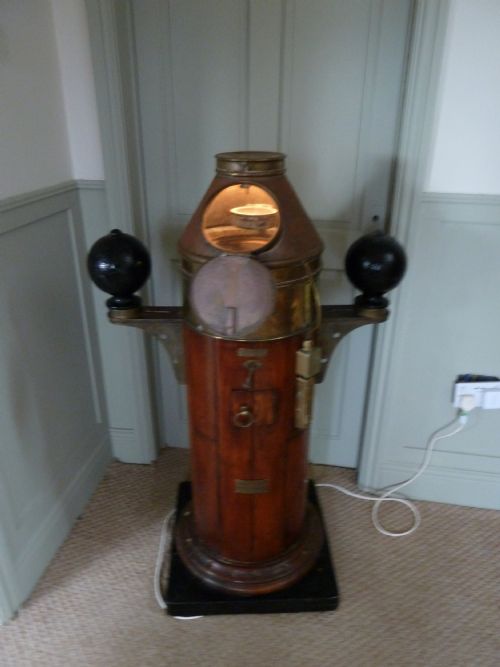
A maritime navigation instrument encompasses portable compasses, sundials, binnacles, and octants designed for finding direction at sea. These objects emerge from periods spanning the eighteenth century through the early twentieth century.
The most common examples on this page are pocket compasses, portable diptych dials, and ship binnacles in brass, mahogany, and turned wood. Such pieces reflect both Georgian craftsmanship and later Victorian scientific production.
Makers ranged from London instrument houses to continental specialists producing presentation pieces and navigational aids for explorers. Each form served a distinct mechanical purpose aboard ship or in the field.
Materials and construction methods
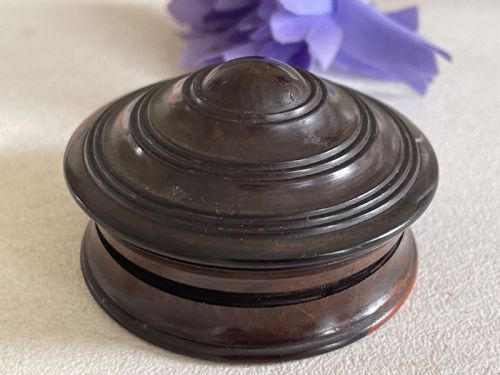
Workshops relied heavily on turned wood, solid brass, and lacquered metal to house sensitive glass-covered dials and paper compass cards. Mahogany and ebony frequently formed the sturdy protective cases for delicate marine tools.
Graduated scales and directional markers were meticulously hand-engraved or printed on paper inserts placed beneath glass panes. Fine threads and pivoting needles ensured accurate readings under rolling shipboard conditions.
The listings span from the eighteenth century through the 1940s, featuring materials such as brass, mahogany, glass, and turned wood.
Assessing build quality and execution
Superior examples demonstrate crisp, deep engraving on metal dials and precise calibration of the compass needle or sextant arms. Finer pieces often retain original fitted wooden cases and complete paper roses.
Simpler instruments show utilitarian construction intended for everyday service rather than presentation. The reputation of the maker and the crispness of the brass casting ultimately set the finest pieces apart.
Hughes & Son·Henri de Magnac·A Hurlimann Paris·John Lilley & Son London·Thomas Mercer
The Maritime Navigation Instrument Glossary
- Binnacle
- A stand or housing on the deck of a ship that held the ship's compass and a lamp. It protected the sensitive needle from weather while keeping it visible to the helmsman.
- Octant
- An early reflecting instrument used to measure angles for celestial navigation. It predates the modern sextant and measures angles up to ninety degrees.
- Artificial horizon
- A device used with a sextant on land or when the natural horizon is obscured. It relies on a reflecting surface, such as black glass, to measure altitude.
- Chronometer
- A highly accurate marine timepiece used to determine longitude at sea. These mechanisms required precise compensation for temperature changes.
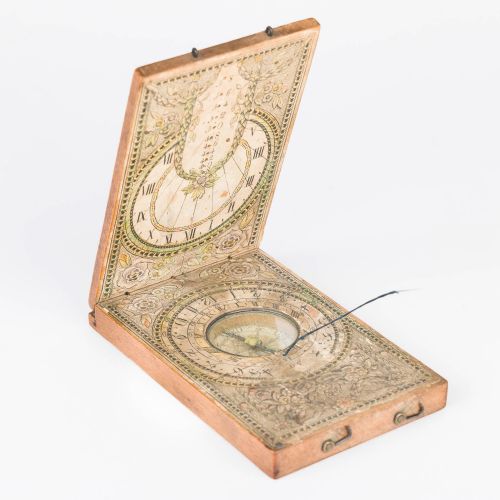
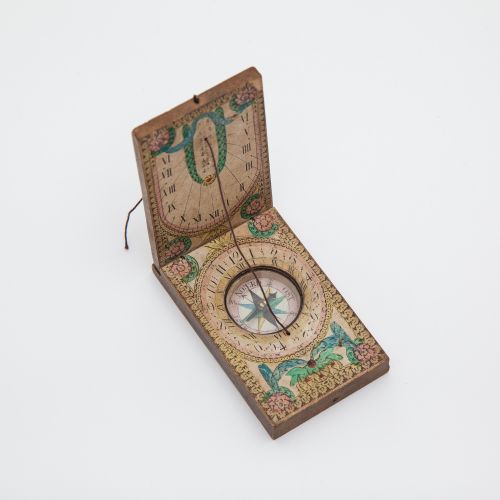
- Diptych dial
- A portable pocket sundial consisting of two small hinged leaves with an internal string gnomon and compass. It allowed travellers to tell time and find north simultaneously.
Maritime Navigation Instrument: Frequently Asked Questions
How did a binnacle work?
A binnacle housed the ship's main compass near the steering wheel. It secured the instrument against the motion of the vessel.
Lamps inside the housing illuminated the compass card for night sailing.
What is an artificial horizon used for?
An artificial horizon provided a flat reflective surface when the sea horizon was invisible. Navigators used it alongside an octant or sextant.
Black glass sets formed a stable mirror for sighting celestial bodies.
How do I date an antique compass?
Dating relies on the materials, typography of the paper card, and the style of the brass housing. Georgian and Victorian examples show distinct manufacturing traits.
Signed signatures and maker locations also help establish a precise period.