
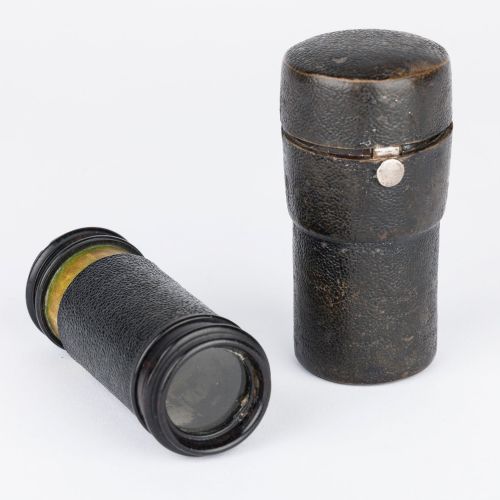


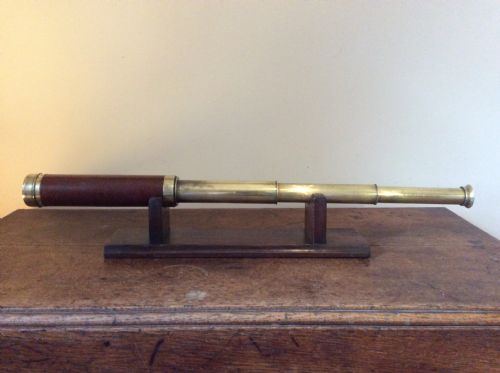


Antique Marine Spyglass
An antique marine spyglass brings precision brasswork and maritime history straight to your shelf.
Antique Marine Spyglass
When you search for an antique marine spyglass, you encounter compact instruments designed for use at sea and on land during past centuries. These pieces encompass scientific instruments, telescopes, and navigational instruments built to withstand harsh weather conditions.
The versions most commonly met on this page span the Georgian, Regency, and Victorian periods. Makers produced single-draw, two-draw, three-draw, and six-draw formats housed in brass, leather, oak, mahogany, and walnut.
Many examples are classified as naval telescopes or officer of the watch telescopes. They include pocket spyglasses as well as longer extending marine telescopes tailored for terrestrial and celestial viewing.
Materials and construction
Makers constructed these telescopes primarily from polished brass tubes designed to slide smoothly within one another. Leather coverings provide a secure grip for users on rolling ship decks.
Wood species such as mahogany, oak, and walnut frequently form body sections or protective casing. Glass lenses focus light to deliver clear magnification across various draws.
Some nineteenth-century sailors relied on a nine-sided telescope barrel to prevent the instrument from rolling off a sloping chart table.
Variations in quality
The distinction between standard instruments and exceptional pieces lies in the precision of the draw mechanism and the clarity of the optical glass. Finer examples maintain smooth alignment across multiple draws without looseness.
Signed items carrying the marks of recognised makers command greater attention from collectors. The quality of external leather stitching and the crispness of engraved maker inscriptions further define the upper tier.
Ross of London·Richardson·Broadhurst Clarkson and Co
The Antique Marine Spyglass Glossary
- Single draw
- A telescope consisting of only two sliding tubes that extend for use. This simpler form offers fewer joints for potential wear.
- Multi-draw
- An instrument featuring three, six, or nine telescoping sections that collapse into a compact length. This design maximises magnification while maintaining portability.
- Day or night
- A specialised optical configuration designed for varied lighting conditions at sea. These lenses gathered maximum light during twilight or darkness.
- Terrestrial telescope
- An optical instrument containing erecting lenses that produce an upright image for land viewing. Marine spyglasses require this setup to keep horizons level.
Antique Marine Spyglass: Frequently Asked Questions
How do I date a marine spyglass?
Examine the materials, typography of signatures, and the number of draw sections.
Earlier pieces from the Georgian and Regency periods often feature simpler multi-draw configurations and distinct handwritten or engraved signatures.
What is an officer of the watch telescope?
It is a specialised maritime telescope used by naval officers during watches to scan horizons and identify vessels.
These instruments balanced portability with sufficient magnification for maritime navigation.
Can I still use an antique spyglass?
Many surviving examples remain optically functional for viewing distant terrestrial objects.
Careful handling is essential to protect the internal glass lenses and maintain the alignment of the brass draws.
Why do some spyglasses have leather covers?
Leather wrapping protected the brass body tubes from dents and provided a firm grip in wet marine environments.
It also prevented cold metal from touching the user's hands during freezing weather at sea.