




Nautical Brass Glass
Nautical brass glass objects combine utilitarian maritime engineering with domestic decorative appeal.
Nautical Brass Glass
Nautical brass glass pieces encompass functional marine instruments, timepieces, and lighting spanning the Victorian, Edwardian, and Art Deco periods. These items unite heavy brass housings with glass lenses, dials, or vessels designed to withstand harsh sea conditions while maintaining precise utility.
Buyers will most commonly encounter aneroid and marine stick barometers alongside desk telescopes and heavy porthole frames from the nineteenth century. These domestic items reflect the growing nineteenth-century fascination with maritime exploration and naval engineering.
Materials and Construction
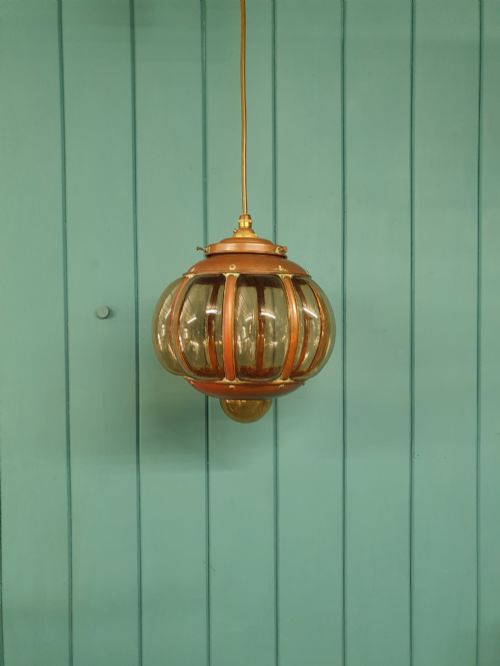
Maker workshops utilised heavy brass castings to form structural housings, bezels, and fittings that resisted corrosion in marine environments. Glass was cast or blown to protect delicate instrument faces or to diffuse light within pendant fixtures.
Cabinetmakers housed sensitive barometer tubes and clock movements in dense timbers including oak, mahogany, rosewood, and fruitwood. Metal components were turned on lathes and polished by hand, while dials utilised enamel or engraved brass plates for clear legibility.
Assessing Quality and Execution
Quality in these instruments rests upon the precision of the mechanical movement and the weight of the metal cast. Heavier gauge brass and thick, distortion-free glass indicate superior domestic or shipboard commissions.
Maker signatures engraved directly onto silvered dials or inscribed into brass tubes separate standard commercial pieces from workshop productions. Finer examples retain original patination on the timber and polished surfaces without excessive refinishing.
Elliott Brothers·Bate of London·John Lilley and Son
The Nautical Brass Glass Glossary
- Aneroid barometer
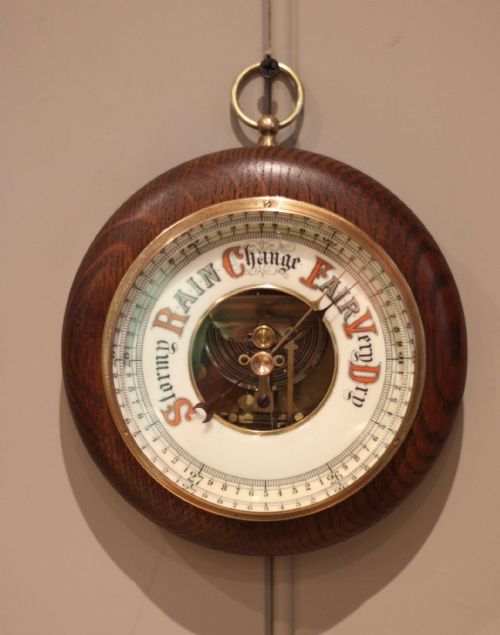
- An instrument that measures atmospheric pressure without using liquid mercury, relying on a flexible metal box. These dials are typically protected behind a heavy brass-rimmed glass bezel.
- Marine stick barometer
- A mercurial barometer designed for use at sea, featuring a restricted tube to prevent fluid surge. They are mounted on gimbals or secured inside wooden cases.
- Four glass clock
- A mantel clock housed in a brass frame with glass panels on all four sides to expose the mechanical movement. Maritime examples often incorporate ship wheels or anchors into the decorative cast brass frame.
- Porthole
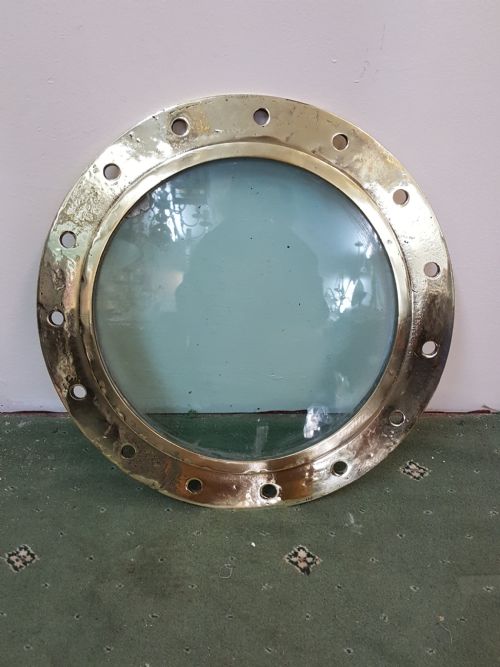
- A heavy circular window frame utilised on ships to admit light and air into cabins. Brass variations incorporate thick bevelled glass secured by heavy hinge bolts and dog clips.
Nautical Brass Glass: Frequently Asked Questions
How do I read an aneroid barometer?
Read the main needle to see current atmospheric pressure measurements displayed in inches of mercury or millibars. Tapping the glass gently confirms the tendency of the pressure to rise or fall.
Compare the pointer needle against the movable indicator needle set by hand to track short-term meteorological changes.
Where were these marine instruments used?
Navigators utilised telescopes and barometers aboard merchant vessels and naval ships to plot courses and anticipate storms. Heavy brass instruments were also secured within shipping offices and coastal homes.
As maritime trade expanded, these durable objects migrated into Victorian libraries and drawing rooms as symbols of global reach.
How should I clean antique brass?
Dust brass surfaces regularly with a soft, dry cloth to prevent airborne grime from settling into engraved details. Avoid abrasive commercial polishes that strip away historical patination.
Preserving the aged golden-brown surface maintains the authentic character developed over decades of exposure.
What is an artificial horizon set?
An artificial horizon provided mariners with a stable reference surface to measure celestial angles when the sea horizon was obscured. These nineteenth-century sets utilised black glass mirrors and levelling components.
They formed part of a navigator's essential toolkit alongside sextants and pocket chronometers.