
Cased Instrument
A cased antique instrument brings precision engineering and purpose into the room, housed in fitted timber boxes designed for travel and preservation.
Cased Instrument
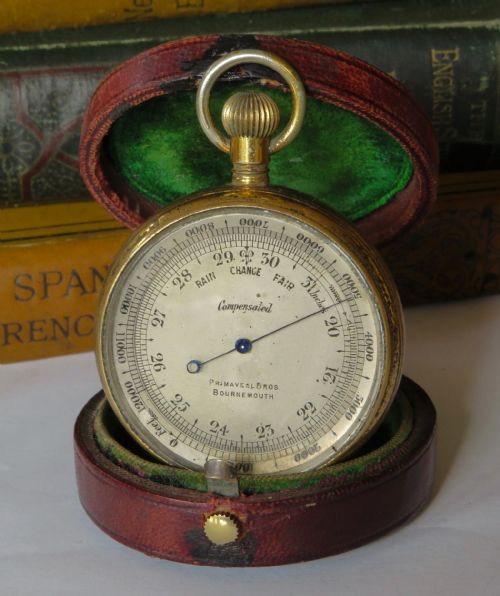
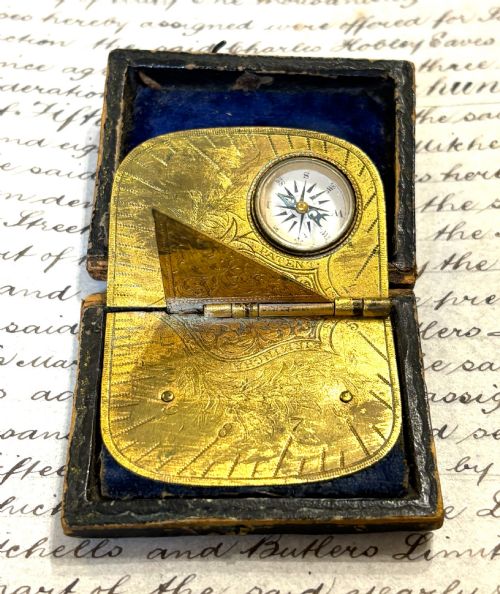
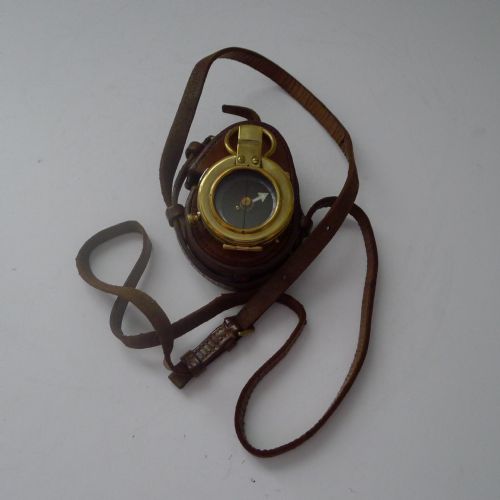
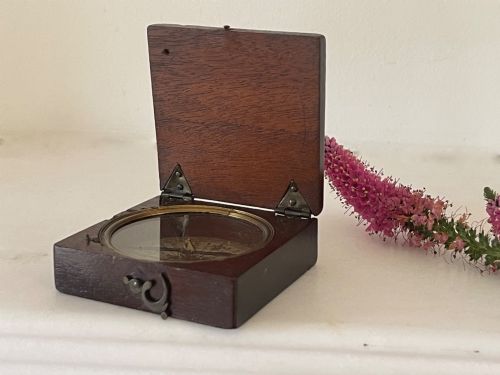
When searching for a cased antique instrument, buyers encounter a diverse range of scientific, medical, and navigational gear produced during the Georgian, Victorian, and Edwardian eras. These objects include pocket barometers, military compasses, surveyors levels, and microscopes, each safely stored in a dedicated fitted receptacle.
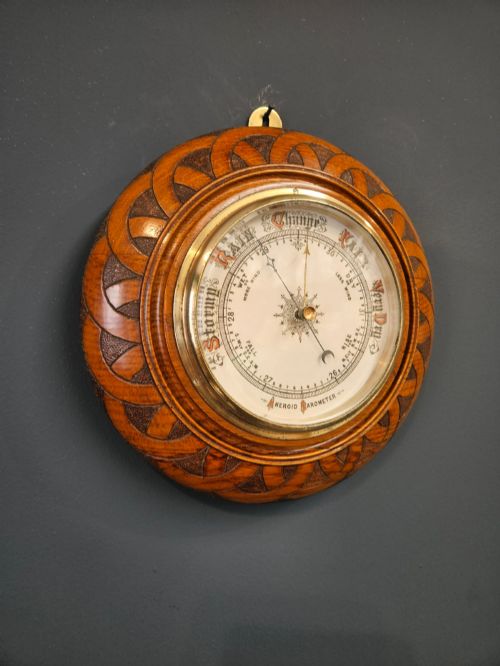
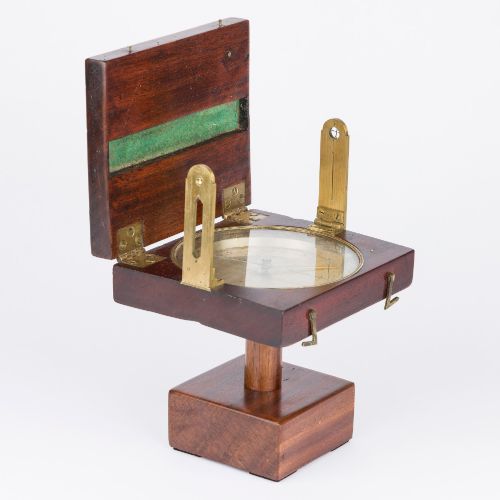
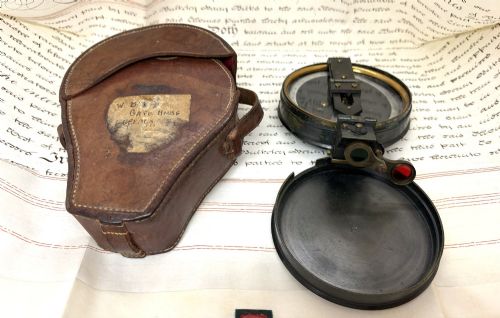
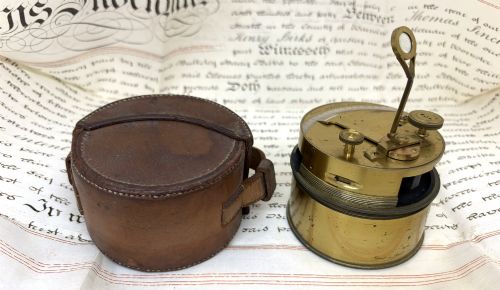
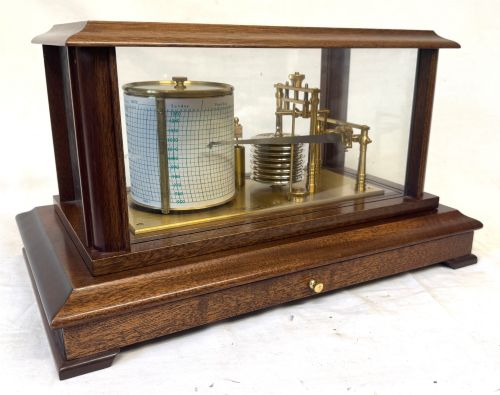
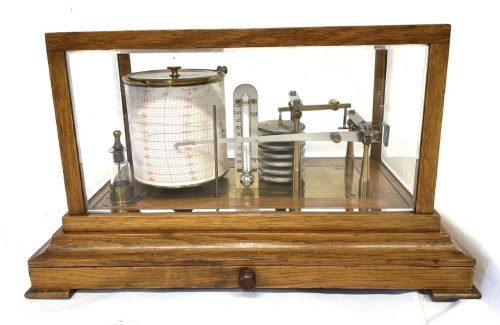
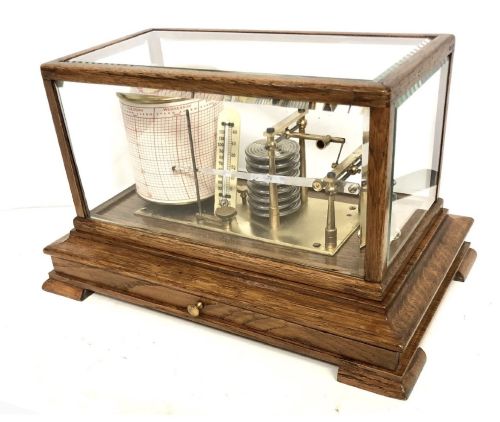
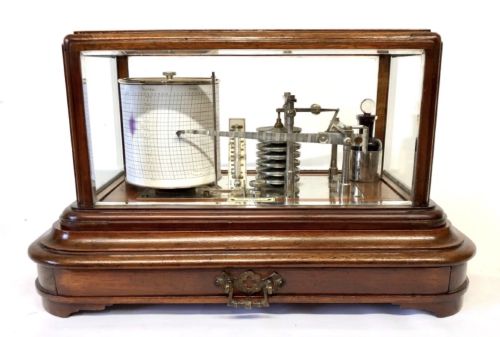
The versions most commonly met on this page are barographs and barometers housed in oak or mahogany cases, alongside pocket instruments and field compasses from the nineteenth and early twentieth centuries. These survivals reflect the practical demands of surveying, meteorology, medicine, and exploration during periods of rapid industrial and scientific advancement.
How they were made
The outer vessels rely heavily on dense hardwoods such as mahogany and oak, frequently turned, carved, or inlaid to protect the delicate mechanisms housed within. Interior fittings often incorporate velvet or paper linings tailored precisely to the contours of the apparatus.
Metal components utilise brass and steel, shaped and engraved for both mechanical function and visual clarity. Glass elements, including bevelled panes and lenses, provide protection and visibility for barometers, thermometers, and optical devices.
Listings feature instruments from the eighteenth, nineteenth, and early twentieth centuries, constructed from brass, mahogany, oak, and glass.
What varies in quality
The distinction between standard utility items and the top of the range rests on the precision of the mechanics and the quality of the enclosing woodwork. Finer examples display meticulous engraving, superior optical clarity, and robust case construction with original fitted keys, hinges, and paperwork.
Makers known for supplying institutional or government contracts generally produce instruments with tighter tolerances and higher grade materials. The presence of original fitted boxes with intact interior linings and label documentation elevates an example significantly above a loose or poorly housed equivalent.
French Ltd·G. Davis of Leeds·P. Orr, Madras·Baker, London·Cary, London·Holtzapffel and Co·Short & Mason·L Casella & Co·R. & J. Beck, London·Poulenc Freres of Paris·H Hughes & Son·M Pillischer·John Millikin·Antoine Redier of Paris·Alfred Apps·George Adams·J Swift·Watson of London
The Cased Instrument Glossary
- Barograph
- A self-recording aneroid barometer that charts atmospheric pressure over time on a rotating drum. These mechanical devices often reside in glazed oak or mahogany cabinets.
- Theodolite
- A precision optical instrument used for measuring angles in horizontal and vertical planes. Surveyors and engineers utilise these brass devices mounted on matching tripod stands.
- Culpepper Microscope
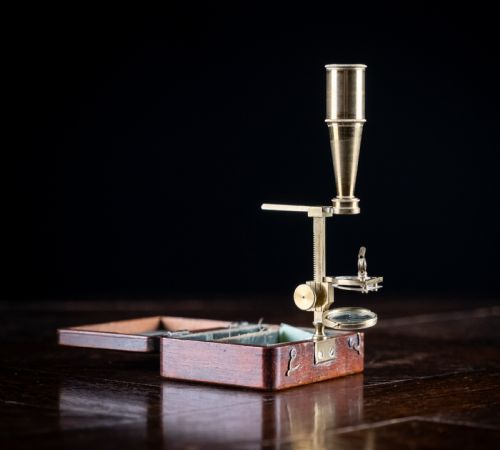
- An early form of compound microscope supported by three pillars over a wooden base. This specific design dates back to the eighteenth century.
- Aneroid Barometer
- A barometric instrument that measures pressure without liquid, using a flexible metal box. These mechanisms populate many pocket and wall-mounted Victorian designs.
- Vaccinating Lancet
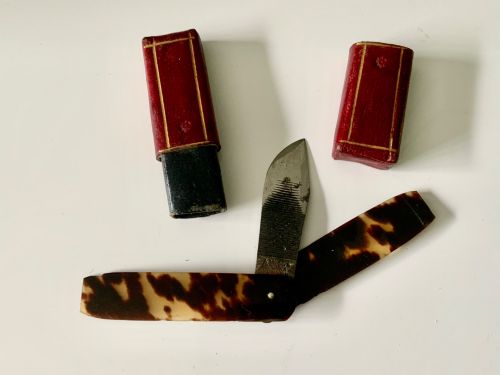
- A small surgical blade employed historically for medical inoculations. These sharp implements frequently appear inside dedicated velvet-lined medical carrying chests.
Cased Instrument: Frequently Asked Questions
What is a cased antique instrument used for?
These historical objects served practical roles in navigation, surveying, meteorology, and medicine before digital technology replaced mechanical calculation. Owners utilised them to measure atmospheric pressure, chart courses, examine specimens, and record scientific data.
Today, they function primarily as decorative display pieces and historical artefacts that appeal to collectors of scientific technology and maritime history. Their protective wooden enclosures allowed delicate instruments to travel safely across the globe during the eighteenth and nineteenth centuries.
How do I know if an instrument is original?
Examine the materials, fasteners, and interior fittings to ensure they match the period of manufacture. Hand-cut screws, aged brass patination, and maker signatures engraved onto the metalwork indicate authenticity.
The fitted wooden case should show commensurate wear with the instrument inside, and paper trade labels or instructions pasted into the lid offer further confirmation of period origin.
How should I clean the wood and brass?
Dust the wooden case gently with a dry, soft cloth and avoid commercial polishes that leave residue on antique finishes. Preserving the natural patina on brass components maintains the historical integrity of the piece.
Keep glass elements clear using a mild cleaner applied to a cloth rather than sprayed directly onto the surface near historic frames.
Can I display these instruments in sunlight?
Direct sunlight causes timber to fade and can degrade historic paper labels, velvet linings, and adhesives inside the case. Position these pieces away from south-facing windows and intense heat sources.
Maintaining a stable indoor humidity prevents the shrinkage or cracking of sensitive mahogany and oak cabinetry.
How do I tell Victorian instruments from Georgian ones?
Georgian instruments often feature simpler, utilitarian mahogany construction with hand-engraved dial plates and script signatures. Victorian examples tend to incorporate more elaborate decoration, diverse metals, and standardised machine production.
Patent dates, manufacturer addresses, and stylistic shifts toward heavier oak carving help narrow down the decade of production.