




Vintage Surveying Equipment
Vintage surveying equipment brings precision brass, mahogany and glass from past centuries straight to your desk or study.
Vintage Surveying Equipment
Vintage surveying equipment comprises the scientific instruments, barometers, drafting tools and nautical devices used to measure land, angle and altitude in past centuries. When you search for vintage surveying equipment, you encounter items spanning the Georgian, Victorian and Edwardian periods, running from 1800 up to 1910.
The objects most frequently met on this page include brass theodolites, compasses, pocket barometers and drainage levels housed in fitted wooden cases. These pieces originate from workshop makers operating in London and Edinburgh during the nineteenth and early twentieth centuries.
Buyers look for these instruments to display mechanical ingenuity, tactile materials and historic engineering. Each piece reflects the specific demands of land measurement, military mapping and maritime navigation during its era of production.
Materials and construction
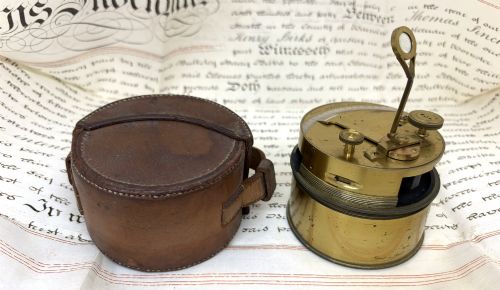
Makers constructed these instruments primarily from turned and cast brass, often utilising lacquered metal or gilt brass alongside silvered metal dials and glass optics. These metallic components provide the weight and rigidity necessary for precise mechanical alignment.
Enclosures and accessories rely heavily on seasoned mahogany and fitted boxwood, sometimes accompanied by stitched leather cases for field transport. Internal scales and pointers depend on fine hand engraving and silvered plating to ensure clear legibility under difficult outdoor conditions.
Vintage Surveying Equipment Retail Price Guide 2026
Typical asking prices for vintage surveying equipment among the pieces listed under this phrase on Sellingantiques today, from the lower quarter to the upper quarter. They describe what is for sale here now, not the wider market.
Early surveyors trusted their lives to brass needles and black glass horizons while mapping uncharted lands in heavy wool waistcoats.
Quality variations in instruments
The distinction between standard production and top tier execution lies in the crispness of the division work on silvered metal arcs and the smoothness of the focusing screws. Superior examples retain their original lacquered metal finishes and carry signed maker inscriptions on the primary barrels.
Quality also shows in the joinery of the fitted mahogany cases and the survival of secondary components such as original compass needles, plumb bobs and glass artificial horizons. Lesser instruments display generalized form without individual maker attribution or show signs of heavy field modification.
Hughes and Son·W and S Jones·L Casella and Co·Negretti and Zambra·Alexander Adie·Thomas Dunn·John Lilley and Son·De Grave and Co·Barker and Son·J Hicks
The Vintage Surveying Equipment Glossary
- Theodolite
- An optical instrument mounted on a tripod for measuring horizontal and vertical angles in surveying and civil engineering. It relies on a rotating telescope and precise graduated circles.
- Clinometer
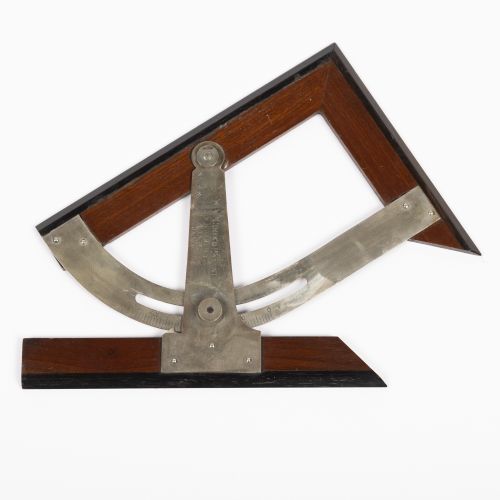
- A tool used for measuring angles of slope, elevation or depression of an object with respect to gravity. Surveyors utilise it alongside levels and compasses to gauge land contours.
- Altazimuth
- An instrument designed to measure both altitude and azimuth simultaneously in astronomical navigation and land surveying. It combines vertical and horizontal angle measurement in a single apparatus.
- Artificial horizon
- A device that provides a reference horizontal plane when direct observation of the natural horizon is obscured. It typically consists of a reflective surface such as black glass paired with a leveling mechanism.
- Station pointer
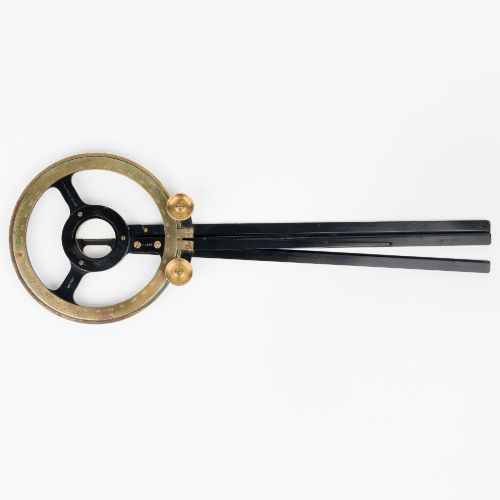
- A three armed protractor used in hydrographic surveying to plot the position of a ship or observation point from angles subtended by three known landmarks.
Vintage Surveying Equipment: Frequently Asked Questions
What is a theodolite used for?
A theodolite measures horizontal and vertical angles between designated points in the field. Surveyors and engineers relied on them to map terrain, lay out building foundations and establish boundary lines.
The telescope rotates on both vertical and horizontal axes to sight targets accurately across long distances. Fitted with precision graduated circles, the instrument translates visual observations into measurable geometric data.
How do I date a brass compass?
Dating a brass compass involves examining the typography of the dial, the style of the needle and the presence of maker signatures. Nineteenth-century examples often feature hand-engraved lettering and specific patent marks.
The materials of the surrounding case also offer clues, as early Victorian items frequently employ solid mahogany boxes with dovetail joints. Comparing the specific construction methods to known workshop dates narrows the period of manufacture.
How should I clean brass instruments?
Cleaning historic brass instruments requires minimal intervention to preserve the original patina and lacquered metal surfaces. Dusting with a soft, dry brush removes surface particles without disturbing delicate glass or silvered dials.
Harsh metal polishes and chemical cleaners strip away historic finishes and diminish the value of the piece. Preserving the natural signs of age maintains the integrity of the instrument as an antique.
What is a pocket barometer?
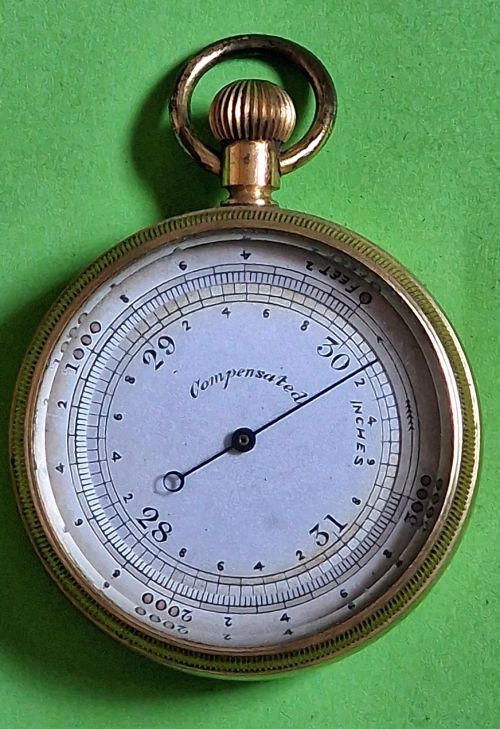
A pocket barometer is a portable instrument designed to measure atmospheric pressure and estimate altitude changes during travel. Surveyors and mountaineers carried them in leather cases for field observations.
The aneroid mechanism inside responds to pressure variations, moving a pointer across a calibrated dial face. These instruments offered a compact alternative to large mercurial barometers.
Are these instruments still accurate?
While many instruments retain their mechanical function, they serve primarily as historic display objects rather than calibrated modern tools. Wear on internal pivots and optics can affect precision over time.
Collectors value them for their craftsmanship, materials and engineering history rather than for active field navigation. Gentle handling ensures the delicate brass gears and glass components remain intact.