



Edwardian Nautical Instrument
These pieces of edwardian nautical instrument gear bring functional maritime history straight into a room, prized for their heavy brass and glass build.
Edwardian Nautical Instrument
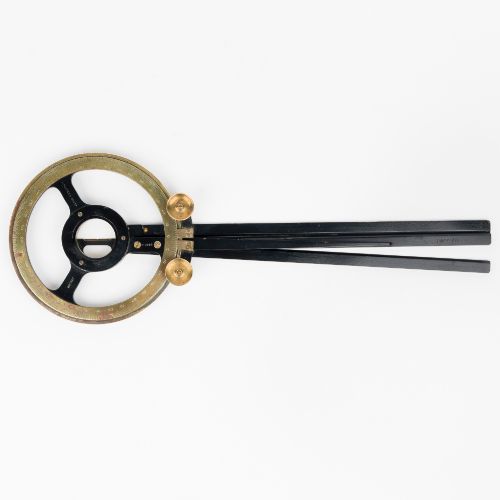
An edwardian nautical instrument encompasses brass bulk head barometers, station pointers, and tabletop telescopes designed for marine navigation and observation. Buyers searching for an edwardian nautical instrument typically encounter items spanning the Edwardian period, 1910, 1920, Victorian times, 1900, and the nineteenth century. These objects include scientific instruments, barometers, tabletop telescopes, and maritime instruments reflecting maritime and industrial styles.
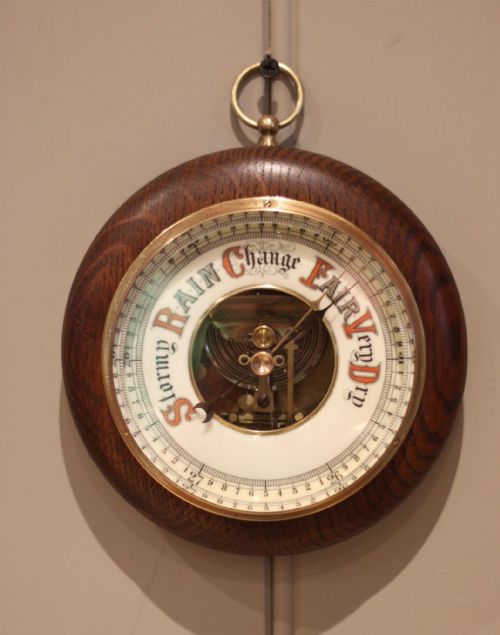
The versions most likely met on this page include circular oak aneroid barometers, brass bulk head barometers, and leather-dressed explorer spyglasses. Makers and makers' marks occasionally appear, alongside pieces styled as maritime, maritime industrial, or Victorian scientific. Forms range from portable travel barometers and desk compasses to large library and astronomical telescopes.
Every edwardian nautical instrument combines utility with craftsmanship, using durable materials meant to withstand sea voyages. Surviving examples showcase the transition from practical shipboard tools to prized decorative and scientific antiques.
How they were made
Precision engineering defined the production of these pieces, utilising clear glass for optical clarity in telescopes and sensitive barometric movements for weather tracking. Metal components were cast, turned, and polished, while ceramics occasionally formed part of dial faces or internal scales.
Edwardian Nautical Instrument Retail Price Guide 2026
Typical asking prices for edwardian nautical instrument among the pieces listed under this phrase on Sellingantiques today, from the lower quarter to the upper quarter. They describe what is for sale here now, not the wider market.
Materials across these listings span brass, glass, wood, oak, lacquered metal, nickel, leather, and ceramic.
What varies in quality
The standard of an edwardian nautical instrument depends heavily on the precision of its optics and mechanical movements. High-tier pieces feature signed makers' details, complex cased mechanisms like barocyclanometers, and fine optical glass that retains crisp focus. Lesser examples show simpler construction with basic materials and unmarked dials.
Finish and material preservation also dictate the range, where original lacquered metal, intact leather dressing, and unpolished brass elevate a piece. The weight, structural integrity of the oak mountings, and the smoothness of adjustable telescope draws further distinguish superior specimens.
Hughes & Son·Clarkson London·H Hughes·James Murray·Broadhurst & Co
The Edwardian Nautical Instrument Glossary
- Aneroid barometer
- A device that measures atmospheric pressure without using liquid, relying on a small flexible metal box. These instruments often feature circular oak or brass outer frames.
- Bulk head barometer
- A weather-measuring instrument designed to be mounted directly to the wall of a ship cabin or room. They usually possess heavy brass bezels and secure fixing points.
- Station pointer
- A navigational three-arm protractor used by mariners to fix a ship position on a chart by measuring angles between visible landmarks. They are precision brass instruments.
- Spyglass
- A small, portable refracting telescope made with multiple sliding draws. They often feature leather-dressed outer tubes for handheld use by explorers and officers.
- Clinometer
- An instrument used for measuring angles of slope, tilt, or elevation of a vessel relative to gravity. Maritime versions helped calculate ship lists at sea.
Edwardian Nautical Instrument: Frequently Asked Questions
What is an edwardian nautical instrument used for?
These instruments served critical functions at sea, ranging from weather forecasting with barometers to navigation using station pointers and telescopes.
Today, they are used as decorative and historical display pieces in studies, libraries, and coastal homes.
How do I identify a Victorian piece from an Edwardian one?
Victorian pieces often lean towards heavy, ornate brass and dark timber finishes with strict scientific styling.
Edwardian items typically display cleaner lines, lighter oak mounts, and refined industrial aesthetics adapted from maritime traditions.
Are these instruments still accurate for weather forecasting?
Many barometers and mechanical instruments retain functional internal movements and respond to local atmospheric pressure changes.
However, they are primarily valued as historical artefacts rather than reliable daily meteorological tools.
How should I care for brass and leather instruments?
Keep brass components lightly dusted and avoid harsh chemical polishes that strip away age patination and maker signatures.
Leather-dressed parts benefit from occasional neutral conditioning to prevent drying while stored away from direct sunlight.