43,011  PAGES BROWSED TODAY PAGES TODAY 276 ANTIQUES UPLOADED TODAYNEW ARRIVALS
276 ITEMS ADDED TODAY
Sort Order
Items Per Page
Browse Categories
Sort order
Relevant Links
Items per page
ID #SA725153
FOR SALE
£3,500
Email Buy
Save
Early Twentieth Century Cased Barocyclonometer or Typhoon Barometer
Jason Clarke Antiques
for sale €4,095     $4,445
£3,500
Jason Clarke Antiques

Jason Clarke Antiques

Sellingantiques Verified Since Jul 2015
View Dealers Stock Page
Id #SA725153
PDF SHARE
SAVE

Early Twentieth Century Cased Barocyclonometer or Typhoon Barometer

1900 - 1920
Description

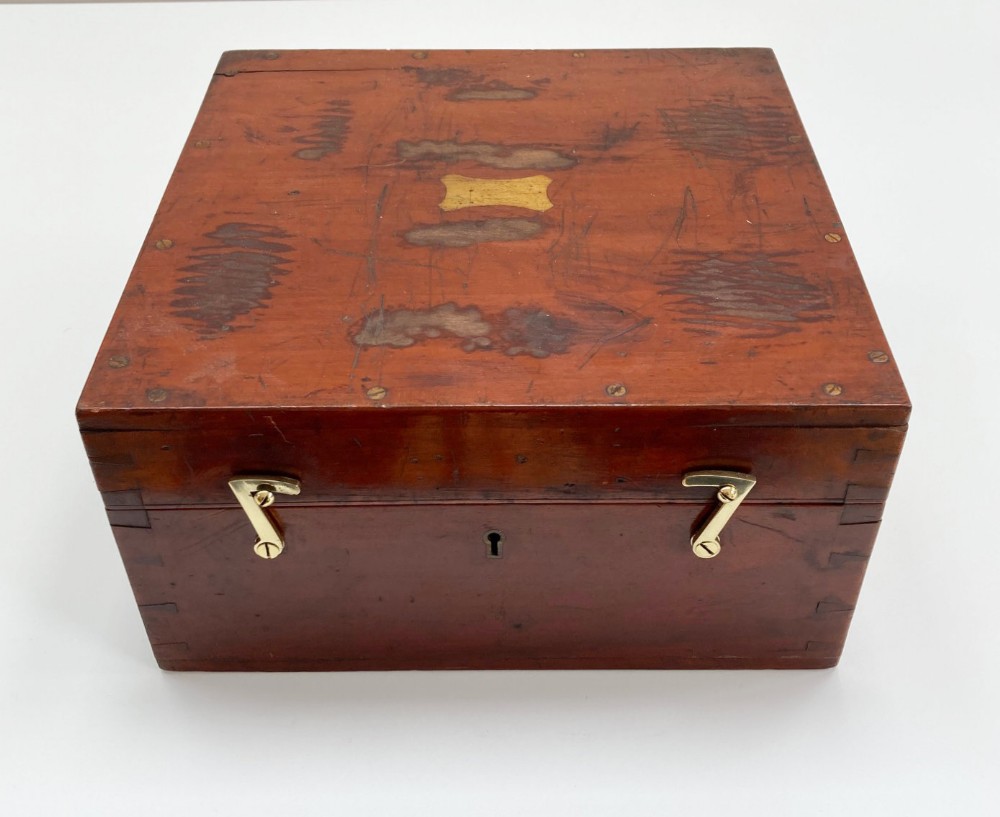
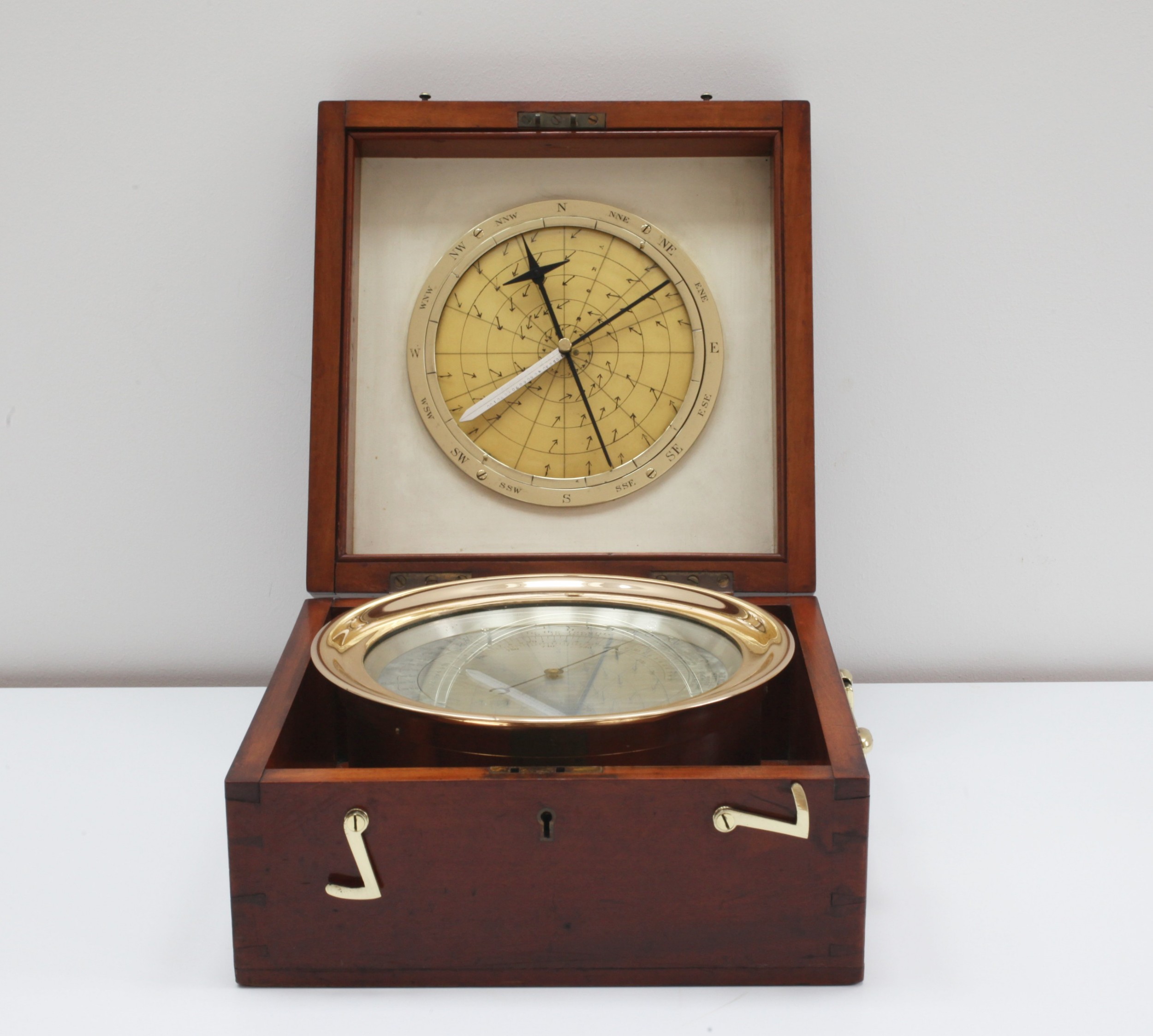
For sale, a rare early Twentieth Century mahogany cased Typhoon barometer of barocyclonometer.

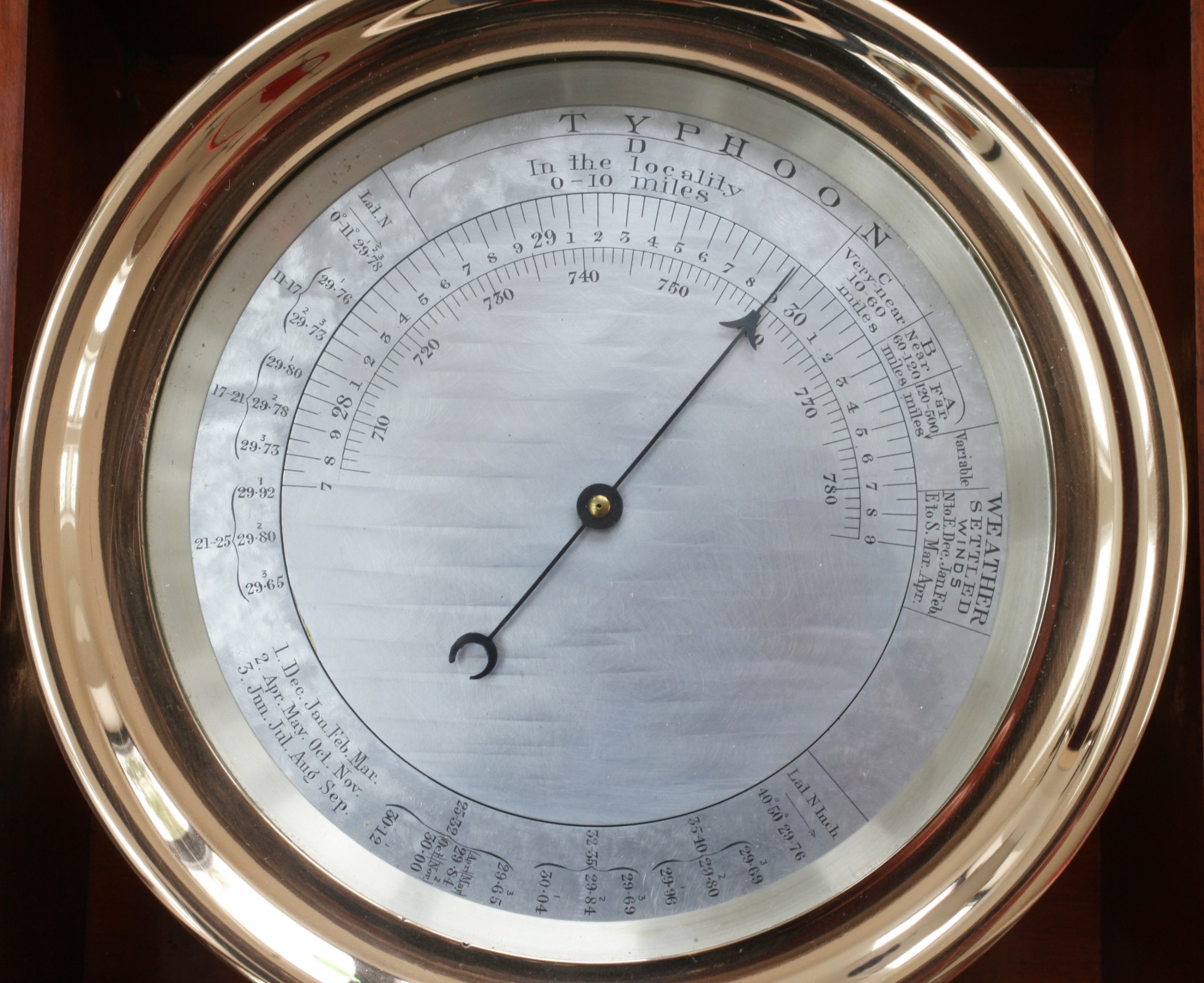
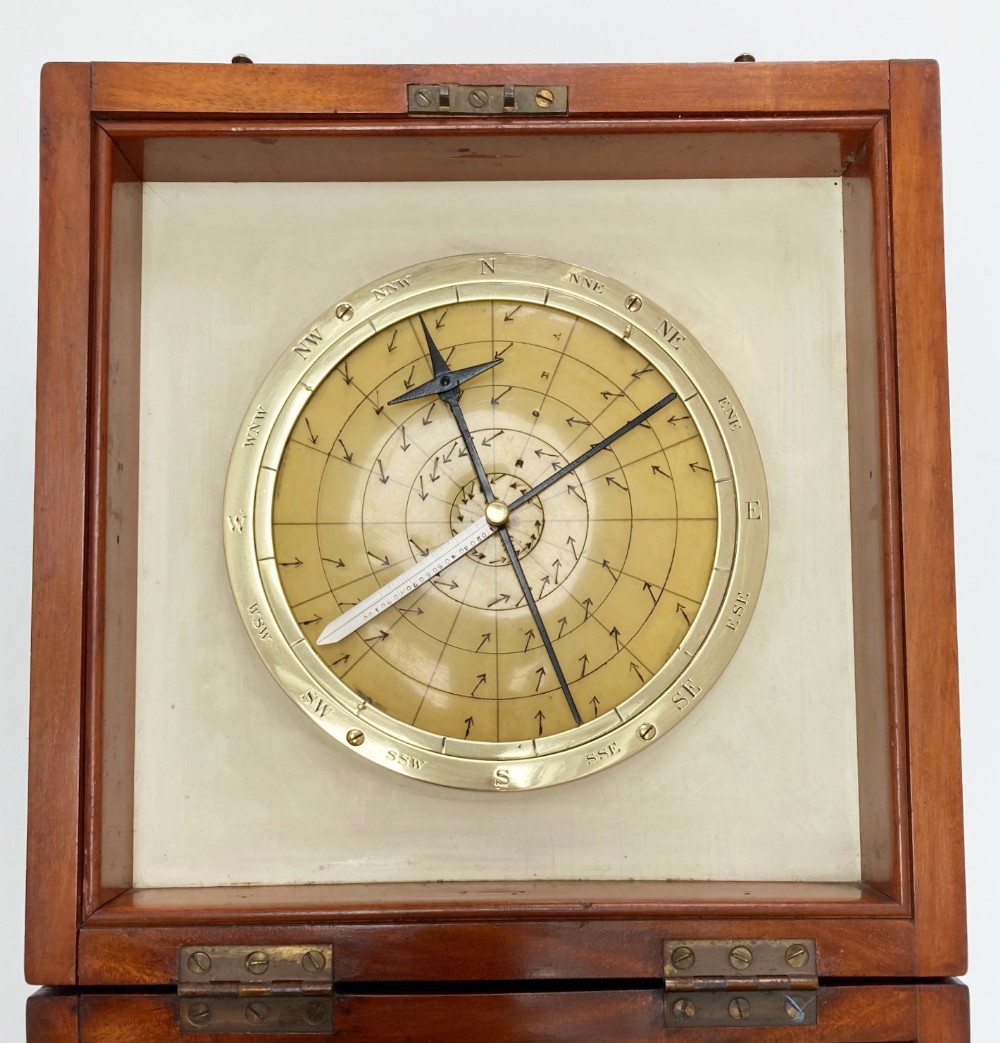
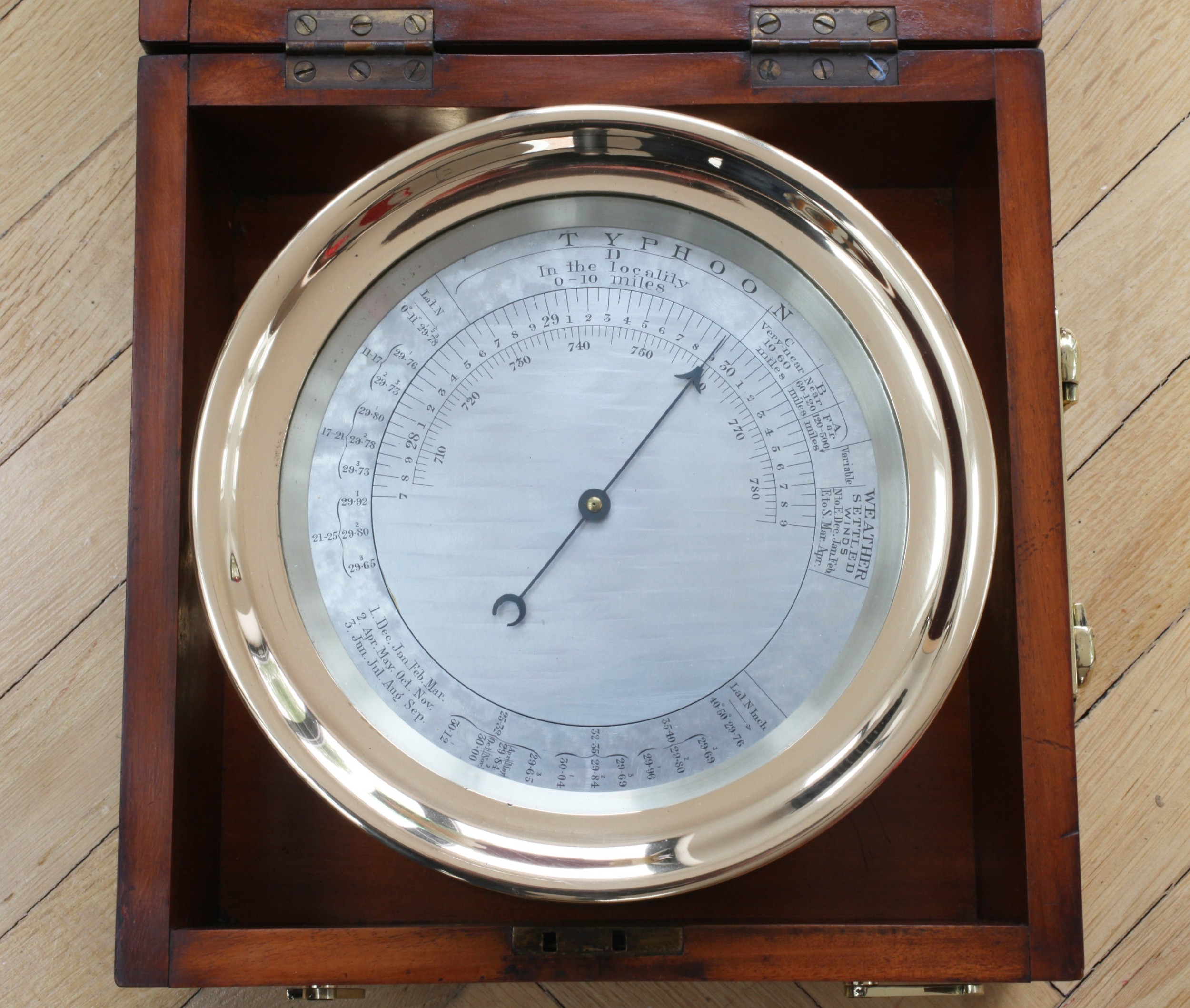
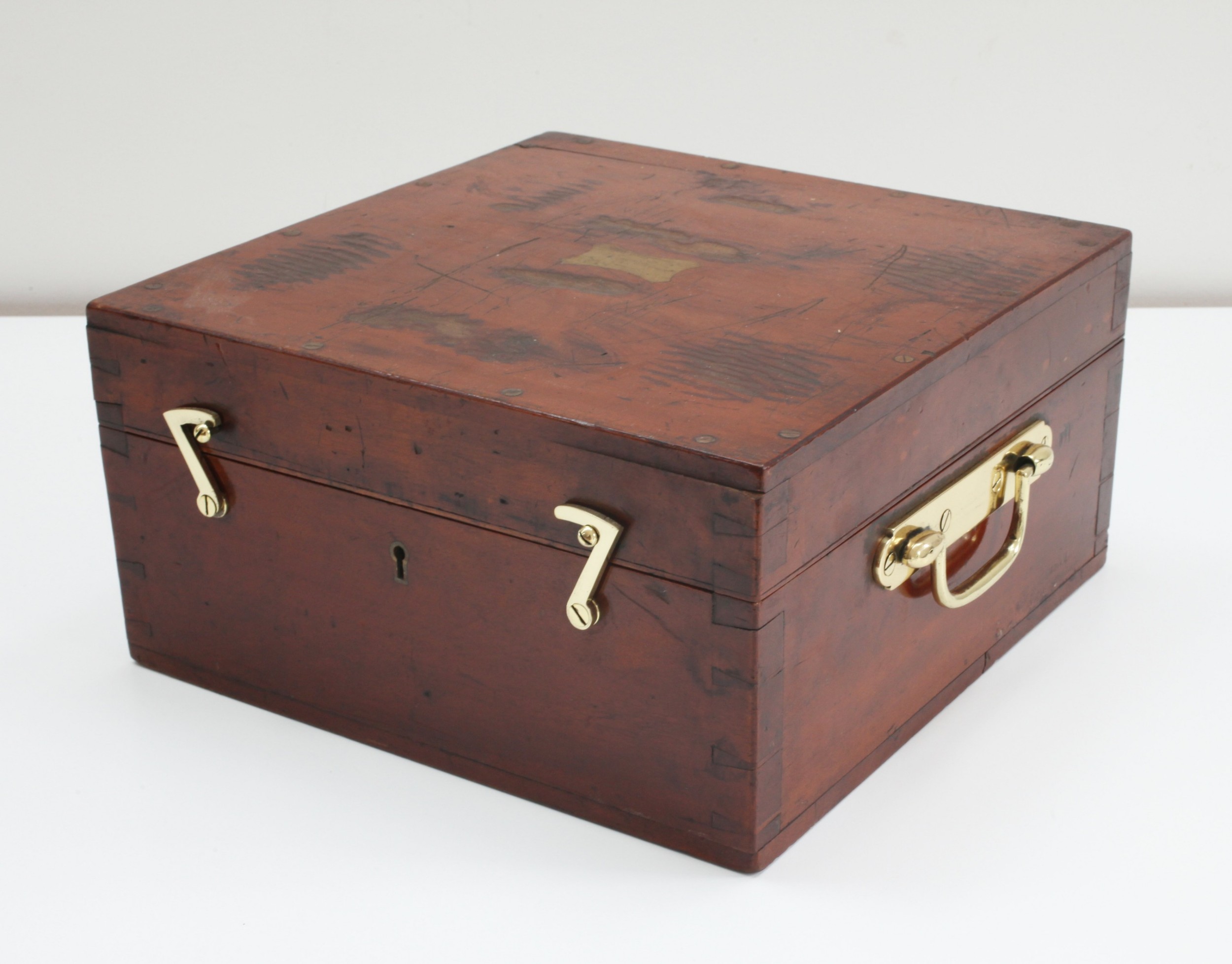
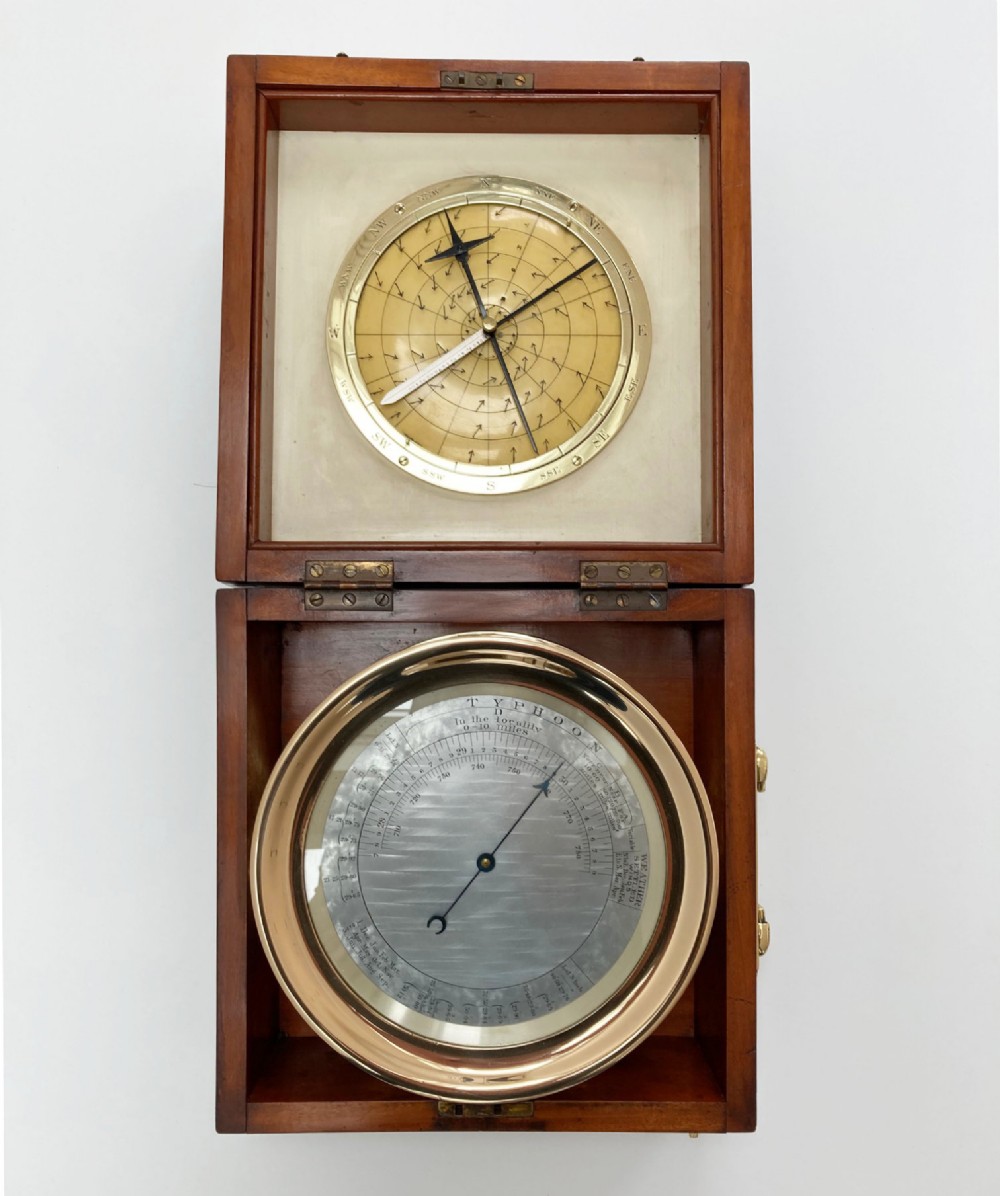
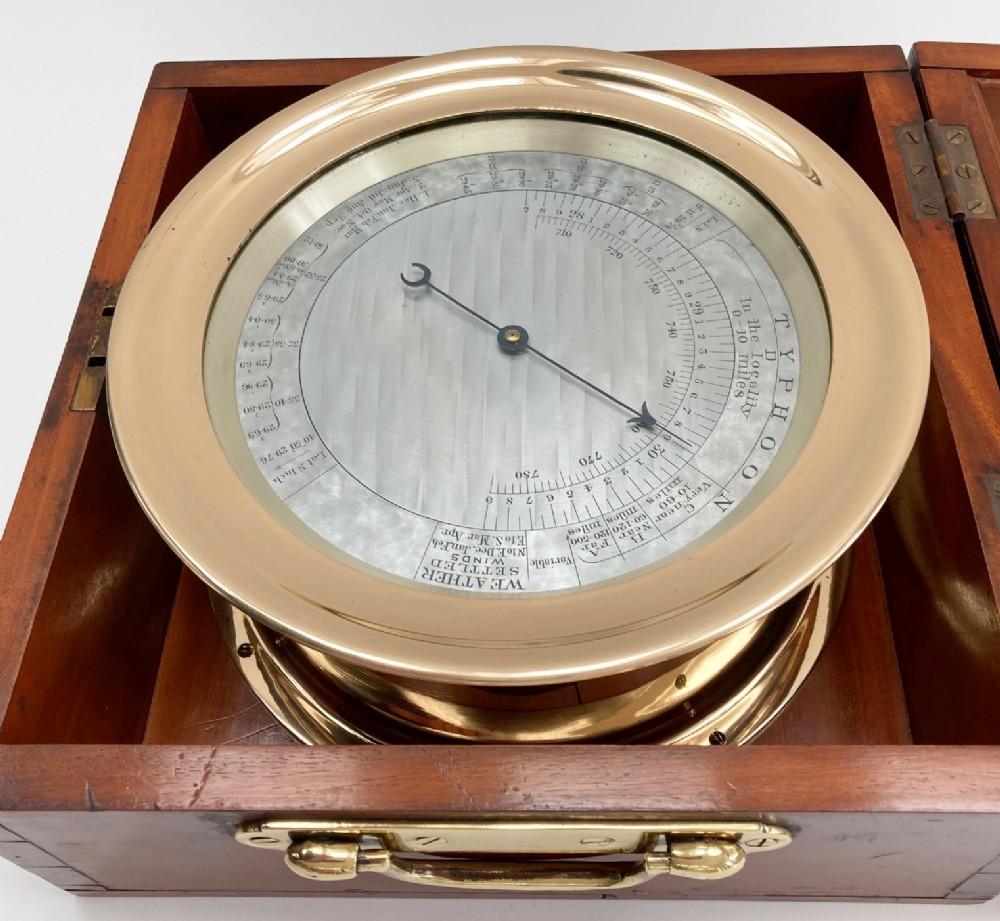
This fascinating instrument is comprised of a seven inch silvered dual ring dial within a very robust nine inch brass case measuring ten centimetres in depth. The barometer is screwed to the base of the mahogany transit case. The inner lid contains a second dial which is employed as a wind disc or cyclometer to be used in conjunction with the barometer when a storm is identified.
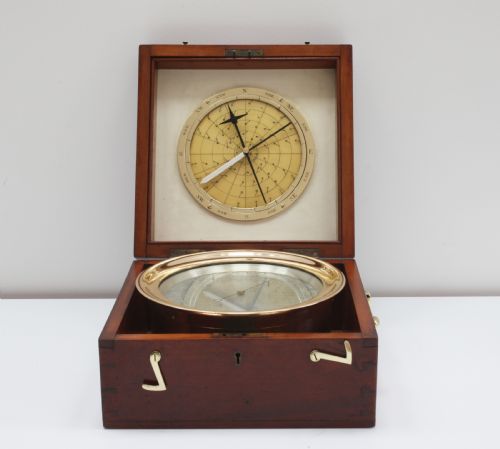
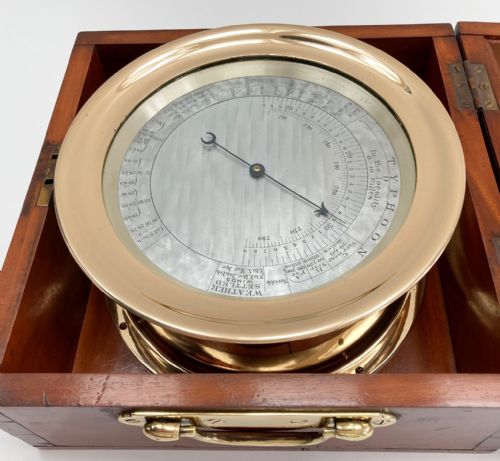
The inner barometer dial has a scale measuring 27.7 to 31.9 inches of barometric pressure with an outer ring which can be turned by manipulation of the outer brass bezel and contains numerous instructions for the setting of the barometer against the scale to gain accurate measurement against both position and time of year.
Perhaps the best description of its use if described in 1913 edition of “popular mechanics where it is described as follows:

“A Barocyclonemeter, an instrument which indicates the position of the centre of a cyclone at a distance of several hundred miles and permits the calculation of the direction in which the riot of wind is moving.
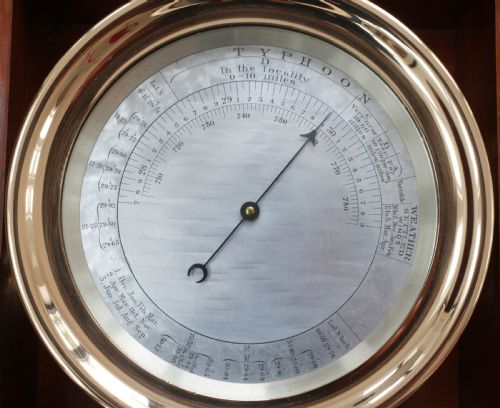
Cyclones, typhoons and other storms tend to move spirally towards a vortex. The delicate instrument, which is a combination of the aneroid barometer and the cyclonometer, will enable the captain of a vessel to learn not only where the centre of a cyclonic area is located, but also in what direction the destructive centre of the storm is moving. Around the dial of the barometer which is graduated in English and metric units, is a movable ring, which first must be set according to directions engraved on its lower half. These have reference to varying zones of latitiude and seasons, for each of which there is a definite pressure above which the conditions may be considered normal, that is, no cyclone within 500 miles need be feared. The ring is turned until a red arrow – that to the right of the segment marked “variable” – points to this normal pressure. If the barometer needle is to the left of the red arrow, the vessel must lie within a cyclonic area. The proximity of a storm being thus ascertained, the cyclometer, by proper setting of its moveable parts in conjunction with mathematical formulas and tables, will furnish a means of determining in which direction the storm centre lies from the ship and in which direction it travels.”
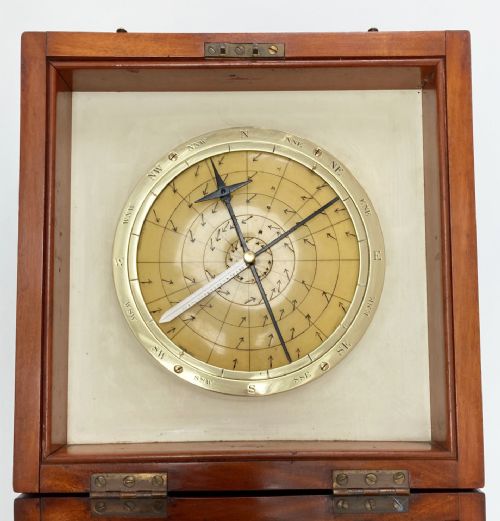
This example has never contained a secondary pointer as described above but the principles are the same. Effectively, the barometer provides the warning signal of dangerous weather conditions and if encountered, the cyclometer contained within the lid will provide guidance for avoiding the most destructive forces of the storm.
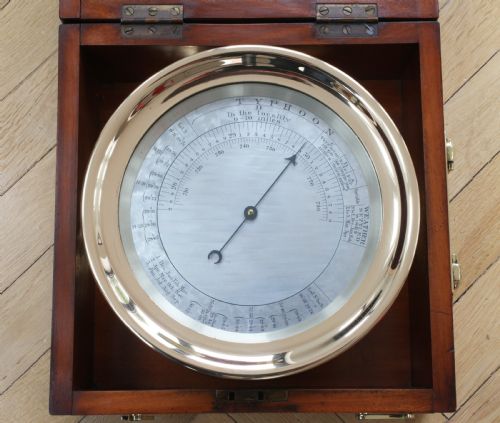
The inventor of this fascinating instrument (and also the nephroscope) was the Jesuit priest Jose Maria Algue (1856 – 1930) who worked as a meteorologist in the Observatory of Manila and released his first publication on his instrument in 1898. His work in the field earnt him an honorary membership of The Royal Society and the Pontificia Accademia Romana and the US Navy eventually adopted the barocyclometer as a standard in their warships around the start of the First World War.
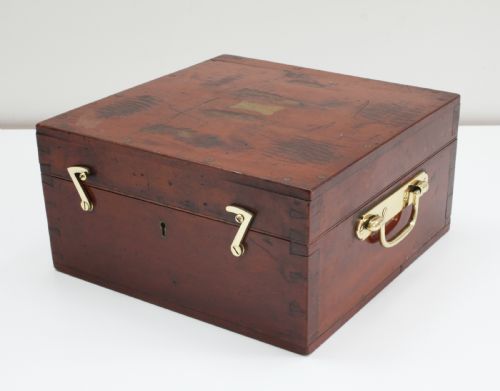
His original work and description of the barocyclonometer can be found at the following site:

https://archive.org/stream/cyclonesfareast00algugoog#page/n223/mode/2up/search/baro

A very seldom seen barometer which will make a stunning centrepiece for a collection even in less tumultuous climates! Circa 1914

Physical Dimensions
Height
14cm (5.51")
Width
27.5cm (10.83")
Depth
27.5cm (10.83")
Declaration

Jason Clarke Antiques has dated this Antique Cased Typhoon Barometer to the 1910s.

Reference Numbers
Sellingantiques Reference
SA725153
Description
For sale, a rare early Twentieth Century mahogany cased Typhoon barometer of barocyclonometer.
This fascinating instrument is comprised of a seven inch silvered dual ring dial within a very robust nine inch brass case measuring ten centimetres in depth.
Jason Clarke Antiques

The barometer is screwed to the base of the mahogany transit case. The inner lid contains a second dial which is employed as a wind disc or cyclometer to be used in conjunction with the barometer when a storm is identified.

fig 1. An early twentieth-century barocyclonometer housed in a hinged mahogany box, featuring a circular brass typhoon barometer in the lower section and a directional cyclone dial mounted in the upper lid.
fig 1. Early Twentieth Century Cased Barocyclonometer or Typhoon Barometer

The inner barometer dial has a scale measuring 27.7 to 31.9 inches of barometric pressure with an outer ring which can be turned by manipulation of the outer brass bezel and contains numerous instructions for the setting of the barometer against the scale to gain accurate measurement against both position and time of year.

fig 2. An early twentieth-century barocyclonometer housed in a hinged mahogany box, featuring a circular brass typhoon barometer in the lower section and a directional cyclone dial mounted in the upper lid.
fig 2. Early Twentieth Century Cased Barocyclonometer or Typhoon Barometer

Perhaps the best description of its use if described in 1913 edition of “popular mechanics where it is described as follows:

“A Barocyclonemeter, an instrument which indicates the position of the centre of a cyclone at a distance of several hundred miles and permits the calculation of the direction in which the riot of wind is moving.

fig 3. An early twentieth-century barocyclonometer housed in a hinged mahogany box, featuring a circular brass typhoon barometer in the lower section and a directional cyclone dial mounted in the upper lid.
fig 3. Early Twentieth Century Cased Barocyclonometer or Typhoon Barometer

Cyclones, typhoons and other storms tend to move spirally towards a vortex. The delicate instrument, which is a combination of the aneroid barometer and the cyclonometer, will enable the captain of a vessel to learn not only where the centre of a cyclonic area is located, but also in what direction the destructive centre of the storm is moving. Around the dial of the barometer which is graduated in English and metric units, is a movable ring, which first must be set according to directions engraved on its lower half. These have reference to varying zones of latitiude and seasons, for each of which there is a definite pressure above which the conditions may be considered normal, that is, no cyclone within 500 miles need be feared. The ring is turned until a red arrow – that to the right of the segment marked “variable” – points to this normal pressure. If the barometer needle is to the left of the red arrow, the vessel must lie within a cyclonic area. The proximity of a storm being thus ascertained, the cyclometer, by proper setting of its moveable parts in conjunction with mathematical formulas and tables, will furnish a means of determining in which direction the storm centre lies from the ship and in which direction it travels.”

fig 4. An early twentieth-century barocyclonometer housed in a hinged mahogany box, featuring a circular brass typhoon barometer in the lower section and a directional cyclone dial mounted in the upper lid.
fig 4. Early Twentieth Century Cased Barocyclonometer or Typhoon Barometer

This example has never contained a secondary pointer as described above but the principles are the same. Effectively, the barometer provides the warning signal of dangerous weather conditions and if encountered, the cyclometer contained within the lid will provide guidance for avoiding the most destructive forces of the storm.

fig 5. An early twentieth-century barocyclonometer housed in a hinged mahogany box, featuring a circular brass typhoon barometer in the lower section and a directional cyclone dial mounted in the upper lid.
fig 5. Early Twentieth Century Cased Barocyclonometer or Typhoon Barometer

The inventor of this fascinating instrument (and also the nephroscope) was the Jesuit priest Jose Maria Algue (1856 – 1930) who worked as a meteorologist in the Observatory of Manila and released his first publication on his instrument in 1898. His work in the field earnt him an honorary membership of The Royal Society and the Pontificia Accademia Romana and the US Navy eventually adopted the barocyclometer as a standard in their warships around the start of the First World War.

fig 6. An early twentieth-century barocyclonometer housed in a hinged mahogany box, featuring a circular brass typhoon barometer in the lower section and a directional cyclone dial mounted in the upper lid.
fig 6. Early Twentieth Century Cased Barocyclonometer or Typhoon Barometer

His original work and description of the barocyclonometer can be found at the following site:

https://archive.org/stream/cyclonesfareast00algugoog#page/n223/mode/2up/search/baro

A very seldom seen barometer which will make a stunning centrepiece for a collection even in less tumultuous climates! Circa 1914

Height
14cm (5.51")
Width
27.5cm (10.83")
Depth
27.5cm (10.83")
Date of Manufacture

Jason Clarke Antiques has dated this Antique Cased Typhoon Barometer to the 1910s.

Reference Numbers
Sellingantiques Ref
SA725153
Jason Clarke Antiques
Sellingantiques verified Since Jul 2015
Dealer Profile

You can view the stock and full dealer information on the Jason Clarke Antiques Profile Page
PDF SHARE
SAVE
An early twentieth-century barocyclonometer housed in a hinged mahogany box, featuring a circular brass typhoon barometer in the lower section and a directional cyclone dial mounted in the upper lid.
1 / 8
Archive I An early twentieth-century barocyclonometer housed in a hinged mahogany box, featuring a circular brass typhoon barometer in the lower section and a directional cyclone dial mounted in the upper lid.

Early Twentieth Century Cased Barocyclonometer or Typhoon Barometer
Archive II An early twentieth-century barocyclonometer housed in a hinged mahogany box, featuring a circular brass typhoon barometer in the lower section and a directional cyclone dial mounted in the upper lid. View II
Archive III An early twentieth-century barocyclonometer housed in a hinged mahogany box, featuring a circular brass typhoon barometer in the lower section and a directional cyclone dial mounted in the upper lid. View III
Archive IV An early twentieth-century barocyclonometer housed in a hinged mahogany box, featuring a circular brass typhoon barometer in the lower section and a directional cyclone dial mounted in the upper lid. View IV
Archive V An early twentieth-century barocyclonometer housed in a hinged mahogany box, featuring a circular brass typhoon barometer in the lower section and a directional cyclone dial mounted in the upper lid. View V
Archive VI An early twentieth-century barocyclonometer housed in a hinged mahogany box, featuring a circular brass typhoon barometer in the lower section and a directional cyclone dial mounted in the upper lid. View VI
Archive VII An early twentieth-century barocyclonometer housed in a hinged mahogany box, featuring a circular brass typhoon barometer in the lower section and a directional cyclone dial mounted in the upper lid. View VII
Archive VIII An early twentieth-century barocyclonometer housed in a hinged mahogany box, featuring a circular brass typhoon barometer in the lower section and a directional cyclone dial mounted in the upper lid. View VIII
Enlarged Archival View
Telephone 07815 046645
Location
Newbury
Berkshire
United Kingdom
Verified Since Jul 2015
Items For Sale 80
Items Sold 607
Jason Clarke Antiques
Verified Since Jul 2015
View Dealer Info
Location: Newbury, Berkshire, United Kingdom
Verified
Jul 2015
For Sale
80
Sold
607
An early twentieth-century barocyclonometer housed in a hinged mahogany box, featuring a circular brass typhoon barometer in the lower section and a directional cyclone dial mounted in the upper lid.
Early Twentieth Century Cased Barocyclonometer or Typhoon Barometer
Ref: SA725153
An early twentieth-century barocyclonometer housed in a hinged mahogany box, featuring a circular brass typhoon barometer in the lower section and a directional cyclone dial mounted in the upper lid.
Detail View 1
Detail View 2
Detail View 3
Detail View 4
Detail View 5
Detail View 6
Detail View 7
Archival Detail
Every single antique dealer on our platform is individually approved by our internal team. We verify their professional trade history, ethical standards, and photographic quality to ensure a secure, high-standard buying environment. Upon joining, every dealer agrees to a strict 9-point code of conduct. While issues can occasionally arise, our dealers typically resolve them swiftly and directly with the buyer. In fact, since our founding in 2002, Sellingantiques has only had to step in to help resolve an issue on roughly five occasions—a true testament to the quality of our dealers and their dedication to your happiness.
Our dealers are highly experienced in packing and shipping fragile, high-value antiques. Because you are in direct contact with the dealer, you will be able to easily go through all available shipping and insurance options together to ensure your item arrives safely.
Antiques are the ultimate green purchase. By choosing historical pieces over newly manufactured goods, you completely eliminate the carbon footprint of modern mass production while preserving exceptional, timeless craftsmanship.

Invented in the late nineteenth century, a barocyclonometer is a specialised marine aneroid barometer combined with a cyclone directional indicator. It was designed primarily for mariners in the Far East to detect pressure drops and determine the direction and distance of approaching tropical cyclones or typhoons.

Traditional cased marine instruments feature heavy brass bezels, lacquered brass components, silvered dial plates, and calibrated steel or brass pointers. The housing boxes are constructed from dense hardwoods such as mahogany or teak with fitted brass hinges to withstand humid maritime environments.

Authentic examples feature dual dials: an aneroid barometer mechanism with a typhoon scale on the main dial, and a rotatable cyclone template dial in the lid. Look for period maker markings, engraved silvered dials rather than printed reproductions, and period-correct brass hinges and hooks on the mahogany box.

A cased maritime instrument serves as an intellectual focal point on an office desk, bookshelf, or sideboard in a study or living space. Displaying the wooden box open highlights the mechanical details, pairing effectively with dark timber, leather accessories, and curated scientific antiques.

Keep the instrument away from direct sunlight, extreme humidity, and high heat sources to prevent timber movement and brass oxidisation. Clean the wooden casing with a soft cloth and beeswax polish, while gently wiping glass surfaces with a dry microfibre cloth without applying liquid cleaners to the internal dials.
items
Add keywords to the filter
Price
£100
£250000
Era
Movements
Material
Origin
Stock Location
Freshness
Online Payments
Categories