




Antique Mercury Barometers
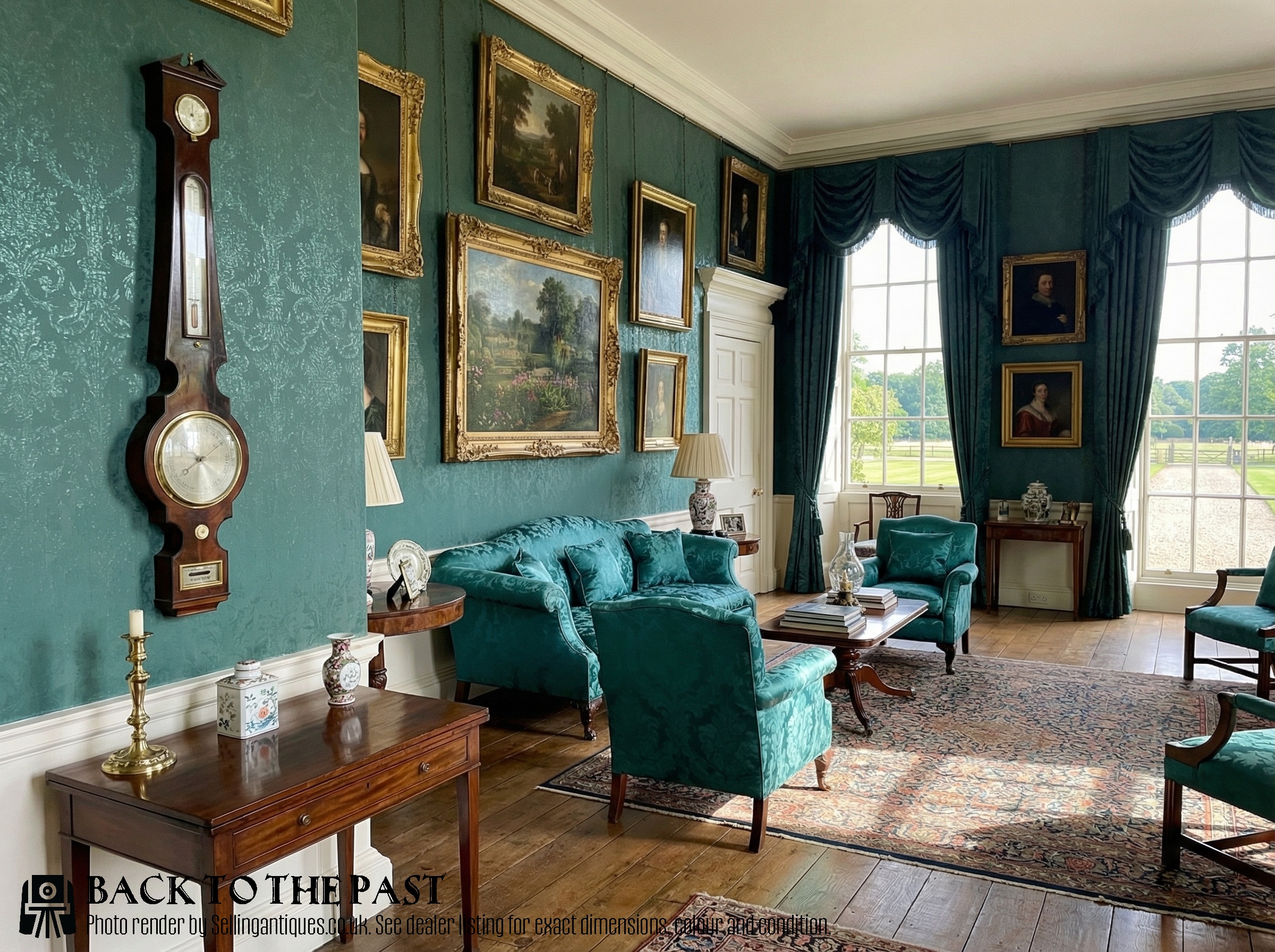
A mercury weather glass in a wooden case, hung indoors to read the pressure and forecast the day's weather.
Antique Mercury Barometers
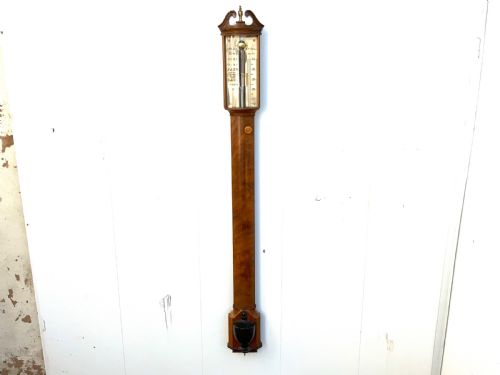
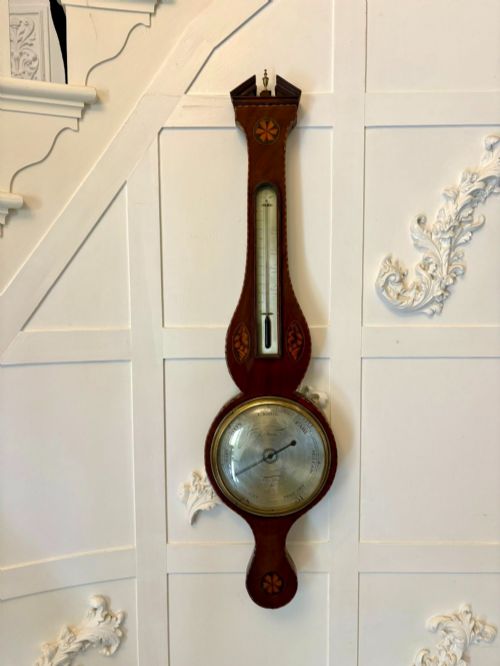
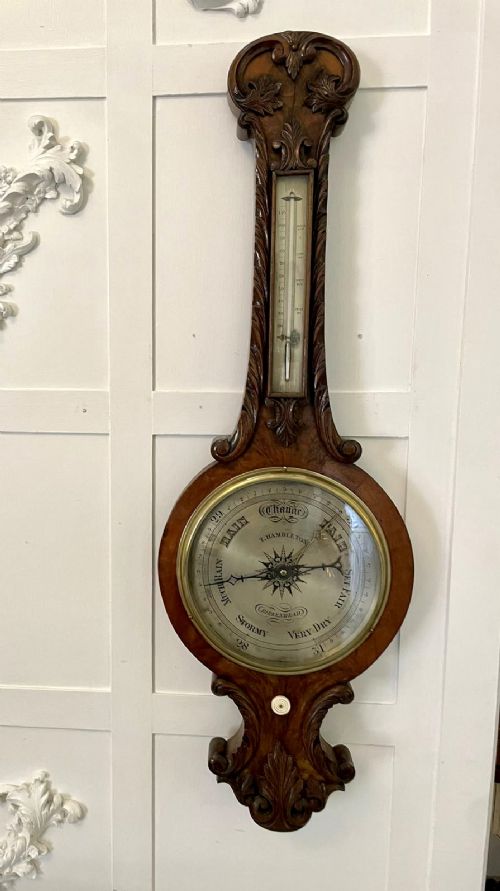
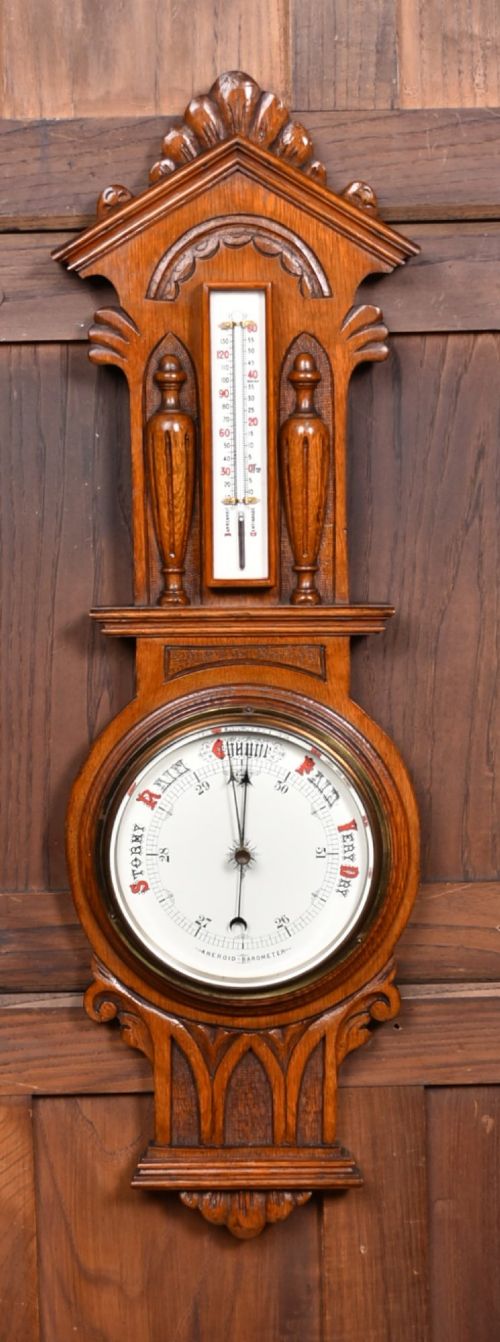
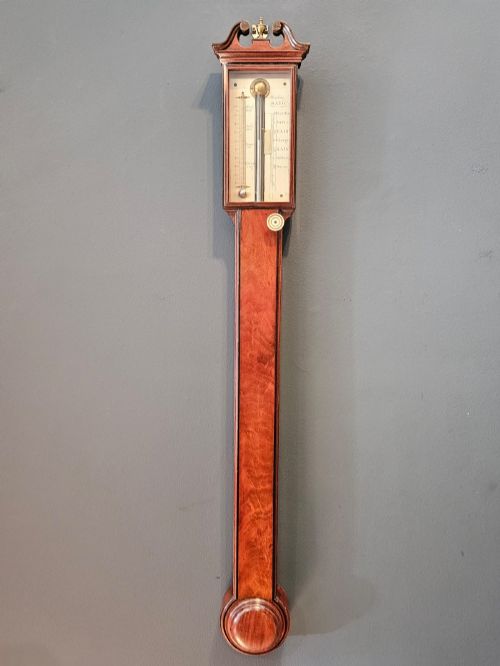
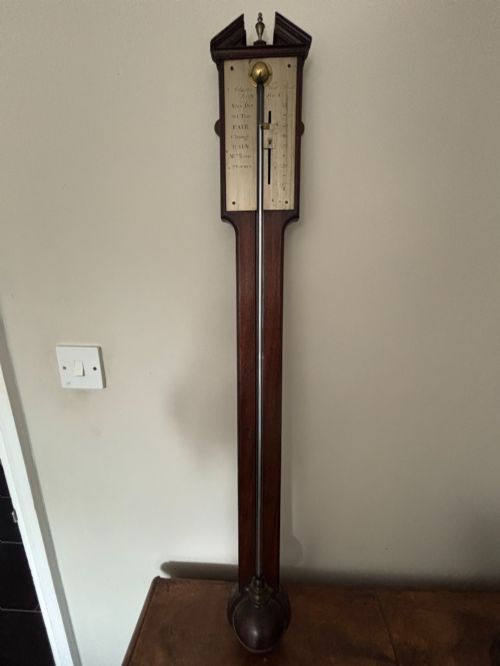
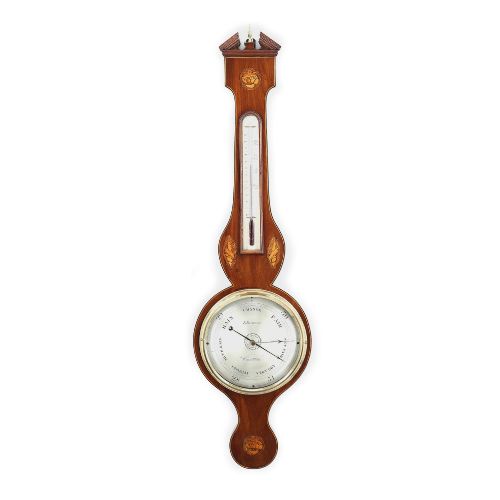
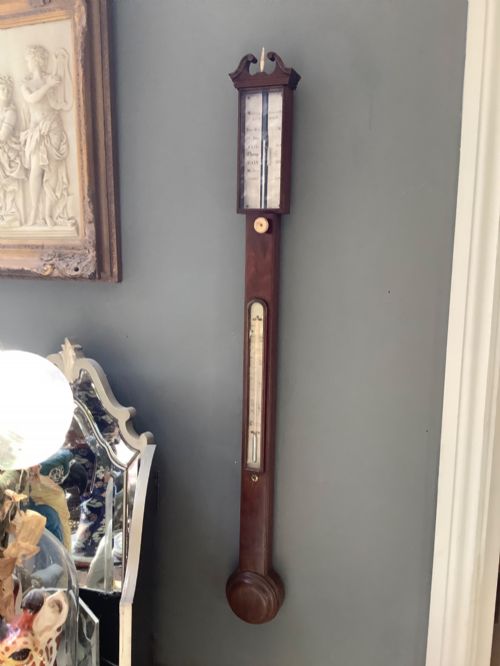
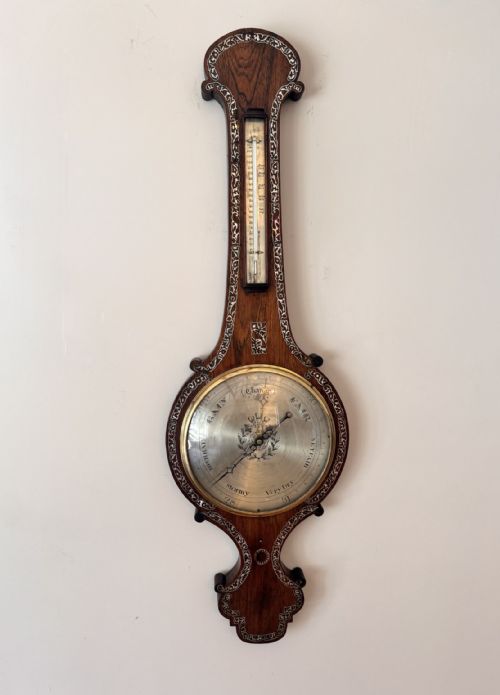
Two shapes cover the ground. The stick barometer is slim and upright, a long mercury tube behind a narrow case with the printed or engraved scale at the top. The wheel or banjo barometer has a round dial, where a float on the mercury turns a pointer, and the tapering case below often carries a thermometer, a hygrometer and a spirit level.
The mahogany stick is the single most likely encounter. 'Stick' appears in forty-eight of one hundred and sixty-seven titles and 'mahogany' in forty-five, with rosewood the second timber. Wheel and banjo together account for a similar slice, and the two words often describe the same object in one title. Dial sizes, when quoted, run from four inches to twelve.
The archive is overwhelmingly English and domestic. A surname paired with a town runs through more than half the sampled titles, from Exeter and Hull to Nottingham, Newcastle, Chester, Liverpool and Glasgow, with London named in thirty-one. Italian surnames attached to English provincial towns turn up throughout, a signature of the itinerant barometer trade rather than of any one workshop.
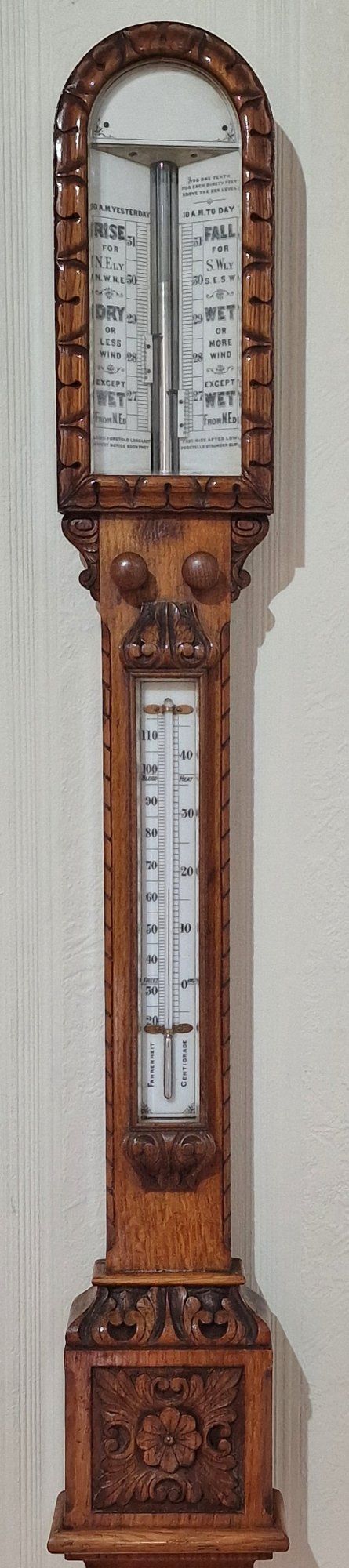
Dating runs from 1700 to 1930, with seventy-six listings carrying a clean year. Decade-level dates cluster in the second half of the nineteenth century. Much of the paperwork is vaguer: '19th Century' is the largest single bucket, and reign labels do further duty, so treat Georgian, Regency or Victorian as shorthand rather than a determination. Oak-cased storm barometers with printed forecasting instructions form a small separate group, alongside a handful of marine, sea-coast and ships patterns.
Where Value Sits
Timber and decoration do most of the work. Figured and inlaid cases push upward: walnut, burr walnut, birds-eye and figured mahogany, parquetry and marquetry all sit near the top, and mother-of-pearl, shell or boxwood and ebony stringing lifts a piece into the upper half. Plain oak and undecorated cases sit at the bottom. 'Inlaid' appears in fifteen titles, 'carved' in nine.
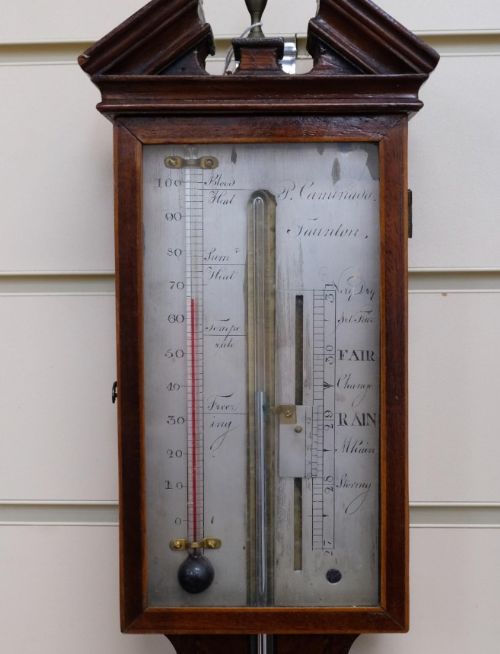
A legible signature counts. Sampled listings above the midpoint tend to name a maker and a town on the register plate or dial, while the cheapest tier is largely unsigned, described simply by reign and timber. No single name recurs often enough across dealers to be treated as a category staple.
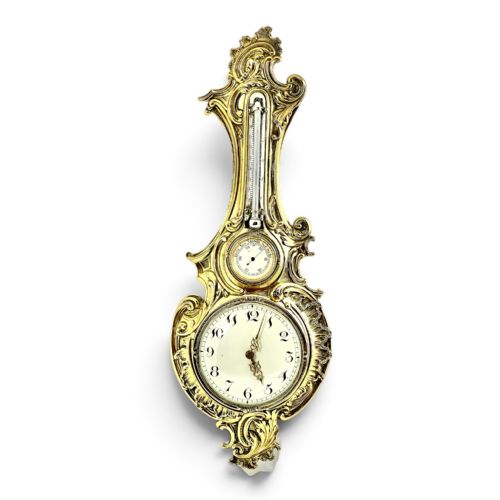
Form and date settle the rest. Bow-fronted stick cases sit at the very top, and one-off shapes such as the angle barometer, the Fortin and a clock-barometer in the shape of a caduceus surface once each and nowhere else. Eighteenth- and very early nineteenth-century pieces sit highest; the 1890 to 1930 end clusters low to mid.
Antique Mercury Barometers Retail Price Guide 2026
Typical UK retail prices for mercury barometers, calculated from the Sellingantiques database of over a million retail prices indexed since 2003. This retail price guide relies exclusively on Sellingantiques data; no external sources or auction records are used, so the figures do not describe the wider market.
Dates on Sellingantiques run from 1700 to 1930: the earliest a walnut stick barometer, the latest a Georgian Revival mahogany one.
The Antique Mercury Barometers Glossary
- Stick barometer
- The slim upright form, a mercury tube behind a narrow case with the scale at the top. Cases appear in mahogany, oak, rosewood, walnut and ebonised finishes.
- Wheel barometer
- The round-dial type, where a float on the mercury turns a pointer. 'Wheel' and 'banjo' are used for the same object in these titles.
- Register plate
- The engraved or printed scale at the top of a stick barometer. It usually carries the maker's name and town.
- Cistern
- The mercury reservoir at the foot of a stick barometer.
- Bow-fronted
- A stick barometer whose case front curves outward. Three appear across the whole sample, all at the top of the range.
- Fortin
- A scientific stick barometer with an adjustable cistern for precise readings. One sampled example.
Antique Mercury Barometers: Frequently Asked Questions
What is the difference between a stick and a wheel barometer?
A stick barometer is the slim upright form: a mercury tube behind a narrow case, with the reading taken from a scale at the top. A wheel barometer has a round dial and a pointer driven by a float sitting on the mercury.
Wheel barometers commonly carry a thermometer, and often a hygrometer and spirit level, in the same case. Stick barometers are usually just the tube and its register plate.
Why is banjo used for some of these?
Banjo describes the case shape of most wheel barometers: a round dial over a tapering body. In these titles the two words point at the same object, and some dealers use both in one description.
'Wheel' appears in thirty-two titles and 'banjo' in twenty-three.
How old are most examples on the market?
The dated field runs from 1700 to 1930, and seventy-six of one hundred and sixty-seven listings carry a clean year. Where a decade is given, the 1850s through the 1880s account for the bulk.
Only six listings are filed as 18th Century, against thirty-four filed simply as 19th Century. The paperwork is much vaguer at the early end than the sampled dates suggest.
Are these mostly English?
Almost entirely. The archive is dominated by English domestic pieces in mahogany or rosewood, signed with a surname and a town.
Non-British origins are the rarest thing in the category: a Milan-signed ebonised stick, a Paris-signed piece, one Dublin maker and one described as American carved walnut.
What does a storm barometer look like?
It is a late-Victorian pattern, usually in carved oak, with printed forecasting instructions set into the case alongside the tube.
These form a small distinct group. 'Oak' appears in eleven titles, and four sampled titles name the storm pattern.
How many come up for sale?
Fifty-two dealers have listed in this category on Sellingantiques, at a rate of about fifteen pieces a year.
That makes supply broad but thin. Most dealers who carry one carry only one.