


Antique Barographs
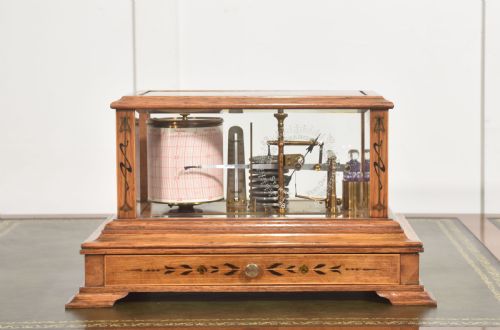
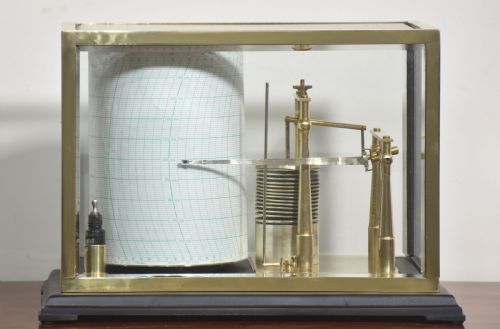
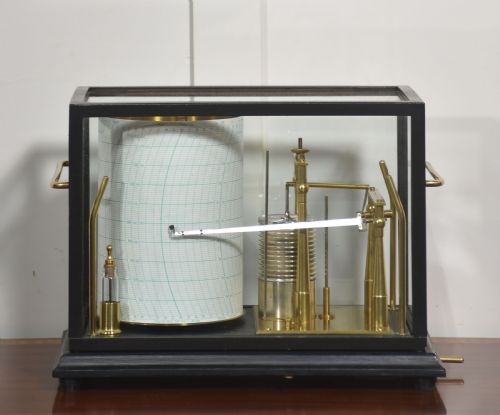
A barograph is a clockwork recording barometer: aneroid capsules drive an inked arm across a paper chart on a turning drum, giving a continuous written trace of atmospheric pressure instead of a single reading.
Antique Barographs
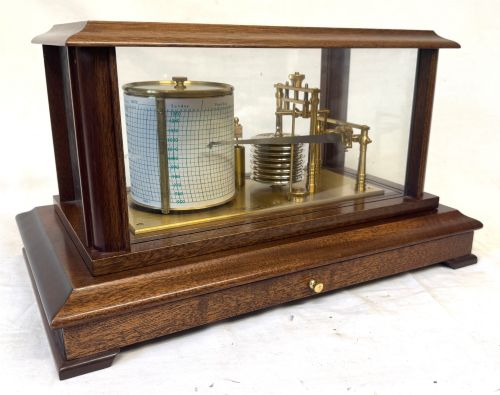
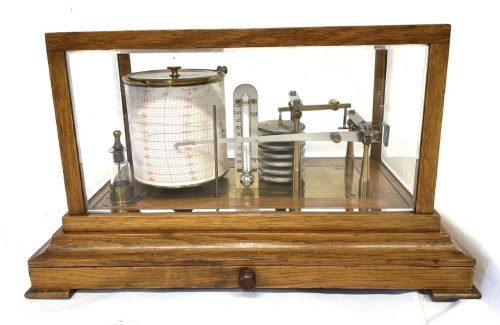
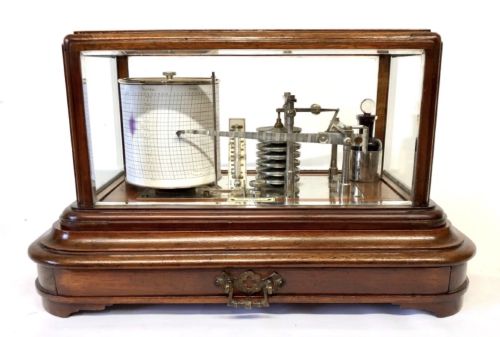
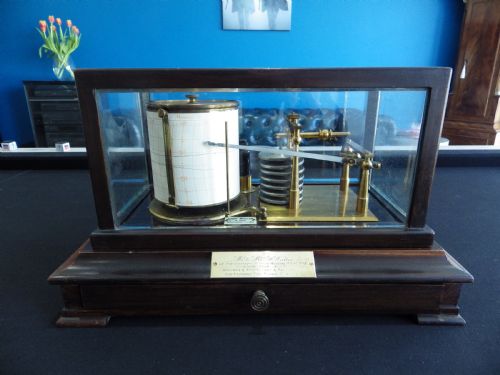
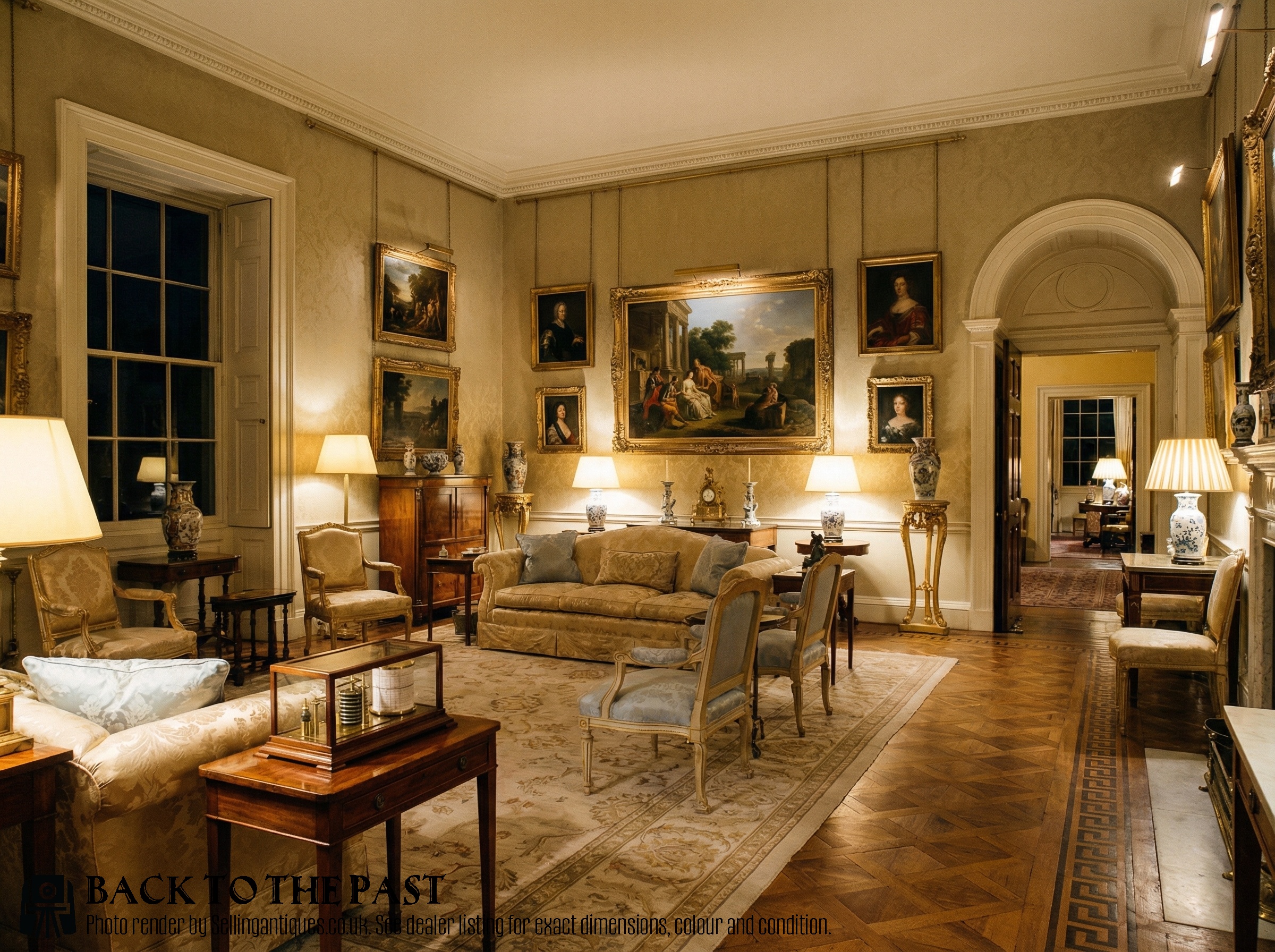
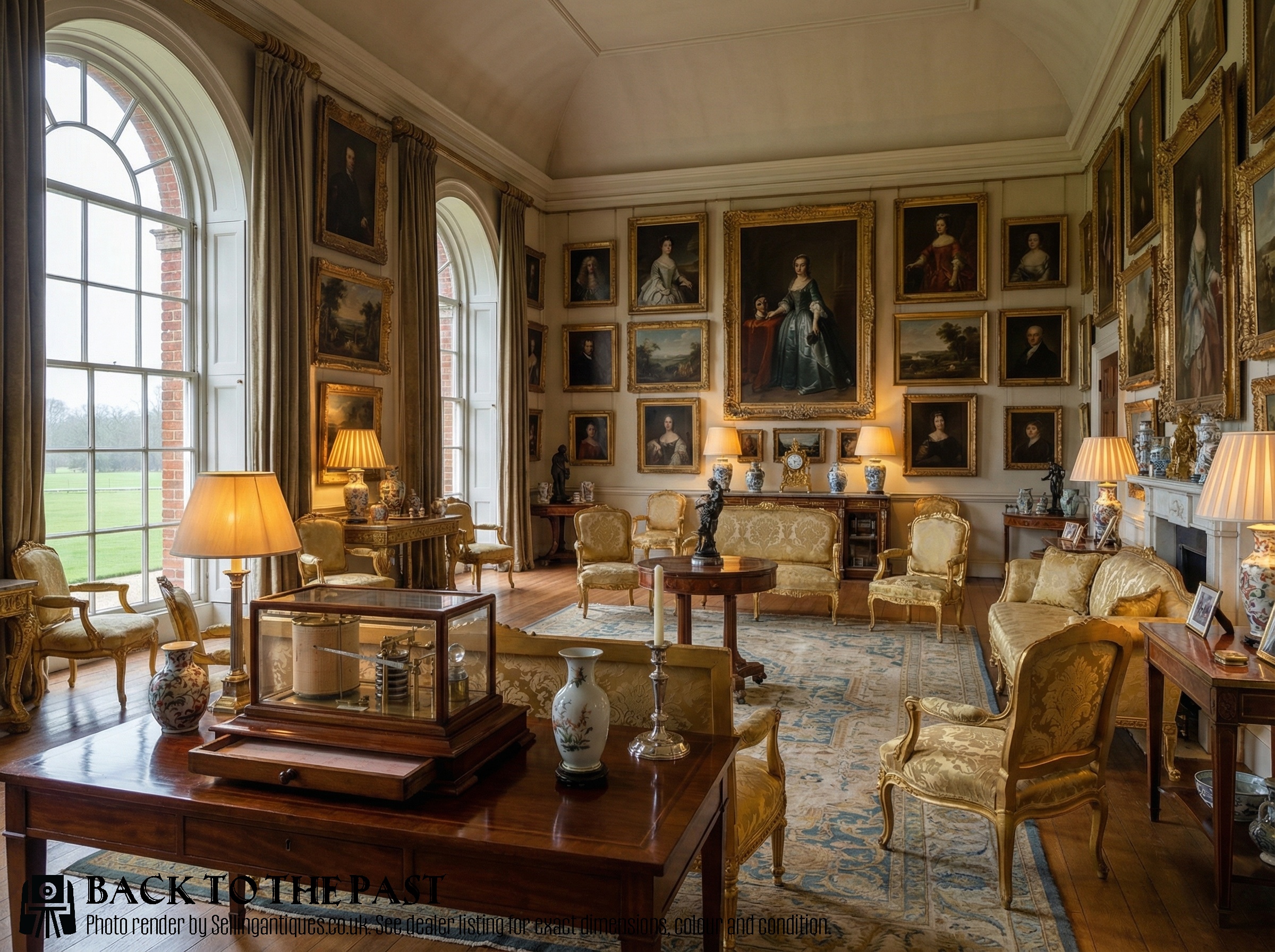
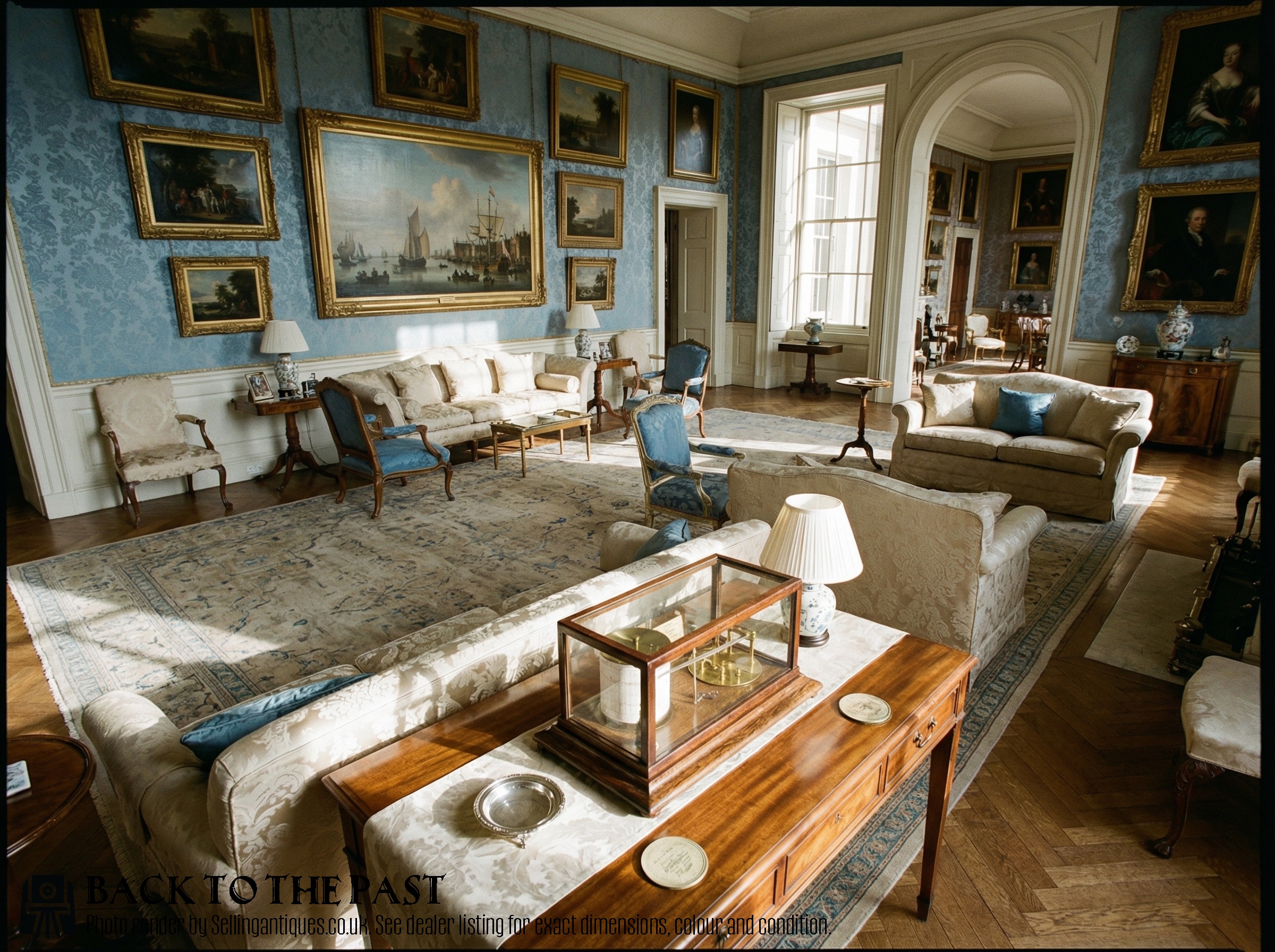
The instrument you'll meet on Sellingantiques is a table barograph in a glazed wooden case, with the mechanism visible behind glass and a shallow drawer of spare charts in the plinth below. "Cased" is the single most common word in these titles, in a third of them, and the case timber is how the trade names the piece: oak, mahogany or walnut account for ninety-one of the hundred and forty-five listings.
Dating is unusually tidy for a barometer category. A hundred and four listings carry a clean year, and the field runs from 1870 to 1950, with the 1910s, 1900s and 1920s together taking eighty of them. Another block is filed by label rather than year, so "Victorian" or "19th Century" on a barograph is a dealer's period bracket rather than a date; several titles reading late 19th century sit against a dated field of 1900.
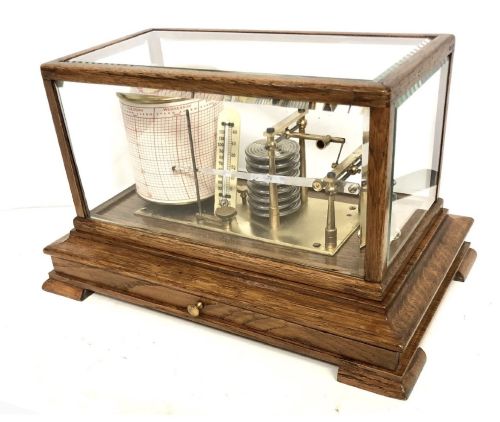
Beyond the standard case-and-drum instrument, a few recognisable variants turn up. Five-glass and bevelled-glass cases, glazed so the movement reads all round, appear in roughly one title in twelve but make up a quarter of live stock. Around a dozen instruments pair the drum with a barometer or aneroid dial, eight add a thermometer, and two record temperature as thermographs.
Oddities appear singly rather than as a type: a gilt brass instrument, a brass-and-nickel-plated case, a miniature, a wall-mounted example with its bracket, and open-scale "micro" barographs that magnify small pressure changes. London wording runs through twenty-one titles, alongside provincial and Scottish names, a scatter of French and German makers, and one recorded as far off as Hong Kong and Singapore.
Where The Range Splits
Glazing does most of the separating. Every title that says five-glass or five glass sits at the very top of the range, and bevelled glass is cited in titles as a quality marker in its own right. A plain single-fronted case in oak, with no more said about it, sits at the other end.
After glazing, it's what else the case carries. A second reading device lifts a piece: a barometer or aneroid dial on the front, an aneroid chapter ring, or a thermograph drum recording temperature alongside pressure. These combined instruments cluster above the mid-range. Timber and decoration pull the same way, with figured walnut, inlaid mahogany and the two Art Nouveau inlaid cases all sitting high.
Size and signature finish the picture. Titles reading large, extra large or micro fall in the upper half, the open-scale instruments among them. A signed movement or dial pushes a barograph upward, while the listings that read simply "Barograph" or "An Edwardian Barograph", with no name attached, sit low. Signatures here are retailers and instrument makers, and many appear only as attributions.
Antique Barographs Retail Price Guide 2026
Typical UK retail prices for barographs, calculated from the Sellingantiques database of over a million retail prices indexed since 2003. This retail price guide relies exclusively on Sellingantiques data; no external sources or auction records are used, so the figures do not describe the wider market.
The 1910s is the decade that leads the barographs on Sellingantiques, with the 1900s just behind and the 1920s third.
The Antique Barographs Glossary
- Cased
- The commonest word in these titles, meaning the glazed wooden case that houses the mechanism, usually oak, mahogany or walnut.
- Drum
- The clock-driven cylinder the paper chart wraps around; some listings call the whole instrument a drum barograph.
- Chart drawer
- A shallow drawer in the case plinth holding spare charts, named in several titles.
- Aneroid
- The stack of evacuated metal capsules that senses pressure and drives the pen. Turns up as "aneroid barograph" and "aneroid chapter ring".
- Five-glass
- A case glazed on five faces so the movement is visible all round. Written as 5-glass or five glass, and a top-of-range form in this category.
- Micro barograph
- An open-scale instrument that records small pressure changes at magnified amplitude. Two titles carry it.
Antique Barographs: Frequently Asked Questions
What period do most barographs date from?
The dated listings run from 1870 to 1950 and nothing falls outside that. The weight is on one generation: the 1910s, 1900s and 1920s together hold eighty of the dated pieces.
Earlier examples are scarce in this corner, with only three in the 1870s. Seventeen more are filed simply as Edwardian, which puts them in the same bracket.
Why does the case wood get mentioned first?
Because it's how the trade identifies these instruments. Oak, mahogany and walnut between them account for ninety-one of the hundred and forty-five titles, and "cased" appears in a third of them.
Oak leads on numbers, with mahogany close behind and walnut a smaller group. Figured walnut and inlaid mahogany cases sit higher in the range than plain oak.
What does five-glass mean on a barograph?
It describes a case glazed on five faces, so the drum and movement can be read from any side rather than just the front.
They're uncommon, turning up in about one title in twelve, though they make up a larger share of what's currently listed. Every explicitly five-glass example sits at the top of the range.
Are combined barograph and barometer instruments common?
They're a recognisable minority rather than the norm. Around a dozen listings pair the recording drum with a barometer or aneroid dial on the case front or in the lid.
Eight add a thermometer, and two go further and record temperature as thermographs. Whichever form it takes, a second reading device tends to place a piece above the mid-range.
How many barographs come up for sale?
About sixteen a year on Sellingantiques, spread across twenty-six different dealers. A steady trickle rather than a flood.
The archive stands at a hundred and forty-five listings in total, which makes it a small but well documented category.
Do unusual barographs turn up, or just table models?
The glazed wooden table instrument dominates, but oddities appear one at a time: a gilt brass barograph, a brass-and-nickel-plated case, a miniature, and a wall-mounted example with its own bracket.
There are also portable types and open-scale micro barographs. Continental instruments from France and Germany make up under a tenth of the archive.