





Georgian Barometers
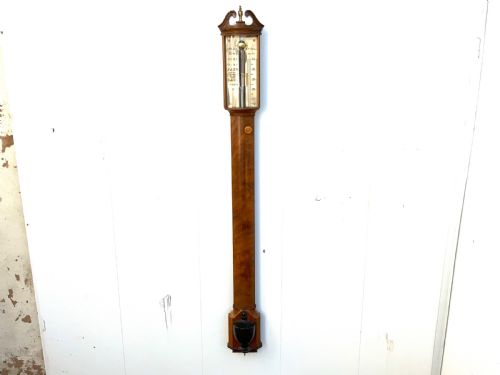
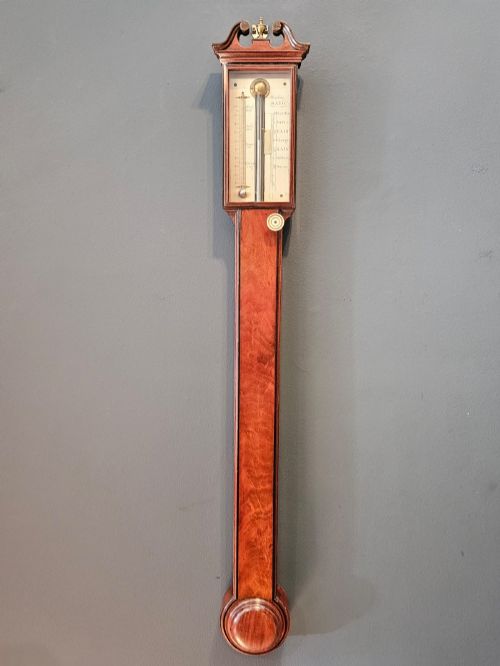
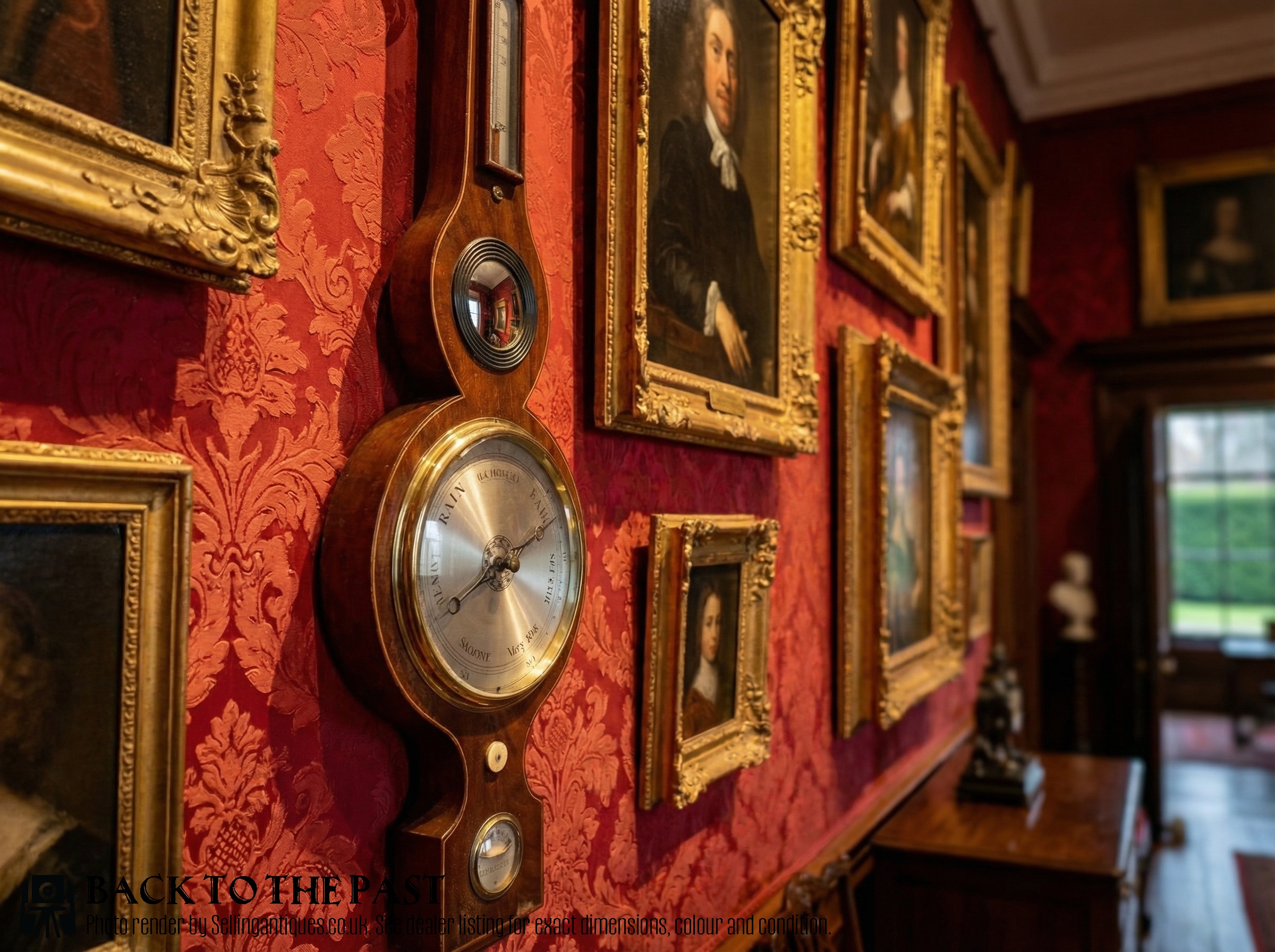
A wall-hung mercury barometer in a wooden case, made to read the weather at home, and on Sellingantiques most often a tall mahogany stick signed with a maker's name and town.
Georgian Barometers
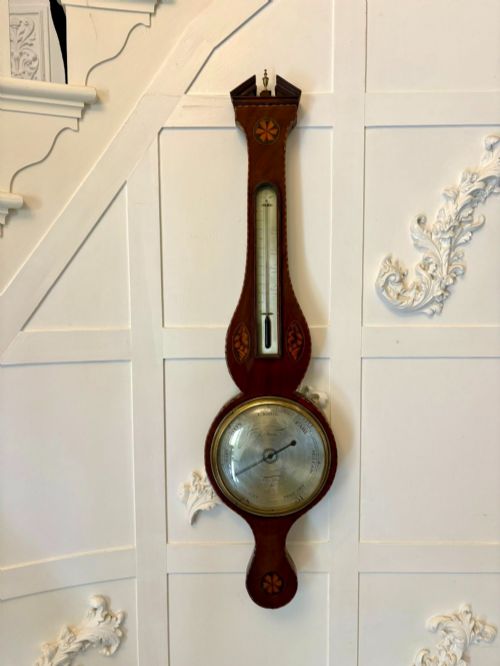
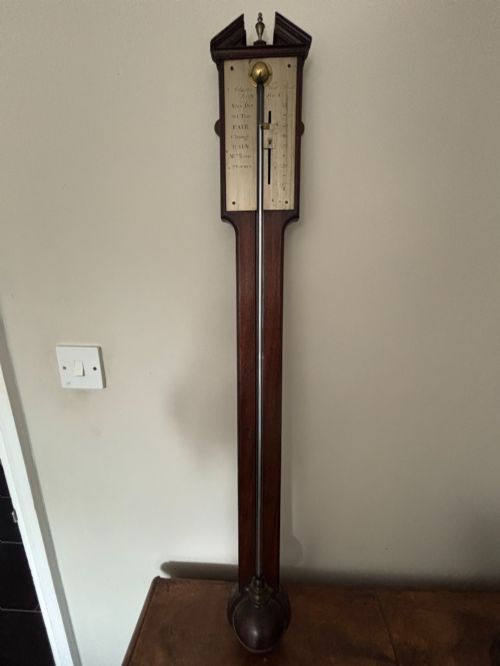
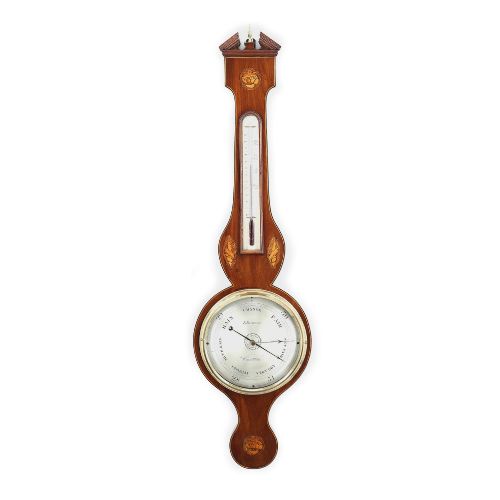
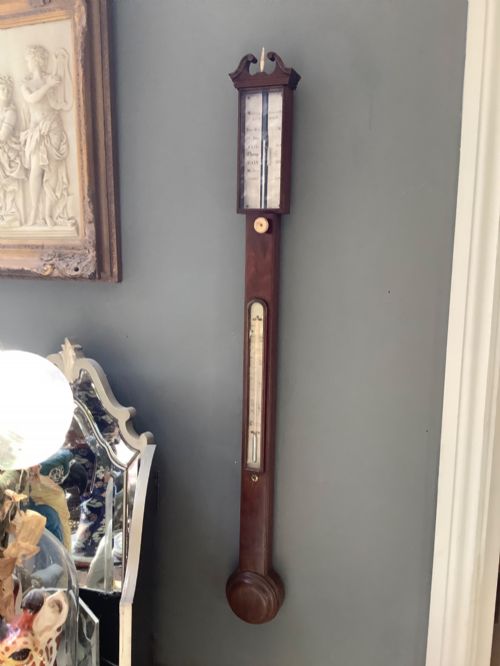
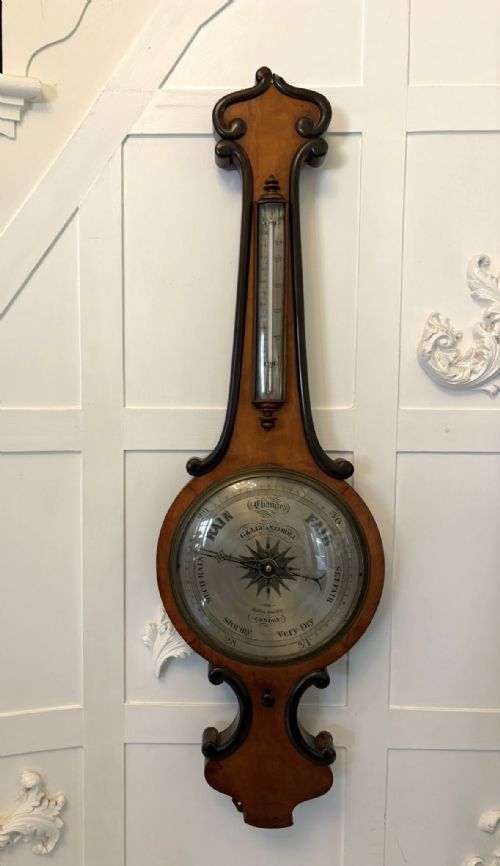
They're wall instruments with a mercury tube in a wooden case, mostly English, and they fall into two shapes. The tall narrow stick barometer, with the tube behind an engraved register plate, and the round-dialled wheel barometer in its waisted banjo case. The stick form came first; the wheel dial, quicker to read at a glance, spread through Britain from the later eighteenth century.
Mahogany runs through the titles more than any other timber, often inlaid or crossbanded, and the word 'stick' appears in a little over two fifths of them. Wheel and banjo cases account for roughly a quarter. Rosewood, walnut, burr walnut and birds-eye maple surface as occasional variants rather than a steady supply.
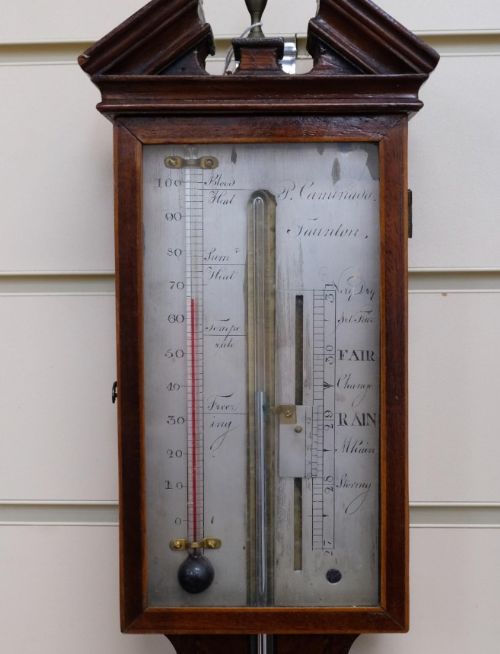
A signature is the norm. Most titles quote a maker or retailer name with a town, read off the plate or dial, and London accounts for a good share of them. Provincial addresses turn up throughout, from York, Newcastle, Exeter and Liverpool to Dumfries, Whitehaven, King's Lynn and Tiverton. No one name defines the category, and forty-one different dealers have listed one on Sellingantiques.
The dating is worth reading carefully. Dealers more often give a label than a year, Georgian, Regency, 1800s or 19th century, and only fifty of the 142 listings carry a clean year. Where a year is given, 1800 is far and away the commonest. The stated range runs 1750 to 1930, so a fringe of Victorian and twentieth-century pieces, including a Georgian Revival example, sits inside the heading.
Where The Range Splits
Form does most of the work. Plain rectangular mahogany sticks sit at the lower end of the sampled range, bow-fronted and shaped cases climb above them, and the unusual shapes reach highest of all: the two angle or sign-post barometers, with the tube bent toward the horizontal to stretch the scale, the three gimballed marine sticks, and a single combined clock and barometer.
Then the signature. A legible maker's name with a town or street address pushes a piece upward, while titles that read simply 'Barometer' or 'Stick barometer', with nothing to name, sit lower. The address itself matters less than the fact that there is one.
Decoration and scale account for the rest. Shell inlay, boxwood and ebony stringing, mother-of-pearl, parquetry and marquetry all appear on higher-reaching cases. On wheel barometers, dial size tracks the same way, with the one 12-inch dial sitting well above the 10-inch examples, and an early walnut case dated to the eighteenth century among the very highest.
Georgian Barometers Retail Price Guide 2026
Typical UK retail prices for georgian barometers, calculated from the Sellingantiques database of over a million retail prices indexed since 2003. This retail price guide relies exclusively on Sellingantiques data; no external sources or auction records are used, so the figures do not describe the wider market.
Georgian is the period label used most on Sellingantiques for these barometers, with 1800s next and 19th Century third.
The Georgian Barometers Glossary
- Stick barometer
- Tall, narrow case with the mercury tube visible behind a register plate. The commonest form in this category.
- Wheel barometer
- Reads on a circular dial worked by a float and pulley, rather than off a scale beside the tube.
- Banjo
- The rounded-top, waisted case that houses a wheel movement, named for its silhouette.
- Mercury
- The working fluid, stated outright in a fair number of titles, and what separates these from later aneroid instruments.
- Cistern
- The reservoir of mercury at the foot of a stick barometer, into which the tube dips.
- Register plate
- The engraved scale beside the top of the tube on a stick barometer, and usually where the signature sits.
- Fecit
- Latin for 'made it', occasionally following a signature on a plate or dial.
Georgian Barometers: Frequently Asked Questions
What is the difference between a stick and a wheel barometer?
A stick barometer is tall and narrow, with the mercury tube running up behind an engraved register plate that you read directly. A wheel barometer reads on a circular dial, driven by a float and pulley, in the waisted case usually called a banjo.
Sticks appear in a little over two fifths of titles on Sellingantiques. Wheel and banjo cases together make up roughly a quarter.
Are Georgian barometers usually signed?
Yes. The great majority of titles quote a maker or retailer name with a town, taken off the register plate or the dial.
London addresses account for a good share, but provincial signatures run wide, from York and Exeter to Dumfries, Dublin, King's Lynn and Tiverton. Some plates carry the word fecit after the name.
Why are Victorian barometers listed under Georgian?
The dealer-supplied dates stretch from 1750 to 1930, so a fringe of later pieces sits inside the heading, including examples dated 1860 through 1890 and a couple from the 1920s and 1930s.
One is described as Georgian Revival and another as being in the style of an earlier maker. Where a clean year is given, 1800 is by far the most frequent.
What woods were used for the cases?
Mahogany dominates, named in a third of titles, often inlaid or crossbanded with boxwood and ebony stringing or shell motifs.
Rosewood, walnut, burr walnut and birds-eye maple each surface a handful of times. One early walnut example dated to the eighteenth century sits among the highest in the sampled range.
How often do these come up for sale?
About thirteen Georgian barometers come to market on Sellingantiques in a year, drawn from a sample of 142 listings.
Forty-one different dealers have listed one, so the category isn't held by any single specialist.
What is an angle barometer?
An angle barometer has the tube bent toward the horizontal, which stretches the scale and makes small movements easier to read. One version is called a sign-post barometer.
Two appear in the whole sample, and both sit near the top of the range.