

Victorian Barometers
A Victorian barometer is a weather instrument for reading atmospheric pressure, made for a hall wall, a ship's bulkhead, a desk or a coat pocket.
Victorian Barometers
Most of what carries this heading is aneroid rather than mercurial. The aneroid reads pressure from a sealed evacuated metal capsule instead of a liquid column, and because it needs no tube of mercury it could be built small, hung anywhere and fixed to a moving ship. Aneroid is named in 181 titles; mercury in only 19.
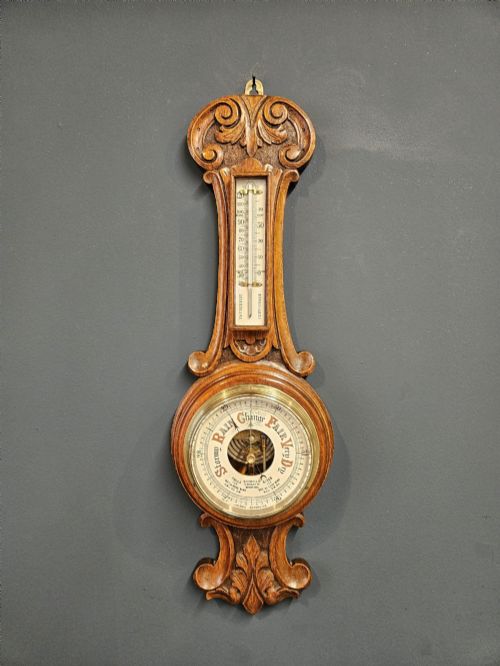
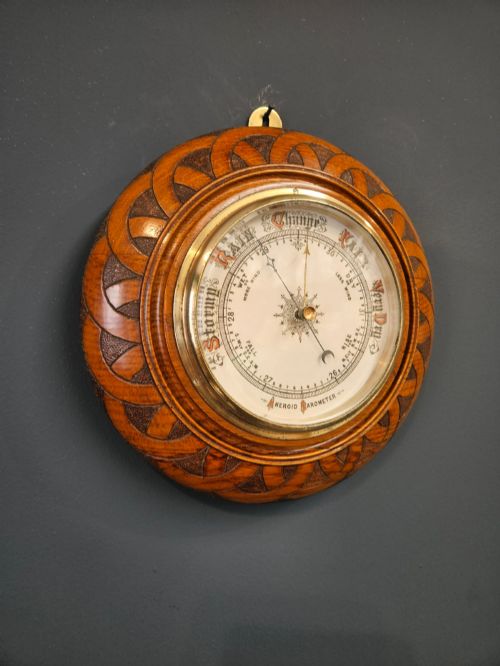
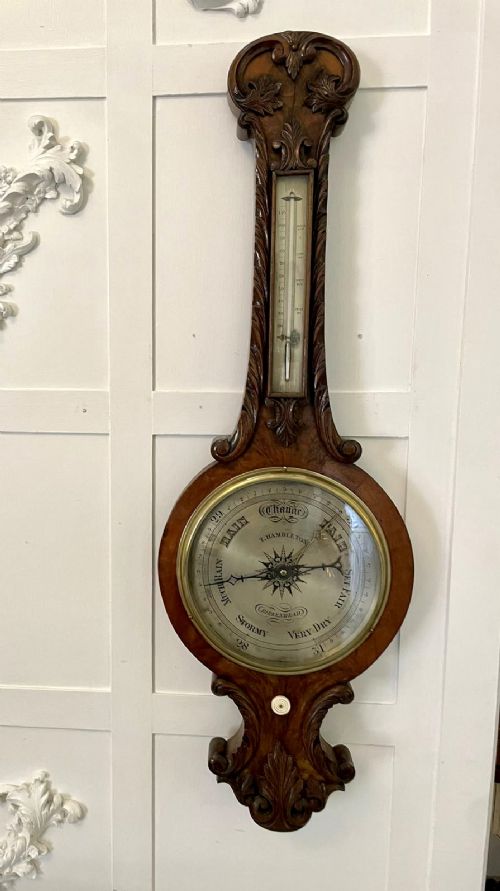
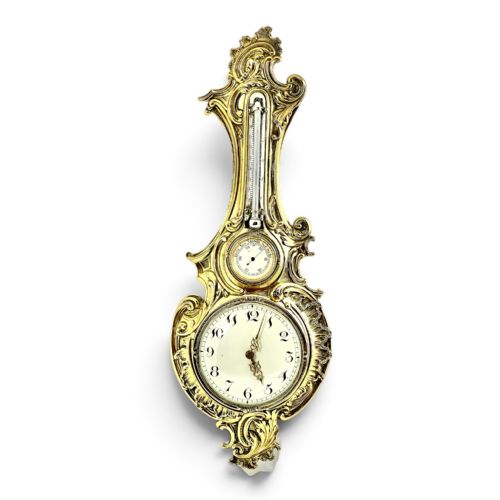
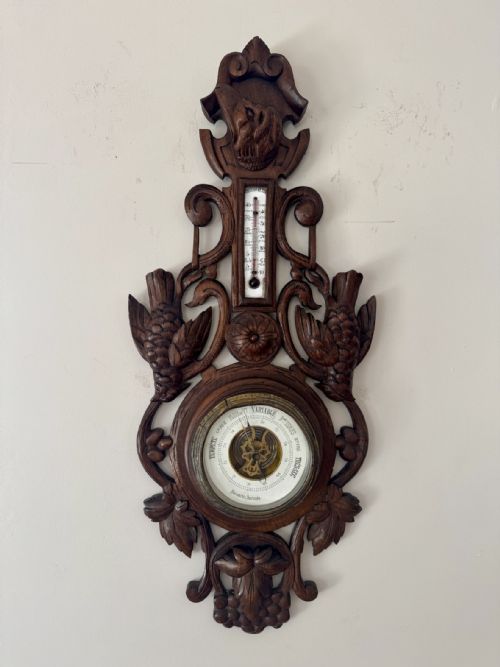
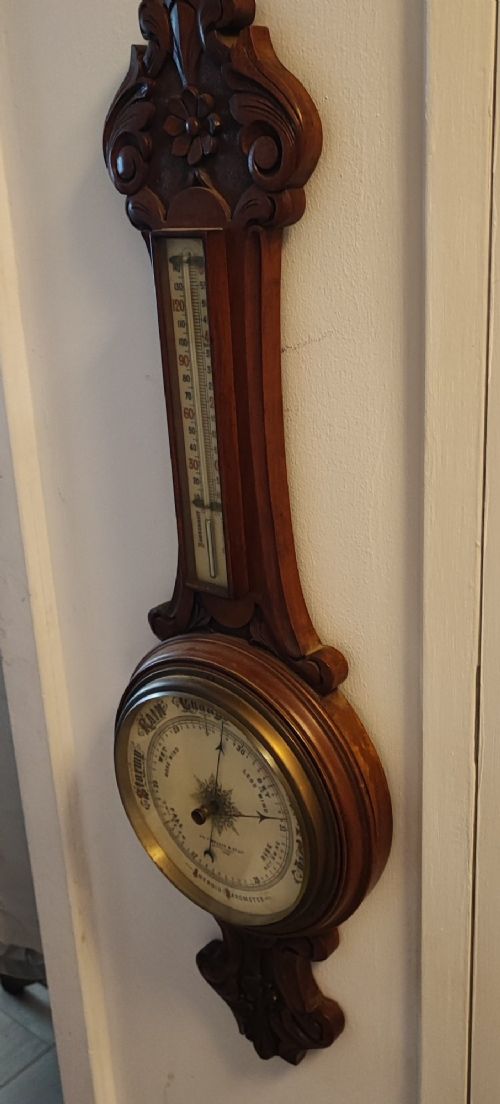
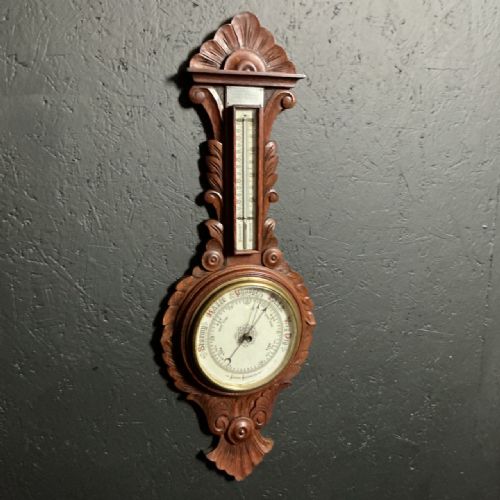
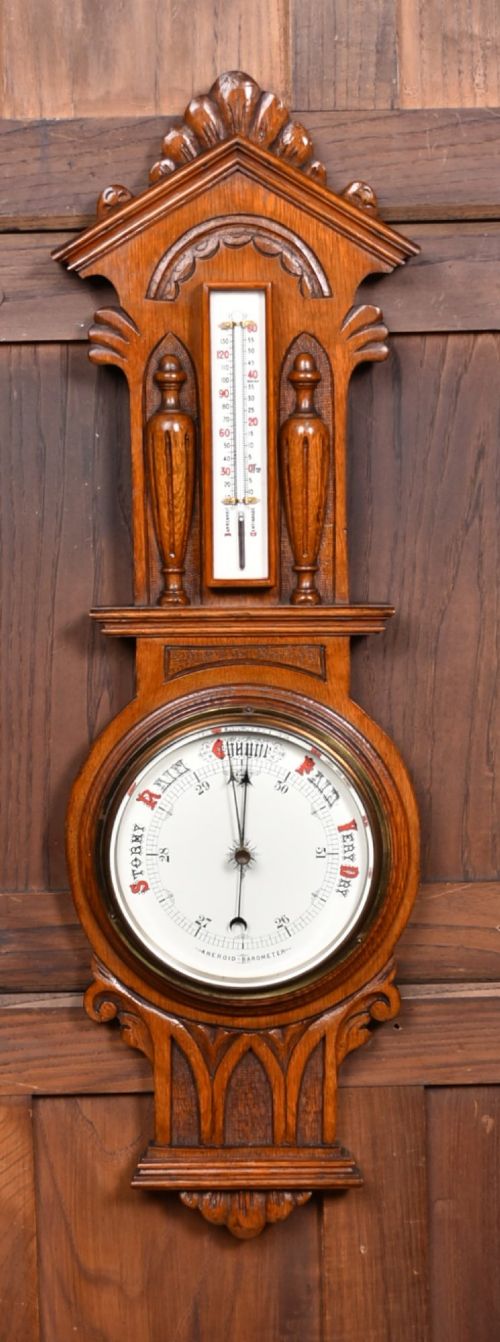
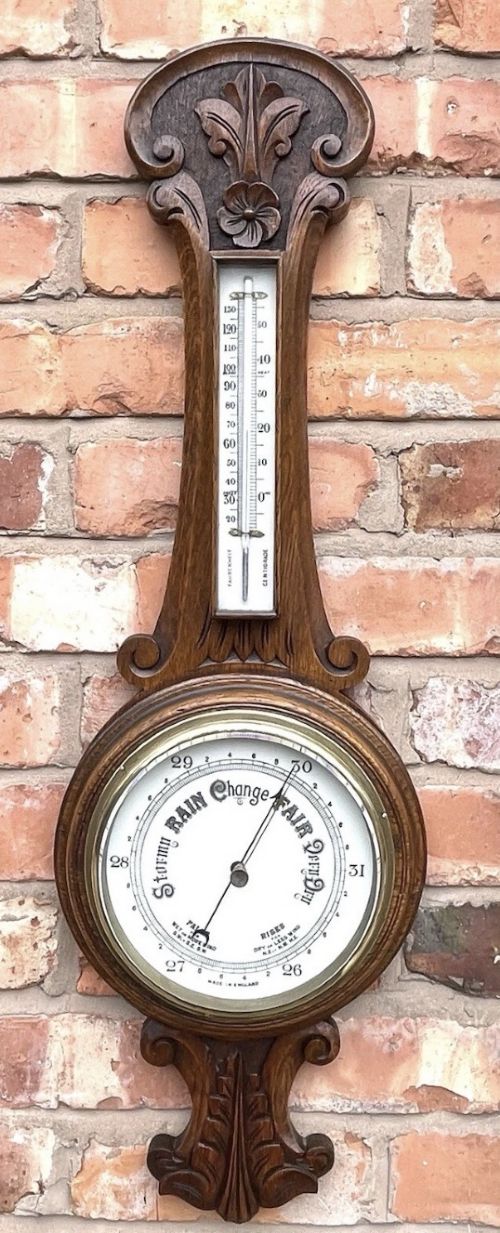
The form you'll meet most often is a carved or polished hardwood wall piece with a round dial. Oak is the defining timber, named in a quarter of all titles, with walnut second. The banjo shape accounts for 148 titles, with pendant, diamond, circular and skeletonised cases alongside. Skeletonised means the case or dial is opened up so the movement shows, and that turns up in 59 titles.
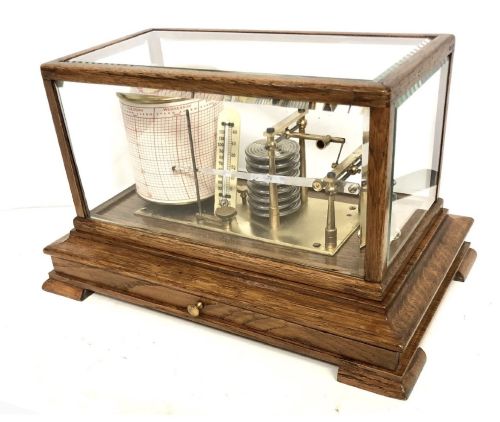
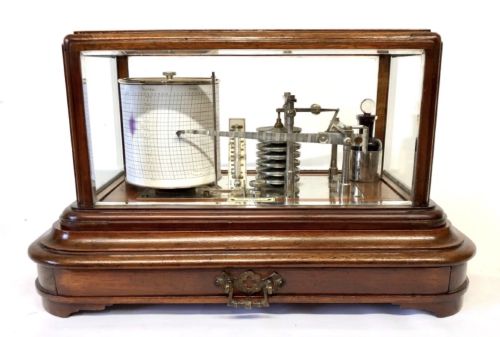
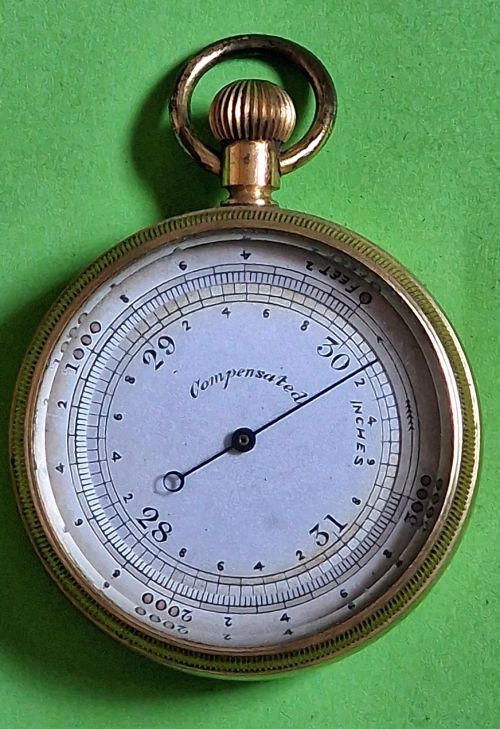
The second block is marine: brass, bronze and steel cases made for shipboard use, including flat-backed bulkhead types and rope-twist bezels. Marine appears in 181 titles, bulkhead in 45. Behind those sit smaller runs of mercury stick and wheel barometers, tall Admiral Fitzroy storm cases with their printed remarks, pocket and desk instruments, and clockwork barographs that ink a chart on a drum.
Dating is loose. Of 1,052 listings, 401 say simply "Victorian" and 593 carry a year; where a decade is given the weight falls late, with the 1880s and 1890s well ahead of the 1850s and 1860s, and a tail running into the 1900s. Read a stated decade as the dealer's estimate. Port and town names ride on the dials in quantity, London leading with 144 titles, with Liverpool, Glasgow, Hull, Cardiff, Bristol and Edinburgh among the rest.
Top And Bottom
Mechanism sets the broad shape of the range. Mercury stick barometers and the two rosewood sympiesometers in the samples sit in the upper half, and barographs sit high as well, several with chart drawers under the case. Plain carved aneroid wall pieces cluster at the very bottom, which is also where the category is most continuously supplied.
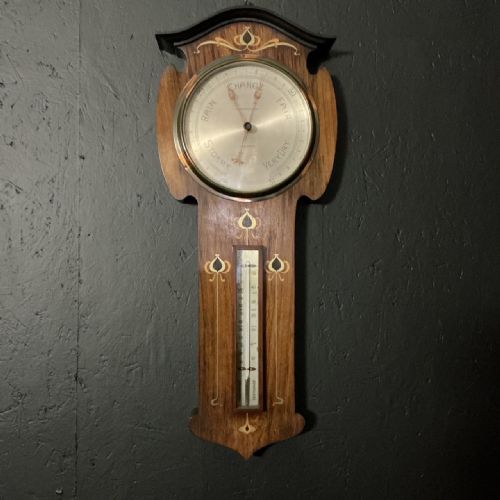
Timber and decoration do the rest of the sorting among the wall pieces. Burr walnut, rosewood, Sheraton inlay and mother-of-pearl sit high; plain turned oak and walnut sit low. Dial size follows the same direction, with quoted sizes running from a 6-inch slim mahogany banjo to a 14-inch skeletonised case, and 10 inches the size quoted most often.
The last axis is the signature. The highest-placed pieces carry a maker's or retailer's name and a town on the dial; the lowest-placed are described by timber and shape alone, with nothing on the dial to attach them to anyone.
Victorian Barometers Retail Price Guide 2026
Typical UK retail prices for victorian barometers, calculated from the Sellingantiques database of over a million retail prices indexed since 2003. This retail price guide relies exclusively on Sellingantiques data; no external sources or auction records are used, so the figures do not describe the wider market.
Negretti & Zambra is one of the names that turns up from the most dealers on Sellingantiques in this category.
Negretti & Zambra·J Hicks of London
The Victorian Barometers Glossary
- Aneroid
- Pressure read from a sealed evacuated metal capsule rather than a column of mercury. Named in 181 titles, and the mechanism behind the bulk of this category.
- Banjo
- The wall case shaped like a banjo, with a large round dial at the bottom. It appears in 148 titles, commonly in oak or walnut.
- Stick barometer
- An upright mercury column in a slender case, named in 93 titles. These sit in the upper half of the range.
- Bulkhead
- A flat-backed cased instrument made to fix against a ship's bulkhead, named in 45 titles and usually brass.
- Skeletonised
- The case or dial opened up so the movement is on show. Some dealers write it as 'visible works'; between them, 59 titles.
- Holosteric
- A trade name for a form of aneroid movement. It recurs on the brass marine cases.
Victorian Barometers: Frequently Asked Questions
Are Victorian barometers mercury or aneroid?
Overwhelmingly aneroid. The word appears in 181 titles against 19 for mercury, so the sealed-capsule instrument is what dominates this heading.
Mercury does turn up, in stick barometers and a smaller run of wheel barometers, and those cluster toward the top of the range.
What wood are the cases made from?
Oak is the defining timber, named in a quarter of all titles, with walnut second and rosewood and mahogany trailing well behind.
Carving is the usual treatment, with 134 titles calling it out and 71 specifically carved oak. Polished oak accounts for another 59.
What does 'marine' mean in these listings?
It's dealer shorthand for the shipboard types, whether flat-backed bulkhead, gimballed or plain brass-cased. Marine appears in 181 titles, bulkhead in 45.
Cases in this group are brass, bronze or steel rather than timber, and rope-twist bezels show up in 17 titles.
How accurate are the dates given?
Treat a stated decade as the dealer's estimate. Of 1,052 listings, 401 say only "Victorian" and 35 say "19th Century".
Where a year is given, the weight falls late in the reign: 198 in the 1880s and 190 in the 1890s, against 62 in the 1870s and around 40 each in the 1860s and 1850s.
A tail of 48 runs into the 1900s, with a few Edwardian and 1920s pieces carrying over.
What is an Admiral Fitzroy barometer?
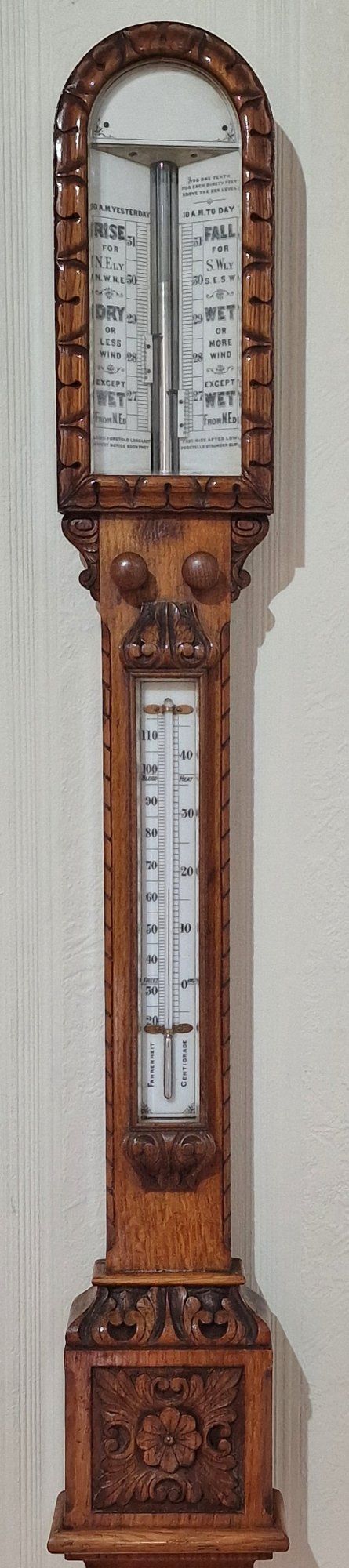
A tall glazed storm barometer with a mercury tube and printed forecasting remarks across the backboard. It appears in 29 titles, with 'Polytechnic' and 'Royal Polytechnic' variants among them.
It forms a small part of the category, well behind the carved wall aneroids.
Do unusual forms come up in this category?
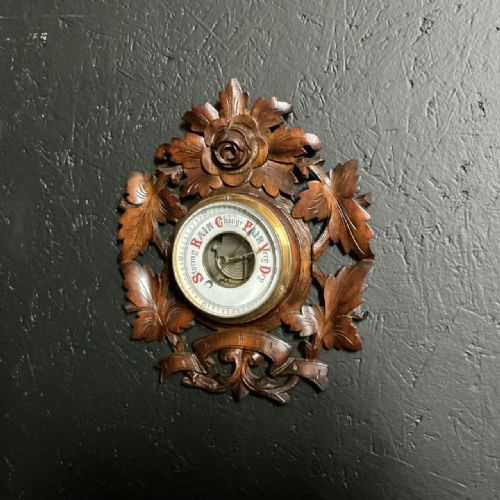
They do. The samples include a barometer hatstand, a barometer paperweight, a caduceus-shaped clock and barometer, a hypsometer and a town hall barometer.
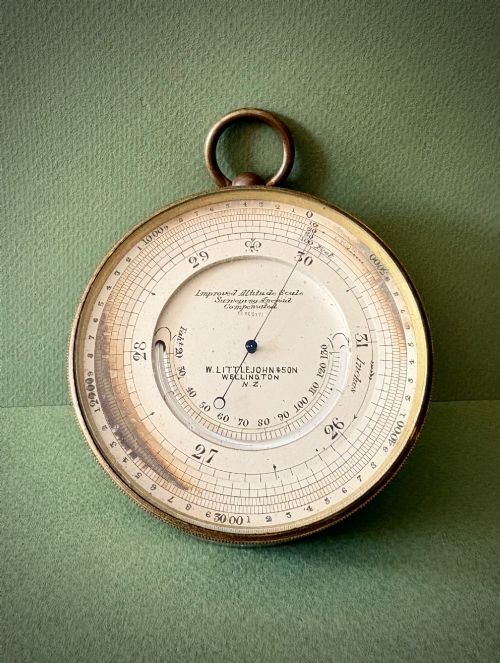
Origins outside Britain are thin on the ground: a Danish carved walnut piece, an American one, a French 'Atmos', a few Black Forest carvings and a New Zealand pocket barometer.
Sixty-nine dealers have listed in this category on Sellingantiques, and about 97 pieces reach the market in a year.