



Vintage Navigational Instrument
A vintage navigational instrument is an old scientific or maritime tool that measures position and time, offering a direct link to the history of exploration.
Vintage Navigational Instrument
When you search for a vintage navigational instrument, you encounter a specialised group of historical objects designed for finding direction, time and position at sea or on land. The selections here span the eighteenth, nineteenth and twentieth centuries, encompassing Georgian, Victorian and mid-twentieth-century periods.
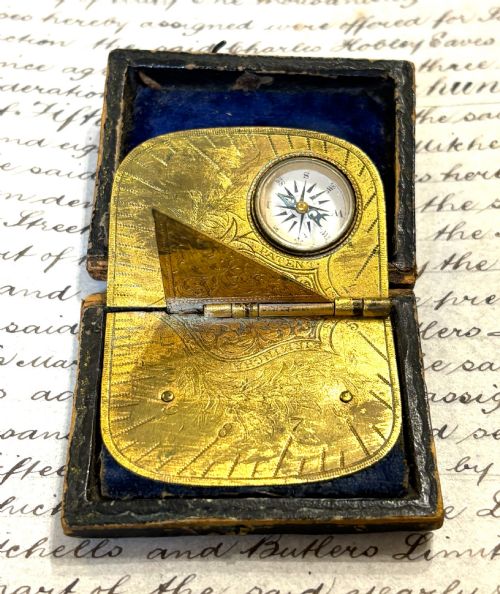
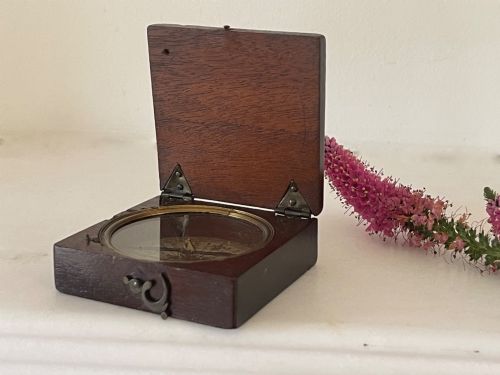
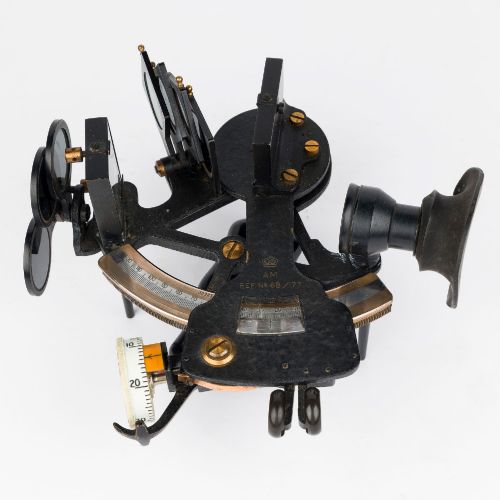
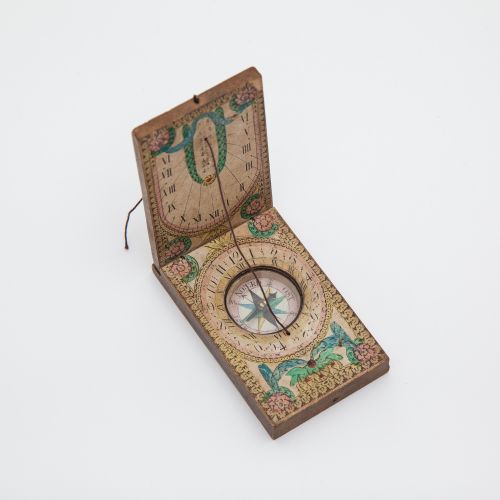
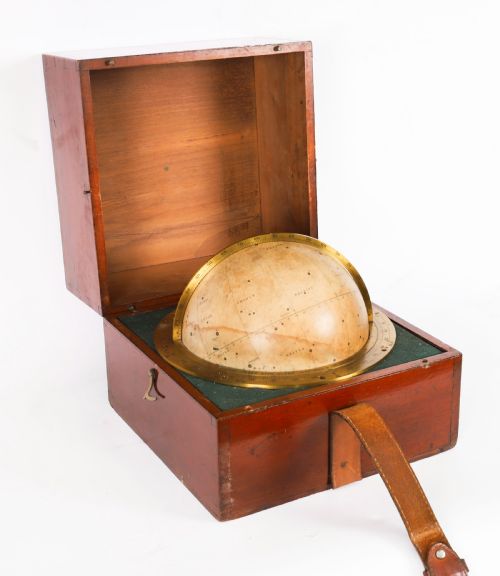
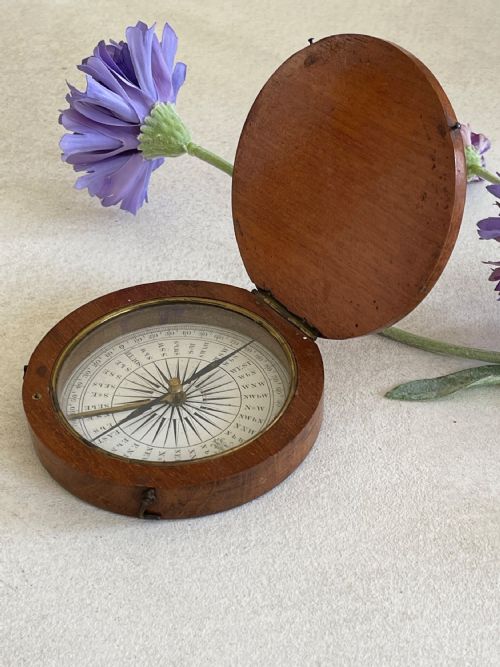
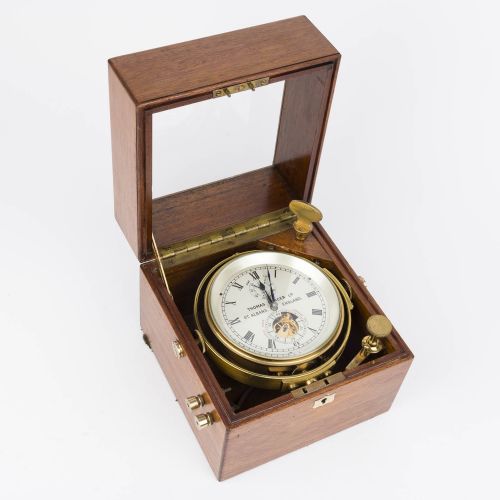
The most common forms on this page include pocket compasses, telescopes, marine chronometers, sundials and sextants. These objects range from small portable pocket sundials to substantial desk compasses and shipboard instruments.
Origins vary from British workshops to European manufacturers, reflecting a rich heritage of scientific and maritime engineering.
Materials and construction
These instruments are constructed predominantly from brass, mahogany, glass and silvered metal, often housed in fitted wooden or leather cases. Brass provides the durable structural foundation for telescopes, compasses and chronometers, frequently polished to a bright finish.
Makers integrated delicate paper dials, glass lenses and engraved silvered metal plates to display readings with precision. Ebony and cast iron also appear in specific maritime and surveying equipment.
Carpentry skills are evident in the dovetailed mahogany and wood cases designed to protect delicate mechanisms during travel.
Assessing the workmanship
Quality in these pieces is dictated by the crispness of the engraving on dials and scales, the smoothness of mechanical movements, and the integrity of the original optics and housing. Superior examples feature finely divided graduations and signed plates from renowned makers.
The choice of materials, such as heavy-gauge brass and well-figured mahogany, distinguishes finer workshop output from more utilitarian instruments. Preserved original cases and complete component sets elevate the standing of a piece within its category.
Thomas Mercer·Litherland Davies Of Liverpool·Samuel Porter·Voigtländer Sohn AG·W T Gilbert·Henri de Magnac·Elliott Bros·W H Harling·John Lilley Son·John Newman
The Vintage Navigational Instrument Glossary
- Marine chronometer
- A highly accurate timekeeper used on ships to determine longitude by observing celestial bodies.
- Sextant
- An instrument used to measure the angle between two visible objects, primarily the horizon and a celestial body, for navigation.
- Clinometer
- A tool used for measuring angles of slope, elevation or depression of an object with respect to gravity.
- Artificial horizon
- A device used in conjunction with a sextant to determine the altitude of a celestial body when the natural horizon is obscured.
- Barocyclonometer
- A specialised barometer designed in the early twentieth century to detect the approach of tropical cyclones.
Vintage Navigational Instrument: Frequently Asked Questions
How do I date an old compass?
Dating relies on stylistic details, materials, typography on the dial and signatures from makers whose active dates are recorded. Comparing the construction style to dated pieces from the same period helps narrow down the decade.
Researching the specific workshop or patent details listed on the instrument provides further historical context and confirmation of its age.
Can these instruments still be used for navigation?
While many mechanical instruments like compasses and sundials remain functional, they are primarily collected and displayed as historical artefacts rather than relied upon for modern navigation.
Precision instruments require professional calibration and maintenance to ensure accuracy against contemporary standards.
How should I display a marine chronometer?
Marine chronometers are best displayed in stable environments away from direct sunlight and extreme temperature fluctuations, which can affect the delicate movement. Many are housed in their original gimbaled mahogany boxes, designed to keep the clock level aboard a rolling ship.
Placing them on a secure desk or shelf allows the fitted glass lid to protect the mechanism while remaining visible for appreciation.