


Antique Maritime Compass
These antique maritime compass instruments offer genuine navigation history, bringing brass, mahogany, and paper dials together for collectors and maritime enthusiasts.
Antique Maritime Compass
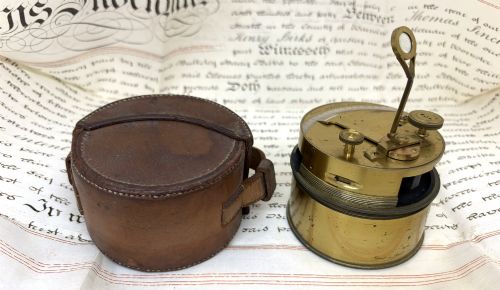
An antique maritime compass is a navigational instrument designed for orientation at sea, taking forms such as pocket compasses, travelling explorers models, and large desk or binnacle instruments. When searching for an antique maritime compass, buyers encounter pieces originating from the eighteenth and nineteenth centuries, spanning Georgian and Victorian periods.
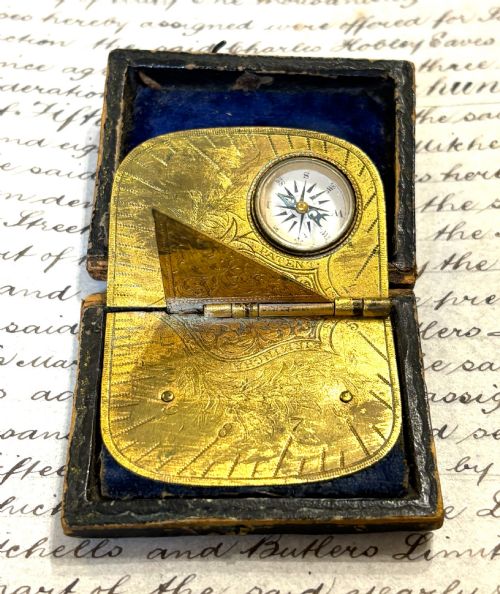
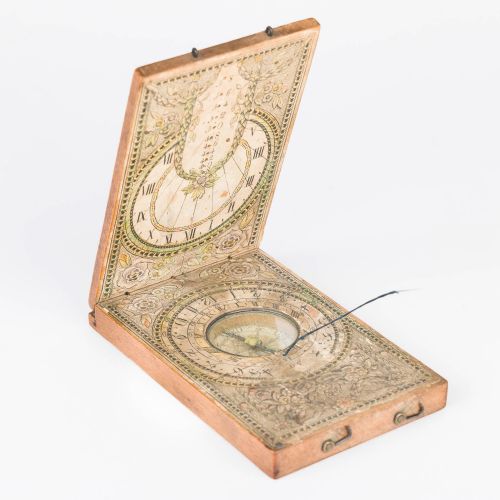
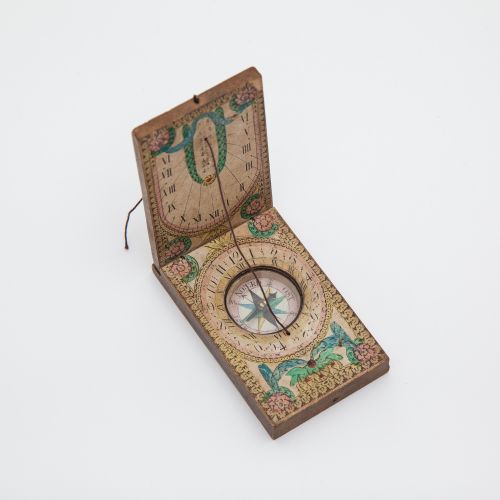
The selection frequently includes pocket sundials combined with compasses, portable diptych-dial formats, and cased circular instruments in wood and brass. Makers and regional origins include English workshops, with London firms appearing alongside uncredited folk art and utilitarian nautical pieces.
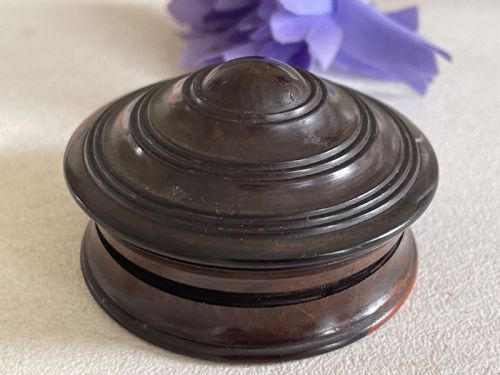
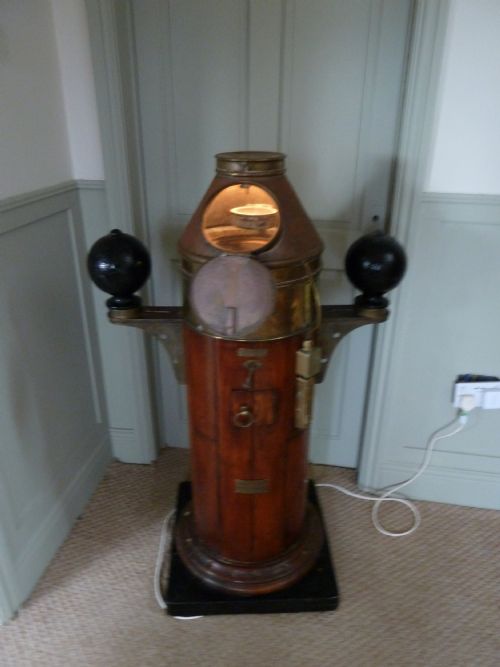
Beyond standard scientific instruments, related nautical objects such as sailors arms bowls and ships binnacles occasionally appear within the broader category. Most examples date from the nineteenth century, though eighteenth-century survivals emerge in diptych and portable formats.
Materials and construction
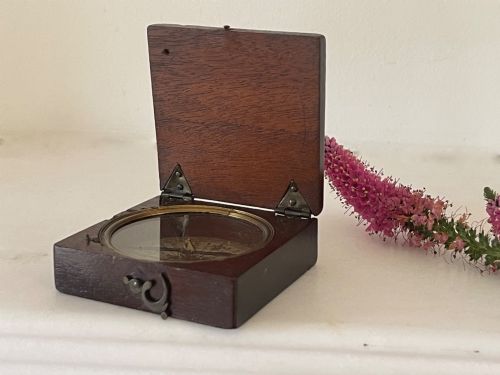
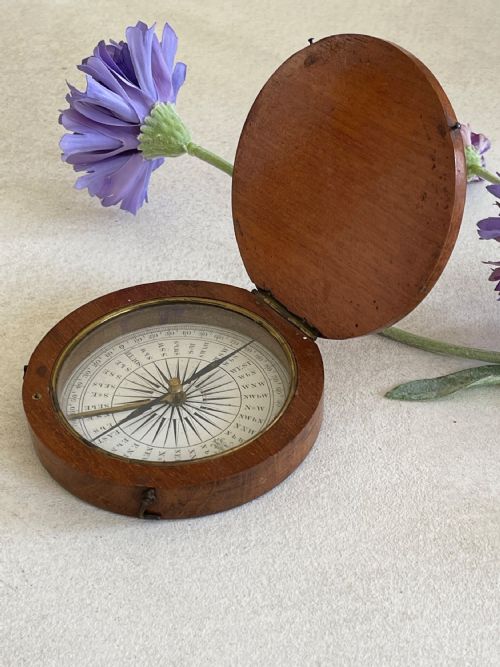
The construction of an antique maritime compass relies heavily on turned brass for the bezels, gimbals, and inner housing, paired with protective glass to shield the delicate paper dials. Cases are fashioned from dense hardwoods such as mahogany and oak, occasionally featuring treen or fitted compartments lined with velvet and leatherette.
Dials are typically printed on paper, featuring hand-inked wind rose details and directional markers calibrated by period instrument makers. Portable units integrate folding brass gnomons and hinges for diptych sundials, securing tightly into custom wooden boxes designed to withstand travel.
Some pocket compasses double as sundials, forcing sailors to hope for sunshine before checking which way is north.
Factors of quality
Quality in an antique maritime compass rests on the clarity and completeness of the original paper dial and the precision of the brass work. Examples signed by known makers command attention through finer engraving and more rigorous mechanical execution.
The preservation of the housing, whether a mahogany box or a heavy desk mount, heavily influences desirability. Original glass, intact needle balancing, and functioning sundial components separate standard utilitarian pieces from high-grade scientific instruments.
Baker, London·Samuel Porter·Stanley, London·Sir William Thomson Lord Kelvin
The Antique Maritime Compass Glossary
- Binnacle
- A waist-high case on a ship holding a ship's compass and lighting to protect it from weather and iron interference.
- Dry Card Compass
- A navigation compass where the directional card balances on a pivot without liquid dampening.
- Diptych-dial
- A portable pocket sundial formed of two hinged leaves containing a compass and a string gnomon.
- Treen
- Small handmade wooden domestic objects and scientific items turned on a lathe.
- Theodolite
- A precision optical instrument used for measuring angles in surveying and navigation.
Antique Maritime Compass: Frequently Asked Questions
How do I date an antique maritime compass?
Dating relies on stylistic markers, materials, and mechanical conventions seen across Georgian and Victorian periods. Paper dial typography and case construction often provide clues to the decade of manufacture.
Signed pieces by makers such as London firms offer tighter chronological windows through historical records. Unsigned folk art or utilitarian pieces are attributed more broadly by their century and timber usage.
Were these compasses used on actual ships?
Many examples served utilitarian functions aboard vessels, ranging from pocket instruments for navigators to large binnacles mounted on deck. Sturdy mahogany cases and brass gimbals protected the delicate internal needles from the constant motion of the sea.
Other formats, such as diptych sundials and desk compasses, were intended for land travel, scientific study, or domestic display. The presence of secondary sundial components points towards multipurpose use by explorers and travellers.
How should I display a cased compass?
Cased pieces in mahogany or oak display well on desks or tables where the fitted interior and paper dial remain visible. Keeping the instrument away from direct sunlight protects the delicate paper and leatherette or velvet linings from fading.
Larger items like desk compasses or binnacles anchor a room as standalone maritime artefacts. Ensuring a stable surface protects the delicate balance of the internal gimbals and needle.