


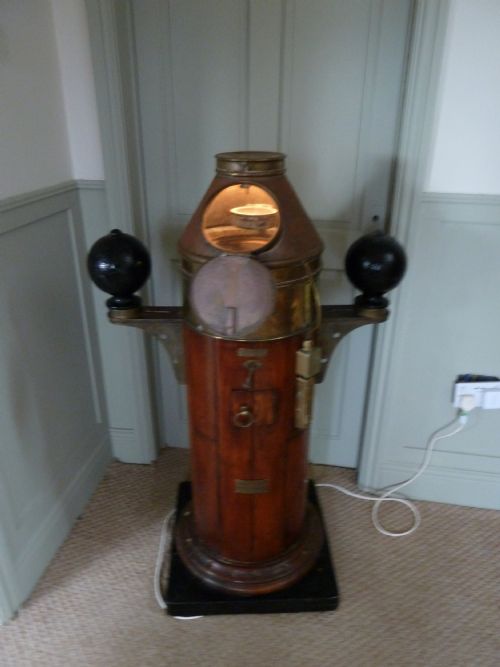


Vintage Brass Compass
These vintage brass compass instruments are precision navigation tools designed for reliable orientation, offering tangible links to historical exploration.
Vintage Brass Compass
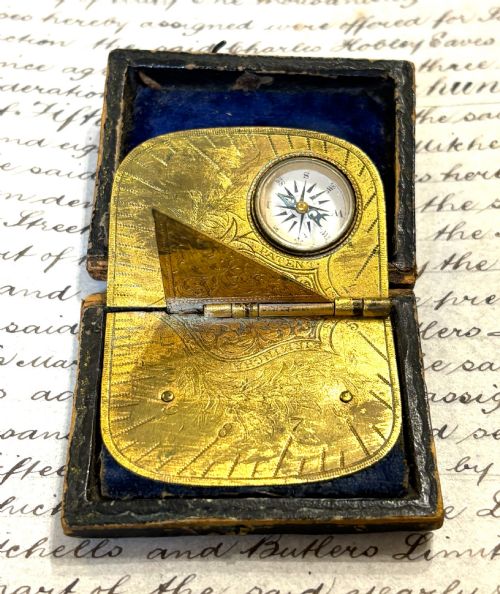
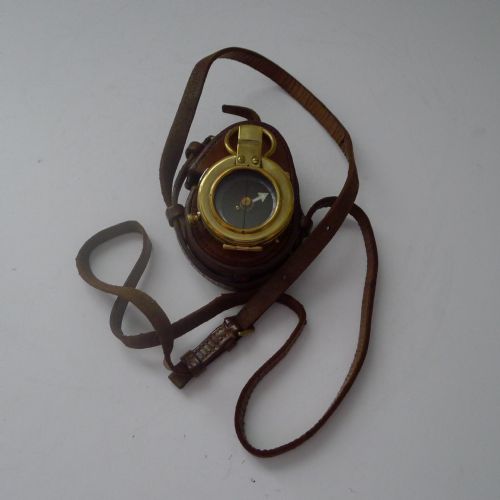
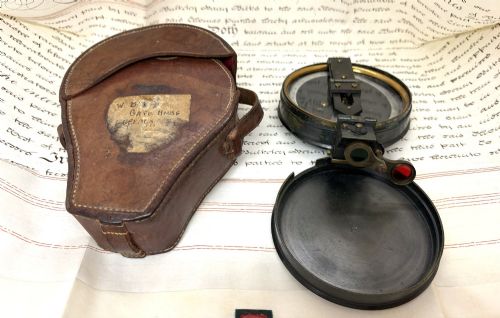
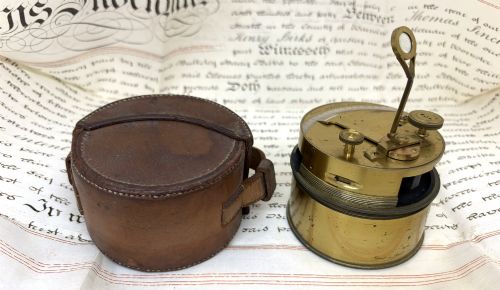
Makers housed these instruments in fitted leather cases, wooden boxes, or paired them with paper dials and silvered metal details. Examples span military issues from the First World War to domestic desk accessories and pocket sundials.
How they were made
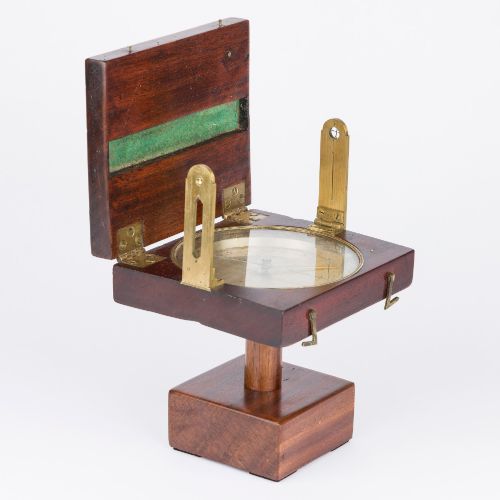
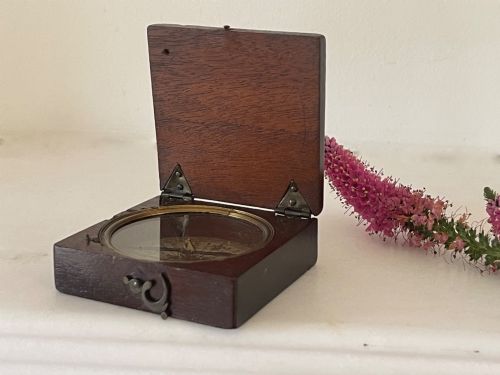
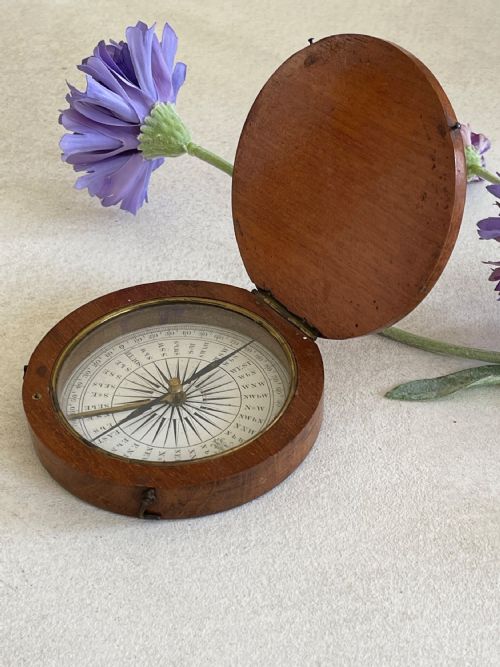
Craftsmen built these items primarily using turned brass, cast bronze, and polished timber cases such as mahogany or boxwood. Glass protected the delicate interior dials while leather and velvet lined the bespoke travelling cases.
Workshops applied silvered metal to the indicator rings and used paper for the directional cards, ensuring legibility in field conditions. Mechanics assembled these components with precise hinges, folding sights, and locking mechanisms for transit.
Listings span the nineteenth and early twentieth centuries, featuring instruments constructed from brass, mahogany, glass, and leather.
What varies in quality
Quality rests upon the precision of the mechanical graduation, the clarity of the engraved maker details, and the integrity of the original housing. Finer examples retain their original leather or wooden travelling boxes and retain clear silvering on the metal dials.
Pieces produced by documented makers exhibit superior finishing in the needle balance and joint tolerances compared to unsigned utilitarian alternatives. The grade of the timber casing and the presence of auxiliary instruments like clinometers further distinguish the tier of the piece.
French Ltd·P. Orr, Madras·Baker, London·W&S Jones·Alfred Apps·Stanley, London·John Newman·R. Field & Son
The Vintage Brass Compass Glossary
- Prismatic compass
- A portable directional instrument that allows the user to take a bearing and read the card simultaneously through a prism.
- Theodolite
- A precision optical instrument used for measuring angles in horizontal and vertical planes during surveying work.
- Binnacle
- A navigational housing designed to secure a compass aboard a ship, isolating it from iron interference.
- Clinometer
- An instrument used for measuring angles of slope or inclination relative to gravity.
- Diptych-dial
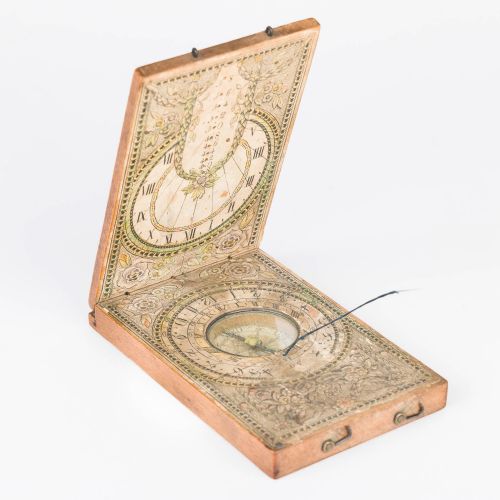
- A small hinged folding portable sundial often incorporating a miniature compass.
Vintage Brass Compass: Frequently Asked Questions
Are these compasses still accurate today?
Many surviving instruments retain functional magnetic needles and balanced bearings, though minor deviations occur due to magnetic pole shifts over the centuries. They function adequately for general direction finding rather than precise modern navigation.
Keep them away from strong local magnetic fields and heavy steel objects to preserve the sensitivity of the internal needle pivot.
How were military compasses used?
Officers and engineers utilised pattern instruments during the First World War and earlier campaigns for map reading, artillery spotting, and terrain mapping. The prismatic design enabled rapid, accurate field sightings under active conditions.
Dating inscriptions and military broad arrow marks often appear engraved directly onto the protective brass housing or the interior lid.
How should I clean the brass case?
Maintain the surface by dusting with a soft dry cloth and avoiding abrasive metal polishes that strip away historical patination. Natural oils from handling will darken the metal gradually over time.
Preserve the integrity of painted dials, paper cards, and fitted velvet linings by keeping moisture away from the interior mechanics.