




Brass Pocket Compass
A brass pocket compass is a dependable navigational instrument and scientific tool that collectors prize for its combination of precision engineering and portable history.
Brass Pocket Compass
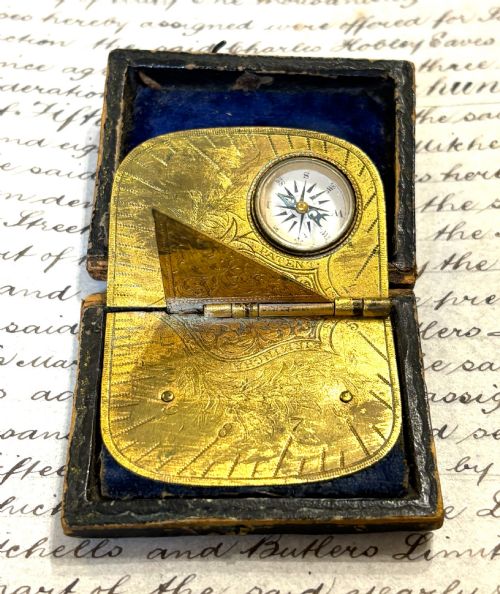
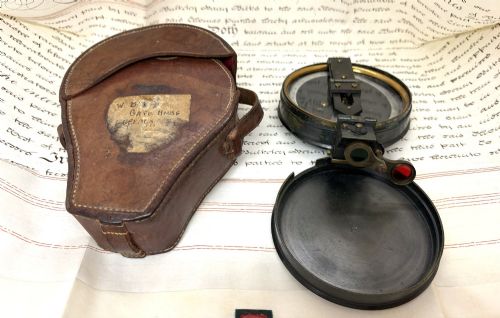
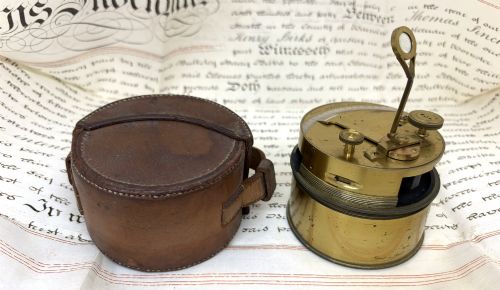
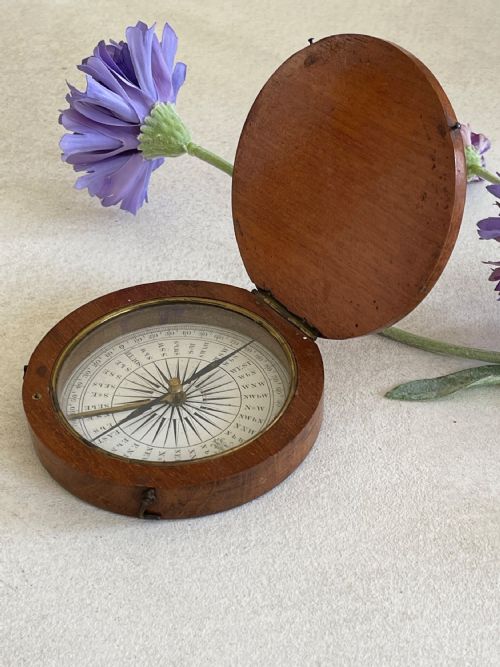
A brass pocket compass bridges practical navigation and scientific craftsmanship, with origins spanning the Georgian era, Victorian period, and First World War. You will frequently encounter robust brass cases housing floating cards, sundials, or prismatic survey needles.
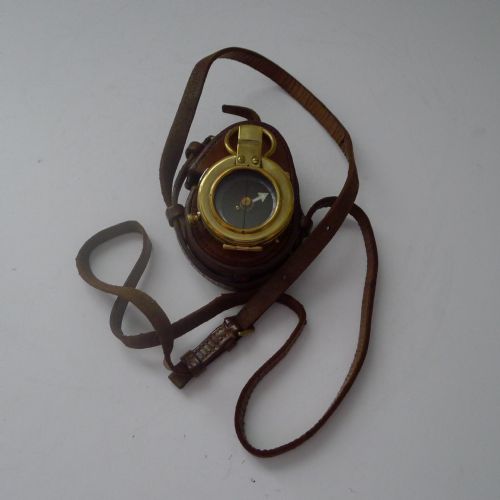
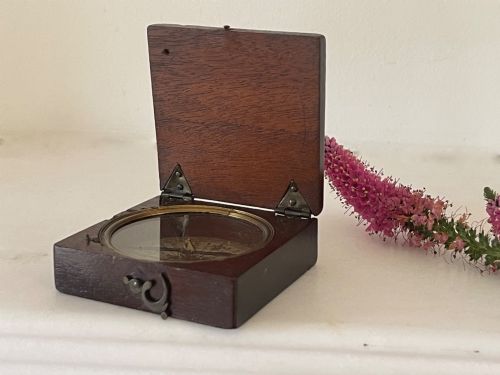
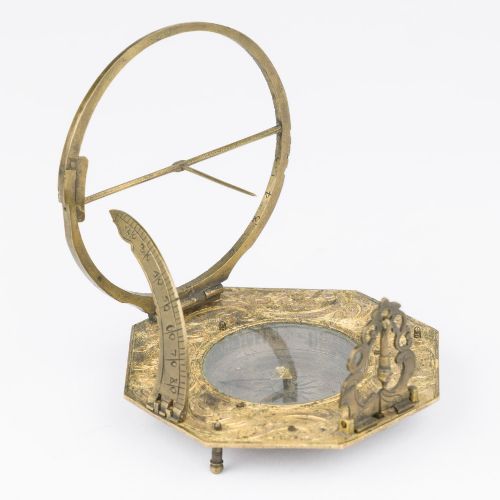
The selection ranges from simple travelling explorers' instruments in mahogany cases to military-issued Verner's patterns and elaborate Augsburg dials. These navigational items reflect the specific demands of maritime, military, and overland travel across two centuries.
Materials and construction methods
Makers utilised heavy brass for durability, protecting the delicate internal needles and glass faces of these portable instruments. Fitted wooden cases in mahogany often included internal velvet or paper linings to secure the device during transit.
Engraved paper dials and steel components completed the movement, while leather and leatherette provided outer protection for military and civilian pocket models alike.
The evidence records instruments spanning the Georgian era, the nineteenth century, and First World War military deployment.
Factors that distinguish individual examples
The reputation of the maker and the legibility of the engraved dial or compass card heavily influence the standing of an instrument. Signed examples from noted workshops demonstrate superior finishing on the brass casing and more precise needle movement.
The survival of fitted wooden transport boxes, original glass covers, and intact leather outer cases elevates the completeness of a piece. Instruments retaining clear military provenance or complex scientific attachments display a higher degree of historical interest.
French Ltd.·P. Orr, Madras·Baker, London·Andreas Vogler·Alfred Apps·Stanley, London·Watkins·J Hicks·Short & Mason Ltd., London·Barker and Sons·Francis Barker, London
The Brass Pocket Compass Glossary
- Prismatic compass
- A navigational instrument that allows the user to take a bearing and read the card simultaneously through a folding prism. This design became standard for military mapping.
- Floating card
- A paper or card dial balanced on a central pivot that moves freely beneath the glass cover to indicate magnetic north. It provides a stable reading compared to a needle alone.
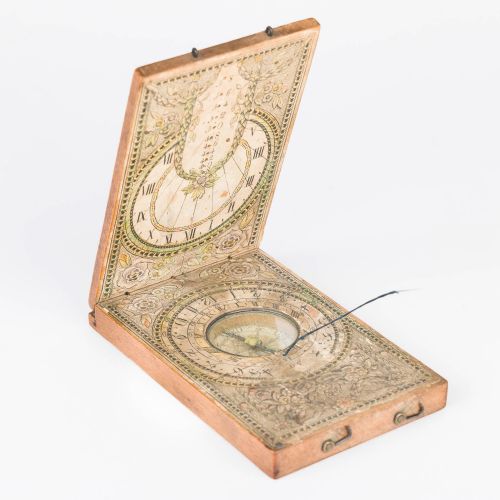
- Diptych-dial
- A portable folding sundial incorporating an integrated compass, often hinged in two sections. It permitted time-keeping and orientation simultaneously in the field.
- Verner's pattern
- A specific military pocket compass design widely issued to British Army officers during the First World War. It combined rugged brass construction with sighting mechanisms.
- Theodolite
- A precision scientific instrument utilising a telescope and graduated circles mounted on a brass base for measuring horizontal and vertical angles. These instruments served advanced surveying work.
Brass Pocket Compass: Frequently Asked Questions
How do I date a brass pocket compass?
Examine the typography on the dial, the style of the brass case, and any maker inscriptions. Patents or military broad arrows often narrow the production era to specific decades.
Signed pieces linked to recorded London workshops or specific historical regiments provide a clearer chronological anchor.
Did these compasses always point true north?
They indicate magnetic north rather than true geographic north, a distinction vital for accurate navigation. Users had to factor in local magnetic declination.
Many period surveying instruments included adjustments or folding sights to help calculate accurate bearings in the field.
How should I store and display a pocket compass?
Keep the instrument in a stable environment away from excessive moisture and strong magnetic fields to protect the internal pivot and needle. Displaying them in their original mahogany boxes or leather cases preserves their context.
Avoid direct, prolonged sunlight to prevent fading on paper dials and degradation of internal velvet linings.