


Antique Compass
These antique compass pieces are precise scientific and navigational instruments forged from brass, glass, and mahogany to guide travellers across land and sea.
Antique Compass
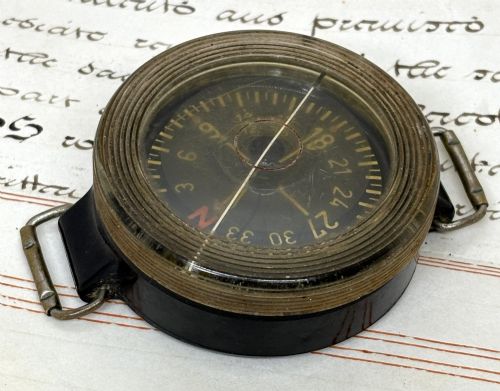
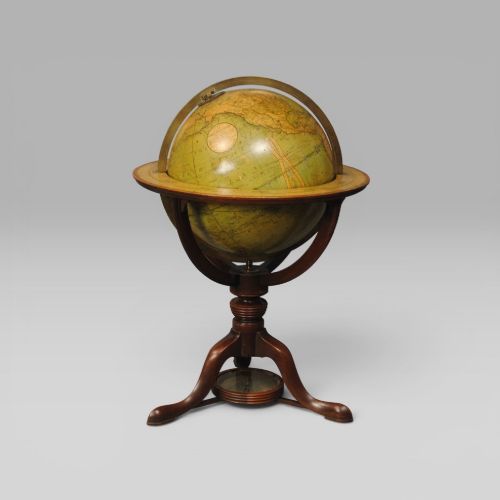
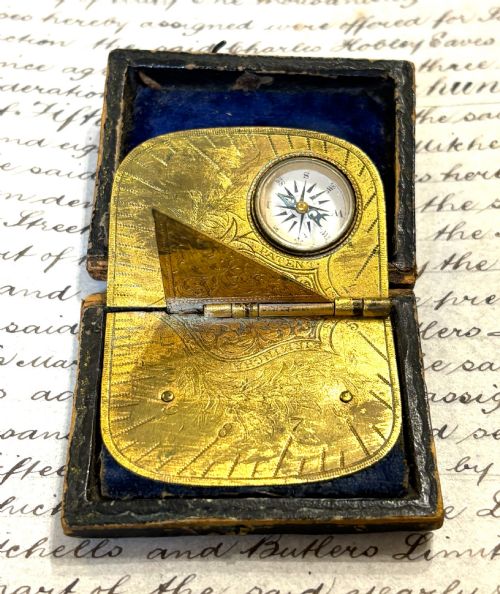
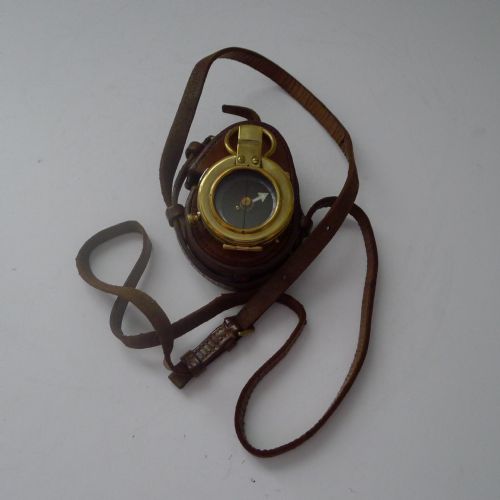
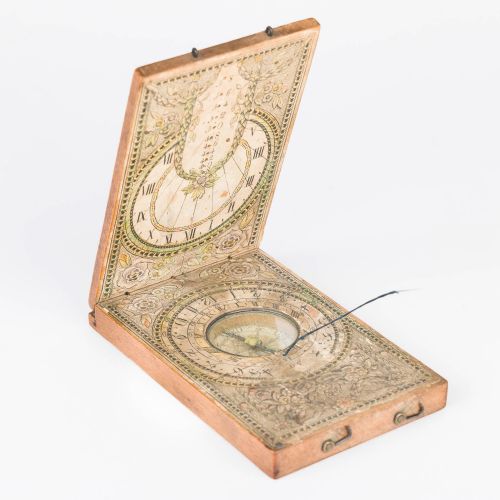
An antique compass encompasses pocket-sized fobs, surveying instruments, and military-issued gear originating predominantly from the nineteenth and early twentieth centuries. Collectors encounter brass pocket watches, diptych sundials, and mahogany-cased instruments alongside novelty maritime pieces.
The material record spans the Georgian, Victorian, and Edwardian eras, with pieces linked to specific military campaigns, naval navigation, and domestic scientific pursuits. Items range from simple pocket compasses to large desk models and complex theodolites.
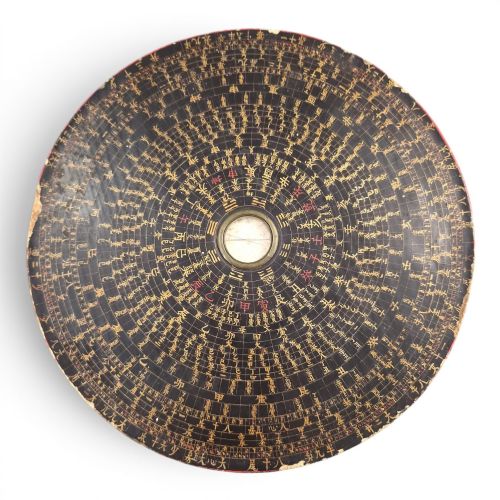
Makers recorded in the evidence include London instrument houses, provincial surveyors, and international workshops producing items such as the Luopan geomantic compass or Verner's pattern military issues. These pieces reflect the technological demands of their respective periods.
Materials and construction
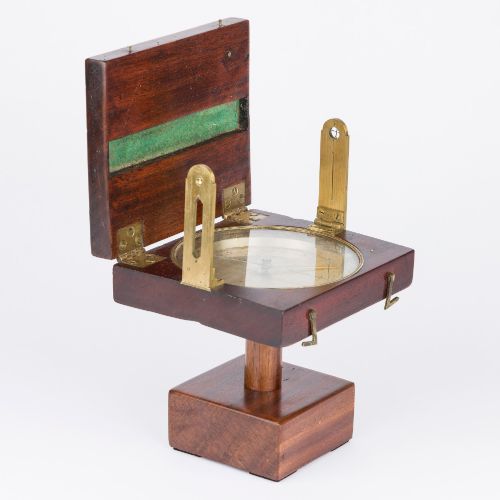
Construction relies heavily on cast and turned brass, paired with glass faces protecting paper dials and silvered metal indicators. Mahogany and other woods provide the housing for cased compasses and larger portable instruments, often lined with velvet.
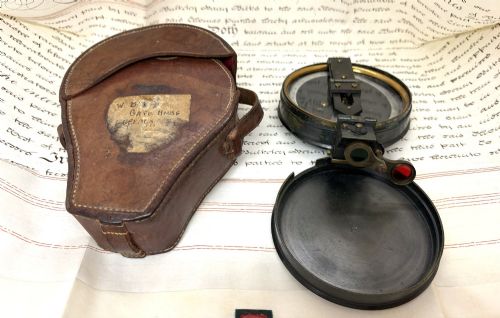
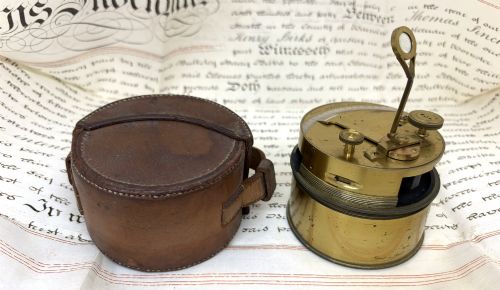
Makers utilised precision engraving for dial faces and compass cards, integrating components like spirit levels, sundials, and gimbals. Leather cases and fitted wooden boxes protected these delicate mechanisms during travel.
The material record for this phrase demonstrates extensive use of brass, mahogany, and paper across the nineteenth and early twentieth centuries.
Evaluating quality and execution
Quality rests upon the clarity of the engraved paper or silvered dial, the integrity of the glass, and the smooth operation of needle locks and gimbals. Signed pieces by established makers carry greater documentary weight than unsigned equivalents.
The finish of the brasswork, the precision of the division marks, and the survival of original fitted wooden or leather cases separate standard utility pieces from exceptional scientific instruments.
Cary London·French Ltd·G Davis of Leeds·P Orr Madras·Baker London·Andreas Vogler·W S Jones·Alfred Apps·Samuel Porter·Malby·Stanley London·John Newman·R Field Son Birmingham
The Antique Compass Glossary
- Binnacle
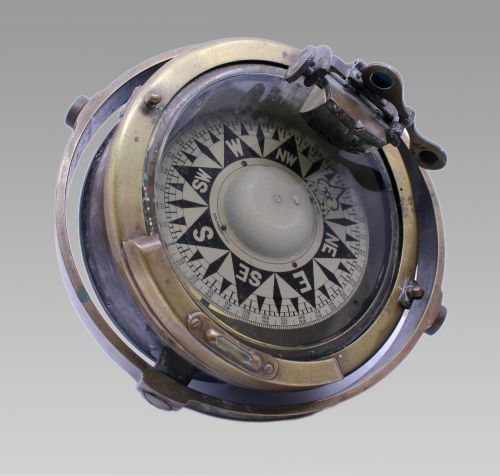
- A navigational housing designed to hold a ship's compass steady upon the deck. It protects the instrument from maritime conditions.
- Theodolite
- A precision optical instrument used for measuring angles in horizontal and vertical planes during surveying. It frequently incorporates magnetic compasses.
- Diurnal
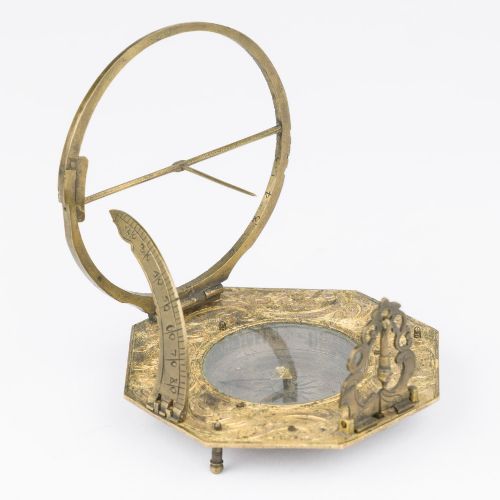
- A portable folding sundial often combined with a compass for travellers. These pieces date from the eighteenth and nineteenth centuries.
- Gimbal
- A pivoted ring system that allows a compass to remain horizontal despite the motion of a ship or carriage. This mechanism ensures accurate readings in transit.
- Beam compass
- A drafting instrument consisting of a bar with sliding points used for drawing large circles. It appears in technical and cartographic contexts.
Antique Compass: Frequently Asked Questions
Are these compasses still accurate?
While many retain functional needles and legible dials, magnetic anomalies and age can affect their precision. They are collected primarily as historical scientific instruments rather than reliable navigational tools.
Handling them requires care to protect fragile glass covers and delicate internal pivots. Most owners display them as decorative or historical objects.
What is a pocket fob compass?
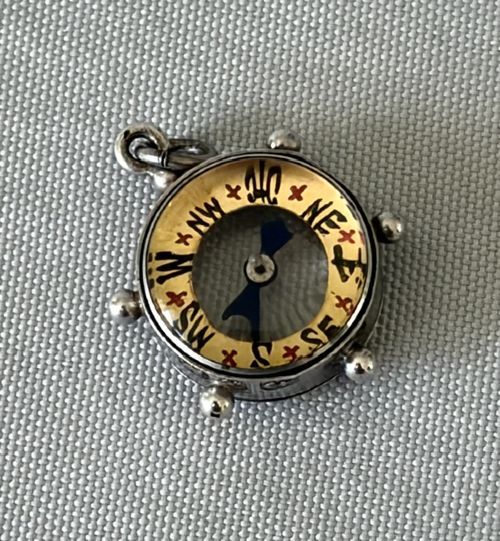
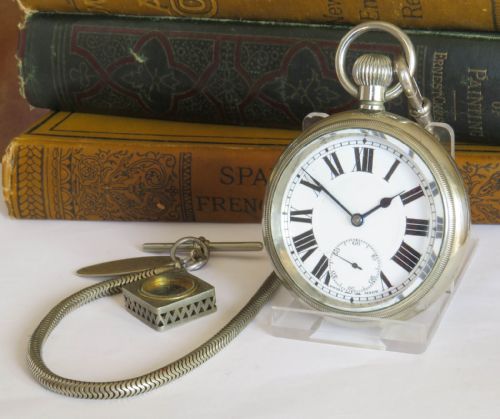
A pocket fob compass is a miniature directional instrument designed to attach to a watch chain or albert. Victorian examples often incorporated novelty designs like ships wheels or pocket watch pairings.
These pieces combined personal ornamentation with functional utility for gentlemen of the period. They showcase fine miniature metalwork and glass-fronted dials.
Why do some compasses include sundials?
Combining a compass with a sundial created a self-contained portable timekeeping and navigation kit for travellers before reliable pocket watches became universal. Diptych and Butterfield types allowed users to determine both time and orientation.
These combination instruments required adjustment for latitude and magnetic declination. They represent the crossover between cartography, horology, and domestic science.