




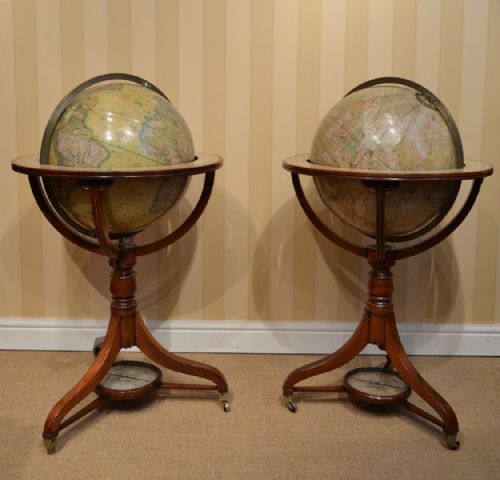


19th Century Compass
A 19th century compass is a precision instrument of navigation and science, offering tactile connection to historical exploration.
19th Century Compass
When you examine a 19th century compass on this page, you encounter diverse forms ranging from pocket sundials and desk instruments to surveyors' tools and marine binnacles. These pieces span periods including Georgian, William IV, and Victorian eras, reflecting the immense scientific and maritime expansion of the epoch.
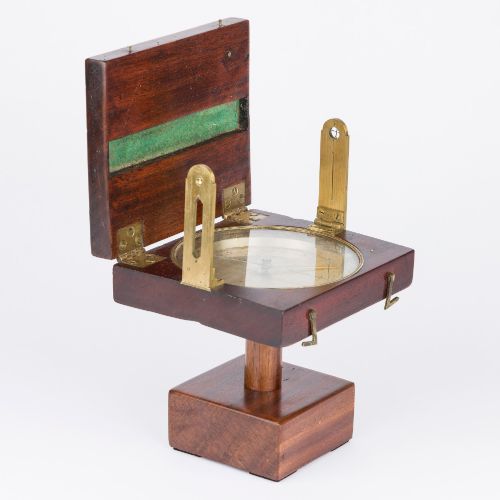
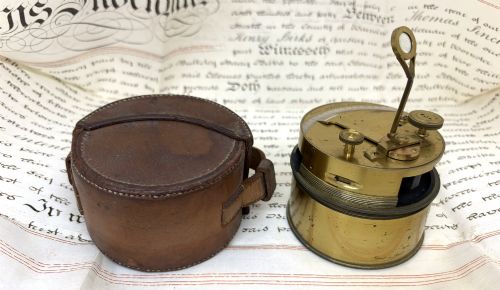
The version you are most likely to meet here is a portable pocket compass housed in wood, treen, or leather, alongside desk-mounted examples and scientific instruments. Alongside dedicated directional tools, the selection incorporates occasional tables featuring inlaid compass roses and decorative objects linked to maritime heritage.
Materials and construction
Makers constructed these instruments using durable metals such as brass and silvered metal for dials and inner mechanics, paired with protective casings of mahogany, oak, boxwood, and treen. Glass protected the delicate needle and graduated paper cards, while leather frequently provided sturdy housing for portable field equipment.
Joinery and metalworking techniques demonstrate precision fitting, from the housing of delicate gimbals to the fine engraving on paper dial faces. Woodworking methods utilised by cabinetmakers yielded fitted cases and specialised occasional tables, integrating practical utility with decorative cabinetwork.
Early explorers relied on tiny pocket compasses housed in turned treen to keep their bearings while traversing uncharted Victorian landscapes.
Assessing quality and execution
The distinction between standard production and superior work lies in the legibility of the engraved dial, the precision of the needle movement, and the quality of the surrounding cabinetry. Signed instruments bearing identifiable maker details command attention for their documented provenance and superior optical or navigational grading.
Materials dictate upper tiers of execution, where heavy brass housings, solid rosewood or mahogany cases, and crisp silvered metal scales indicate workshop proficiency. Lesser examples rely on simplified wooden turnings or plain paper cards without intricate graduations.
G. Davis of Leeds·Baker, London·W&S Jones·Alfred Apps·Thomas Malby·John Newman
The 19th Century Compass Glossary
- Binnacle
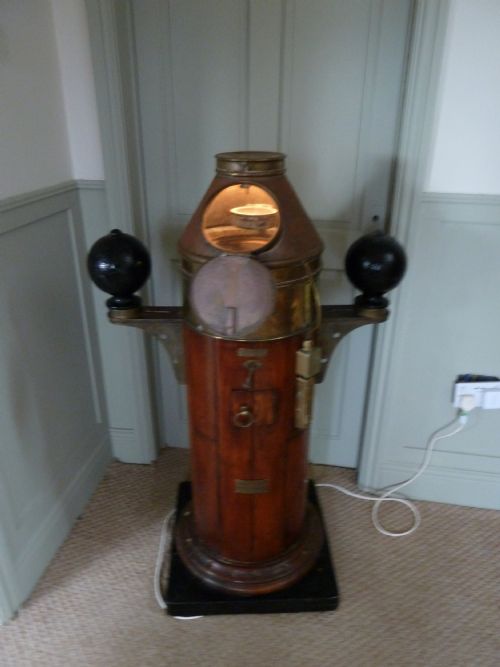
- A navigational housing designed to hold a ship's compass securely on deck. It protected the instrument from the elements and iron interference.
- Theodolite
- A precision optical instrument used for measuring angles in horizontal and vertical planes. It frequently incorporated integrated compass needles for surveying.
- Treen
- Small handmade wooden objects produced by turning or carving. Pocket compasses were often housed in turned treen containers.
- Galvanometer
- An electromechanical instrument used for detecting and measuring electric current. Victorian examples sometimes paired electrical measurement with compass integration.
- Gimbal
- A pivoted support ring that allows a compass to remain horizontal despite the motion of a ship. This mechanism ensures accurate readings at sea.
19th Century Compass: Frequently Asked Questions
How do I use a pocket compass?
Pocket versions from this period rely on a magnetic needle suspended over a paper or silvered metal card, balanced to find magnetic north. Opening the lid or releasing the needle stop allows the mechanism to swing freely.
Modern magnetic interference and historical wear mean these pieces serve primarily as decorative collector items rather than reliable navigation tools for modern hiking.
Were all of these used at sea?
While maritime examples like ships binnacles and nautical compasses served naval and merchant vessels, many pieces served entirely terrestrial functions. Surveyors, engineers, and travellers utilised theodolites, clinometers, and desk compasses on land.
Domestic items such as lamp tables with inlaid compass roses and decorative bowls demonstrate how the motif extended into Victorian interior decoration and folk art.
How do I date a compass?
Dating relies on stylistic clues in the cabinetry, the typography on paper dial cards, and maker signatures recorded in historical directories. Materials like mahogany and rosewood point toward Georgian and Victorian manufacturing periods.
Markings left by specific London and provincial workshops help narrow the window of production to particular decades within the nineteenth century.
What is a sun dial compass combination?
Portable travel instruments often combined a magnetic compass with a folding gnomon and sundial face. This dual setup allowed travellers to check local solar time alongside magnetic north.
These combination pieces were valued by explorers and surveyors who needed reliable timekeeping and directional orientation away from permanent settlements.