




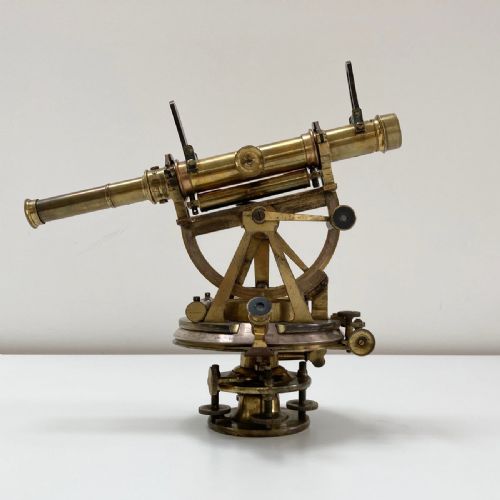


Brass Surveyor Instrument
These brass surveyor instrument examples are precision tools of navigation and mapping, prized by collectors for their intricate dials and historical utility.
Brass Surveyor Instrument
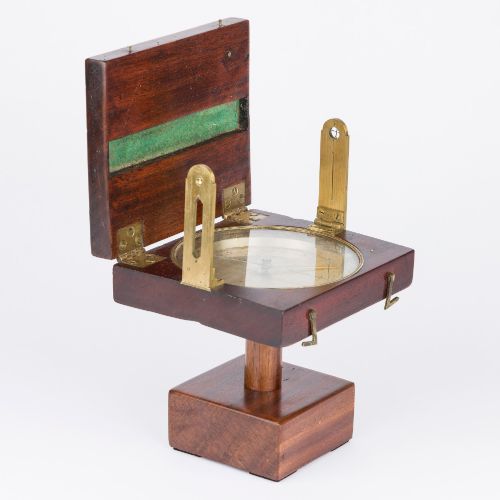
A brass surveyor instrument represents the height of precision engineering from the Georgian, Victorian, and Edwardian eras. Buyers searching for this phrase seek scientific devices that once measured land, angles, and elevations in the field or the office.
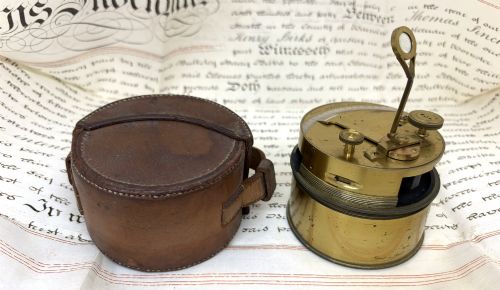
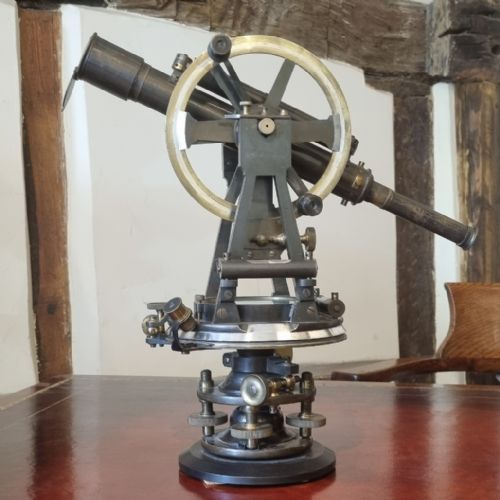
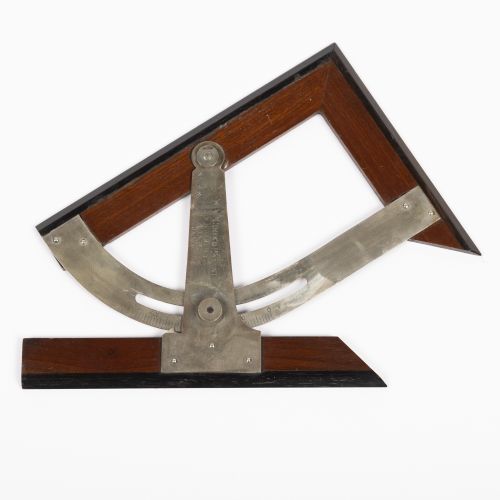
The pieces on this page span several distinct forms, including theodolites, compasses, levels, clinometers, and pantographs. Many survive alongside their original mahogany cases and fitted internal components, offering a complete picture of historical surveying practice.
How They Were Made
Makers constructed these instruments primarily from polished brass, often incorporating silvered metal for graduated dials and delicate glass covers to protect needle pivots. Solid wood such as mahogany formed the protective carrying cases and baseboards required for field work.
Workshops applied finely etched markings, paper compass cards, and signed inscriptions directly onto the metal or dial faces. Leather straps and bronze fittings completed assemblies designed to withstand rigorous outdoor deployment.
Listings feature scientific instruments spanning the nineteenth and early twentieth centuries, constructed from brass, mahogany, glass, and silvered metal.
What Varies in Quality
Quality rests in the legibility of the engraved scales, the smoothness of the leveling screws, and the crispness of the maker signatures stamped into the brass. Instruments retaining signed attributions to notable London and regional makers tend to demonstrate superior mechanical refinement.
The presence of matching accessory lenses, complete vernier plates, and original fitted wooden housing elevates an example significantly. Pieces that preserve their silvered finishes and functional magnetic needles show better original preservation.
G. Davis of Leeds·Baker London·W&S Jones·L Casella & Co·Negretti & Zambra·Elliott Bros of London·Alexander Adie of Edinburgh·W. H. Harling·Cox of Devonport·John Newman·Barker & Son·J Hicks·R. Field & Son·WF Stanley
The Brass Surveyor Instrument Glossary
- Theodolite
- A precision optical instrument mounted on a tripod for measuring horizontal and vertical angles. It forms the backbone of accurate triangulation and land mapping.
- Clinometer
- A tool used for measuring angles of slope, elevation, or depression of an object with respect to gravity. Surveyors and military engineers relied on them for topographical assessment.
- Vernier
- A auxiliary scale providing sub-divisions of a primary graduated scale to allow more precise readings. It permits fractional measurements beyond the main divisions.
- Pantograph
- A linkage mechanism connected in a parallelogram fashion based on similar triangles used to copy drawings at a different scale. Draughtsmen utilised them for map reproduction.
- Altazimuth
- An instrument designed to measure both altitude and azimuth coordinates simultaneously. It combines vertical and horizontal sighting arcs in a single assembly.
Brass Surveyor Instrument: Frequently Asked Questions
What is a surveyor compass used for?
A surveyor compass provided directional bearings and angle measurements for mapping property boundaries and laying out civil engineering projects in the field.
These portable devices sat upon staff mountings or tripods, allowing operators to sight distant landmarks while reading magnetic headings through hinged vanes.
How do I identify the maker of an instrument?
Makers typically engraved their company name, partnership style, and business address directly onto the silvered dial face, the brass mounting plate, or the inner lid of the fitted wooden case.
Examining these signatures alongside patent marks provides direct evidence of the workshop responsible for the assembly.
Where should I display a brass instrument?
Display these brass surveyor instrument pieces on sturdy desks, bookshelves, or inside glass cabinets away from direct sunlight and damp environments to protect the polished metal and wood cases.
Keeping them in stable room conditions prevents the brass from tarnishing too rapidly and safeguards any delicate paper compass cards.
Why do some instruments include mahogany cases?
Mahogany cases protected delicate optical elements, glass covers, and precise leveling screws from damage during transport across rugged terrain.
Custom fitted interiors ensured each component stayed securely in place, often preserving trade labels from the retailers who sold them.