8,146  PAGES BROWSED TODAY PAGES TODAY 36  ANTIQUES UPLOADED TODAY NEW ARRIVALS
ID #SA783067
FOR SALE
£695
Email Buy
Save
William IV Desk Compass with Inclinometer by John Newman of Regent Street
Jason Clarke Antiques
for sale €813     $883
£695
Jason Clarke Antiques

Jason Clarke Antiques

Sellingantiques Verified Since Jul 2015
View Dealers Stock Page
Relevant Links
Id #SA783067
PDF SHARE
SAVE

William IV Desk Compass with Inclinometer by John Newman of Regent Street

19th century
Description

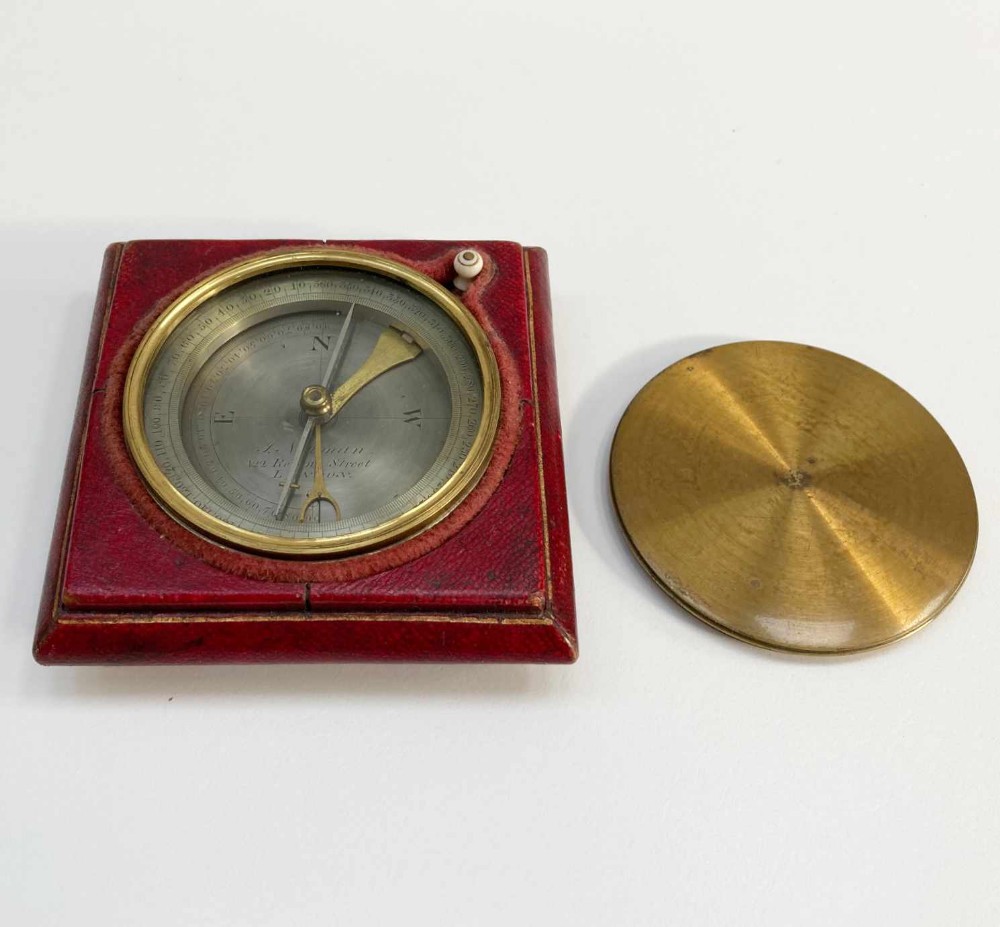
For sale, a William IV desk compass with inclinometer by John Newman of 122 Regent Street, London.

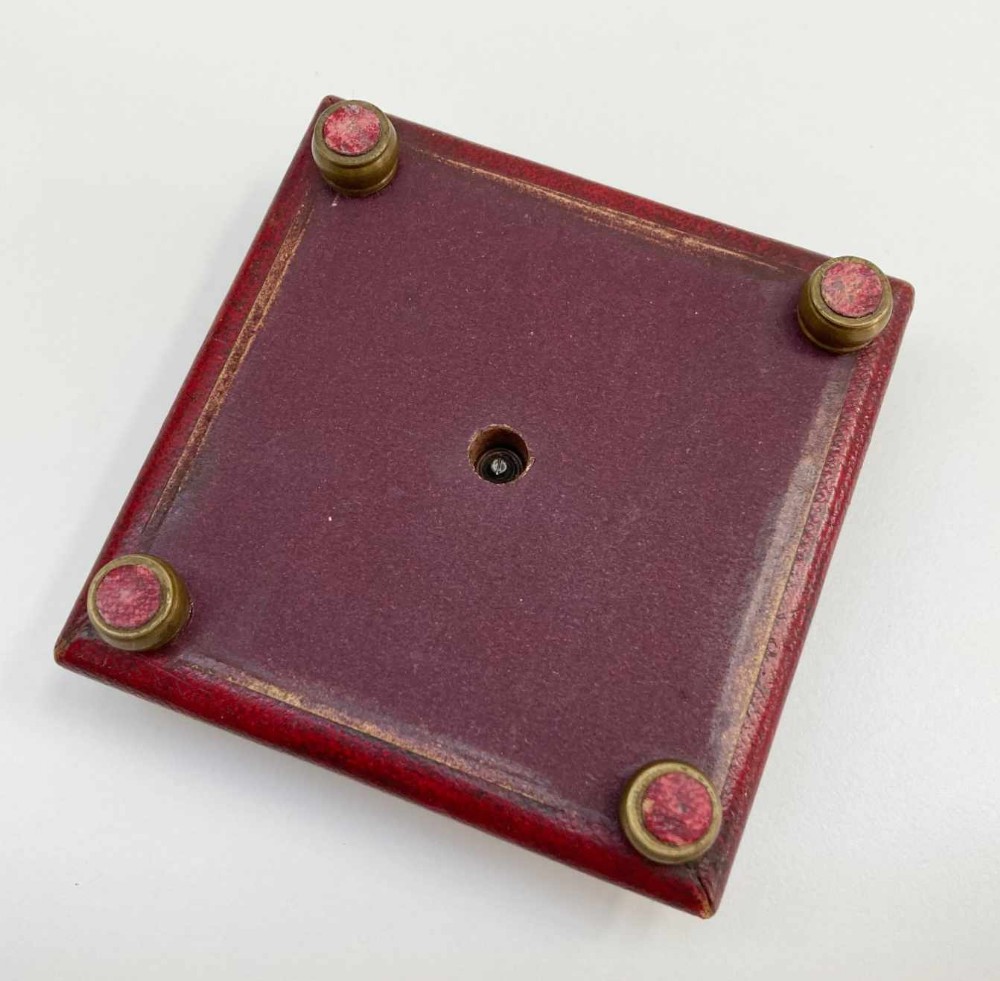
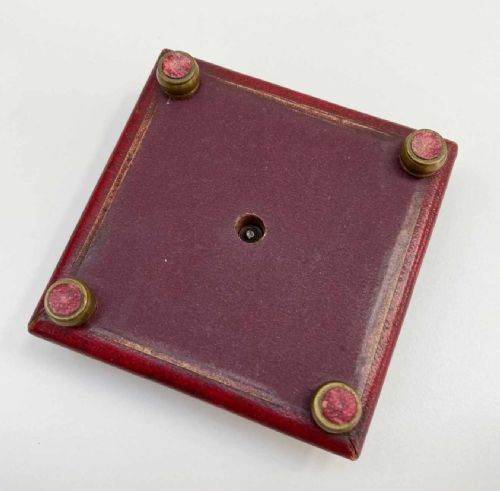
A truly magnificent example contained within a graduated morocco and gilt tooled leather covered surround which sits upon four turned brass feet. As a mark of care and quality, each foot is fitted with a small leather pad to the base to avoid marking the furniture!
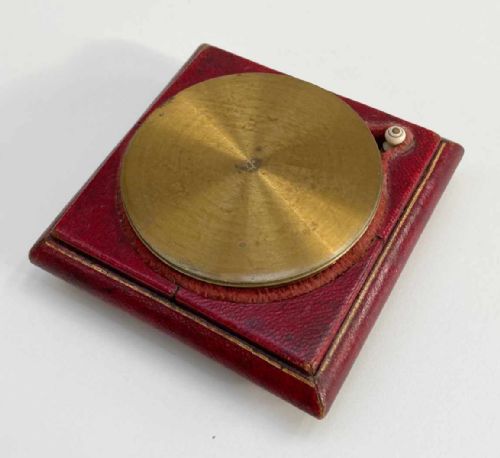
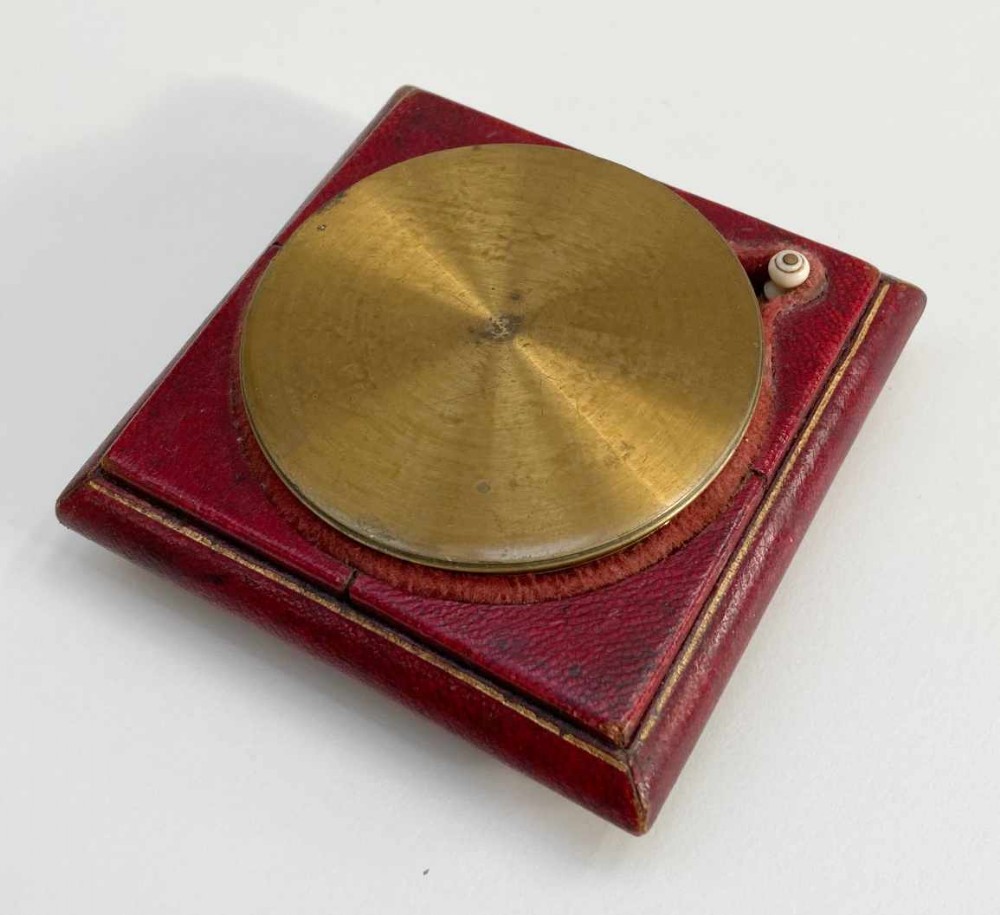
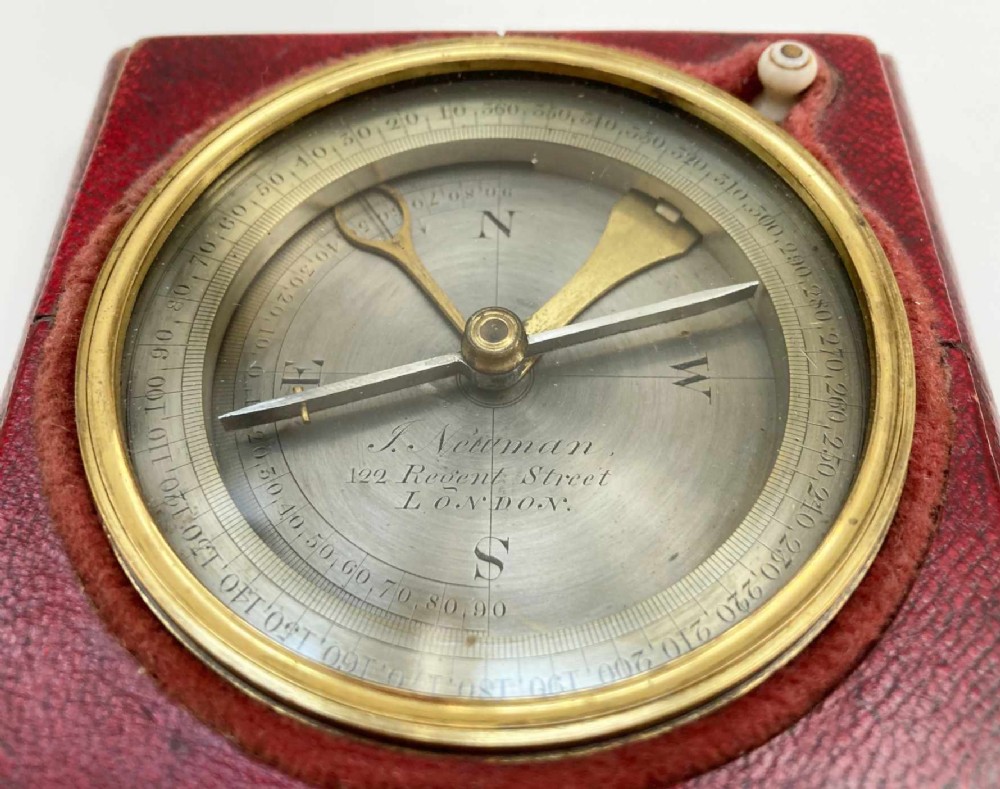
The compass dial is fitted with a turned brass lid to ensure its protection which reveals an astonishingly good and graduated compass dial. The very robust outer ring is minutely engraved to 360 degrees whilst the lower dial is marked with the compass points. The eastern half of the lower dial is further graduated from 0 – 90 degrees from east to north and from east to south to incorporate an inclinometer which swings freely below the compass needle. The southern half of the dial is engraved with the maker’s name, “J. Newman, 122 Regent St, London”.
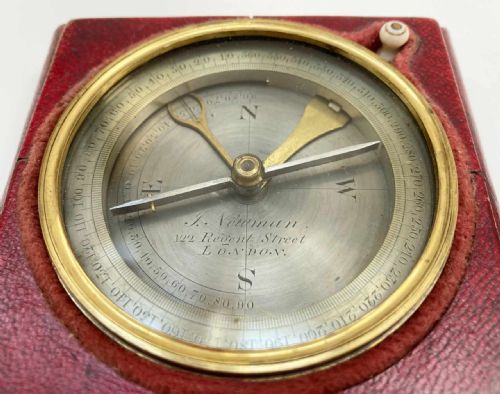
The compass fits snugly into its base with a red velvet liner surrounding its circumference and with a small finger push to the north-west point to allow the needle to be locked when in transit. A small screw at the base of the case also allows for adjustment to the needle height.
A simply stunning example by a significant maker from the period. Perhaps a little impractical as a portable instrument but its quality and unusual design is evident throughout.

Newman is somewhat understated, he rarely figures amongst the best makers of the period and his history is somewhat less well known than his early Nineteenth Century counterparts however, he was a hugely respected figure during his time. Born in 1783, both he and presumably his brother George Newman were apprenticed to Philip Brock although there is also some association with a Robert Tangate to whom one or both may have been turned over to during this time. Tangate had previously been apprenticed to George Adams of Fleet Street so their education would have been of the highest quality.

Other Newmans of the period seem also to have some relationship with John but it is hard to unravel. This branch of the family were ultimately apprenticed through Tyco Wing who under Thomas Heath had been in turn apprenticed alongside George Adams and Troughton amongst other notable characters. A Thomas Newan also eventually took over the Heath & Wing business. The commonality of names seem too obvious to ignore but would need some further specific research.

John Newman gained his freedom in 1807 and traded initially from his birthplace in Camberwell, moving to Lisle Street in Leicester Square in 1812 from where he continued to trade until 1827 and from there undertook laboratory work, chemical supply and manufacture for The Royal Institution where he associated himself with numerous leading scientists of the age. Prior to his departure from this address, he was commissioned by the Royal Society to create a standard barometer which was perhaps one of his most successful and well known products used by numerous observatories for its pin-point accuracy. Later, in 1824 he provided instruments for Rear-Admiral Parry’s voyage to find the North West passage.

Regent Street was newly built in 1827 when Newman secured his premises at number 122 proving a significant rise in success during this period and he remained at this address until his death. Whilst trading from these premises, he served the likes of Charles Darwin for whom he made a portable mountain barometer to take with him on HMS Beagle, he manufactured instruments for the Ross Expedition and for the scientist, Sir Charles Wheatstone. Newman was also an exhibitor at The Great Exhibition where he gained special mention for his air pumps

He finally relinquished his position as instrument maker to The Royal Institution in the early months of 1860 and died in July of the same year. The business was sold by his son to

Physical Dimensions
Height
3cm (1.18")
Width
9cm (3.54")
Depth
9cm (3.54")
Declaration

Jason Clarke Antiques has dated this William IV Desk Compass to the 1800s.

Reference Numbers
Sellingantiques Reference
SA783067
Description
For sale, a William IV desk compass with inclinometer by John Newman of 122 Regent Street, London.
A truly magnificent example contained within a graduated morocco and gilt tooled leather covered surround which sits upon four turned brass feet.
Jason Clarke Antiques

As a mark of care and quality, each foot is fitted with a small leather pad to the base to avoid marking the furniture!

fig 1. A square red leather desk compass with a circular silvered dial, brass bezel, and a separate brass protective cap.
fig 1. William IV Desk Compass with Inclinometer by John Newman of Regent Street

The compass dial is fitted with a turned brass lid to ensure its protection which reveals an astonishingly good and graduated compass dial. The very robust outer ring is minutely engraved to 360 degrees whilst the lower dial is marked with the compass points. The eastern half of the lower dial is further graduated from 0 – 90 degrees from east to north and from east to south to incorporate an inclinometer which swings freely below the compass needle. The southern half of the dial is engraved with the maker’s name, “J. Newman, 122 Regent St, London”.

fig 2. A square red leather desk compass with a circular silvered dial, brass bezel, and a separate brass protective cap.
fig 2. William IV Desk Compass with Inclinometer by John Newman of Regent Street

The compass fits snugly into its base with a red velvet liner surrounding its circumference and with a small finger push to the north-west point to allow the needle to be locked when in transit. A small screw at the base of the case also allows for adjustment to the needle height.

fig 3. A square red leather desk compass with a circular silvered dial, brass bezel, and a separate brass protective cap.
fig 3. William IV Desk Compass with Inclinometer by John Newman of Regent Street

A simply stunning example by a significant maker from the period. Perhaps a little impractical as a portable instrument but its quality and unusual design is evident throughout.

Newman is somewhat understated, he rarely figures amongst the best makers of the period and his history is somewhat less well known than his early Nineteenth Century counterparts however, he was a hugely respected figure during his time. Born in 1783, both he and presumably his brother George Newman were apprenticed to Philip Brock although there is also some association with a Robert Tangate to whom one or both may have been turned over to during this time. Tangate had previously been apprenticed to George Adams of Fleet Street so their education would have been of the highest quality.

Other Newmans of the period seem also to have some relationship with John but it is hard to unravel. This branch of the family were ultimately apprenticed through Tyco Wing who under Thomas Heath had been in turn apprenticed alongside George Adams and Troughton amongst other notable characters. A Thomas Newan also eventually took over the Heath & Wing business. The commonality of names seem too obvious to ignore but would need some further specific research.

John Newman gained his freedom in 1807 and traded initially from his birthplace in Camberwell, moving to Lisle Street in Leicester Square in 1812 from where he continued to trade until 1827 and from there undertook laboratory work, chemical supply and manufacture for The Royal Institution where he associated himself with numerous leading scientists of the age. Prior to his departure from this address, he was commissioned by the Royal Society to create a standard barometer which was perhaps one of his most successful and well known products used by numerous observatories for its pin-point accuracy. Later, in 1824 he provided instruments for Rear-Admiral Parry’s voyage to find the North West passage.

Regent Street was newly built in 1827 when Newman secured his premises at number 122 proving a significant rise in success during this period and he remained at this address until his death. Whilst trading from these premises, he served the likes of Charles Darwin for whom he made a portable mountain barometer to take with him on HMS Beagle, he manufactured instruments for the Ross Expedition and for the scientist, Sir Charles Wheatstone. Newman was also an exhibitor at The Great Exhibition where he gained special mention for his air pumps

He finally relinquished his position as instrument maker to The Royal Institution in the early months of 1860 and died in July of the same year. The business was sold by his son to

Height
3cm (1.18")
Width
9cm (3.54")
Depth
9cm (3.54")
Date of Manufacture

Jason Clarke Antiques has dated this William IV Desk Compass to the 1800s.

Reference Numbers
Sellingantiques Ref
SA783067
Jason Clarke Antiques
Sellingantiques verified Since Jul 2015
Dealer Profile

You can view the stock and full dealer information on the Jason Clarke Antiques Profile Page
Relevant Links
PDF SHARE
SAVE
A square red leather desk compass with a circular silvered dial, brass bezel, and a separate brass protective cap.
1 / 4
Archive I A square red leather desk compass with a circular silvered dial, brass bezel, and a separate brass protective cap.

William IV Desk Compass with Inclinometer by John Newman of Regent Street
Archive II A square red leather desk compass with a circular silvered dial, brass bezel, and a separate brass protective cap. View II
Archive III A square red leather desk compass with a circular silvered dial, brass bezel, and a separate brass protective cap. View III
Archive IV A square red leather desk compass with a circular silvered dial, brass bezel, and a separate brass protective cap. View IV
Enlarged Archival View
Telephone 07815 046645
Location
Newbury
Berkshire
United Kingdom
Verified Since Jul 2015
Items For Sale 82
Items Sold 605
Jason Clarke Antiques
Verified Since Jul 2015
View Dealer Info
Location: Newbury, Berkshire, United Kingdom
Verified
Jul 2015
For Sale
82
Sold
605
A square red leather desk compass with a circular silvered dial, brass bezel, and a separate brass protective cap.
William IV Desk Compass with Inclinometer by John Newman of Regent Street
Ref: SA783067
A square red leather desk compass with a circular silvered dial, brass bezel, and a separate brass protective cap.
Detail View 1
Detail View 2
Detail View 3
Archival Detail
Every single antique dealer on our platform is individually approved by our internal team. We verify their professional trade history, ethical standards, and photographic quality to ensure a secure, high-standard buying environment. Upon joining, every dealer agrees to a strict 9-point code of conduct. While issues can occasionally arise, our dealers typically resolve them swiftly and directly with the buyer. In fact, since our founding in 2002, Sellingantiques has only had to step in to help resolve an issue on roughly five occasions—a true testament to the quality of our dealers and their dedication to your happiness.
Our dealers are highly experienced in packing and shipping fragile, high-value antiques. Because you are in direct contact with the dealer, you will be able to easily go through all available shipping and insurance options together to ensure your item arrives safely.
Antiques are the ultimate green purchase. By choosing historical pieces over newly manufactured goods, you completely eliminate the carbon footprint of modern mass production while preserving exceptional, timeless craftsmanship.

During the early 19th century, precision instruments were manufactured in London for maritime, surveying, and personal desktop use. Compasses combined with inclinometers allowed users to calculate magnetic bearings alongside angles of elevation or slope.

High-grade scientific instruments of this era typically featured cast and turned brass bezels, silvered metal dials with hand-engraved degree markings, glass covers, and protective morocco leather cases.

Authentic period pieces feature hand-engraved maker signatures on the dial, accurate street addresses such as Regent Street, silvered surfaces displaying subtle oxidisation, and precise brass fittings.

Scientific antiques function as tactile accent pieces when placed atop stackable art books on an office desk, curated shelf display, or library console table.

Keep the item in a temperature-controlled environment away from direct heat and moisture. Use a dry microfibre cloth for dusting, avoiding abrasive metal polishes on lacquered brass or silvered dials.
items
Add keywords to the filter
Price
£100
£250000
Era
Movements
Material
Origin
Stock Location
Freshness
Online Payments
Categories