


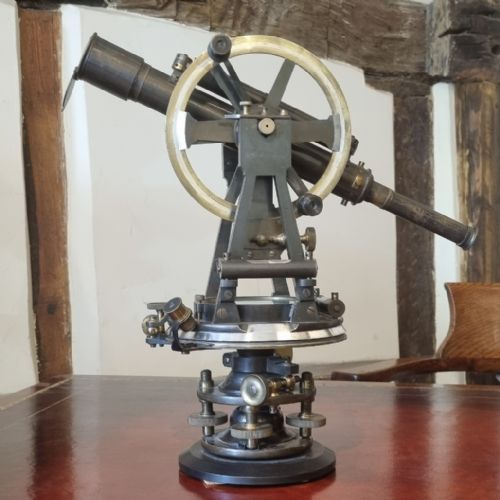

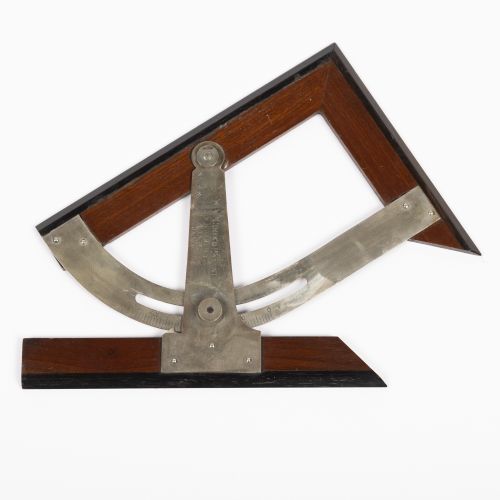


Victorian Surveying Instrument
These Victorian surveying instrument pieces are precision brass and glass tools built for mapping and measurement, prized for their complex mechanical engineering and tactile historical presence.
Victorian Surveying Instrument
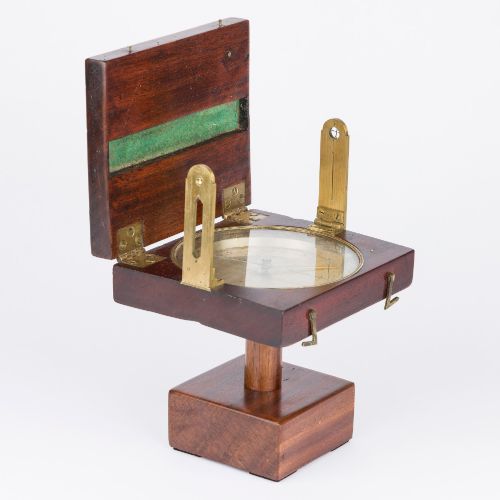
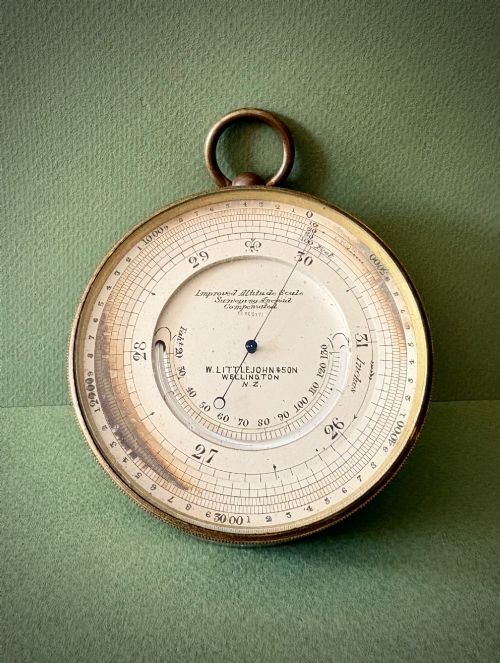
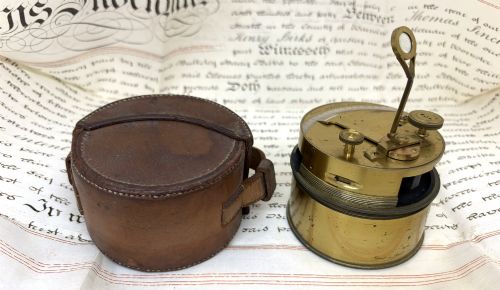
A victorian surveying instrument encompasses specialised apparatus designed for field mapping, navigation, and topographical measurement during the nineteenth century and the early twentieth century. Buyers encounter an array of forms on this page, including theodolites, surveying compasses, pocket barometers, altimeters, clinometers, and drainage levels.
Many of these tools arrive paired with fitted wooden storage cases constructed from mahogany or boxwood, frequently retaining interior velvet linings and original trade labels from London makers. The selection ranges from portable pocket instruments utilised for individual fieldwork to large tripod-mounted theodolites deployed in major civil engineering projects.
The aesthetic of a victorian surveying instrument sits firmly within scientific and military contexts, often categorized under Victorian Scientific or Victorian Military styles. Their physical presence combines utilitarian functionality with the high-grade decorative finish typical of nineteenth-century precision metalwork.
Materials and construction methods
The primary material underpinning almost every victorian surveying instrument is brass, frequently polished or finished with gilt, paired with clear glass covering delicate dial faces and spirit levels. Metal components are often hand-engraved with measurement scales, vernier graduations, and makers' signatures.
Enclosing cases are predominantly fashioned from solid mahogany or boxwood, sometimes featuring fitted leather elements, hinged brass corners, and inset carrying handles. Internal components incorporate fine steel sighting threads, glass lenses, and delicately balanced magnetic needles housed within sealed dampening chambers.
Object types recorded in these listings include pocket barometers, drafting instruments, clinometer level sights, and portable transit instruments.
Assessing quality in scientific instruments
Quality in a victorian surveying instrument is determined by the crispness of the engraved graduations and the smooth, backlash-free movement of its focusing screws and vernier arms. The finest examples retain their original optics, complete sighting vanes, and unblemished compass needle pivots that settle truly.
The presence of a matching, maker-stamped mahogany case substantially elevates the integrity of the piece, particularly when fitted with internal brackets designed specifically for that tool. Signed instruments bearing the names of prominent London makers command closer attention due to the superior grade of their internal mechanical tolerances.
G. Davis of Leeds·Baker, London·L Casella & Co·Stanley, London·Negretti & Zambra London·Elliott Bros. of London·Thomas Dunn·W. H. Harling·James Murray·John Lilley & Son London·Barker & Son·J Hicks·WF STANLEY
The Victorian Surveying Instrument Glossary
- Clinometer
- A tool used for measuring angles of slope, elevation, or depression of an object with respect to gravity. Surveyors and military observers relied on them to determine gradients in the field.
- Vernier
- A auxiliary sliding scale used to obtain more precise readings on a graduated measuring scale than can be read directly from the main division. It allows the user to measure fractions of the smallest scale division.
- Altimeter
- An instrument used to measure altitude relative to a fixed level, often operating via barometric pressure changes in portable field models. Pocket versions were widely carried by engineers and balloonists.
- Artificial Horizon
- A device providing an optical or fluid-based horizontal reference plane when direct horizon sightings are obscured. Black glass sets were commonly deployed alongside astronomical surveying tools.
Victorian Surveying Instrument: Frequently Asked Questions
What is a theodolite used for?
A theodolite is a precision instrument designed for measuring both horizontal and vertical angles during land surveying, mapping, and major civil engineering projects. Surveyors mounted these heavy brass devices on tripods to establish accurate grid coordinates and property boundaries.
The telescope attached to the assembly allowed operators to sight distant markers with extreme accuracy. By reading the finely engraved silver or brass vernier scales, they calculated exact geometric angles across difficult terrain.
How do pocket barometers work?
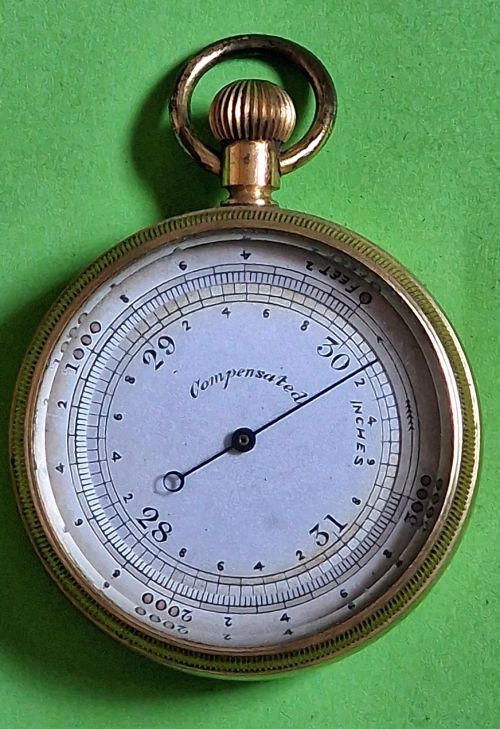
Pocket barometers measure atmospheric pressure changes to help predict weather shifts or estimate elevation changes while travelling outdoors. Inside the small brass case, a flexible sealed metal capsule expands or contracts as air pressure fluctuates.
This physical movement transfers through a delicate chain and spring mechanism to turn the indicator needle across the dial face. Many examples feature a secondary altitude scale plotted along the outer perimeter of the glass cover.
How should I clean brass instruments?
Historic brass surveying tools should generally be left with their natural aged patina rather than polished to a bright shine. Vigorous cleaning can remove original lacquer, engraved maker signatures, and the surface character accumulated over generations.
Dust the instrument gently with a soft, dry brush and wipe glass components with a lint-free cloth. Avoid chemical cleaning agents entirely, as they risk damaging delicate metal finishes and graduation markings.
Can these instruments still be used?
While many examples remain mechanically functional, modern surveyors rely on electronic and satellite-based technology for field accuracy. These antique instruments are valued primarily as historical artefacts, decorative objects, and mechanical curiosities.
If you choose to operate a compass or level outdoors, expect minor calibration variances due to magnetic shifts and age. Most owners display them on desks or shelves alongside their fitted mahogany storage boxes.