



Wooden Tripod Floor Stand
These wooden tripod floor stand pieces provide versatile support and illumination, bringing practical height and steady three-legged balance to any room.
Wooden Tripod Floor Stand
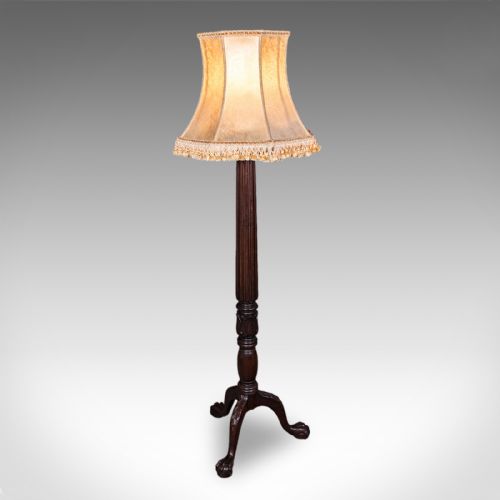
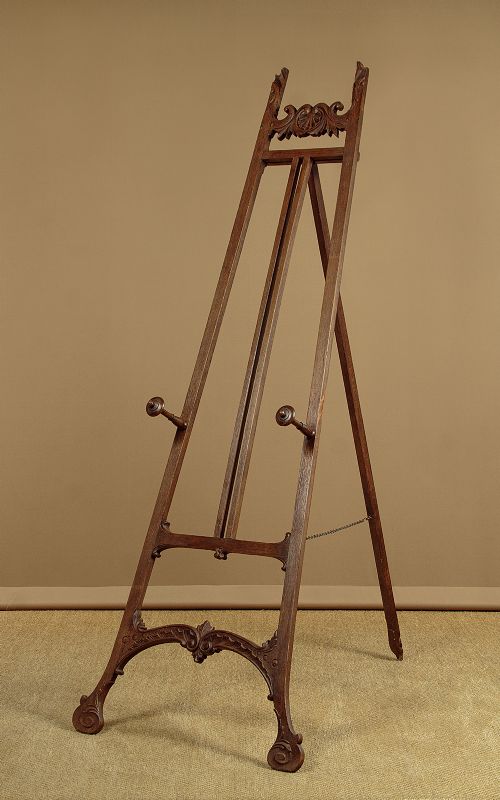
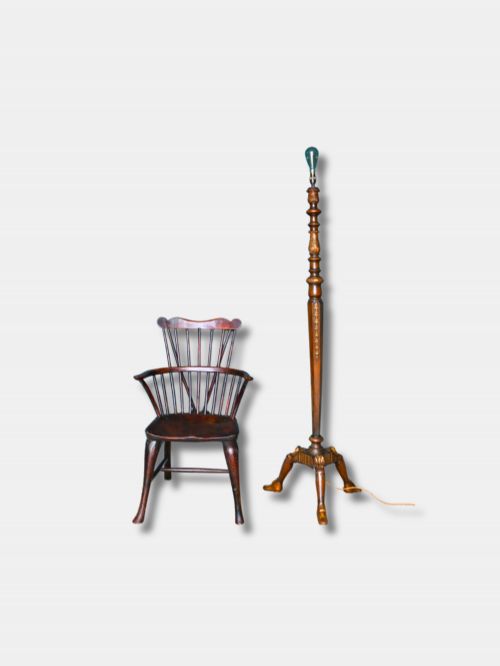
A wooden tripod floor stand is a tall, three-legged support designed to hold lamps, music sheets, display easels, and reading surfaces. These items appear across the Victorian, Edwardian, and later periods in diverse formats ranging from standard lamps to scientific instruments.
The assortment includes specialised forms like shaving stands, lecterns, and reading stands alongside conventional floor lights. Such pieces reflect the domestic and professional utility of past decades, utilising sturdy three-legged bases to maintain stability on uneven floors.
How they were made
Makers constructed these supports primarily from dense hardwoods like mahogany, oak, and walnut, frequently turning the central shafts on a lathe. Brass components, including joints, collars, and candle sockets, appear alongside metal hardware to provide functional adjustment and structural reinforcement.
Surface treatments range from natural wood grains to ebonised finishes and gilt highlights, while some display carved ornamentation such as swan designs or eagles. Fabric elements integrate into lamp shades, and glass or mirror components appear on specific lighting and shaving variants.
Some upright stands abandon conventional dignity entirely to support carved wooden eagles or graceful swans.
What varies in quality
Quality rests in the precision of the turning on the tripod legs and the integrity of the joints connecting the central shaft to the base. Finer examples display harmonious proportions where the weight of the tripod balances the height of the fixture above.
The sophistication of adjustable mechanisms distinguishes superior items, particularly when brass ratchets, screws, and sliding collars operate smoothly without excessive play. Carved details executed by hand elevate the decorative merit above plain turned alternatives.
The Wooden Tripod Floor Stand Glossary
- Tripod base
- A three-legged support structure designed to distribute weight evenly and maintain stability on floor surfaces. This arrangement prevents rocking on uneven antique floorboards.
- Standard lamp
- A tall floor-standing lamp base designed to illuminate a room from standing height. These fixtures often feature weighted or spread feet to support electrical fittings or conversion hardware.
- Display easel
- An upright framework used to hold paintings, photographs, or display boards for viewing. They frequently incorporate adjustable pegs and tilting mechanisms.
- Lectern
- A slanted reading desk designed to support books or notes for a speaker. They frequently stand upon a central column secured by spreading legs.
- Ebonised
- Wood treated with a dark stain or finish to imitate expensive ebony. This technique gained popularity during the Victorian era for decorative and formal furnishings.
Wooden Tripod Floor Stand: Frequently Asked Questions
What is a wooden tripod floor stand used for?
These versatile stands support lighting, reading materials, art displays, and specialised instruments within domestic and institutional settings. Their tall profiles bring utility and illumination to corners and seating areas without occupying excessive floor space.
Historically, specific variants served dedicated tasks such as holding sheet music, displaying framed pictures, or supporting shaving mirrors. Today, many survive in converted forms, particularly standard lamps adapted from earlier lighting or display apparatus.
How do I date a wooden tripod floor stand?
Dating relies on observing the prevailing styles, wood types, and construction methods visible in the piece. Victorian examples often feature rich mahogany or heavy carved ornamentation, whereas Edwardian pieces lean towards lighter oak or simpler turned profiles.
Hardware details also offer chronological clues, such as the type of brass screws, hinges, and adjustment mechanisms used. Comparing the turned patterns against documented revival styles like William IV or Georgian helps narrow the manufacturing era.
Are these stands stable on carpets?
The three-legged tripod design naturally finds three points of contact on flat surfaces, which helps prevent rocking. However, thick carpets can occasionally obscure uneven patches beneath individual feet.
Placing heavier items like standard lamps or scientific instruments on deep pile carpets requires careful positioning to ensure the centre of gravity remains balanced over the base.
What does a converted stand mean?
A conversion indicates that an object originally built for one purpose has been altered to serve another, such as a music stand or candle holder adapted into an electric lamp. This practice was common as households updated their lighting and utility needs over the decades.
Collectors often examine the wiring routes, added brackets, and adaptation points to understand how the original structure was modified while retaining its core tripod base and upright shaft.