


Antique Barometer with Case
An antique barometer with case is a precision weather instrument housed in timber and glass, combining scientific utility with handsome domestic furniture.
Antique Barometer with Case
When you search for an antique barometer with case, you are looking at scientific instruments designed to record atmospheric pressure over time, often featuring integrated barometers and thermometers. These pieces span periods from the nineteenth century through the mid twentieth century, encompassing Victorian, Edwardian, and later decades.
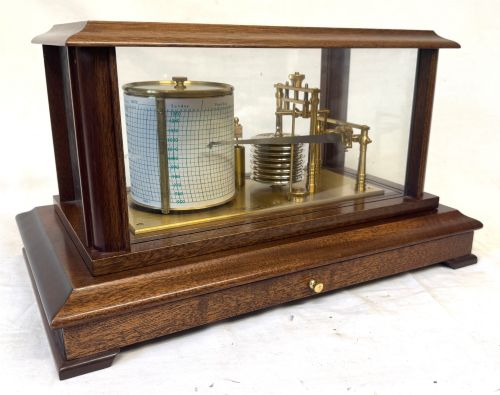
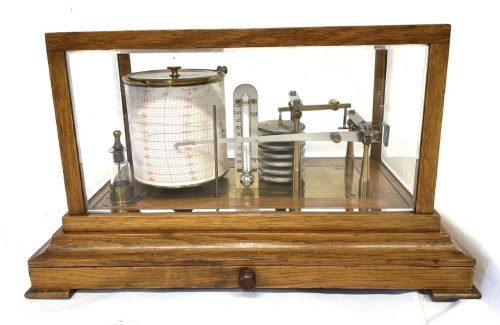
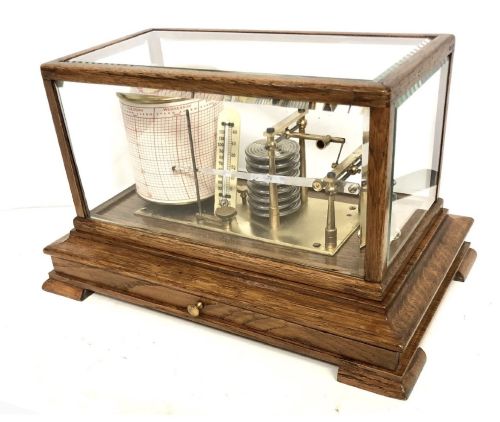
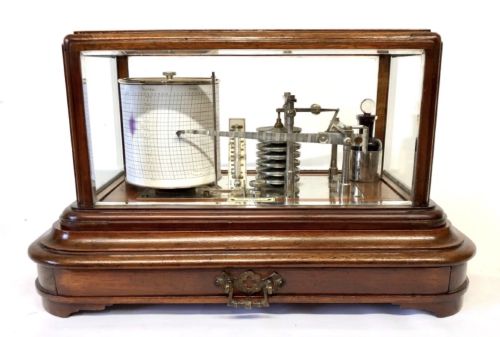
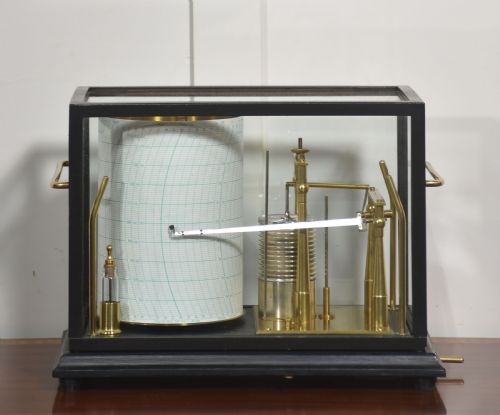
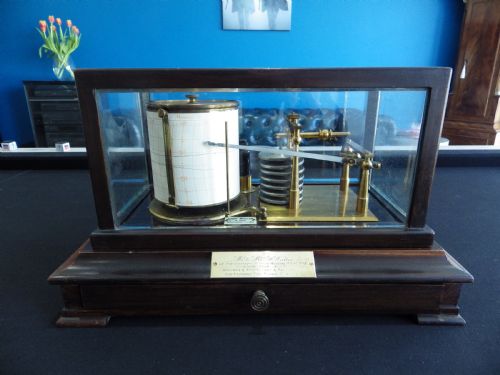
The most common form on this page is the barograph, housed in a timber case with five glass panels that protect the brass and steel recording mechanism inside. Many examples include a dedicated chart drawer beneath the main instrument bed, holding weekly paper records and spare ink bottles.
The materials reflect the cabinet-making standards of their respective eras, utilising solid woods like oak and mahogany paired with bevelled glass and silvered metal dials. You will find items originating from British makers as well as colonial firms and European workshops.
Materials and construction
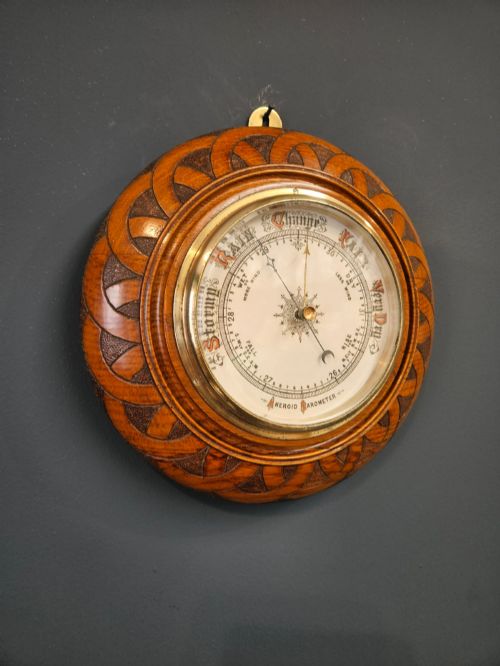
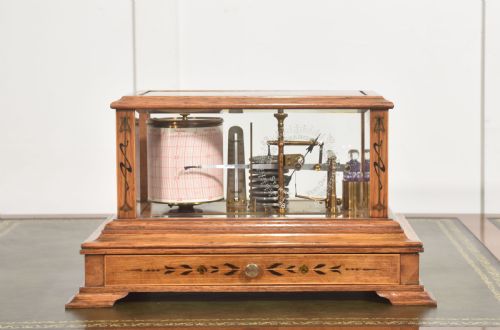
Casework is constructed primarily from seasoned oak and rich mahogany, frequently joined with precision and finished to display the natural grain of the timber. Some Edwardian pieces incorporate subtle Art Nouveau inlay work to decorate the wooden exterior.
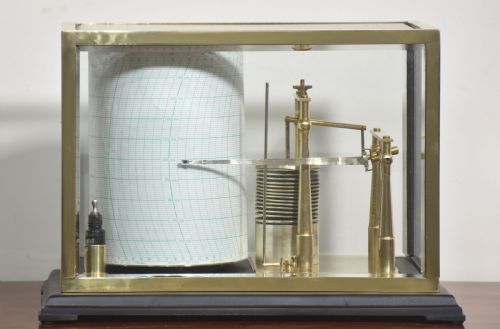
The interior mechanical assemblies combine brass movements, steel linkages, and silvered metal scales or paper chart drums. Glazing relies on heavy bevelled glass panes fitted into wooden frames to seal the instrument while allowing a clear view of the working parts.
Weekly paper charts stored in the built-in drawer keep decades of past storms quietly tucked beneath the clockwork.
What separates the better examples
Quality in these instruments rests on the reputation of the maker and the crispness of the mechanical movement. Signed brass beds from established scientific firms command greater attention than unsigned or utilitarian workshop pieces.
The cabinet work tells its own story through the selection of timber, the weight of the bevelled glass, and the inclusion of practical details like smooth chart drawers and working thermometers.
Russell Norwich·Gaupp and Co·Hezzanith·Short and Mason·Casella London·Baines Harrogate·Jules Richard·Negretti and Zambra·Dobbie Son and Hutton
The Antique Barometer with Case Glossary
- Barograph
- A recording barometer that traces a continuous line of atmospheric pressure onto a rotating paper chart. This mechanical graph allows observers to study weather trends over the course of a week.
- Bevelled glass
- Glass panes with polished, angled edges fitted into the sides and top of the instrument case. This treatment adds a refined optical edge to the wooden housing.
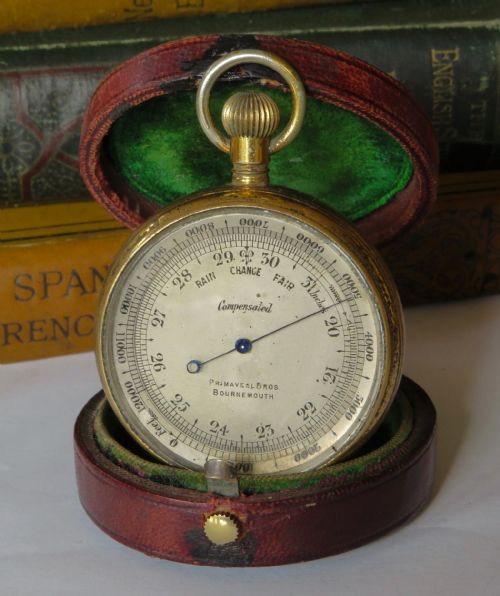
- Compensated barometer
- An instrument fitted with a mechanical device to adjust for temperature variations affecting the reading. This ensures atmospheric measurements remain accurate across changing room conditions.
- Silvered metal
- Brass or copper treated to produce a matte silver finish, commonly used for instrument dials and scales. The resulting surface provides high contrast for engraved numbers and maker details.
- Chart drawer
- A small storage compartment built into the base of the wooden case to hold spare recording papers and ink. It keeps necessary maintenance accessories close to the instrument.
Antique Barometer with Case: Frequently Asked Questions
How do I wind the clockwork drum?
The revolving drum contains a spring-driven clock movement that is wound gently using a small attached key.
Take care not to overwind the mechanism, as this can damage the internal spring assembly.
Where should I place a barograph at home?
Position the instrument on a stable surface away from direct sunlight, radiators, and heavy vibrations.
Stable indoor conditions ensure the timber case remains unaffected and the delicate recording arm functions properly.
How do I change the paper chart?
Lift the brass pen arm clear of the drum before releasing the cylinder from its spindle.
Slide off the old paper sheet and wrap a fresh weekly chart around the drum, aligning the edges securely.
Can these instruments still forecast the weather?
Yes, the barometric mechanisms respond accurately to shifts in atmospheric pressure just as they did originally.
Watching the pen trace rising or falling lines provides a reliable local indicator of approaching weather changes.