

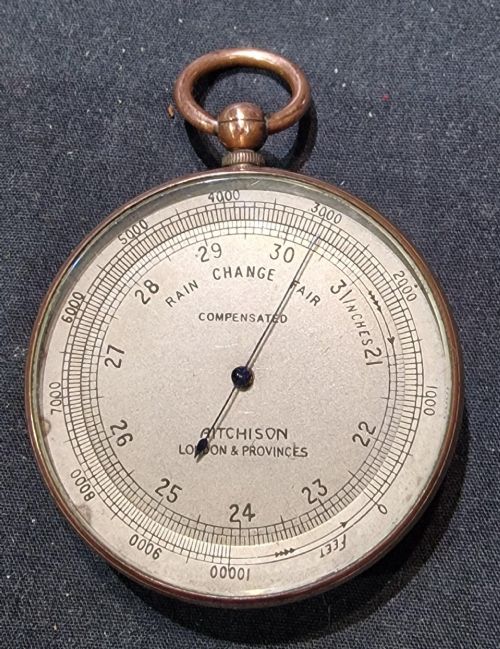


Brass Pocket Barometer
A brass pocket barometer is a portable scientific instrument designed for measuring atmospheric pressure and altitude during travel.
What they are
Brass pocket barometers represent precision engineering housed in portable forms, designed to accompany travellers and scientists across the nineteenth century. These instruments measure changes in barometric pressure, frequently functioning simultaneously as altimeters to gauge elevation.
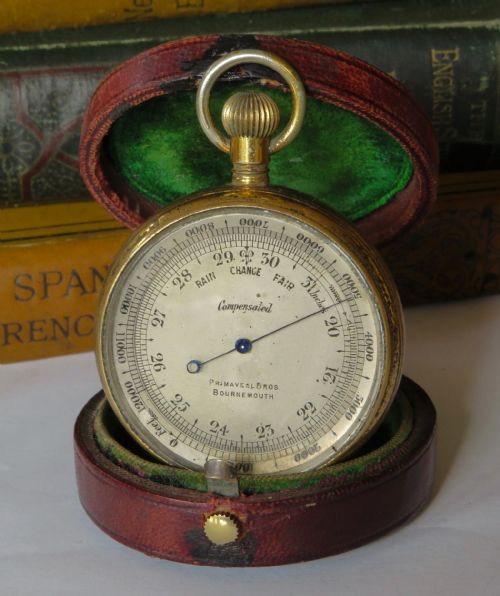
Most examples encountered here belong to the Victorian era, spanning from eighteen ninety to nineteen hundred. They survive in pocket-friendly proportions, often accompanied by original fitted cases lined in velvet or leather.
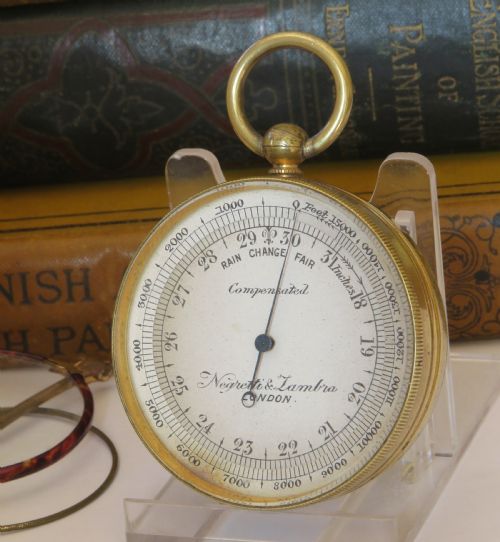
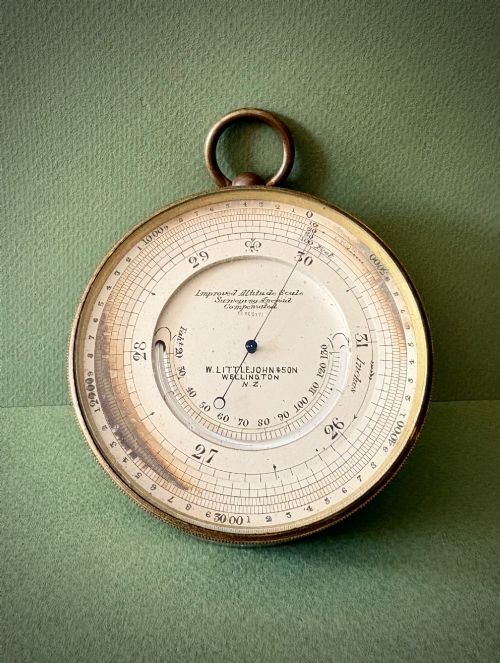
The evidence shows diverse origins and retailers named on dials, including London makers alongside colonial and international pieces. Forms range from simple meteorological indicators to complex combination pieces incorporating thermometers.
How they were made
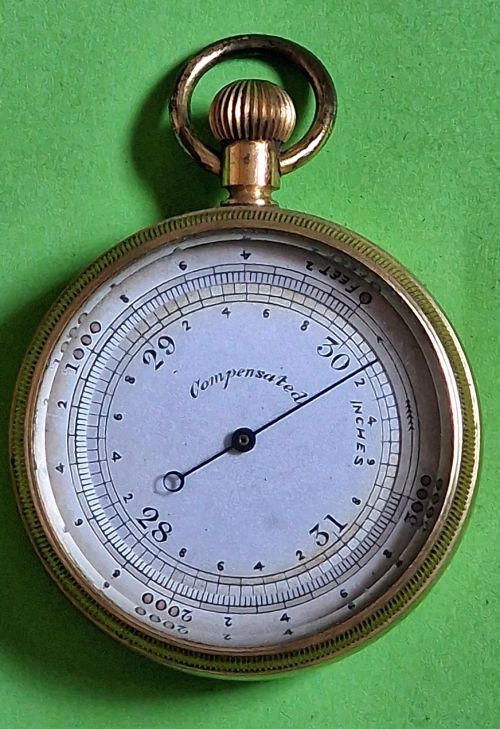
Cases and bezels are constructed predominantly from brass, sometimes finished with gilt or polished surfaces to enhance appearance. Interior mechanisms utilise delicate steel components alongside silvered metal dials engraved with precise meteorological scales.
Protection during transport is provided by fitted exterior cases, typically finished in leather and lined with soft velvet or silk to cushion the glass and metal housing. Bevelled glass covers protect the delicate indicator needles without obscuring the dial face.
Retail Price Guide 2026
Typical UK retail prices for brass pocket barometer, calculated from the Sellingantiques database of over a million retail prices indexed since 2003. This retail price guide relies exclusively on Sellingantiques data; no external sources or auction records are used, so the figures do not describe the wider market.
Listings feature Victorian scientific instruments utilising brass, glass, leather, and silvered metal across nineteenth-century forms.
What varies in quality
Quality rests in the precision of the movement and the clarity of the engraved silvered metal dial. Finer instruments incorporate compensated movements designed to maintain accuracy across varying temperatures.
The execution of the exterior housing defines the tier of the piece, from standard brass pocket barometers to elaborate gilt brass instruments with multi-function dials and bespoke leather cases.
Primavesi·Negretti & Zambra·Aitchison·James Murray
The Brass Pocket Barometer Glossary
- Aneroid barometer
- An instrument measuring atmospheric pressure without liquid, using an expanding metal capsule. This mechanism allowed barometers to become truly portable pocket instruments.
- Altimeter
- A scale incorporated into the barometer face to measure altitude based on atmospheric pressure. These dual functions proved essential for nineteenth-century exploration and travel.
- Compensated
- A movement adjusted to counteract temperature fluctuations affecting the internal metal capsule. Compensated instruments deliver greater accuracy across varying climates.
- Gilt brass
- Base metal treated with a thin layer of gold or gold-coloured wash. This finish provided both decorative appeal and protection against tarnishing.
Frequently Asked Questions
How do these barometers work?
These instruments rely on an internal flexible metal capsule that contracts or expands as atmospheric pressure changes. Connected levers translate this movement to the indicator needle on the dial face.
Changes in weather or elevation alter the pressure, moving the needle across engraved silvered metal scales to show meteorological shifts.
What is an altimeter function?
An altimeter scale uses the drop in barometric pressure at higher elevations to estimate height above sea level. Travellers read this secondary scale alongside standard weather indicators.
Many nineteenth-century pocket instruments combined both barometric pressure and altitude measurement onto a single dial face.
How were they carried safely?
Pocket barometers were housed in sturdy brass cases fitted with bevelled glass to protect the delicate internal mechanism and dial. These instruments travelled inside dedicated leather cases lined with velvet.
The protective outer housing ensured the precision scientific instrument survived journeys in pockets or travelling bags.
How do I date these instruments?
Dating relies on maker signatures, dial typography, and style characteristics associated with the Victorian period and the nineteenth century. Surviving examples frequently point to production around eighteen ninety and nineteen hundred.
Maker names inscribed on the dial provide definitive historical context and link the piece to known nineteenth-century firms.