



Vintage Pocket Barometer
These vintage pocket barometer instruments pack atmospheric measurement into a portable brass case you can carry in a waistcoat pocket.
Vintage Pocket Barometer
A vintage pocket barometer measures atmospheric pressure for altitude and weather forecasting while remaining small enough to transport easily. The listings here present scientific instruments originating across the Victorian, Edwardian, and early twentieth century periods, spanning forms from simple altimeters to complex surveying barometers.
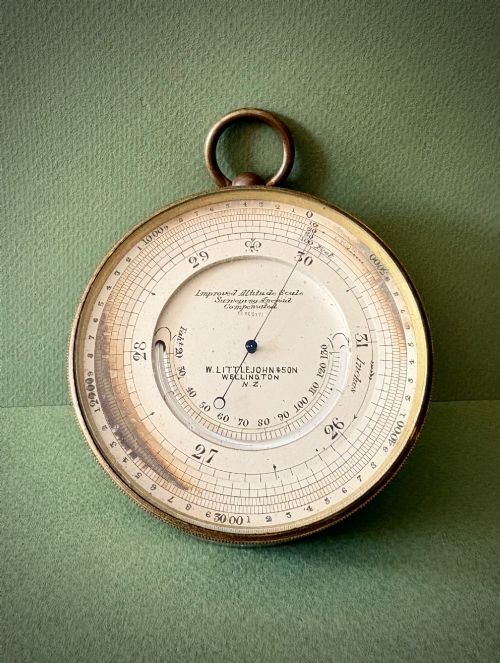
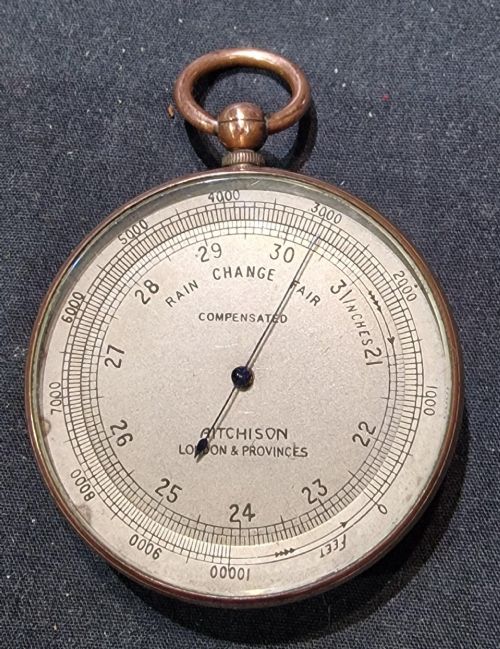
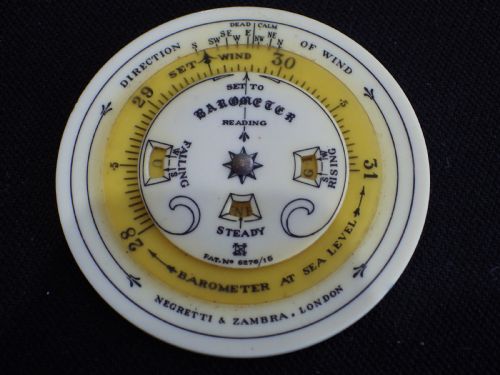
Most examples you encounter on this page belong to the Victorian and Edwardian eras, housed in protective leather or fitted wooden boxes. Makers such as Negretti and Zambra, James Murray, and M Pillischer dominate the better examples, often combining aneroid barometer movements with altimeter scales.
Colonial and regional variants appear among the selection, including pieces marked for New Zealand or military observation balloon use. These instruments range from unbranded pocket barometers to precision travelling pieces signed by notable opticians and instrument makers of Bond Street.
How they were made
Workshops constructed these barometers using brass and gilt brass for the outer cases, enclosing delicate steel and silvered metal dials behind clear glass. Celluloid elements occasionally appear on dials and scales, while fitted cases utilise sturdy leather over wood.
Precision engineering governed the internal aneroid movements, which relied on corrugated metal vacuum chambers to register minute pressure changes without liquid mercury. Skilled craftsmen engraved the revolving silvered metal bezels and altitude scales by hand to ensure legible readings in the field.
What varies in quality
Superior quality rests in the precision of the movement and the reputation of the maker inscribed on the silvered dial, such as Negretti and Zambra or James Murray. Signed instruments from established London addresses command greater attention than anonymous pieces due to their superior calibration and finishing.
The survival of original fitted cases, instructions, and auxiliary components significantly elevates an instrument's standing. Finer specimens retain crisp engraving on the gilt brass casing and clean, unblemished glass over legible barometer scales.
Negretti and Zambra·James Murray·M Pillischer·Aitchison
The Vintage Pocket Barometer Glossary
- Aneroid barometer
- An instrument that measures atmospheric pressure using a flexible metal box rather than liquid mercury. It expands and contracts with pressure shifts to move the indicator needle.
- Altimeter
- A specialised scale used on barometers to measure height above sea level based on decreasing atmospheric pressure. Surveyors and mountaineers relied heavily on this dual functionality.
- Compensated barometer
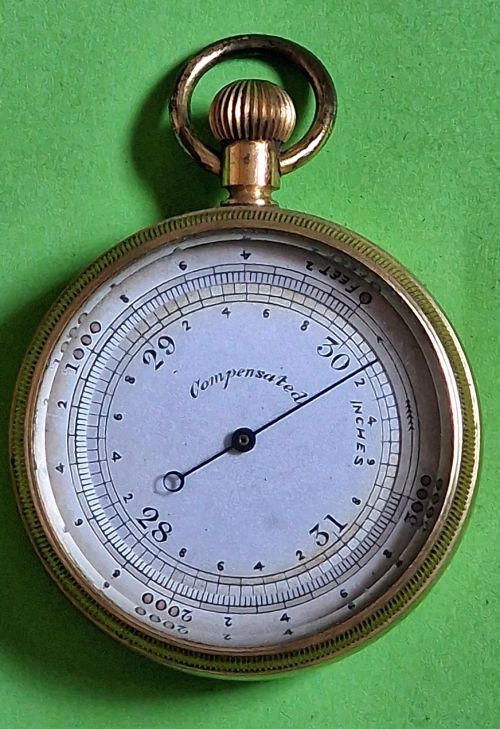
- An instrument fitted with a bimetallic device to correct for temperature errors affecting the internal movement. This ensures accurate altitude and pressure readings across varying climates.
- Bezel
- The ring of brass or gilt metal that holds the glass face in place over the dial. On pocket barometers, this ring often rotates to set markers for weather tracking.
Vintage Pocket Barometer: Frequently Asked Questions
How do I read a pocket barometer?
Read the main dial in inches of mercury or millibars to check current atmospheric pressure. The secondary outer scale typically measures height in feet for altimeter use.
Rotating the bezel allows you to align a marker needle over the current pressure reading to track whether the weather is improving or worsening over the day.
What is the difference between Victorian and Edwardian models?
Victorian models often feature robust brass cases with ornate silvered dials and heavy glass covers reflecting mid to late nineteenth-century craftsmanship. Maker signatures from this era frequently reference Bond Street addresses.
Edwardian examples tend toward refined compact designs, sometimes incorporating celluloid components or specialised surveying scales tailored for scientific and military observation.
Were these used for mountaineering?
Mountaineers, surveyors, and military balloon observers utilised these portable instruments to calculate altitude changes during ascents. The inclusion of altitude scales alongside barometric pressure made them essential field tools.
Compensated movements were particularly valued for outdoor use because they maintained accuracy despite temperature fluctuations at high elevations.
How should I store a pocket barometer?
Keep the instrument in its original fitted leather or wooden box when not in display to protect the brass case and glass face from knocks. Store it in a stable environment away from damp conditions and direct heat sources.
Avoid laying heavy objects on top of the case to preserve the delicate aneroid mechanism housed inside the brass housing.