

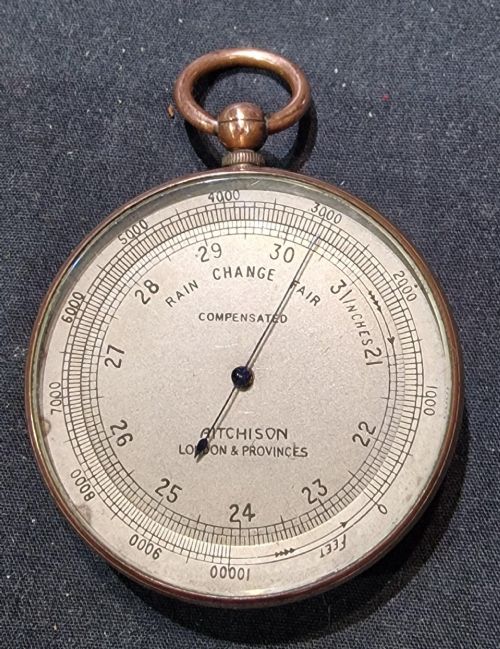


Pocket Aneroid Barometer
These pocket aneroid barometer examples pack complex barometric science into portable brass cases built for travel and fieldwork.
What these pocket aneroid barometer pieces are
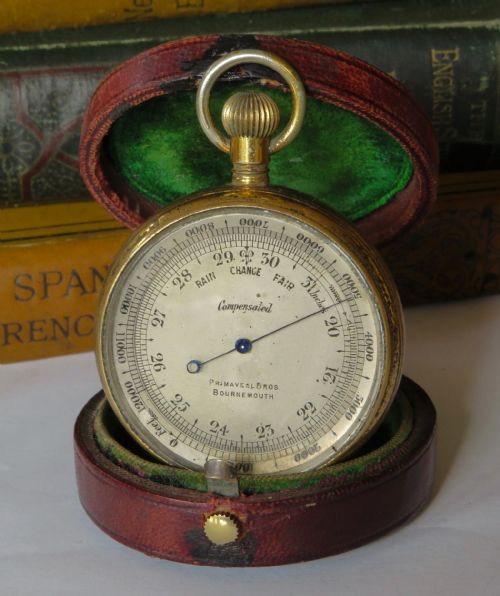
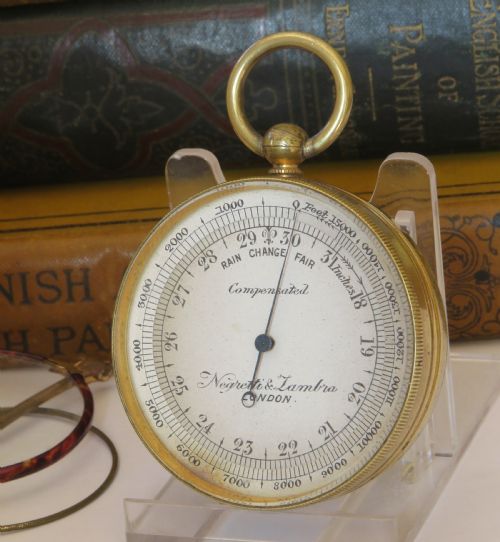
A pocket aneroid barometer is a portable scientific instrument designed to measure atmospheric pressure changes for weather forecasting and altitude tracking. These pieces emerge primarily from the Victorian and Edwardian periods, spanning dates from the 1860s through to 1910.
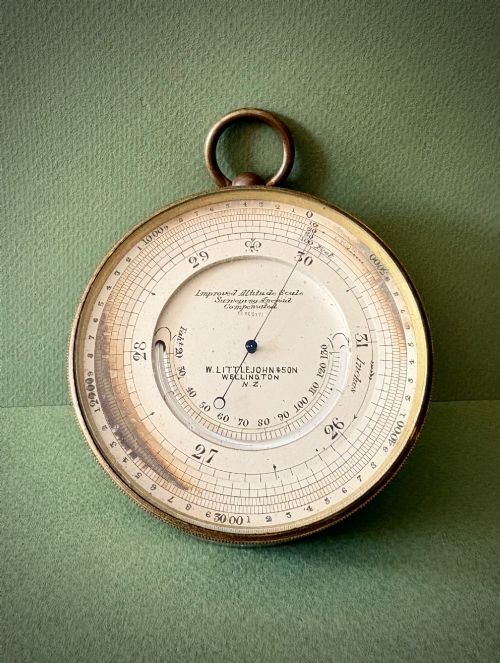
The most common formats on this page are compact circular instruments housed in protective leather or metal cases. Examples range from simple weather forecasting models to advanced surveying instruments and military observation balloon altimeters.
Makers such as Negretti & Zambra, M Pillischer, Aitchison, and Hall Bradford represent the origins of these scientific items. Collectors encounter both standard brass finishes and gilt brass variations alongside combination instruments featuring built-in altimeters and thermometers.
How they were made
Makers utilised brass, gilt brass, and silvered metal to construct the housings and dials of each pocket aneroid barometer. Delicate internal mechanisms required precise assembly alongside protective glass lenses to shield the graduated metal faces.
Many instruments incorporated fitted leather cases designed to protect the portable mechanisms during field use and travel. Metal casings were polished or gilded, while dials featured finely etched or engraved measurement scales.
Retail Price Guide 2026
Typical UK retail prices for pocket aneroid barometer, calculated from the Sellingantiques database of over a million retail prices indexed since 2003. This retail price guide relies exclusively on Sellingantiques data; no external sources or auction records are used, so the figures do not describe the wider market.
Listings feature brass, gilt brass, and silvered metal materials across Victorian and Edwardian scientific instruments.
What varies in quality
The inclusion of original signed dials, maker signatures from reputable London opticians, and surviving matching leather cases distinguishes finer examples. The crispness of the dial engraving and the robustness of the brass housing further define the tier of the piece.
Negretti & Zambra·M Pillischer·Aitchison·Hall Bradford
The Pocket Aneroid Barometer Glossary
- Aneroid barometer
- An instrument that measures atmospheric pressure using a flexible metal capsule rather than liquid mercury. It shrinks or expands with pressure shifts to move a dial pointer.
- Altimeter
- A specialised barometric scale used to measure height above sea level, frequently integrated into pocket instruments for surveying and balloon observation.
- Compensated
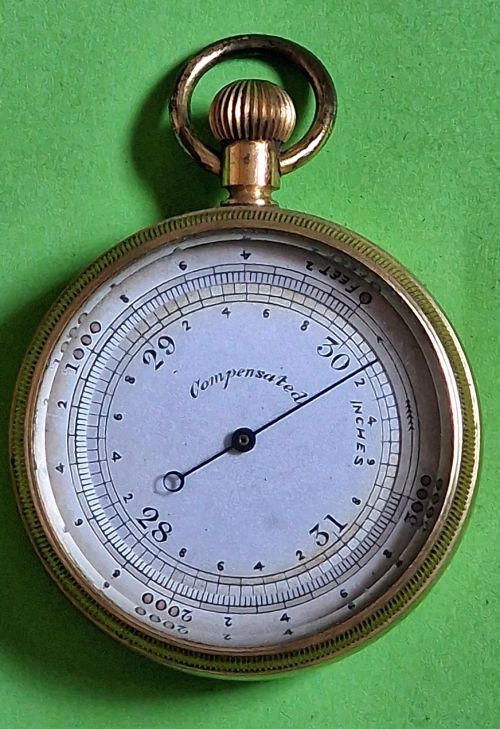
- A mechanical adjustment within the barometer that corrects for errors caused by ambient temperature changes affecting the internal metal capsule.
- Gilt brass
- Brass coated with a thin layer of gold to improve appearance and prevent tarnishing. This finish appears on finer Victorian scientific instruments.
Frequently Asked Questions
How do pocket aneroid barometers work?
These instruments contain a sealed corrugated metal box that expands or contracts as air pressure changes. A system of levers connects this capsule to the indicator hand on the dial.
Changes in weather correspond directly to these mechanical movements, translating invisible atmospheric shifts into readable visual measurements.
What is the difference between a barometer and an altimeter?
A standard barometer measures atmospheric pressure to assist with local weather forecasting. An altimeter uses that same barometric pressure drop to calculate height above sea level.
Many pocket scientific instruments combine both functions on a single dual-scale dial for field use.
Why are some barometers called compensated?
Compensated barometers feature an internal adjustment mechanism that neutralizes the physical effect of temperature changes on the metal capsule. Uncompensated instruments can read inaccurately when moved between warm rooms and cold outdoor air.
This technical addition ensures greater measurement reliability across varying climates.
How should I store a pocket aneroid barometer?
Keep the instrument in its original leather or fitted case when not in display to protect the glass lens and exterior metal finish. Store them in stable indoor environments away from excessive moisture and direct sunlight.
Regular handling should remain gentle to preserve the delicate internal linkages of the aneroid movement.