


Brass Weather Instrument
A brass weather instrument brings the practical science of the nineteenth and early twentieth centuries into a room with polished metal and timber.
Brass Weather Instrument
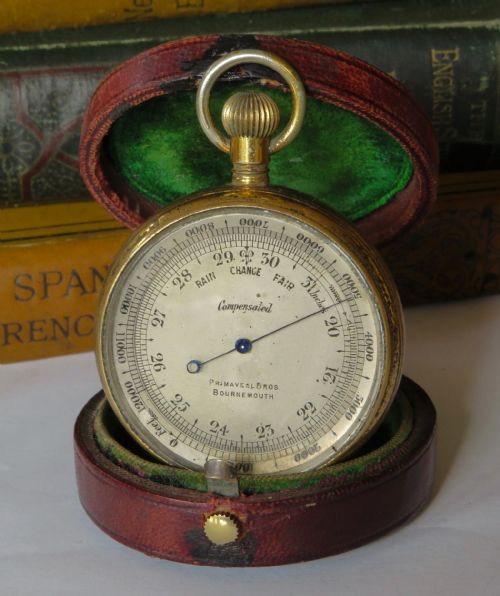
A brass weather instrument encompasses barometers, barographs, hygrometers, and anemometers designed to measure atmospheric pressure, humidity, or wind speed. When exploring this selection, buyers encounter scientific pieces spanning the Georgian, Victorian, and Edwardian periods.
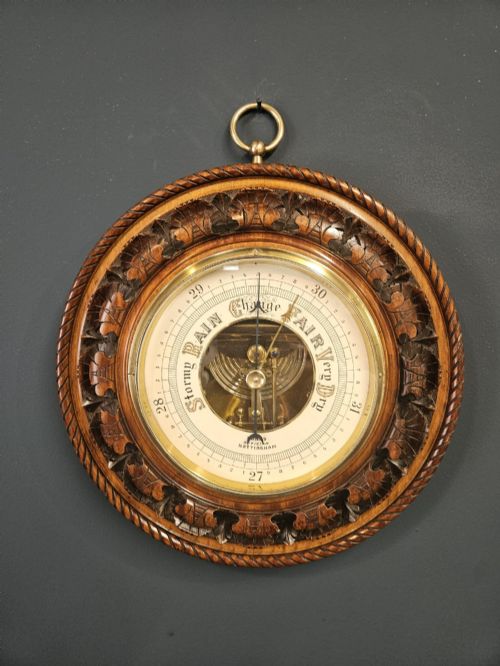
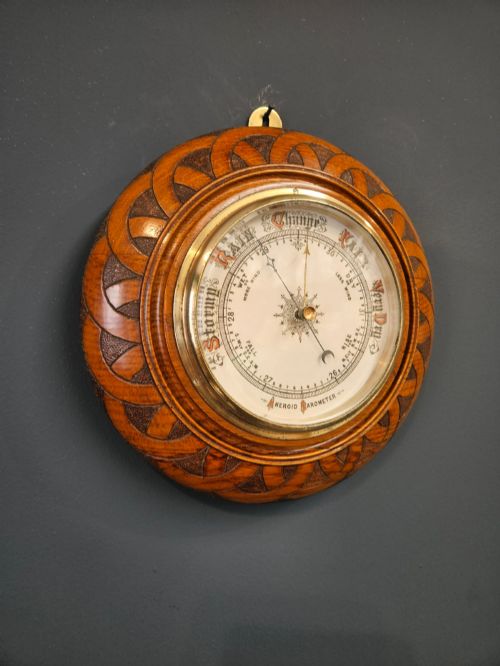
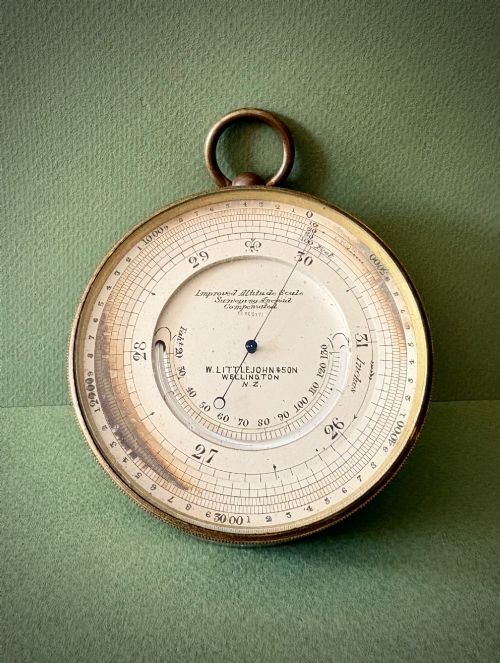
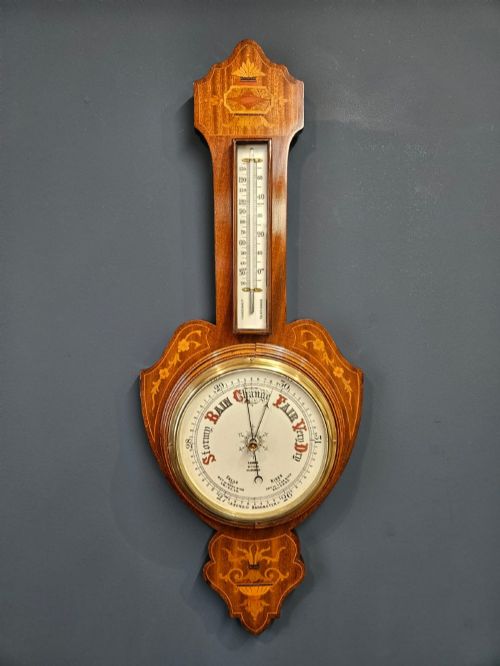
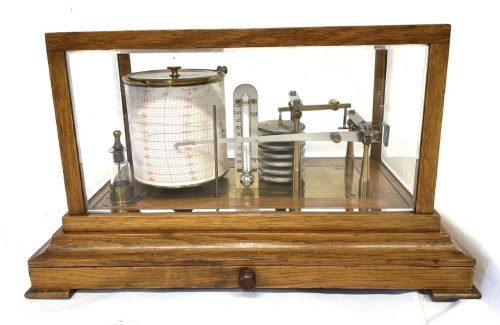
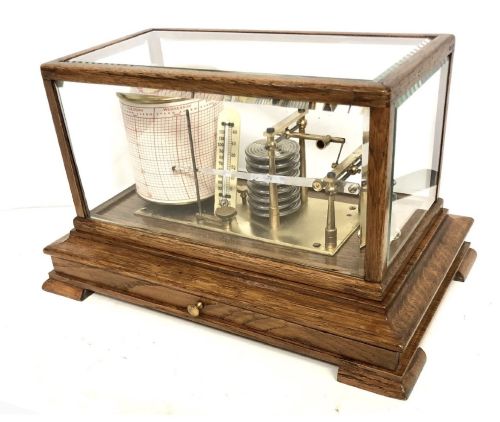
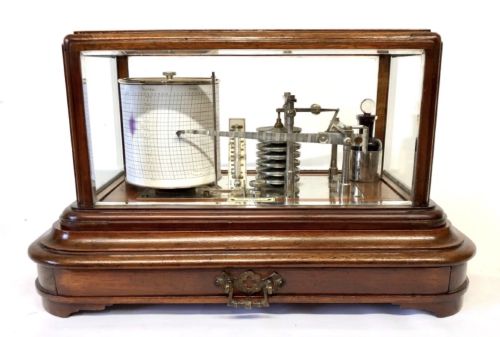
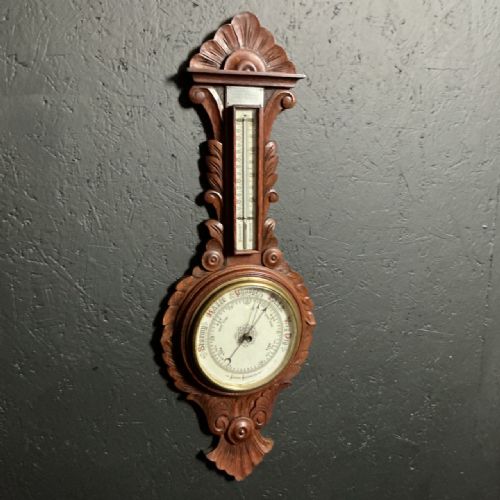
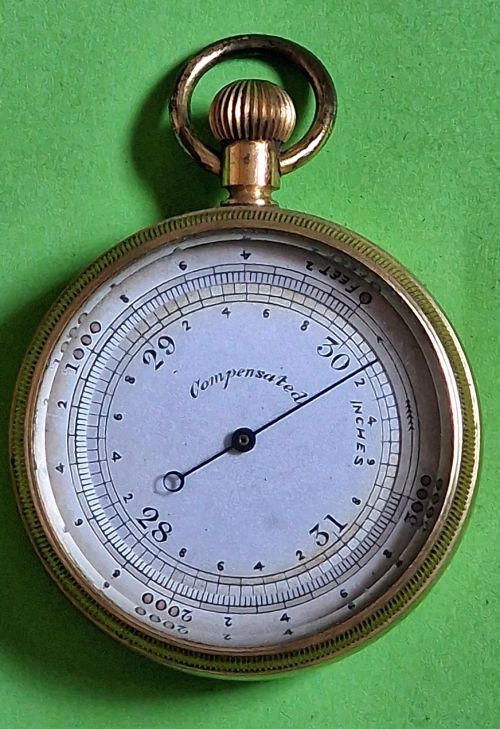
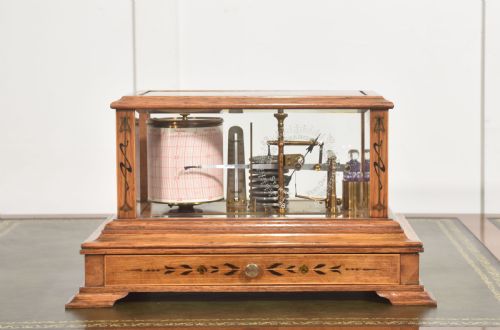
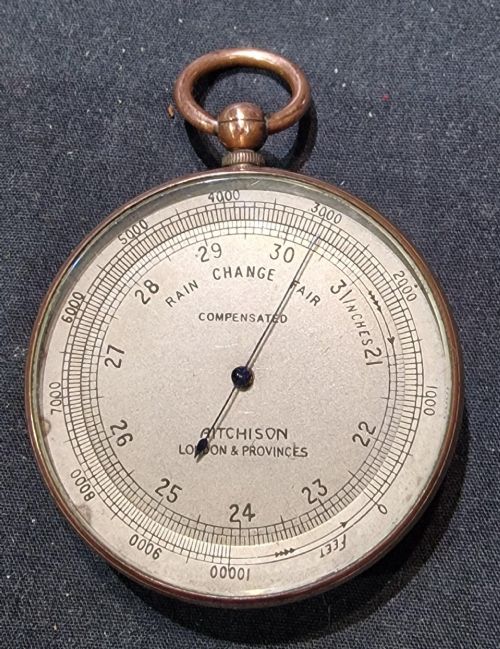
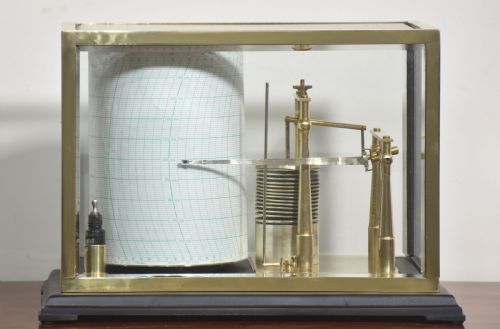
The most common forms on this page include wall-mounted aneroid barometers, cased barographs with chart drawers, and pocket barometers intended for travel. These objects reflect a time when recording meteorological changes was both a domestic necessity and a pursuit of scientific inquiry.
Origins range from British makers working in London and provincial towns to continental workshops and colonial suppliers. Materials cluster heavily around brass cases paired with oak, mahogany, walnut, and bevelled glass.
Materials and construction
Makers housed sensitive mechanical movements within heavy cast brass bezels, dials, and frames. These metal components were frequently silvered, engraved, or polished to a bright finish.
Timber housings were constructed from seasoned oak, mahogany, walnut, and rosewood, often featuring carved details, geometric designs, or inlaid veneers. Heavy glass panels, sometimes bevelled, protected delicate dials and recording drums.
Listings feature brass cases paired with oak, mahogany, walnut, and silvered metal dials across Victorian, Edwardian, and Georgian periods.
Standards of execution
Quality rests in the precision of the mechanical movement and the crispness of the engraved silvered dial. Superior pieces exhibit fine calibration marks and smooth linkage adjustments signed by established makers.
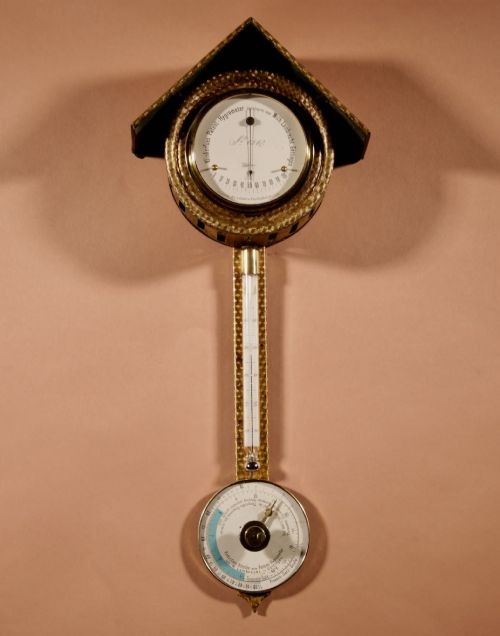
Cabinetwork distinguishes the range, with solid timbers, hand-cut dovetails, and substantial bevelled glass marking out workshop production above standard output. The integration of auxiliary instruments, such as thermometers or hygrometers within a single case, elevates the sophistication of the piece.
Negretti and Zambra·Short and Mason·Wilh Lambrecht·Elliott Brothers·J Hicks
The Brass Weather Instrument Glossary
- Aneroid barometer
- An instrument that measures atmospheric pressure by the expansion and contraction of a flexible metal capsule, eliminating the need for liquid mercury. It forms the mechanism for many wall and desk instruments.
- Barograph
- A recording barometer that traces pressure changes over time onto a rotating paper chart using an ink pen attached to the movement. These are typically housed in glazed wooden cases with chart drawers.
- Hygrometer
- A device used to measure the humidity of the air, utilising hair or wet and dry bulb systems. Examples from this period often bear maker signatures from London and Paris.
- Anemometer
- An instrument for measuring wind speed, utilising rotating cups or pressure plates connected to a dial indicator. These specialised scientific pieces are less common than barometers.
- Silvered dial
- A brass dial treated with a silver compound to create a matte white finish that receives engraved numerals and inscriptions clearly. This treatment allows graduations to remain legible under varying light conditions.
Brass Weather Instrument: Frequently Asked Questions
How do I read an aneroid barometer?
Read the main pointer against the pressure scale graduated in inches of mercury or millibars. A secondary hand, set by hand against the primary pointer, shows whether pressure rises or falls between inspections.
Changes in the weather follow these movements rather than the labels written on the dial, such as rain or fair. Tapping the glass gently before reading ensures the mechanism settles past any friction in the linkages.
Can these antique barometers still be calibrated?
Most aneroid barometers include a small adjustment screw accessible on the back or through the dial face. Turning this screw aligns the indicator hand with the local barometric pressure obtained from a reliable current source.
Significant mechanical repairs require a specialist who understands nineteenth-century linkages and capsules. Once set against a known local reading, the instrument tracks weather patterns accurately.
Where should I place a barograph at home?
Position the instrument on a stable, level surface away from direct sunlight, radiators, and exterior doors. Fluctuating temperatures and vibrations interfere with the delicate recording arm and the clockwork drum.
Rooms with consistent ambient conditions suit these instruments best, preserving both the wooden case and the internal brass mechanisms. Placing the piece at eye level also makes changing the weekly paper chart straightforward.
What maintenance do wood and brass cases need?
Clean the brass components with a dry microfiber cloth, avoiding liquid polishes that seep into engraved lettering and ruin the aged surface. Wooden cabinets benefit from occasional applications of beeswax to nourish the grain without building up a sticky residue.
Keep the bevelled glass clear using standard glass cleaner applied to a cloth rather than sprayed directly near the wood. Regular dusting prevents particulate matter from settling inside unsealed movements.