




Negretti and Zambra
Negretti and Zambra instruments are precision meteorological and scientific devices that appeal to collectors for their fine optical and mechanical engineering.
Negretti and Zambra
When you search for Negretti and Zambra, you encounter professional scientific and meteorological apparatus produced by the renowned London firm. The pieces on this page span the nineteenth and early twentieth centuries, encompassing the Victorian and Edwardian eras.
The most common forms you meet are barometers, including pocket versions, stick barometers, aneroid barometers, and weather forecasters. Barographs, thermometers, and telescopes also appear frequently across the inventory.
Domestic and field instruments predominate, ranging from large oak and mahogany wall barometers to pocket-sized surveying barometers and pedestals. These items reflect the high scientific output of London instrument makers during the industrial expansion.
Materials and Construction
Makers utilised dense timbers such as oak, mahogany, walnut, and golden oak to house barometer tubes and barographs. These woods were carved, polished, and fitted with brass bezels and dials.
Glass forms the barometer tubes, thermometer stems, and optical lenses for telescopes and theodolites. Metal components, including brass and eighteen carat gold, provide structural integrity and fine mechanical movement.
Enamel dials, leather cases, and velvet linings complete the portable and pocket instruments. Mercury fills the mercurial stick barometers and standard thermometers recorded in the evidence.
Negretti and Zambra Retail Price Guide 2026
Typical asking prices for negretti and zambra among the pieces listed under this phrase on Sellingantiques today, from the lower quarter to the upper quarter. They describe what is for sale here now, not the wider market.
Listings feature oak, mahogany, brass, and glass across Victorian and Edwardian barometers, barographs, and pocket instruments.
Assessing Quality
The standard of a Negretti and Zambra piece rests upon the precision of its mechanical movement and the crispness of its scale engravings. Finer examples display meticulous calibration and robust housing without excessive wear.
Materials contribute significantly to distinction, with solid carved walnut, mahogany, or mounted oak cases commanding greater attention than simpler constructions. Retained accessories, such as original boxed instructions or leather cases, elevate the completeness of the item.
Negretti and Zambra
The Negretti and Zambra Glossary
- Barograph
- A self-recording aneroid barometer that charts atmospheric pressure on paper over a weekly period. These instruments combine clockwork mechanisms with pressure-sensing chambers.
- Aneroid barometer
- A device for measuring atmospheric pressure without liquid, using a flexible metal box that expands or contracts. This compact design allowed for portable pocket and desk barometers.
- Stick barometer
- A tall wall-mounted instrument containing a vertical glass tube filled with mercury over a cistern. These provide direct readings of barometric pressure.
- Hypsometer
- An apparatus used to determine boiling points of liquids to calculate altitude and atmospheric pressure. It is a specialised scientific instrument for surveying.
Negretti and Zambra: Frequently Asked Questions
What is a Negretti and Zambra weather forecaster?
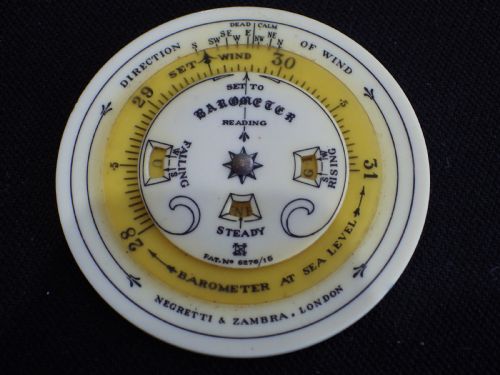
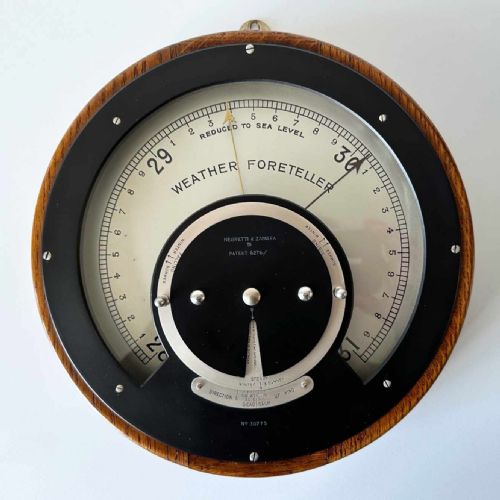
A weather forecaster is an aneroid barometer dial instrument designed to interpret atmospheric changes for domestic use.
These pieces feature rotating or adjustable indicators that help users predict short-term meteorological shifts.
How do I identify a Victorian Negretti and Zambra barometer?
Victorian barometers often feature engraved ivory or metal dials signed by the London makers alongside substantial mahogany or oak cases.
Stylistic cues from the mid to late nineteenth century help date the exterior cabinetry and mercury or aneroid setups.
Were these instruments used for navigation?
Marine barometers, RNLI marine barometers, and watch telescopes were specifically produced for maritime observation and shipboard navigation.
Sturdy brass mountings and gimbal systems protected these devices from motion on the water.
What is the difference between a stick barometer and a barograph?
A stick barometer uses a vertical column of mercury to display current atmospheric pressure at a single glance.
A barograph uses clockwork drums and ink pens to trace a continuous line of pressure changes across several days.